The Great Sphnix

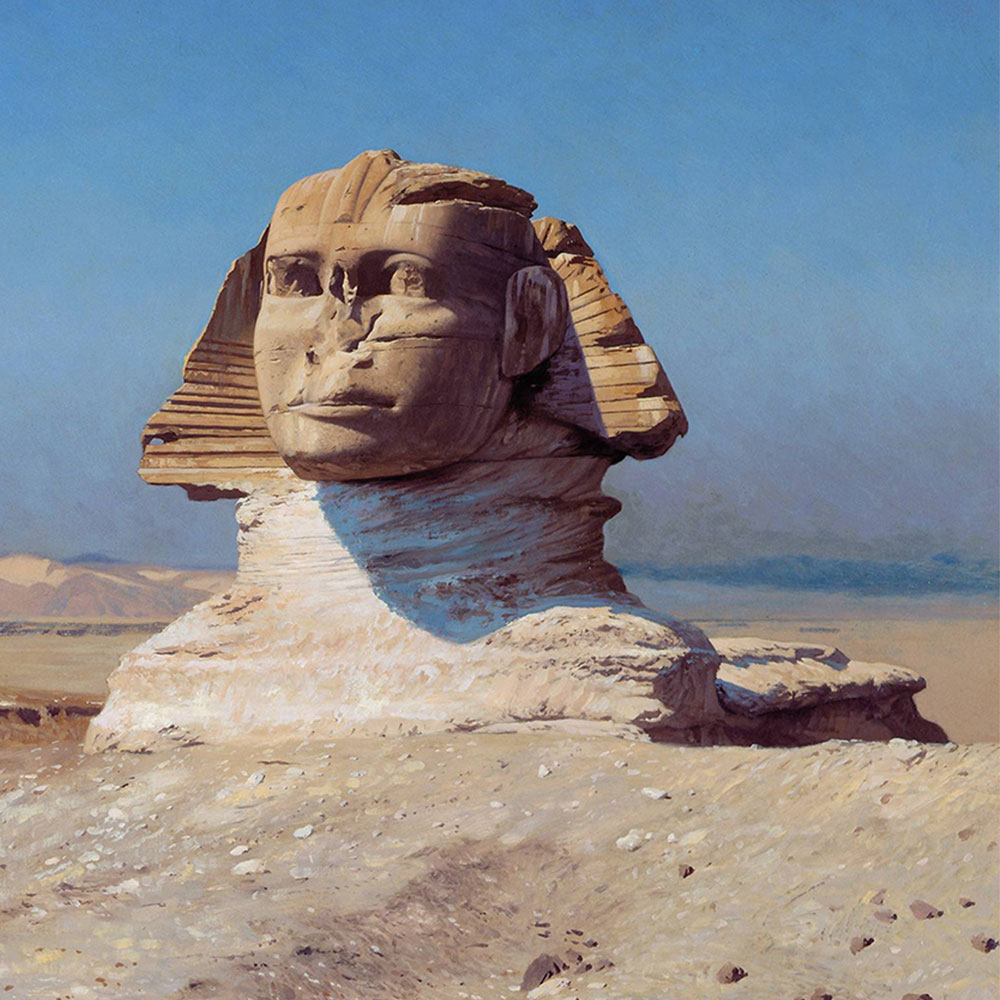
The Great Sphinx of Giza is one of the most iconic monuments of ancient Egypt, carved from a single mass of limestone during the reign of King Khafre, the builder of the second pyramid at Giza. Positioned beside Khafre’s pyramid complex, the Sphinx served as a monumental guardian of the necropolis, its imposing presence symbolizing royal authority and divine protection. In ancient Egyptian tradition, a sphinx combined the body of a lion, representing strength, power, and the eternal nature of kingship, with the head of a human, typically the reigning pharaoh wearing the nemes royal headdress. This fusion of human intelligence and animal might expressed the ideal qualities of the king as both ruler and protector. The Great Sphinx is not only the earliest known colossal sculpture in Egypt but also one of the largest monolithic statues in the world. Measuring 241 feet (73.5 m) in length, 63 feet (19 m) in width, and 66 feet (20 m) in height, it was carved directly from the bedrock of the Giza Plateau. Its sheer scale and technical achievement reflect the organizational power of the Old Kingdom state and the sophisticated craftsmanship of its artisans. Over millennia, the Sphinx has inspired countless interpretations—religious, political, and symbolic—and remains a central emblem of ancient Egyptian civilization. Its enigmatic expression and monumental form continue to evoke the grandeur and mystery of the pharaohs who shaped the Giza landscape.
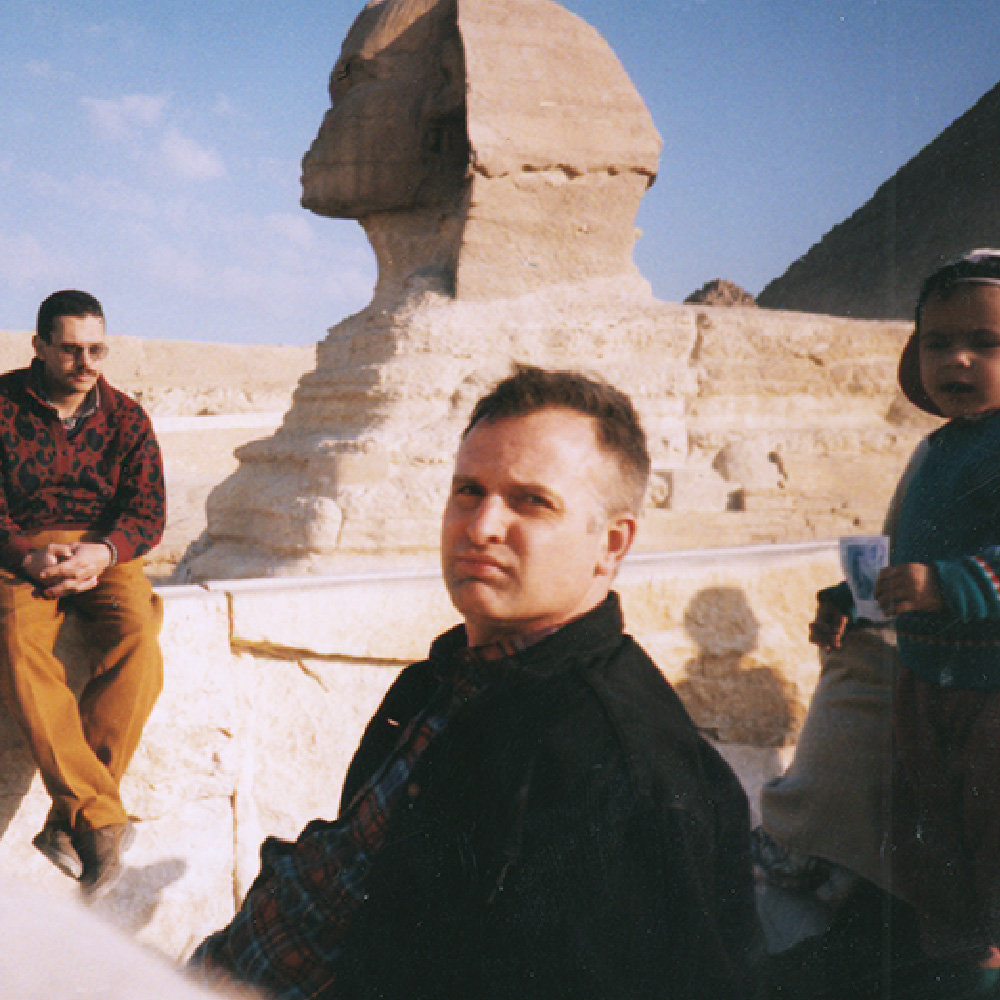
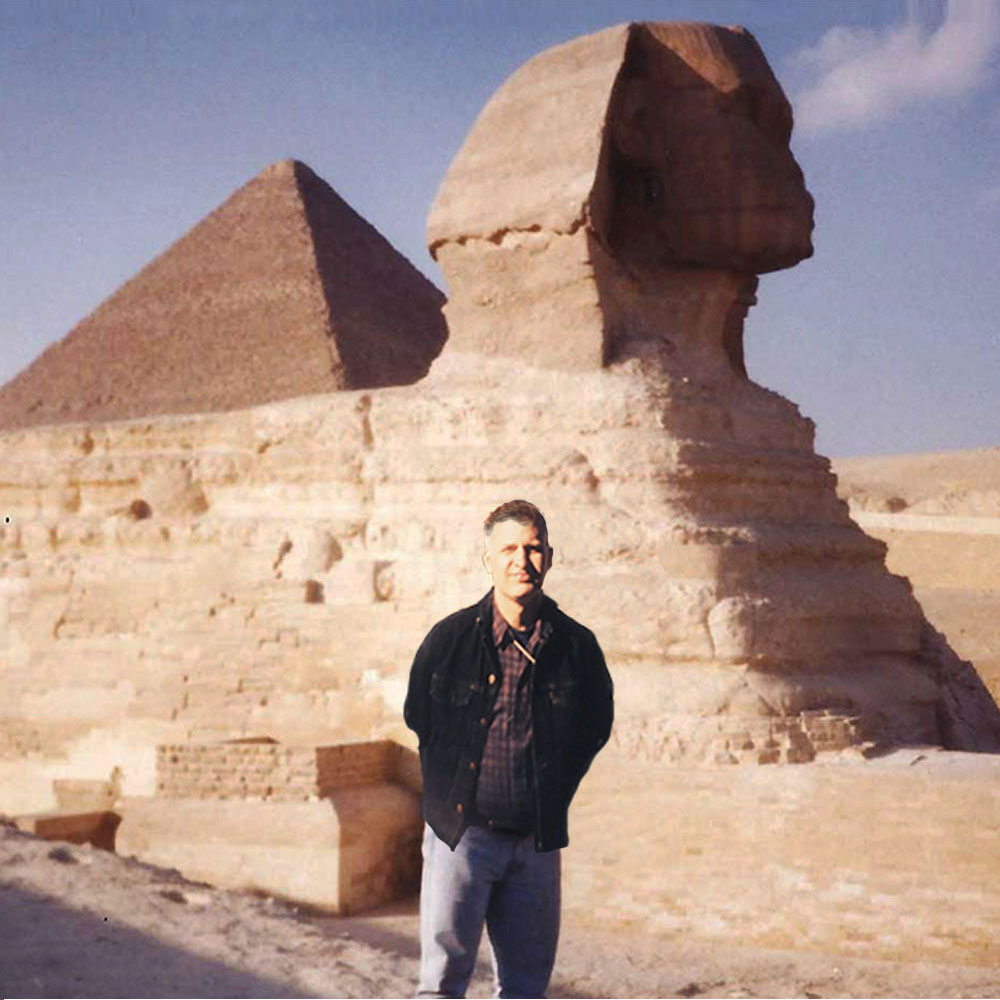
I with The Great Sphinx of Giza, 2575 BCE, a reclining mythical creature with the head of a human and the body of a lion, The Giza Plateau, Cairo
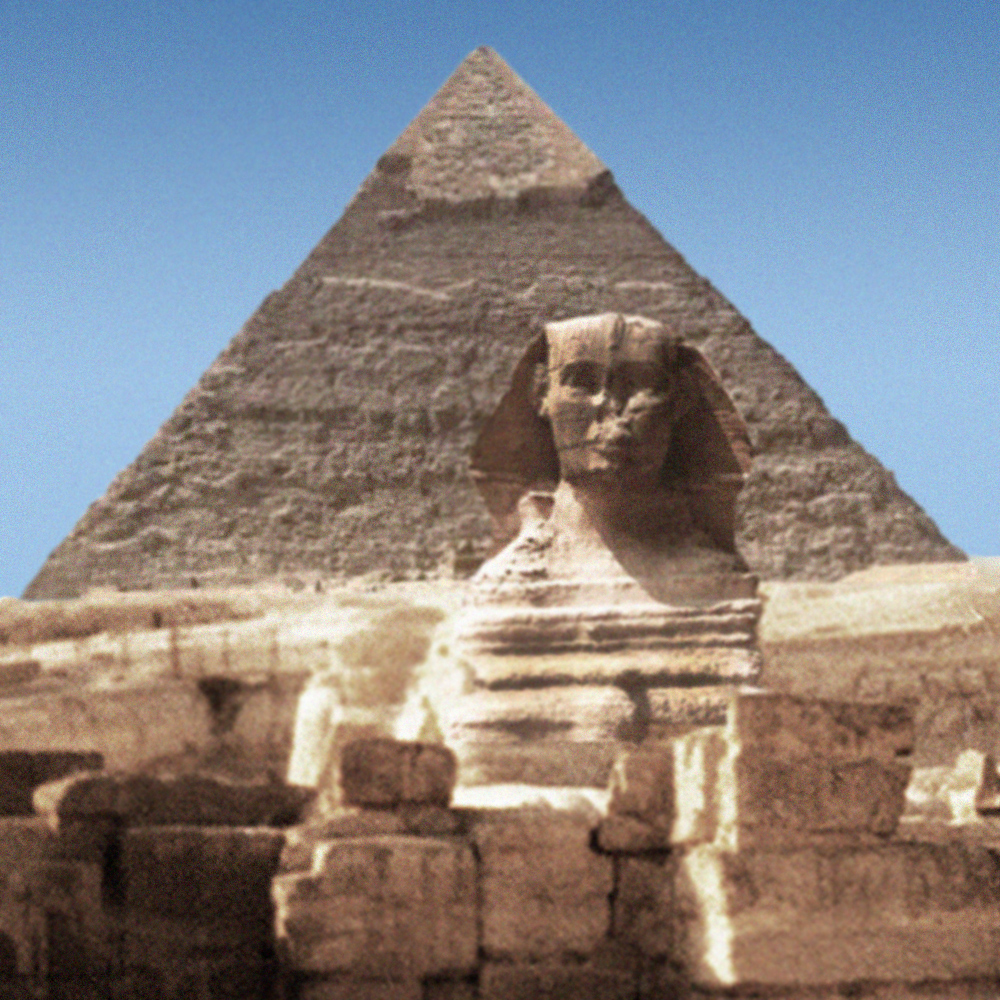
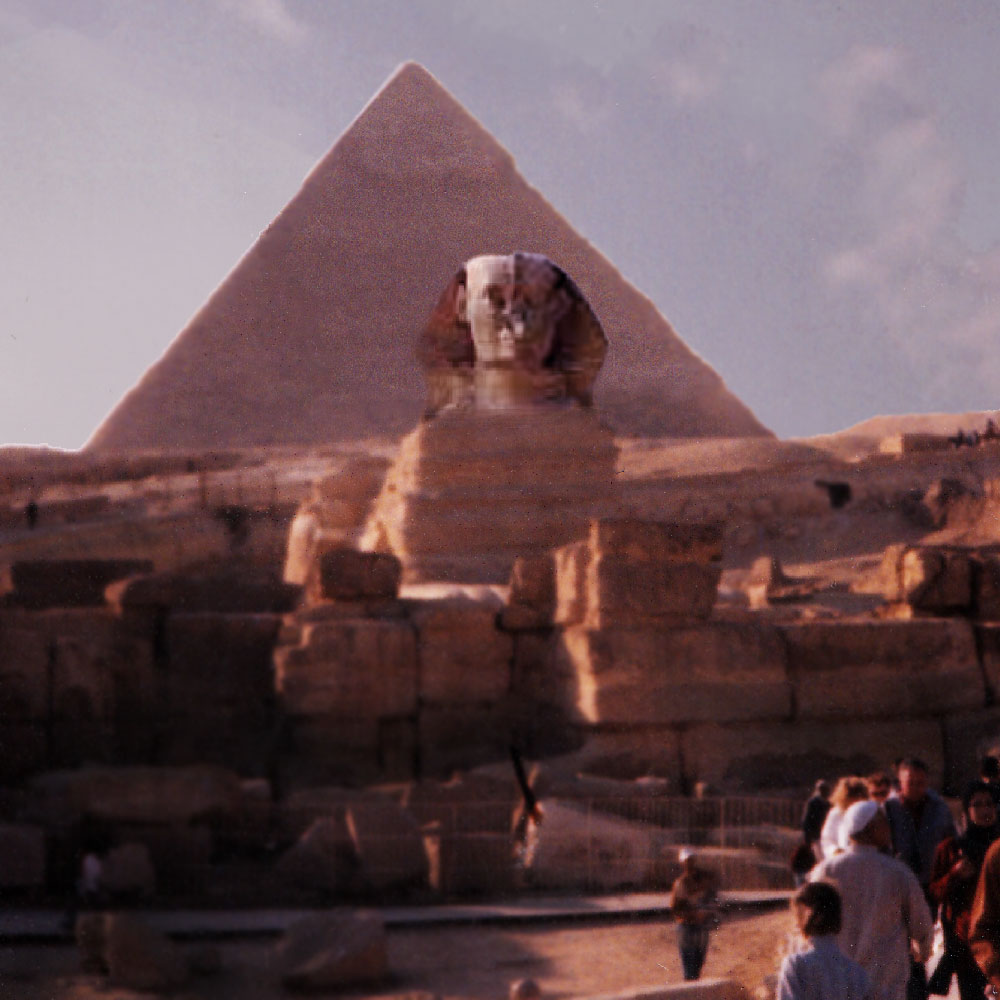
A close view of King Khafre's enormous pyramid with the Great Sphnix directly in front, 4th Dynasty, 2575 BCE, The Giza Plateau, Cairo
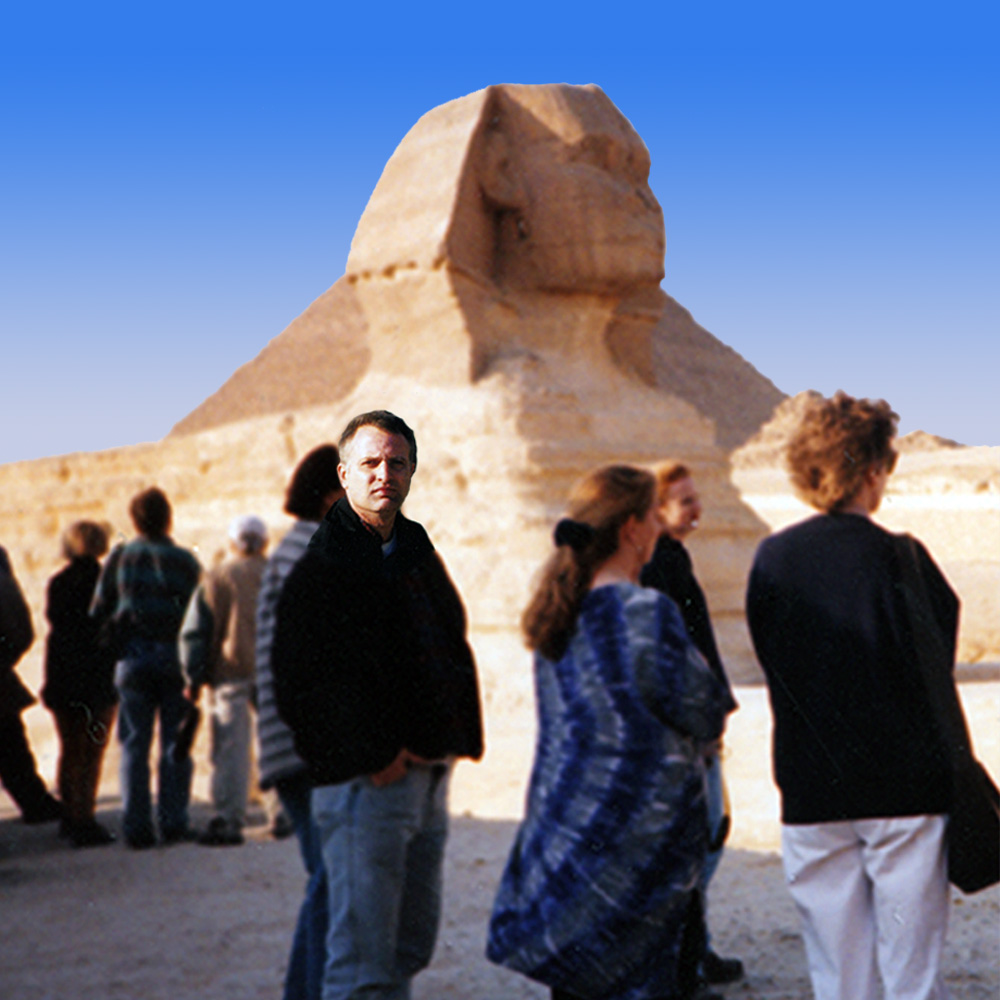
I with other tourist listening to tour guide about The Great Sphinx of Giza, 2575 BCE, The Giza Plateau, Cairo
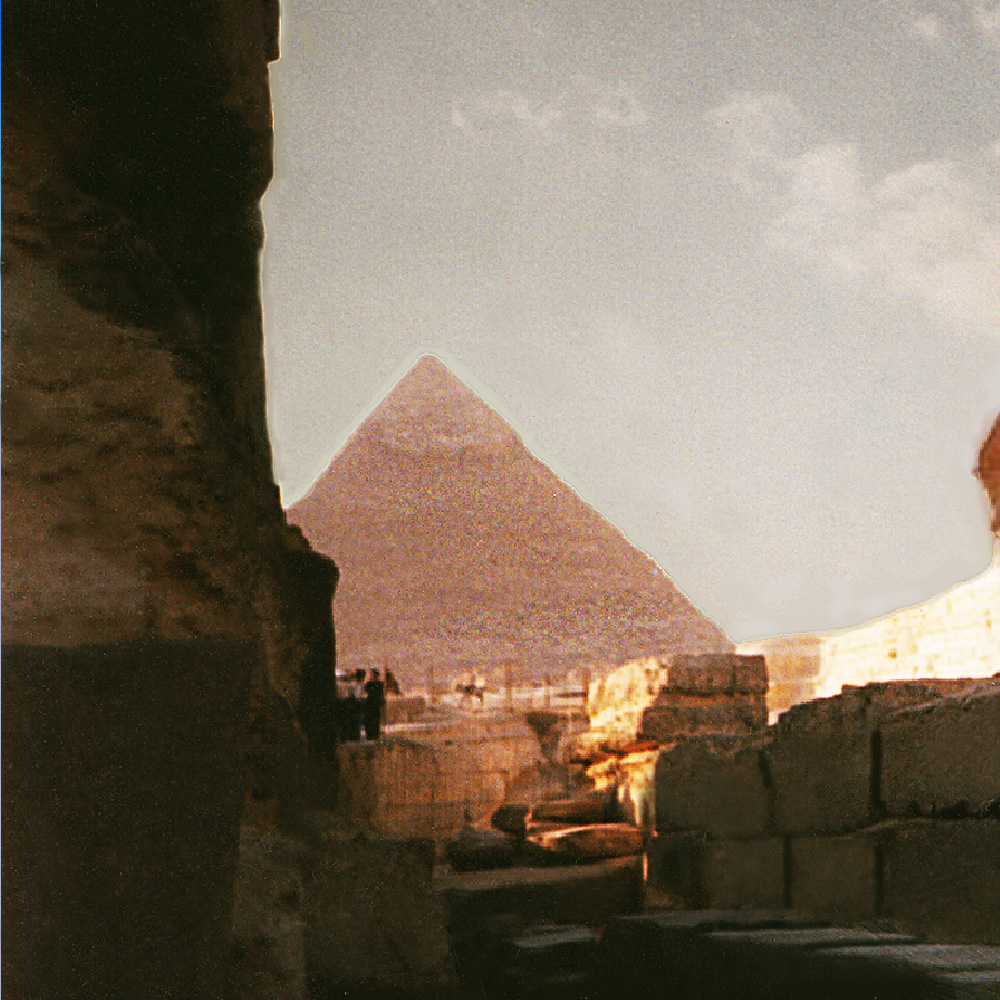
I next to the Great Sphnix of Giza, 2575 BCE, a reclining mythical creature with the head of a human and the body of a lion, The Giza Plateau, The Giza Plateau, Cairo
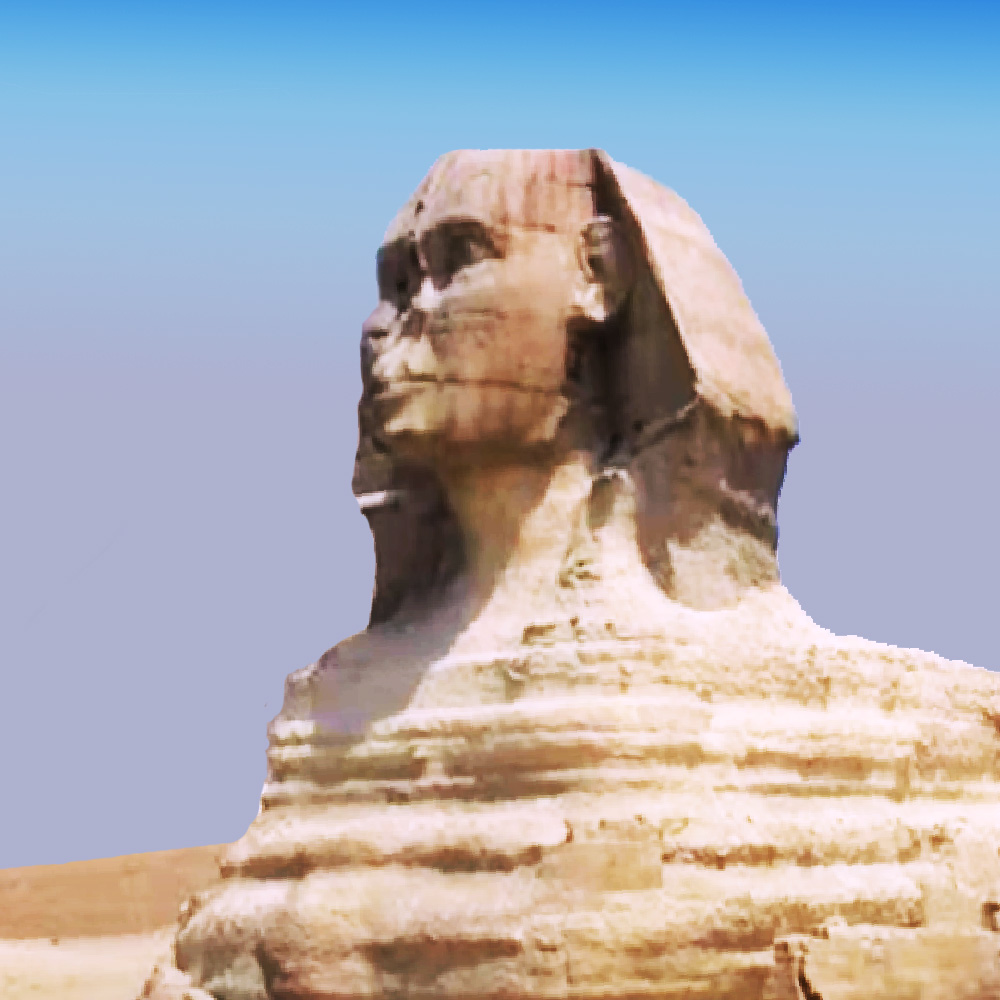
The Great Sphinx of Giza, the colossal limestone statue directly in front of King Khafre's pyramid, 2575 BCE, The Giza Plateau, Cairo
The Great Sphinx of Giza, a colossal limestone statue that likely dates to the reign of King Khafre 2575 BCE, The Giza Plateau, Cairo
I next to the Great Sphnix of Giza, 2575 BCE, a reclining mythical creature with the head of a pharaoh and the body of a lion, The Giza Plateau, Cairo
The Great Sphinx of Giza, the colossal limestone statue directly in front of King Khafre's pyramid, 2575 BCE, The Giza Plateau, Cairo
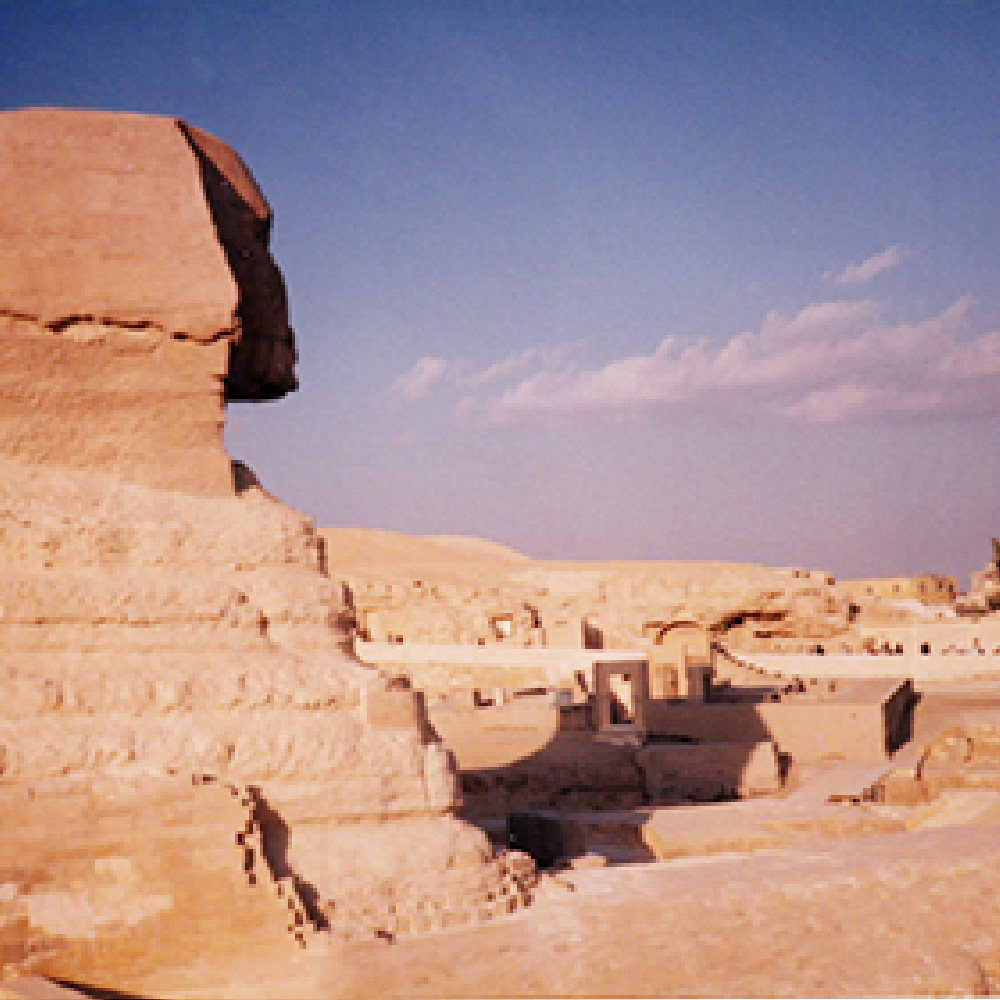
Side view with a afternoon shadow of the Great Sphinx of Giza, 2575 BCE, The Giza Plateau, Cairo
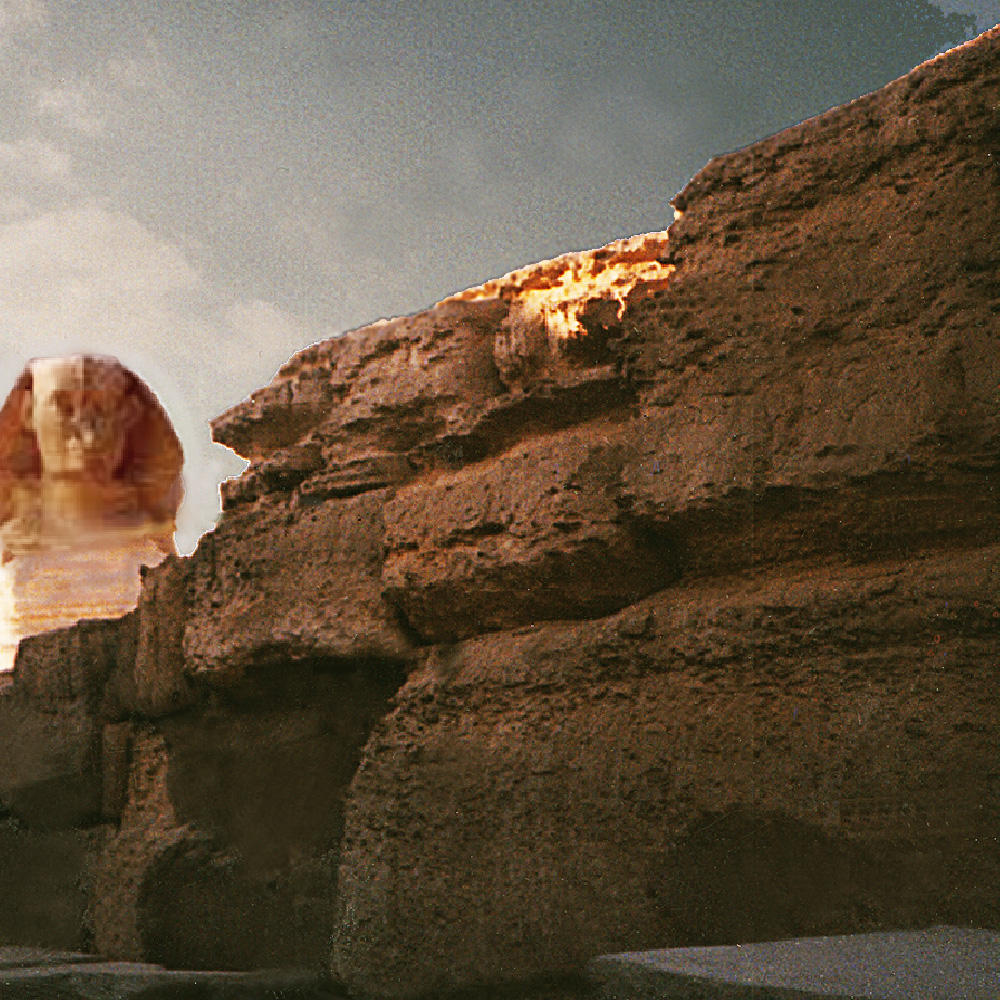
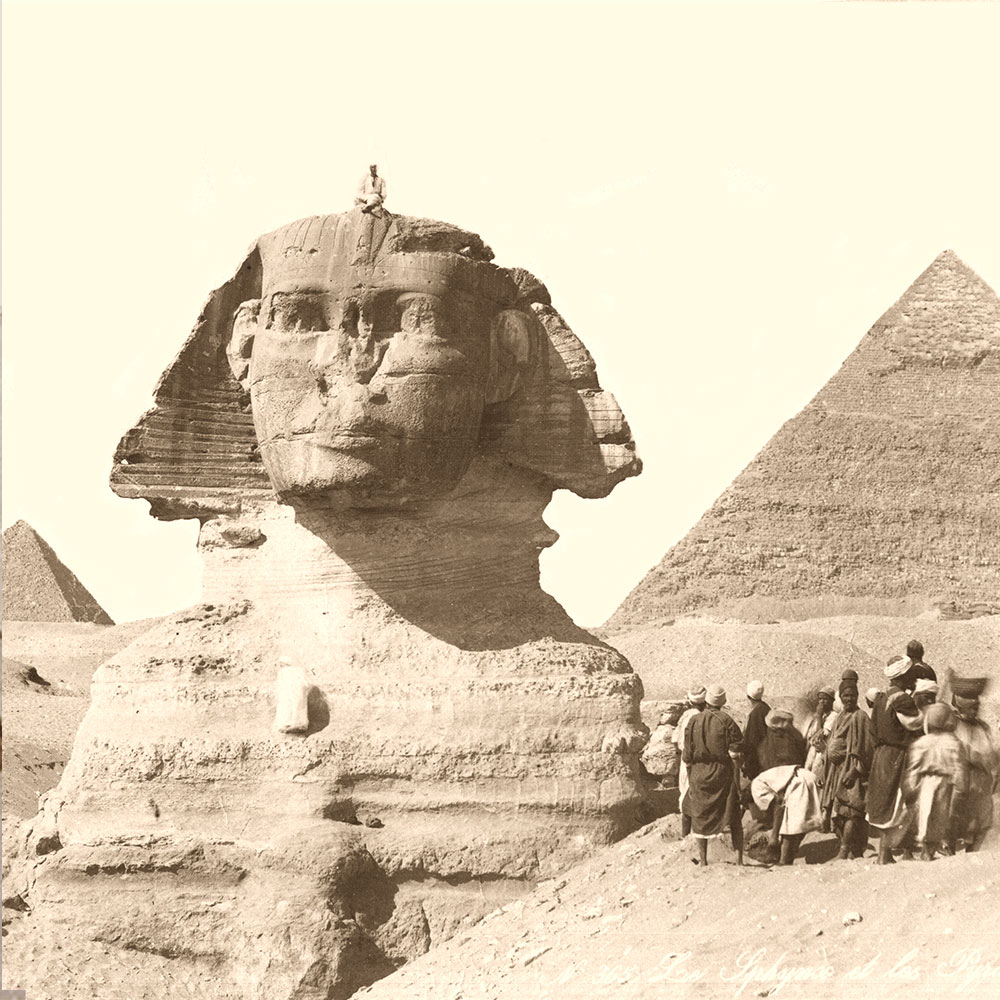
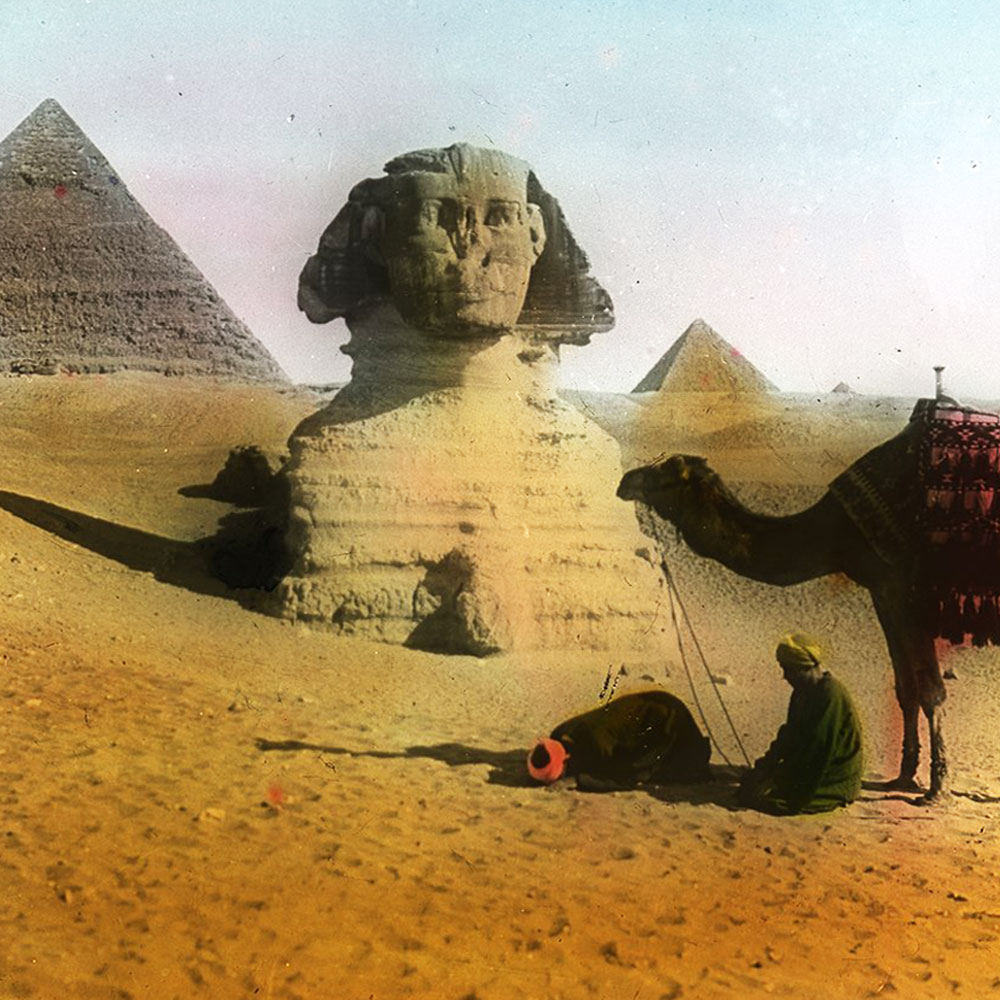
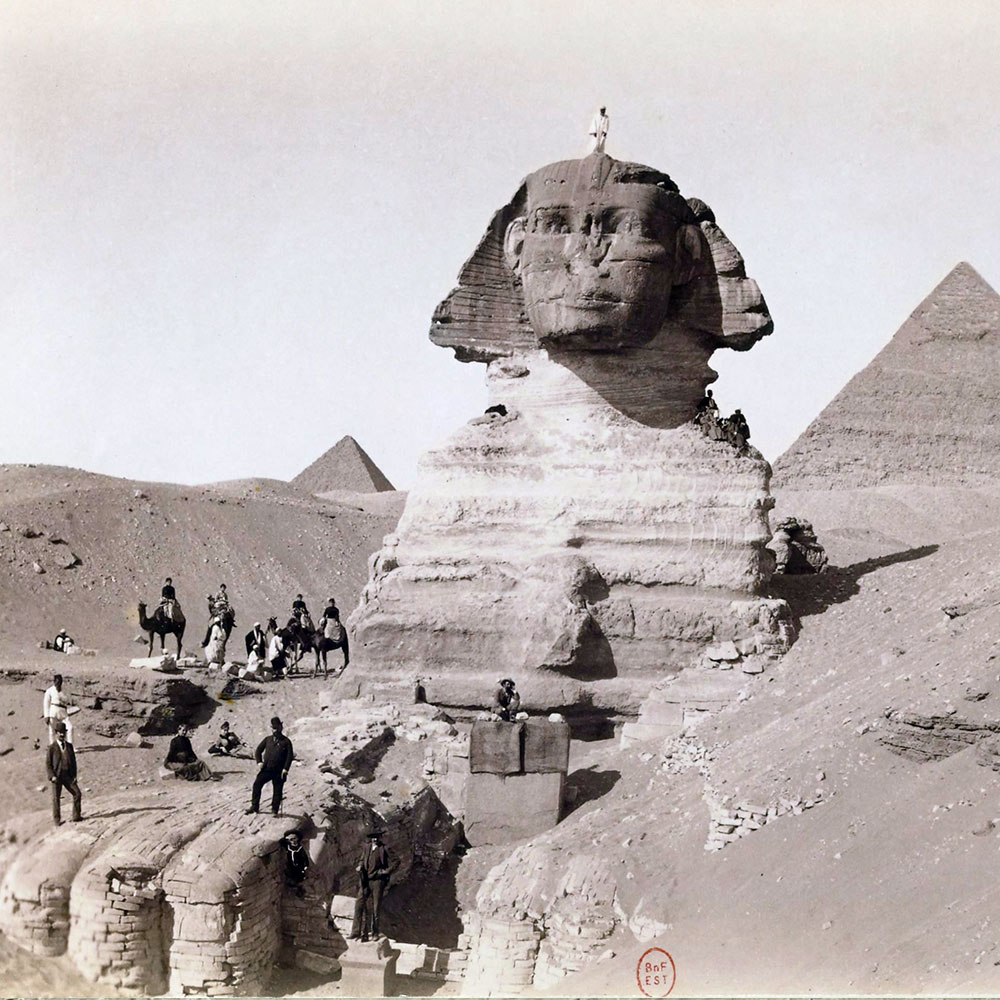
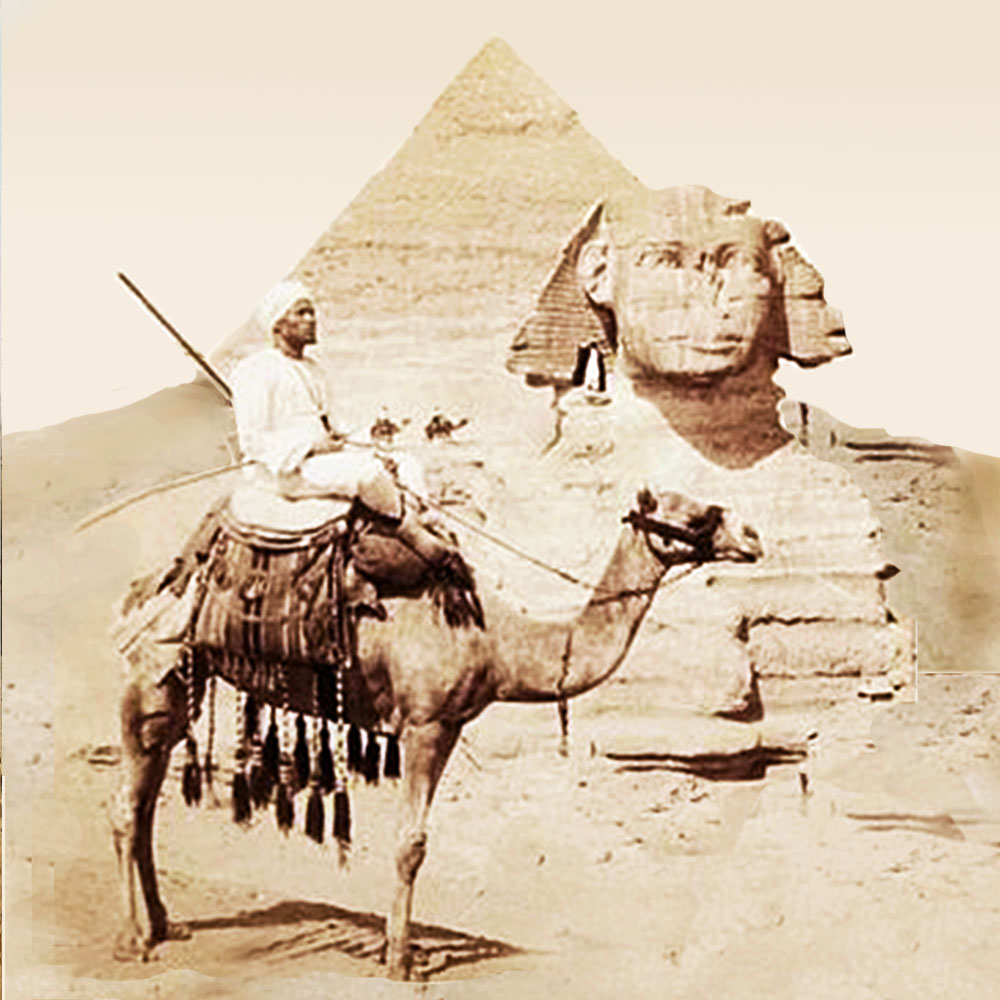
 Sub-Menu THE SPHINX HISTORIC PHOTOS Historical documentation with 19th-century photography and oil paintings of the Great Sphinx. While photography has only been around for about 200 years, photographers have flocked to the Giza Plateau in the Egyptian desert to capture images of the enigmatic creature with the head of a pharaoh and the body of a lion.
Zangaki. 0365. Le Sphynx et les Pyramides, Images by Zangaki Brothers, Date: 1870s-1890s, Source: Scan of the original photograph digitized by: Elekes AndorAttribution 3.0
Brooklyn Museum, Egypt, Medium: Albumen silver print from glass negative, Lantern Slide Collection:The Brooklyn Museum
Sphinx an the Pyramids of Ghiza, Date: 1880, Photo: Beniamino Facchinelli, 1839-1895, Source:Bibliothèque nationale de France
The Sphinx and pyramid of Cheops, Egypt, Albumen prints: 1890-1900, publisher: Strohmeyer & Wyman, NYC, 1896, Repository: Library of CongressPublic Domain
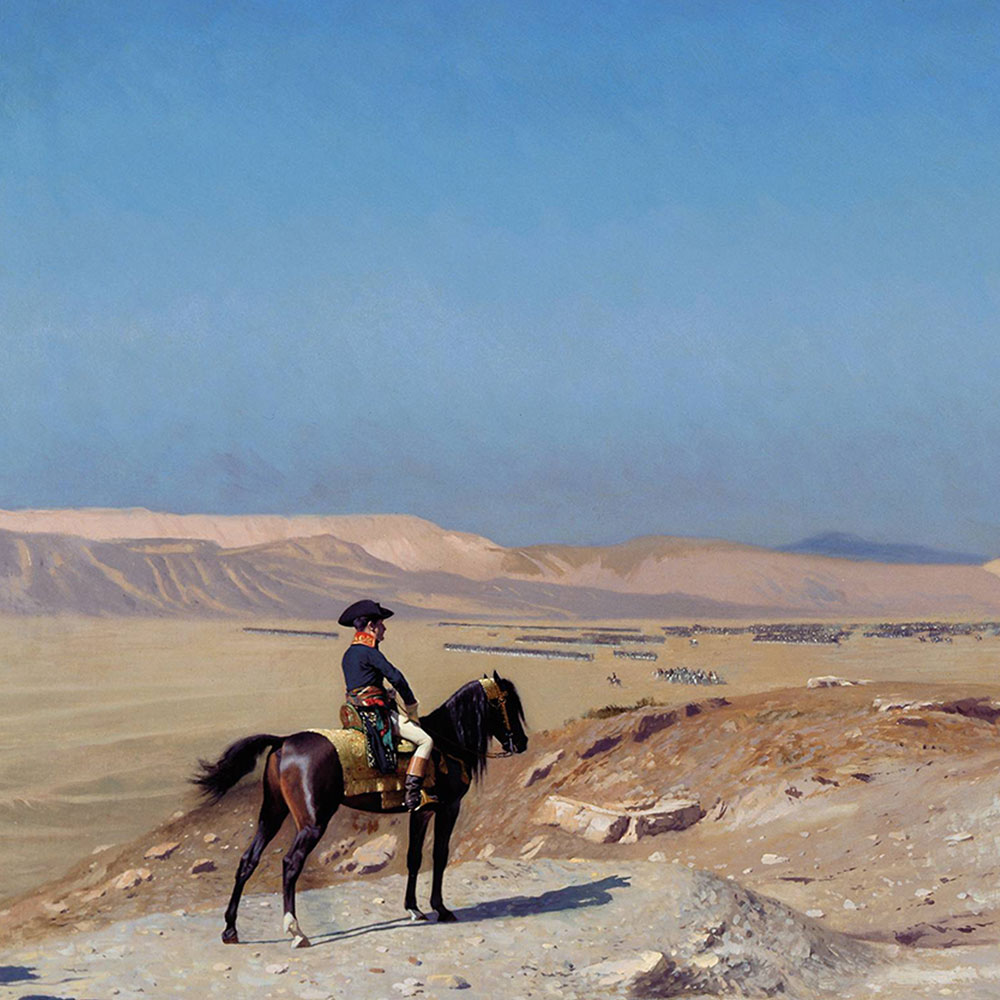
1.) Bonaparte Before the Sphinx, (French: Bonaparte devant le Sphinx) Medium: Oil on canvas, Date: 1886, Artist: Jean-Léon Gérôme, 1824-1904
2.) Napoleon Bonaparte during his Egyptian campaign of 1798, positioned on horseback in front of the Great Sphinx of Giza, with his army in the backgroundPublic Domain
Website & Website & Content Created by Richard Brafford, © 2025, All Rights Reserved, Fair Use Disclaimer for Non-Commercial Use for Educational & Entertainment Purposes OnlyTop