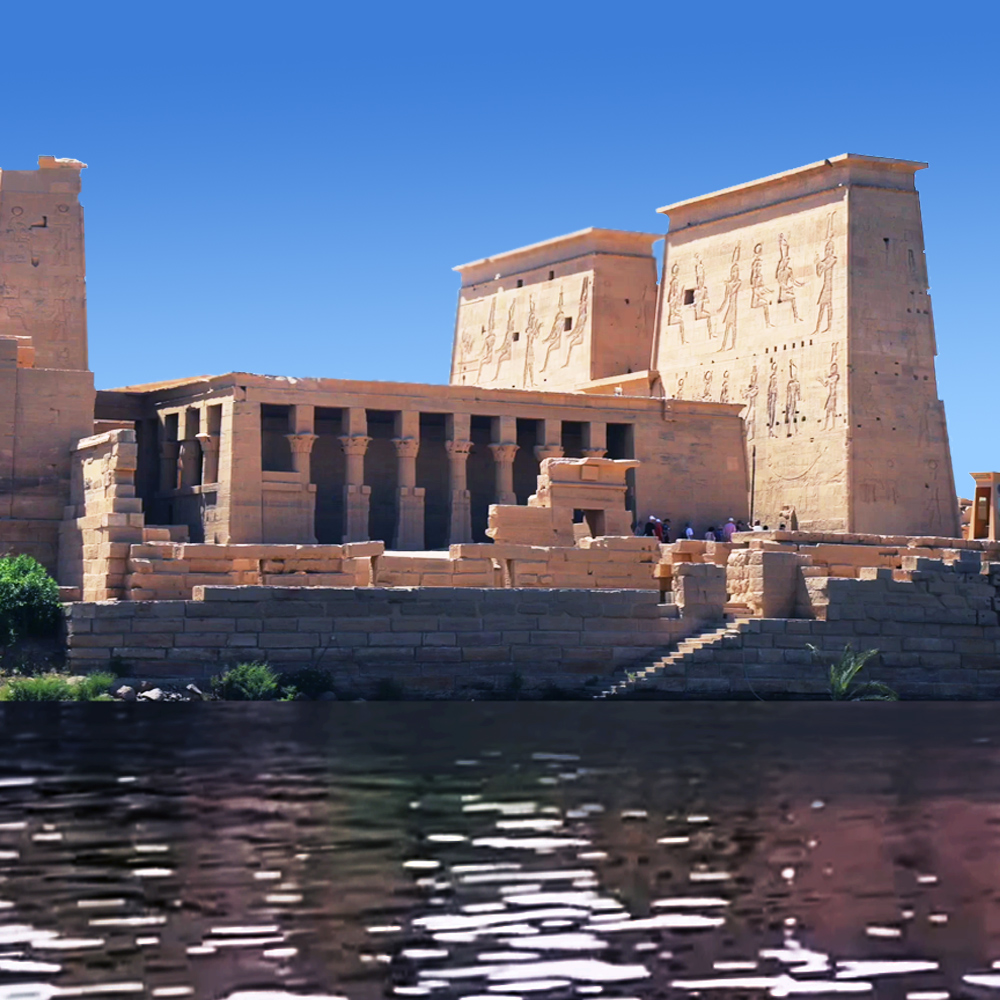
Philae, now relocated to Agilkia Island just south of Aswan, is one of Egypt’s most enchanting temple complexes—an island sanctuary framed by
the waters of the Aswan Low Dam and lying downstream from the High Dam and Lake Nasser. When rising waters threatened to submerge the Temple of Isis in the 1960s,
UNESCO and the Egyptian government undertook a remarkable rescue, dismantling the monument block by block and rebuilding it on higher ground. Despite centuries of
flooding and early Christian iconoclasm, the temple remains strikingly intact. Its graceful colonnades and finely carved reliefs—especially the musical scenes in the
Temple of Hathor—reflect the artistic refinement and spiritual resonance that defined Philae in antiquity. Today, the complex stands as both a testament to ancient
devotion and a triumph of modern conservation, offering visitors an unforgettable encounter with beauty, resilience, and sacred architecture.
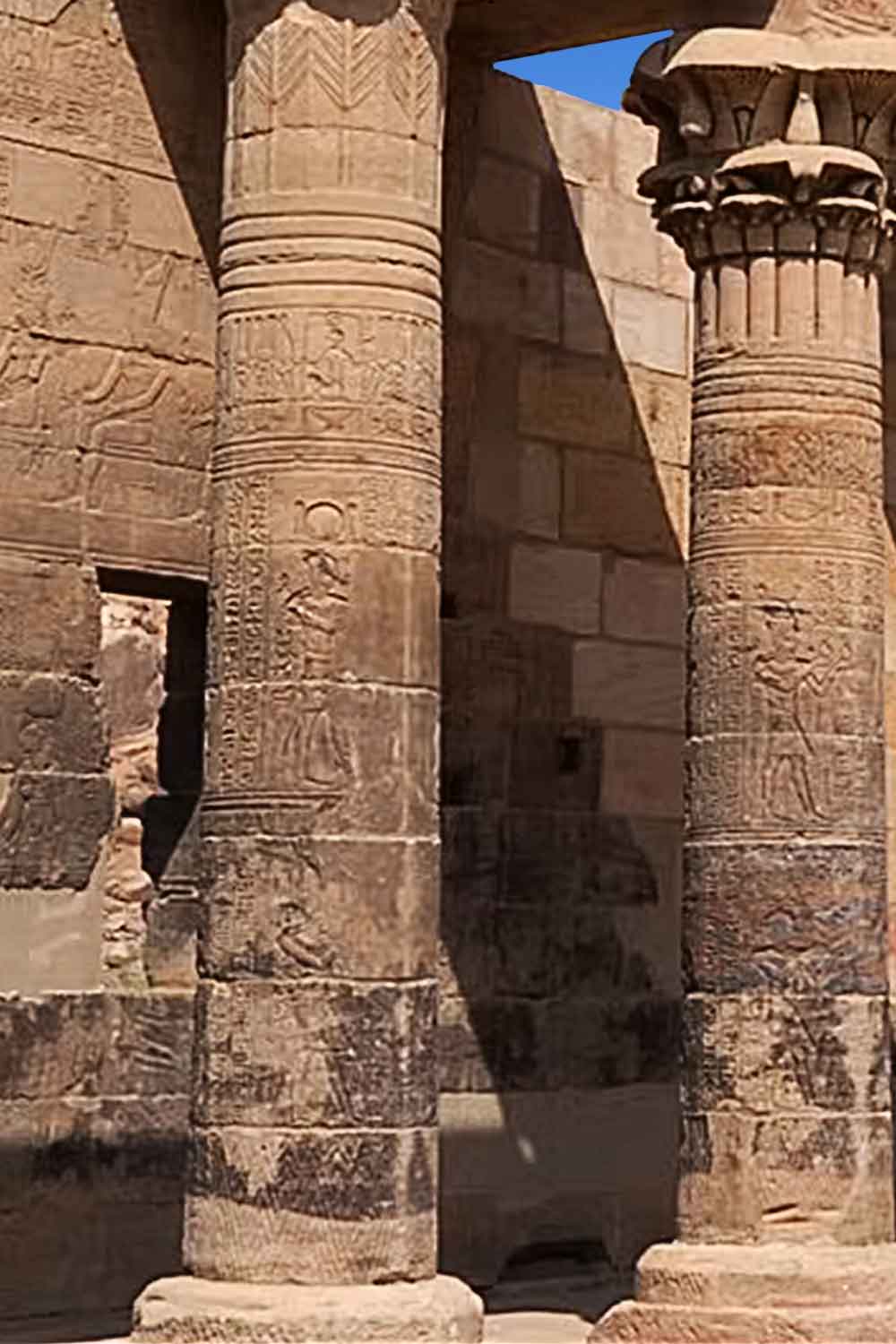
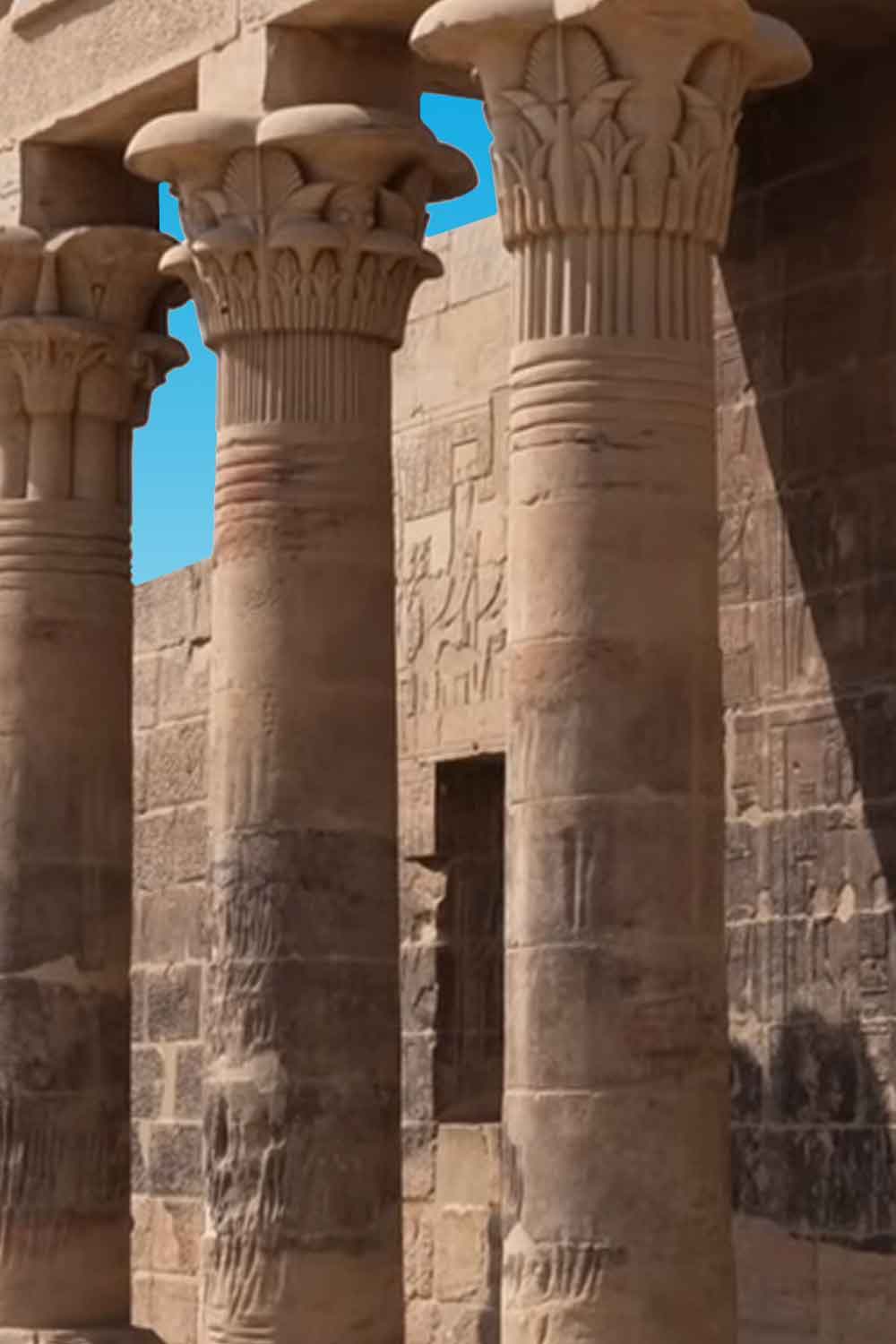
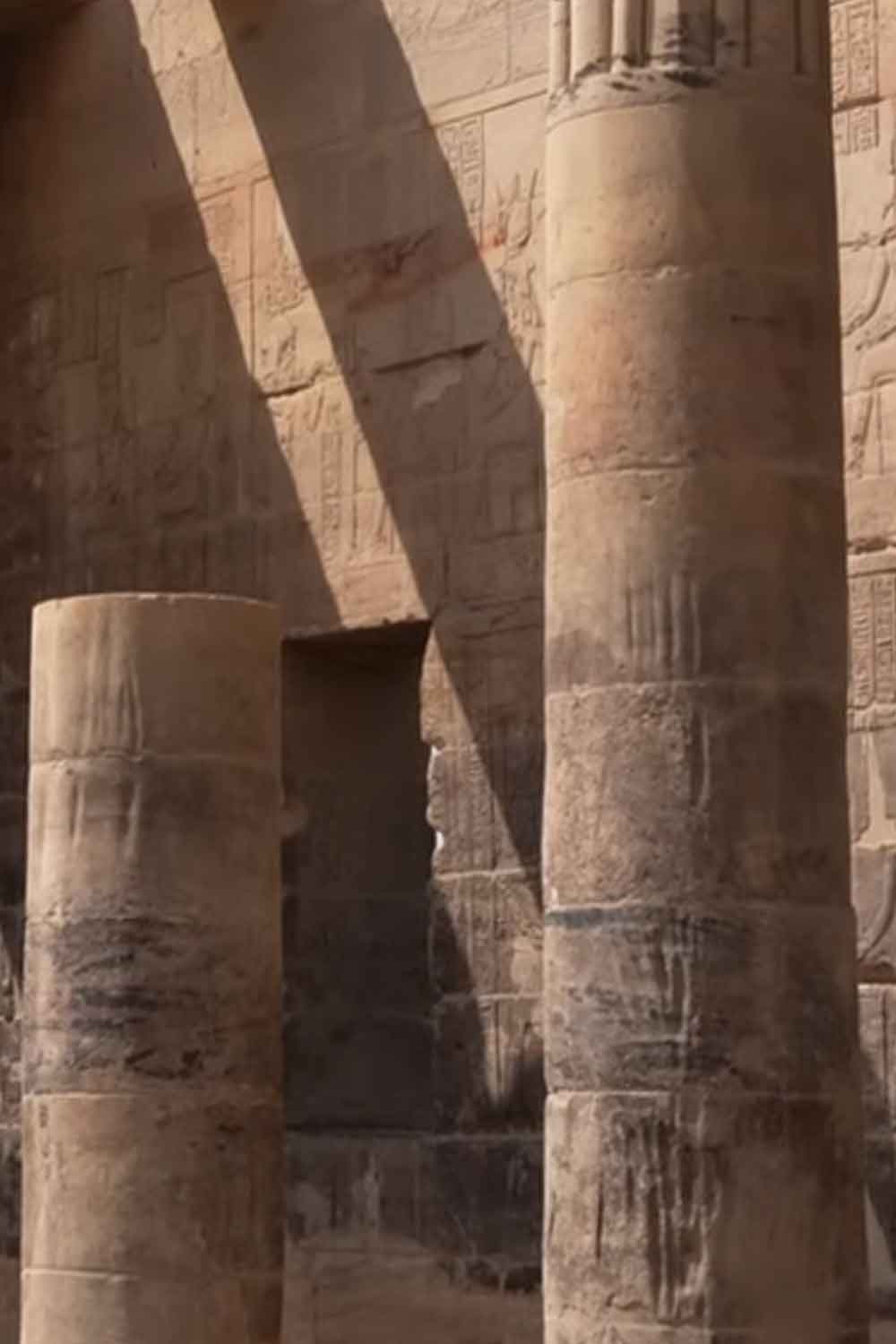
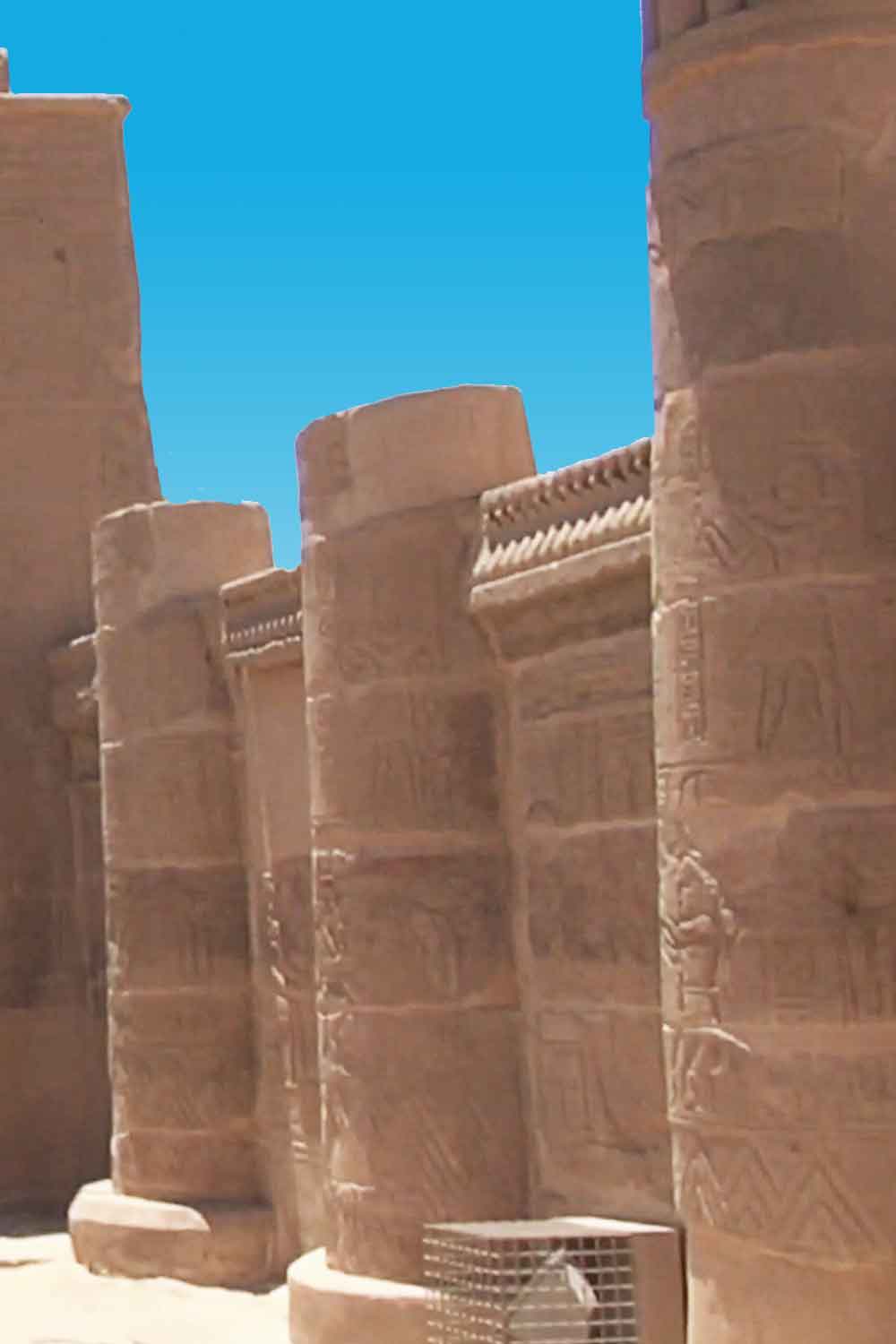
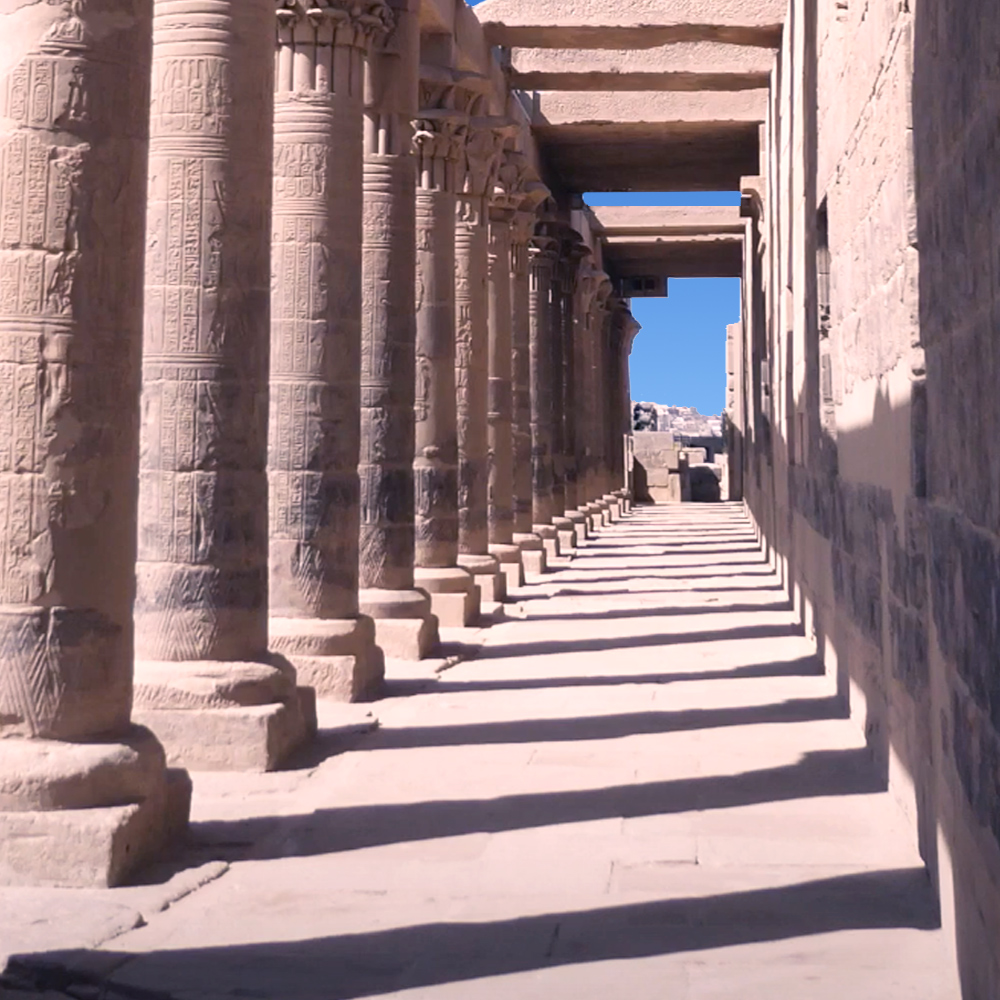
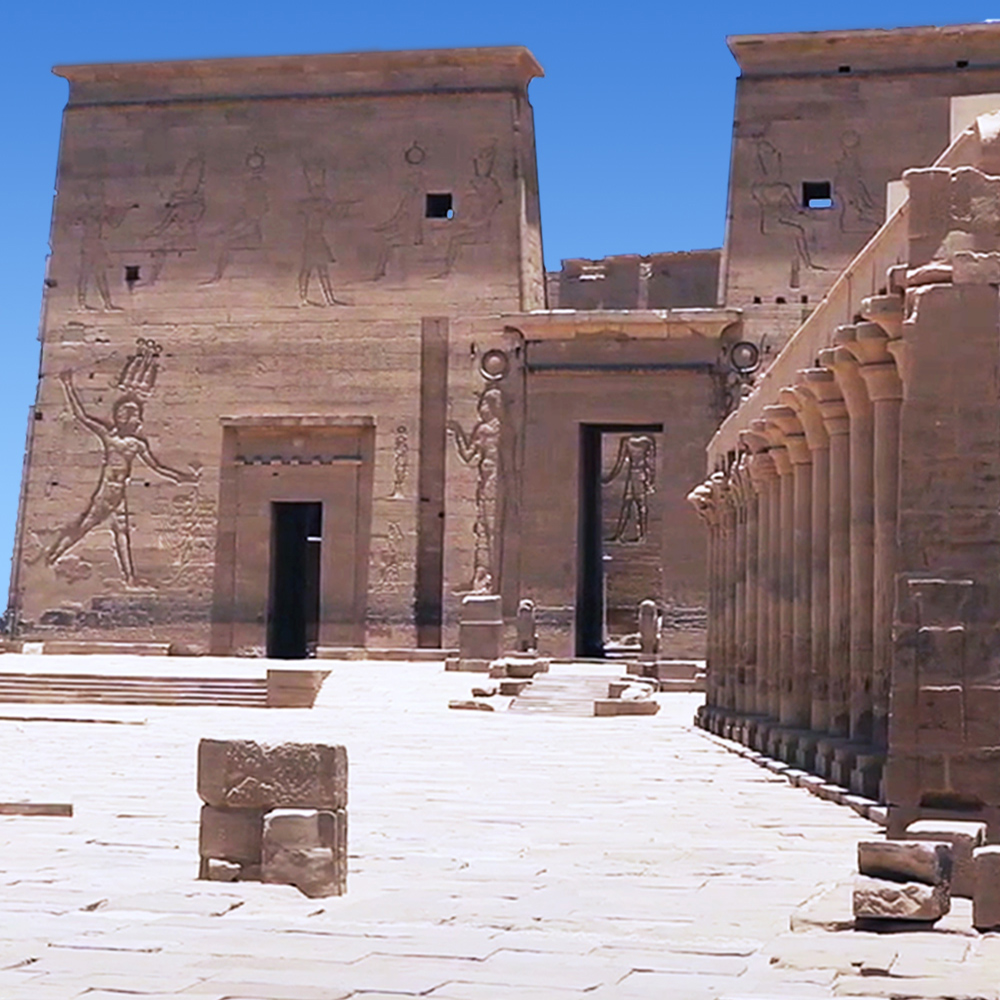
1.) The Temple of Isis, Magniicent Colonnade
in the
2.) inter forecourt, featuring an array of
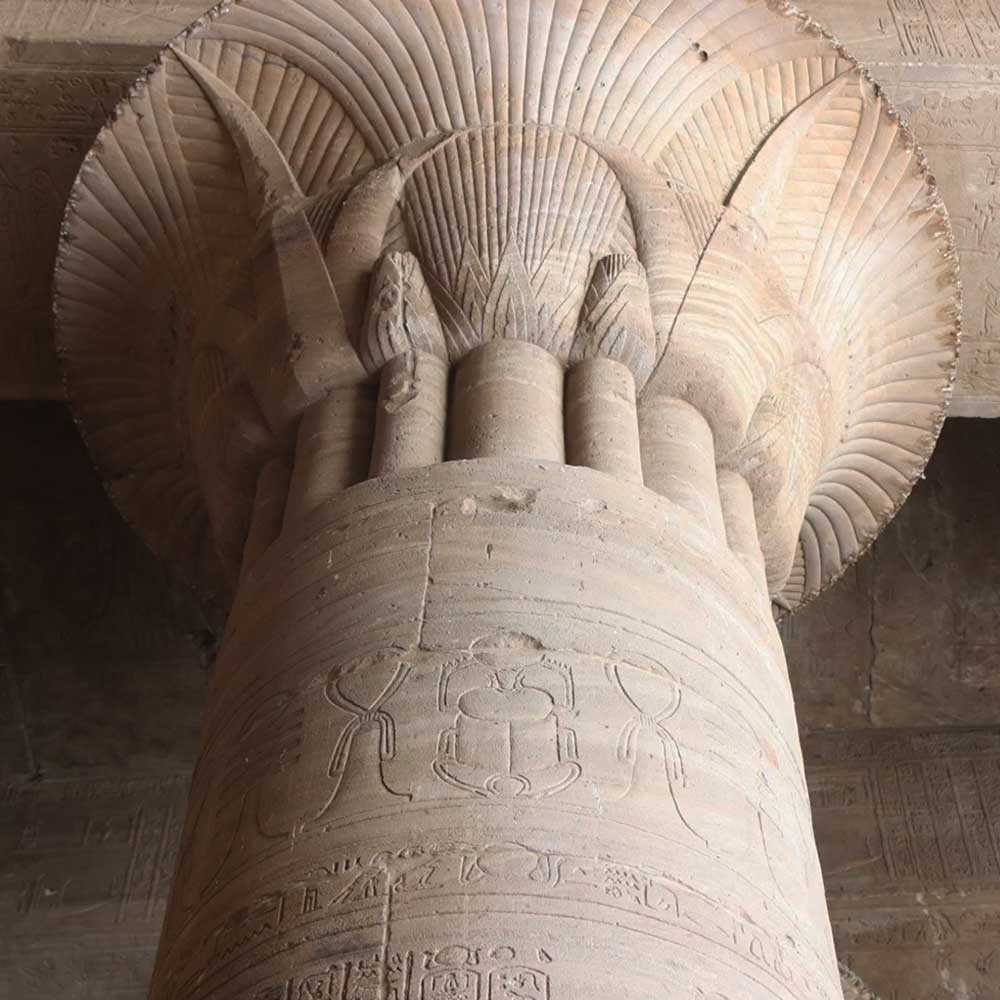
capitol styles
3.) 7th century BCE
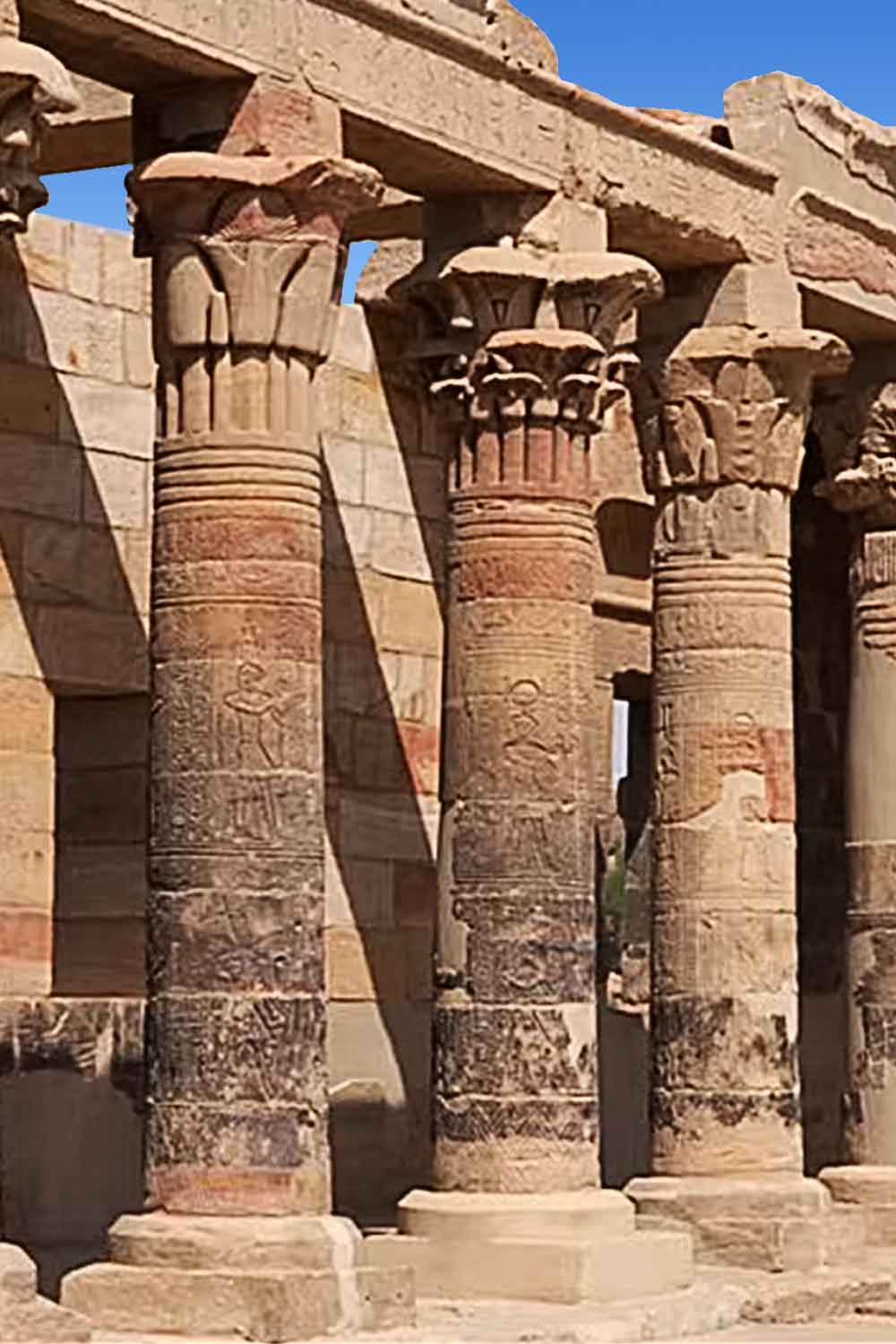
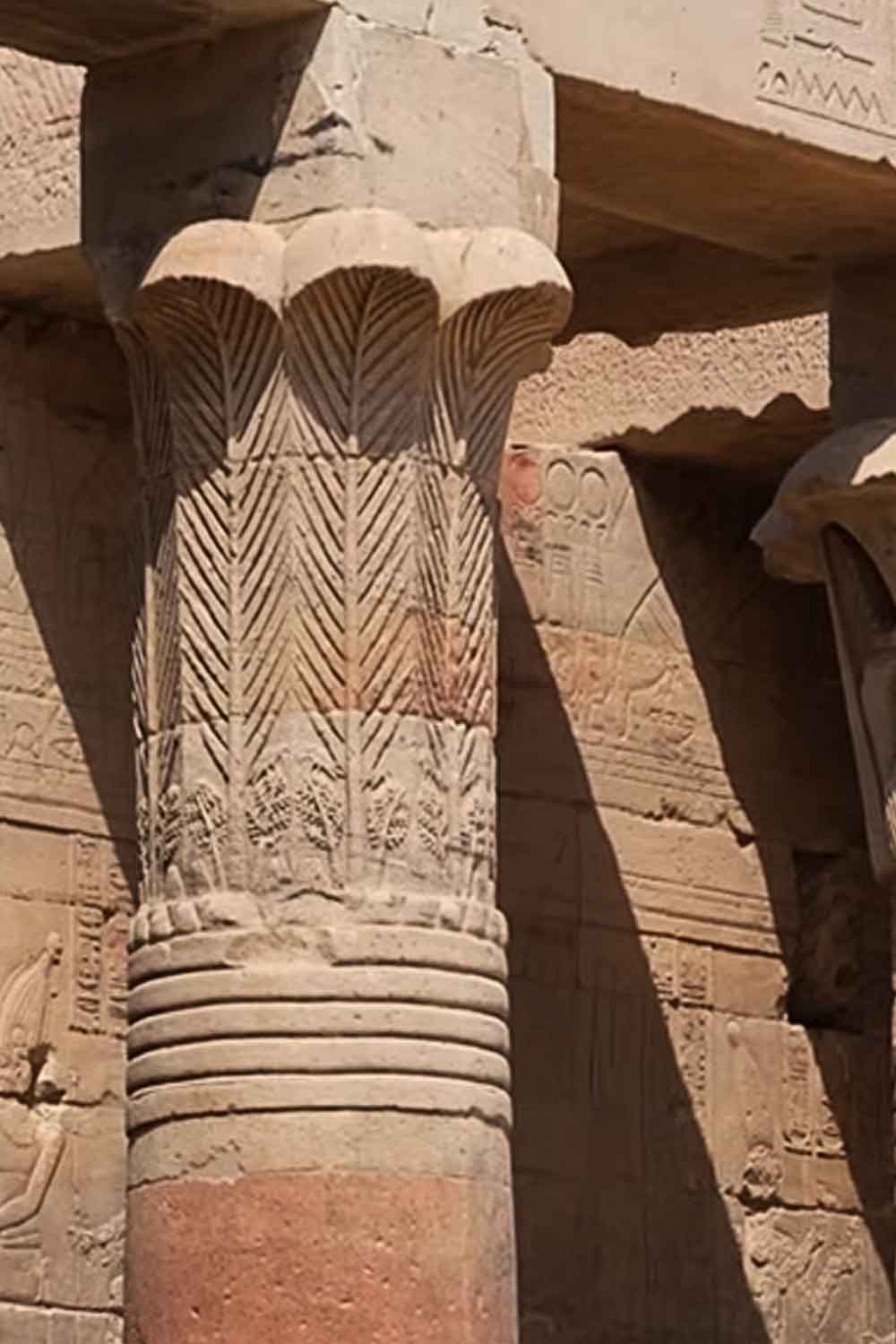
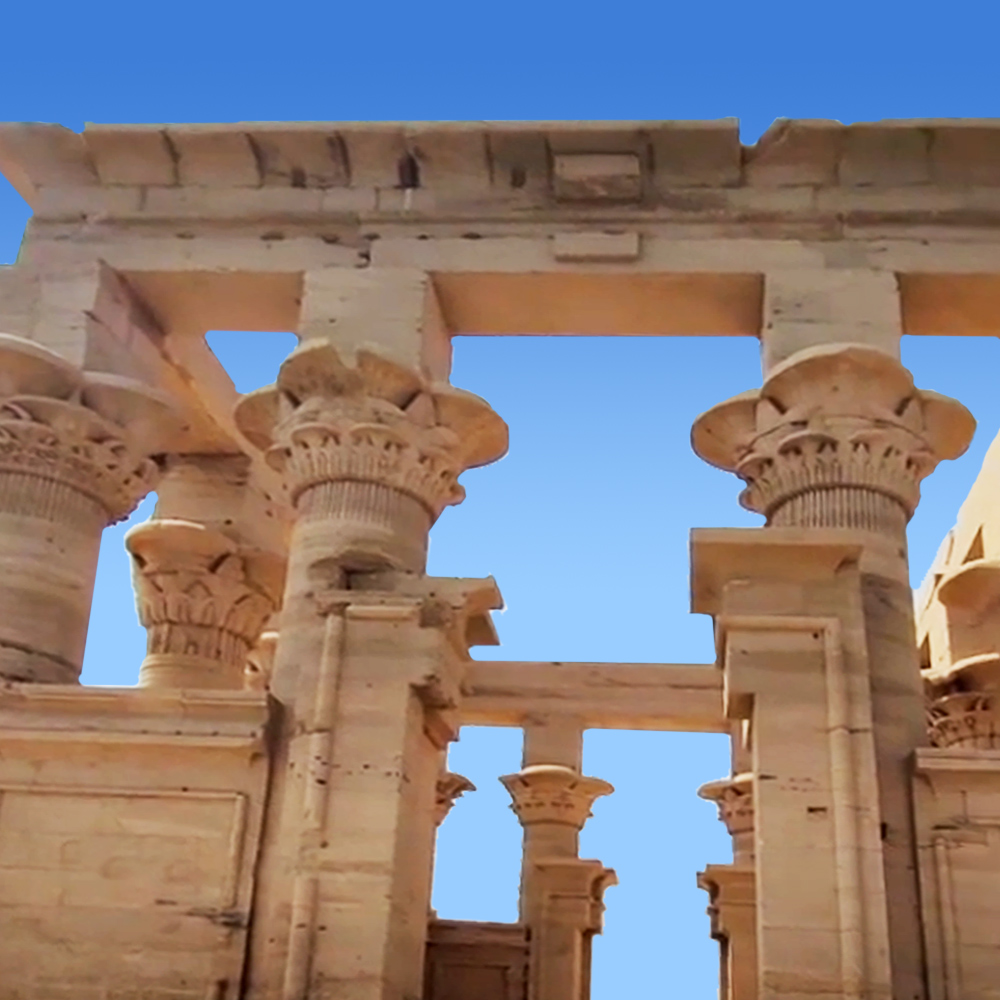
1.) The temple of Isis, Colonnade in the
inter forecourt,
2.) featuring the Palmette capitol
3.) 7th century BCE
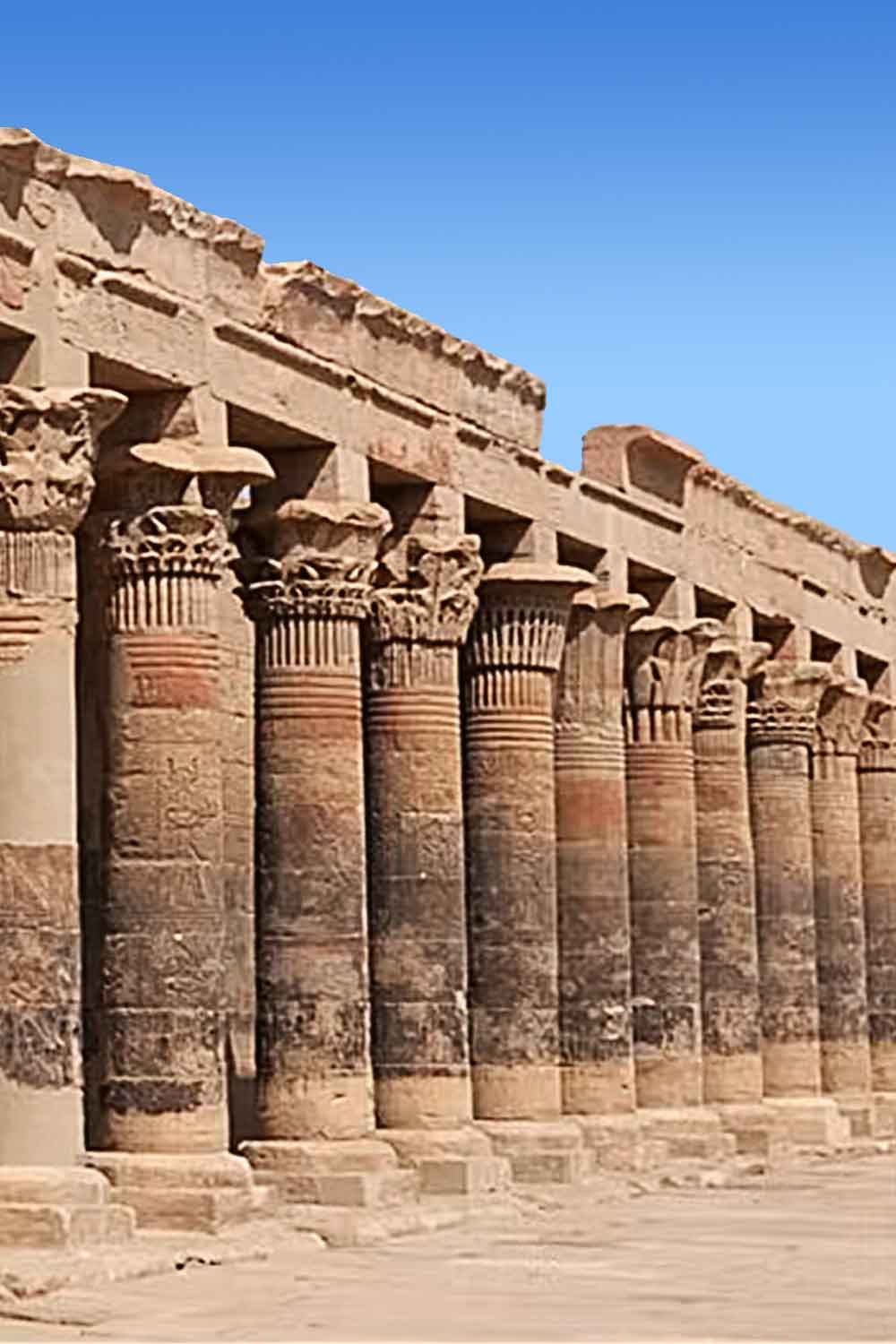
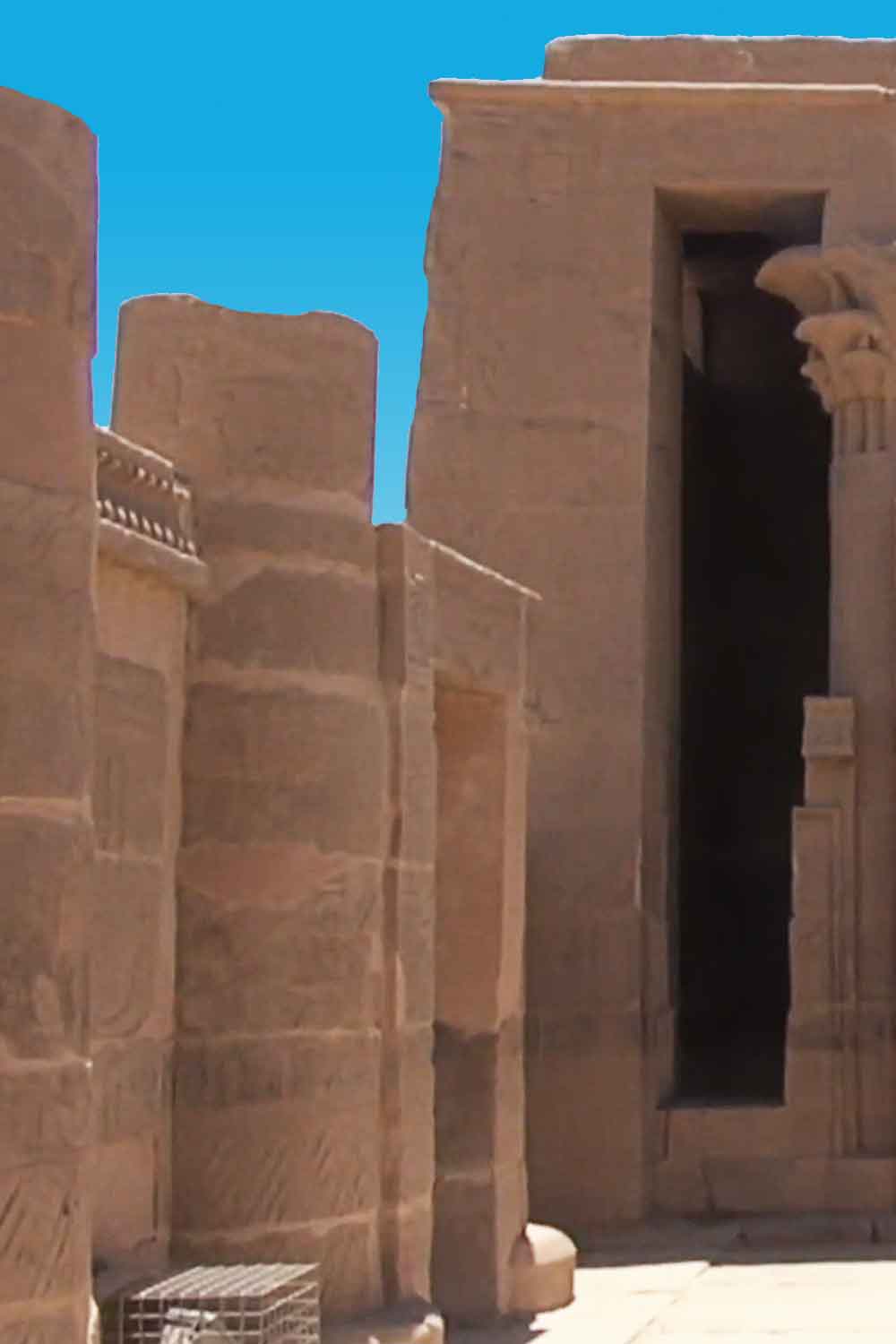
1.) The temple of Isis, Colonnade in the
inter forecourt,
2.) Near Trajan's kiosk at Philae
3.) 7th century BCE
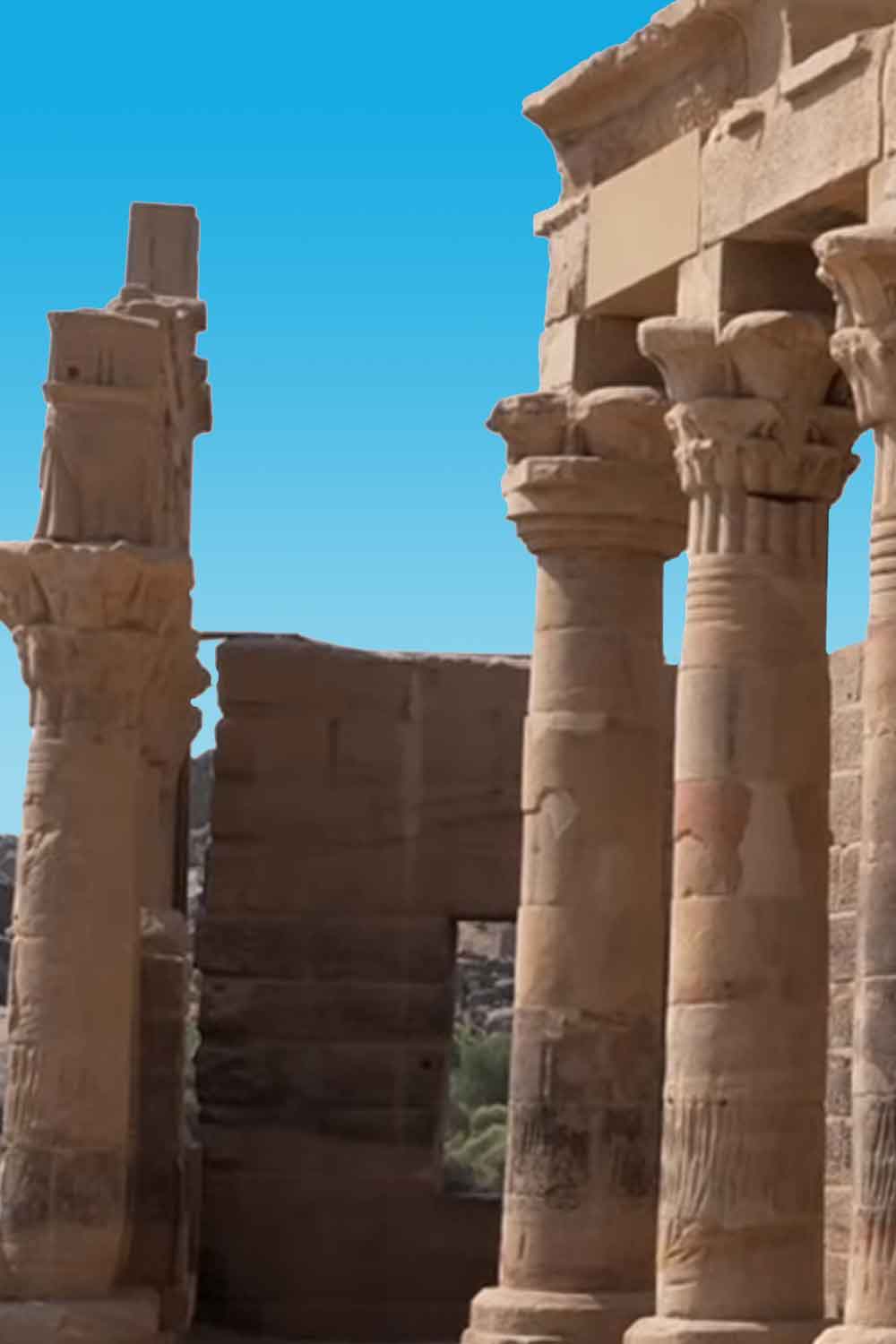
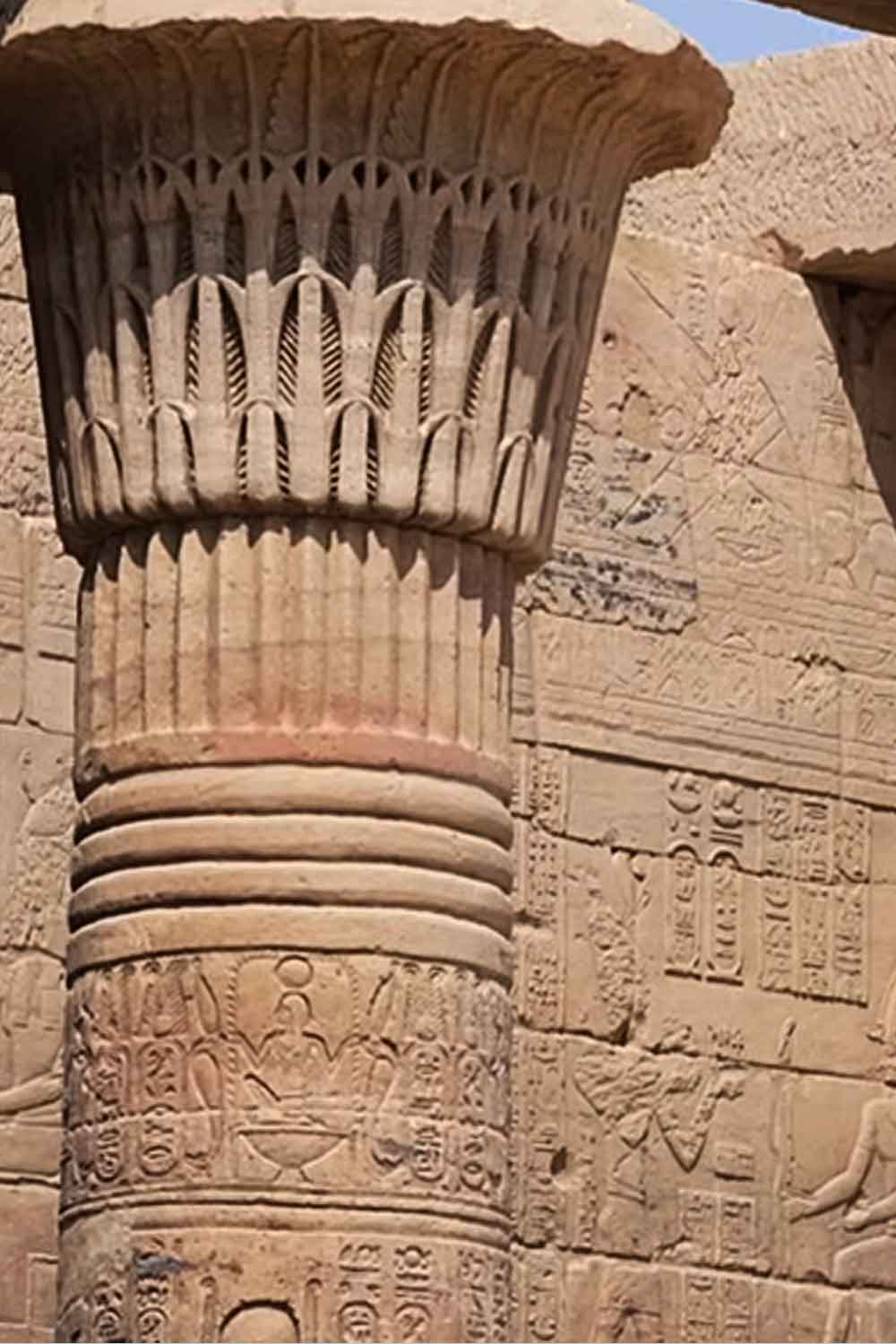
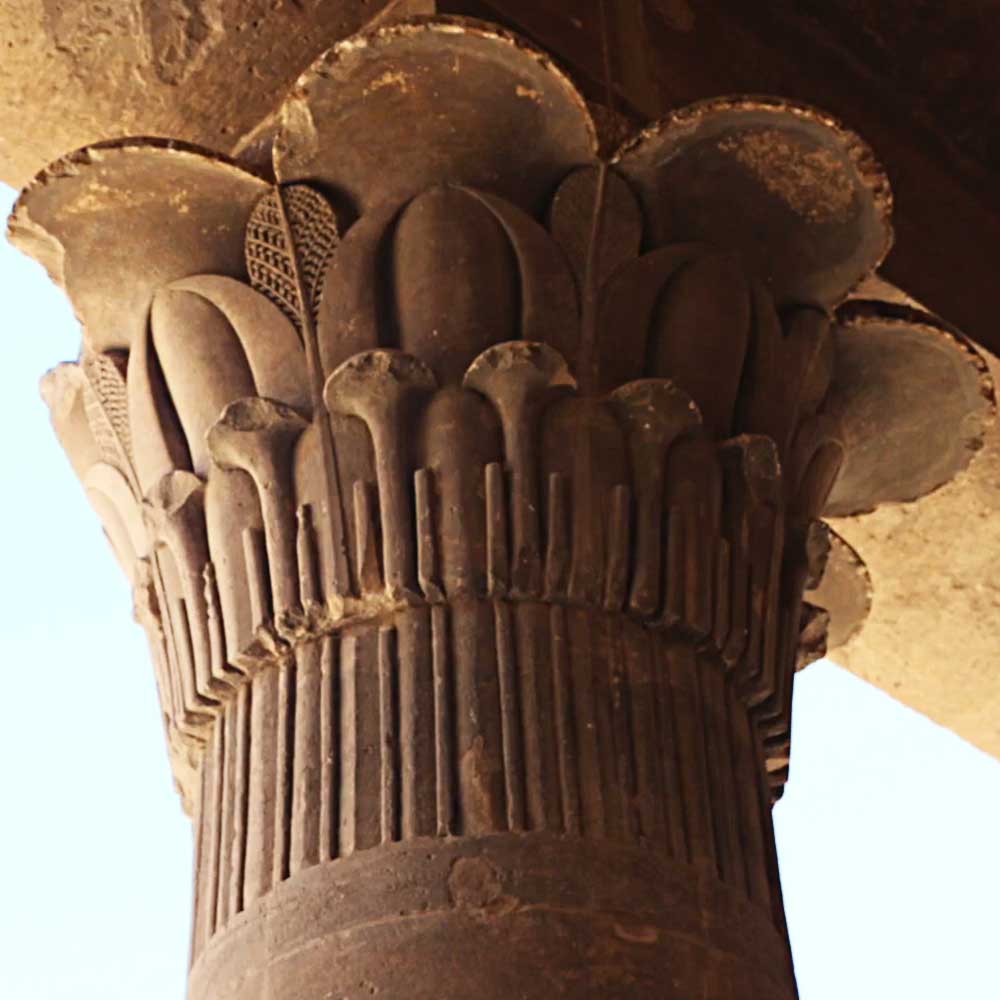
1.) Colonnade in the inter forecourt, Open
papyrus capital
2.) Palm capital,
3.) Palmettes capital, at the temple of
Isis, Philae, 7th century BCE
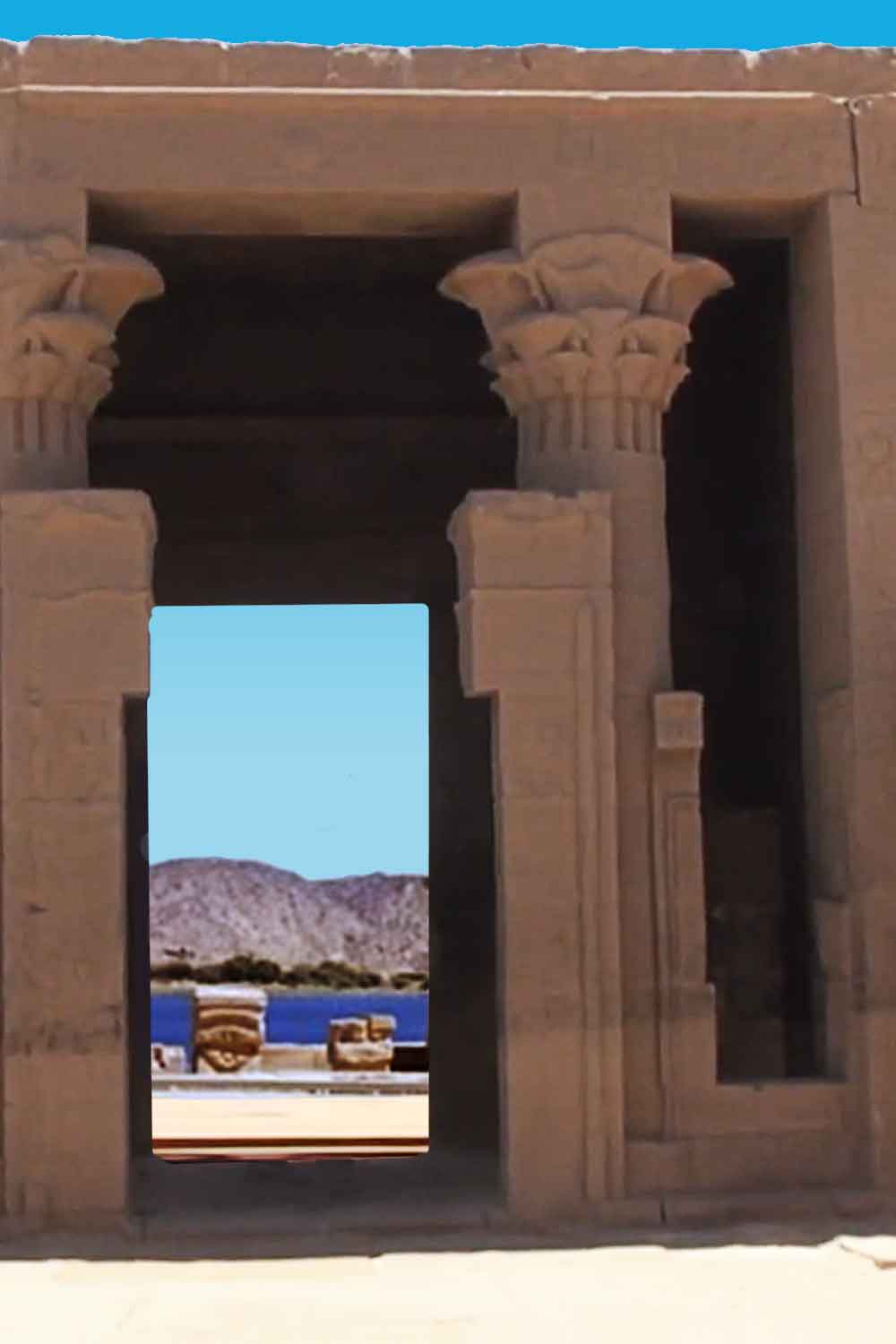
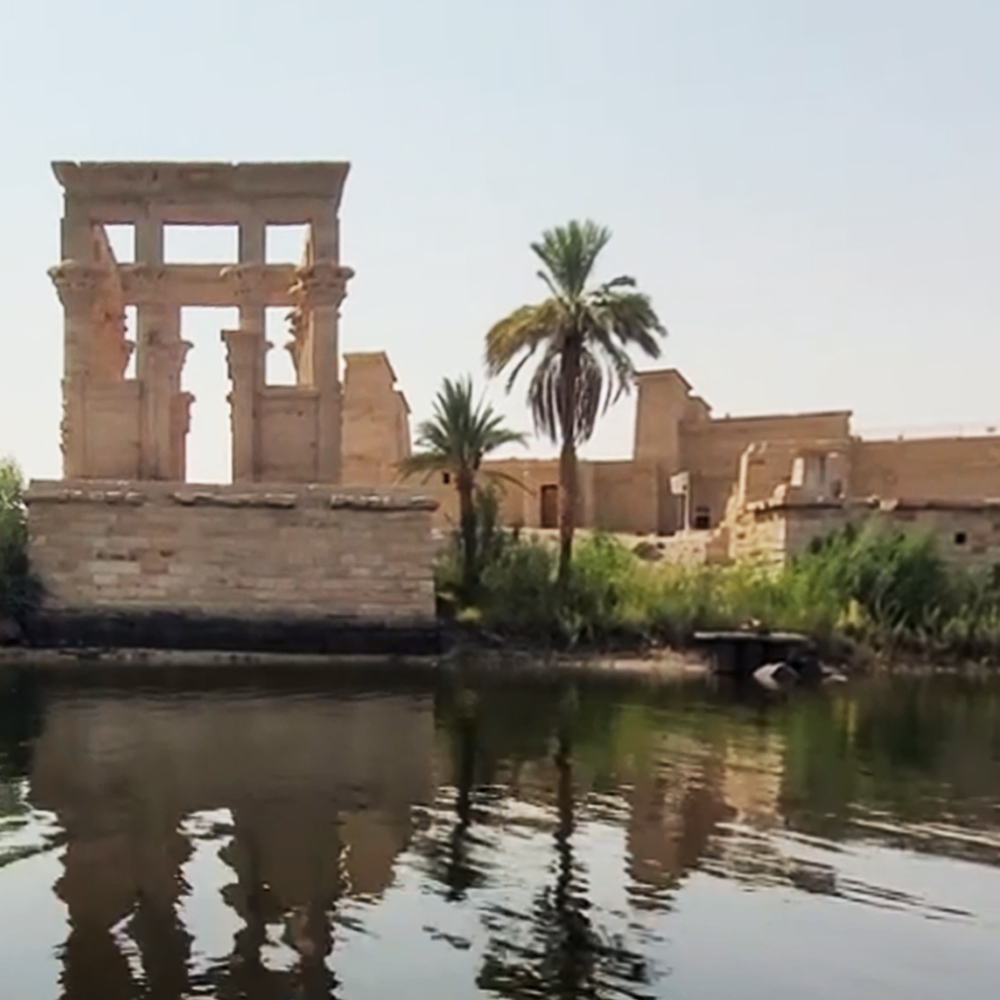
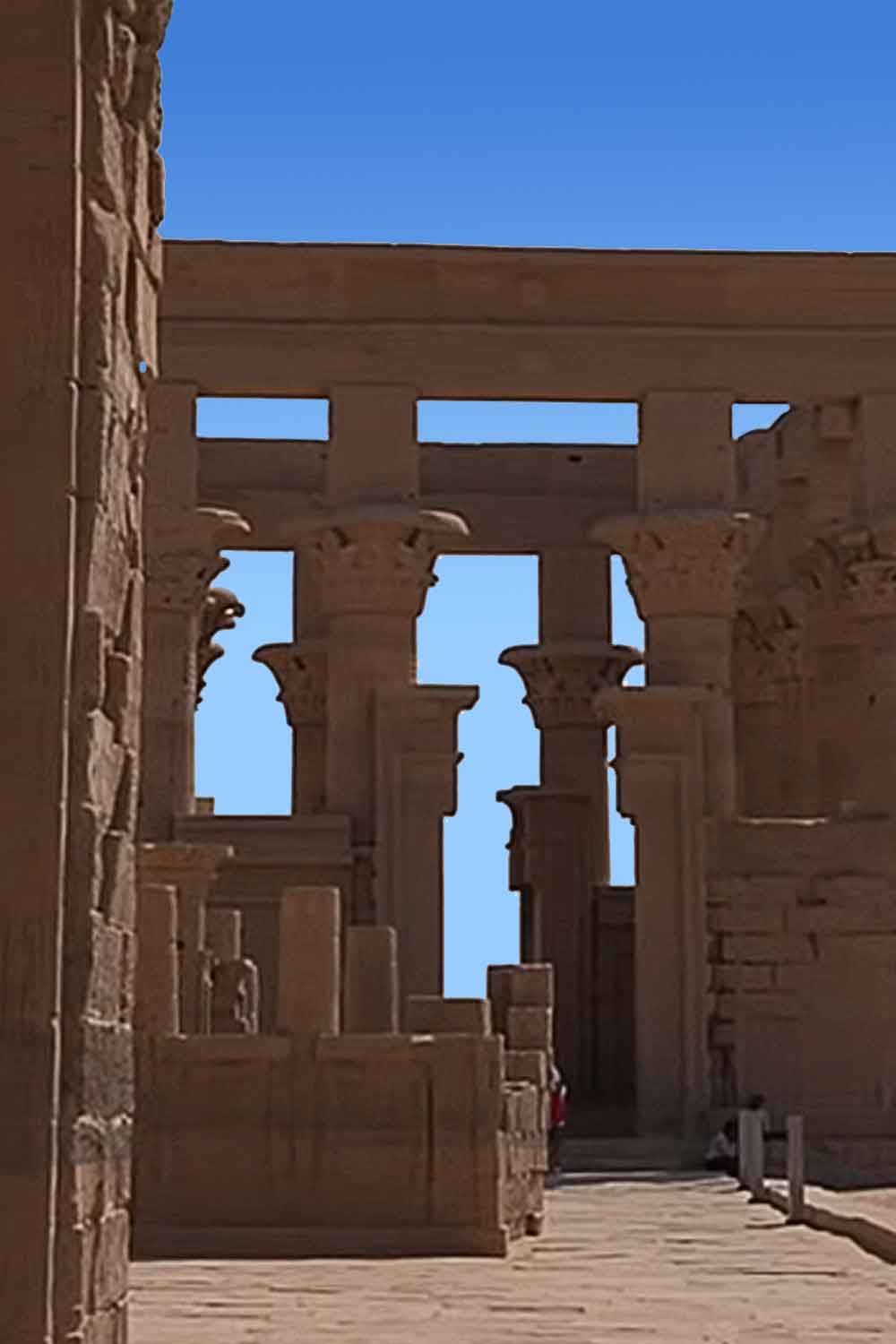
1.) Trajan's Kiosk, a hypaethral temple, in
classical architecture
2.) attributed to Trajan, Roman emperor from
98 to 117 AD, due to his
3.) depiction as pharaoh seen on some of the
interior reliefs
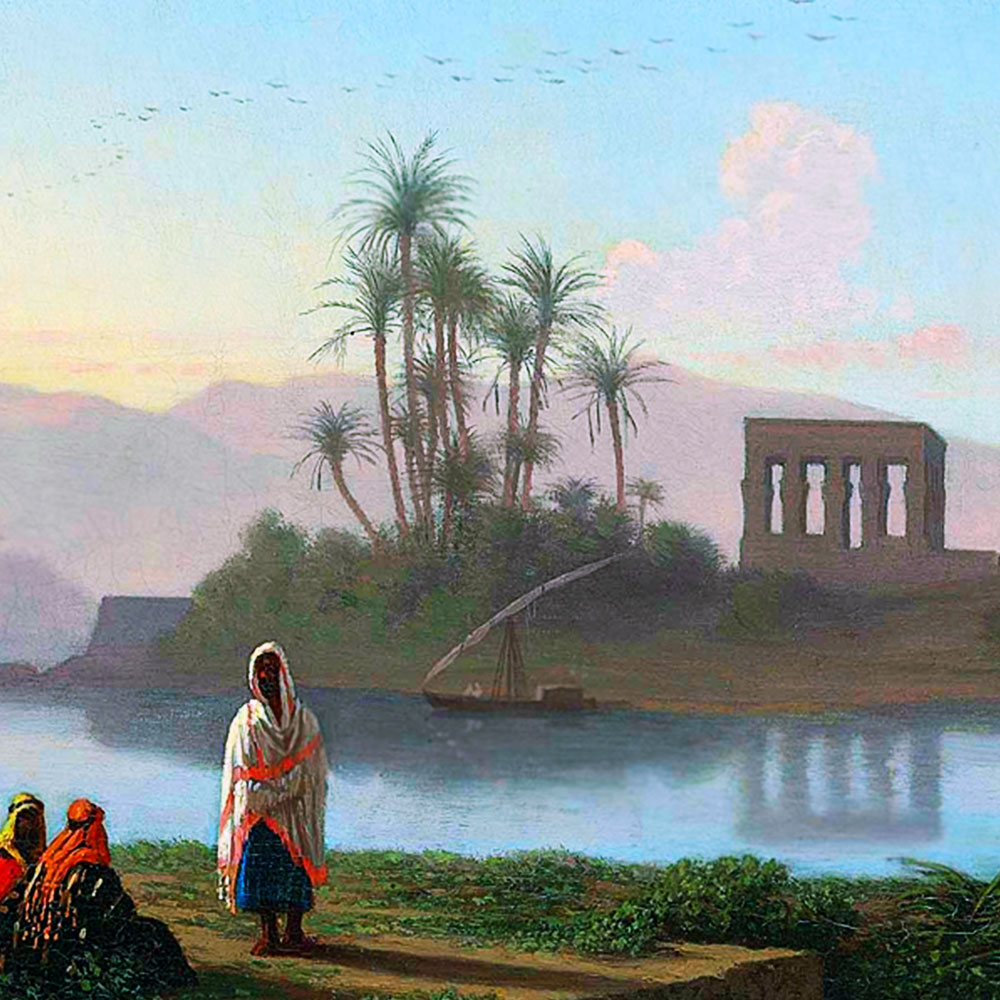
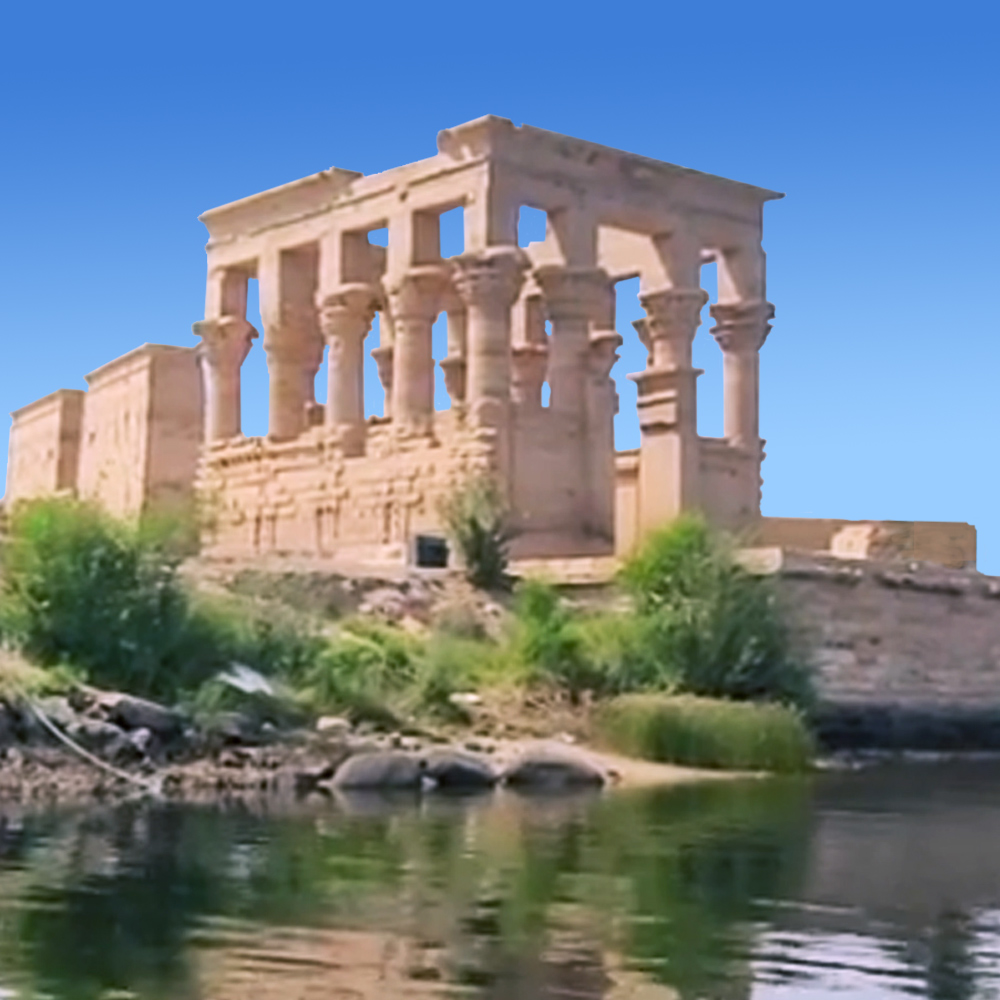
Trajan's Kiosk, is a hypaethral temple, in
classical architecture, hypaethral describes a building with no roof and with columns forming a partial wall
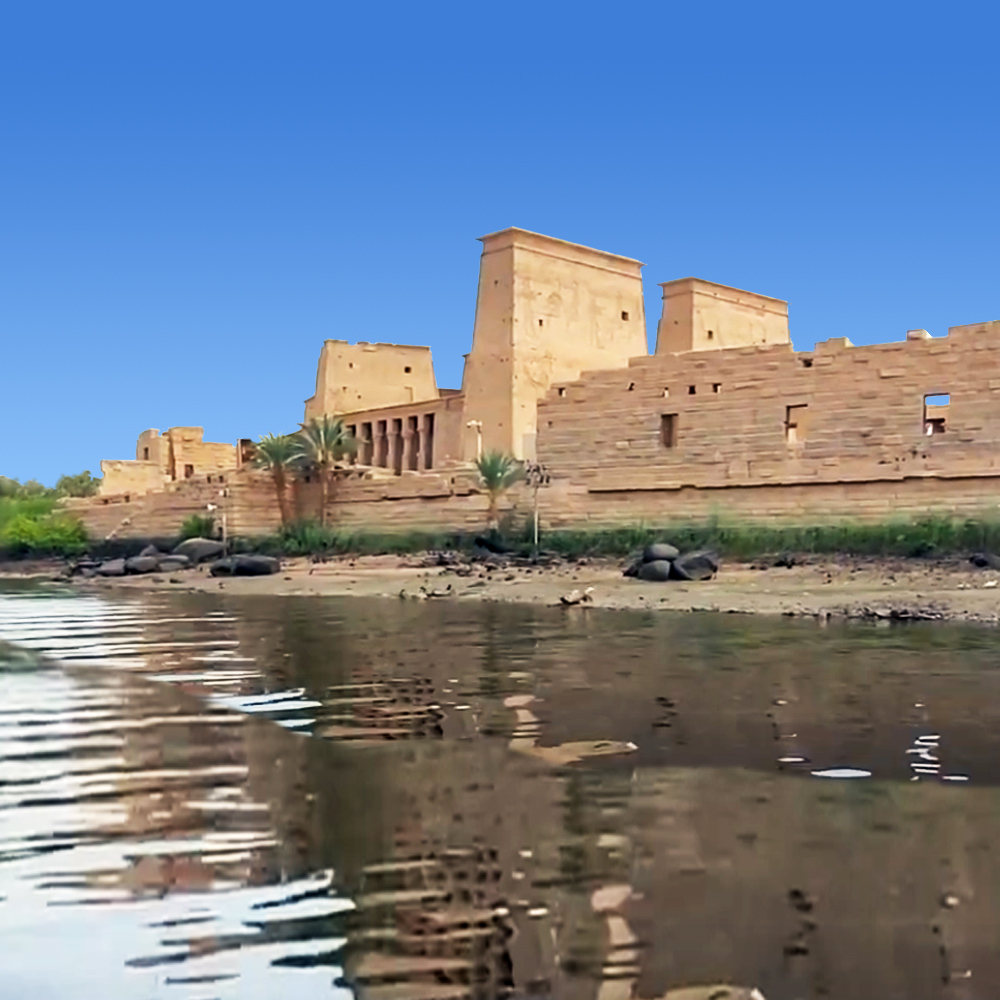
Philae Temple of Isis from the west on the
Nile, the Philae complex was dismantled and relocated to Agilkia island in 1960 due to the construction of Aswan Dam
Eastern colonnade in the outer forecourt and
the temple of Isis on Philae was the last stronghold of the pagan faith in Egypt, it closed in the 6th century AD, Agilkia Island, South of
Aswan
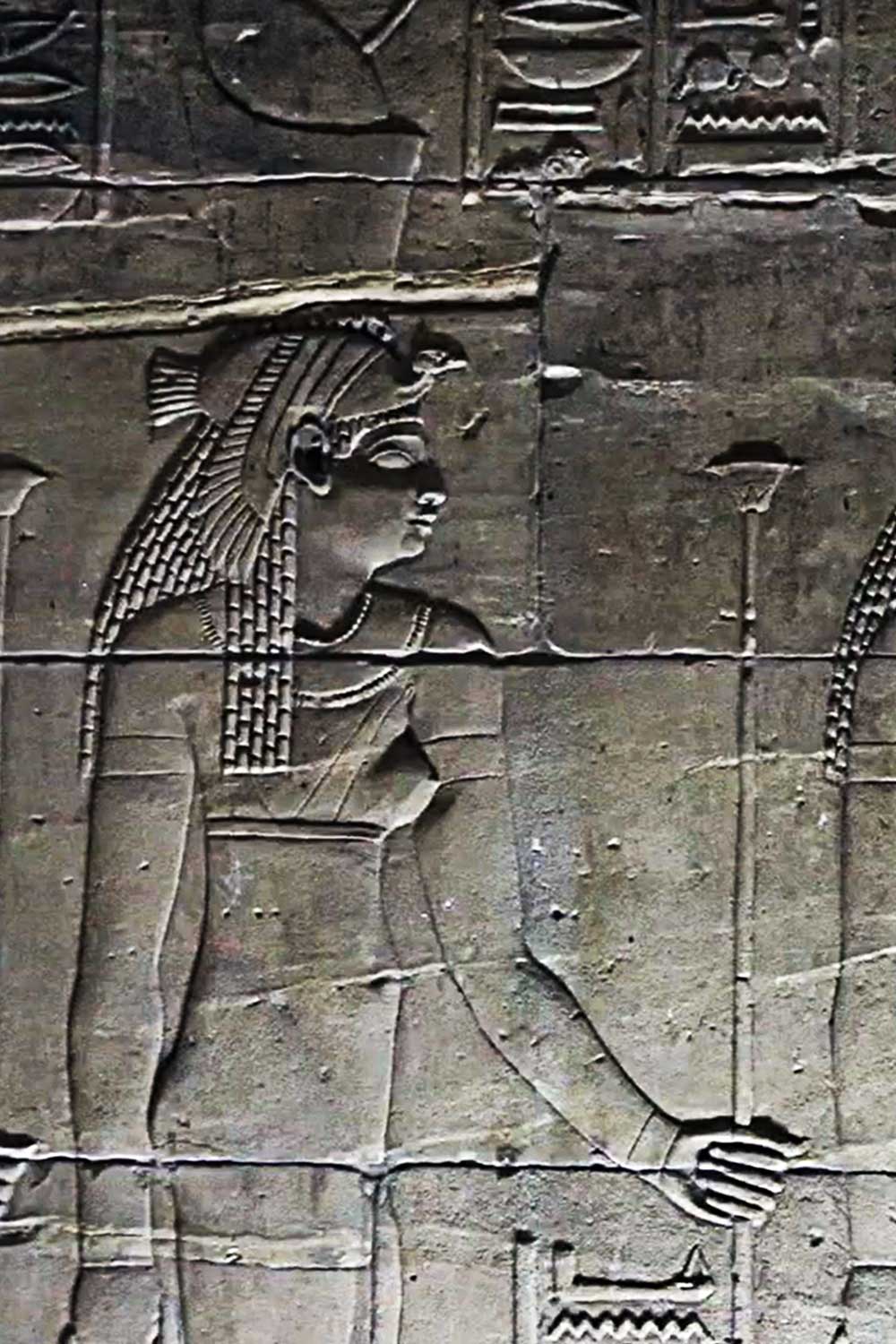
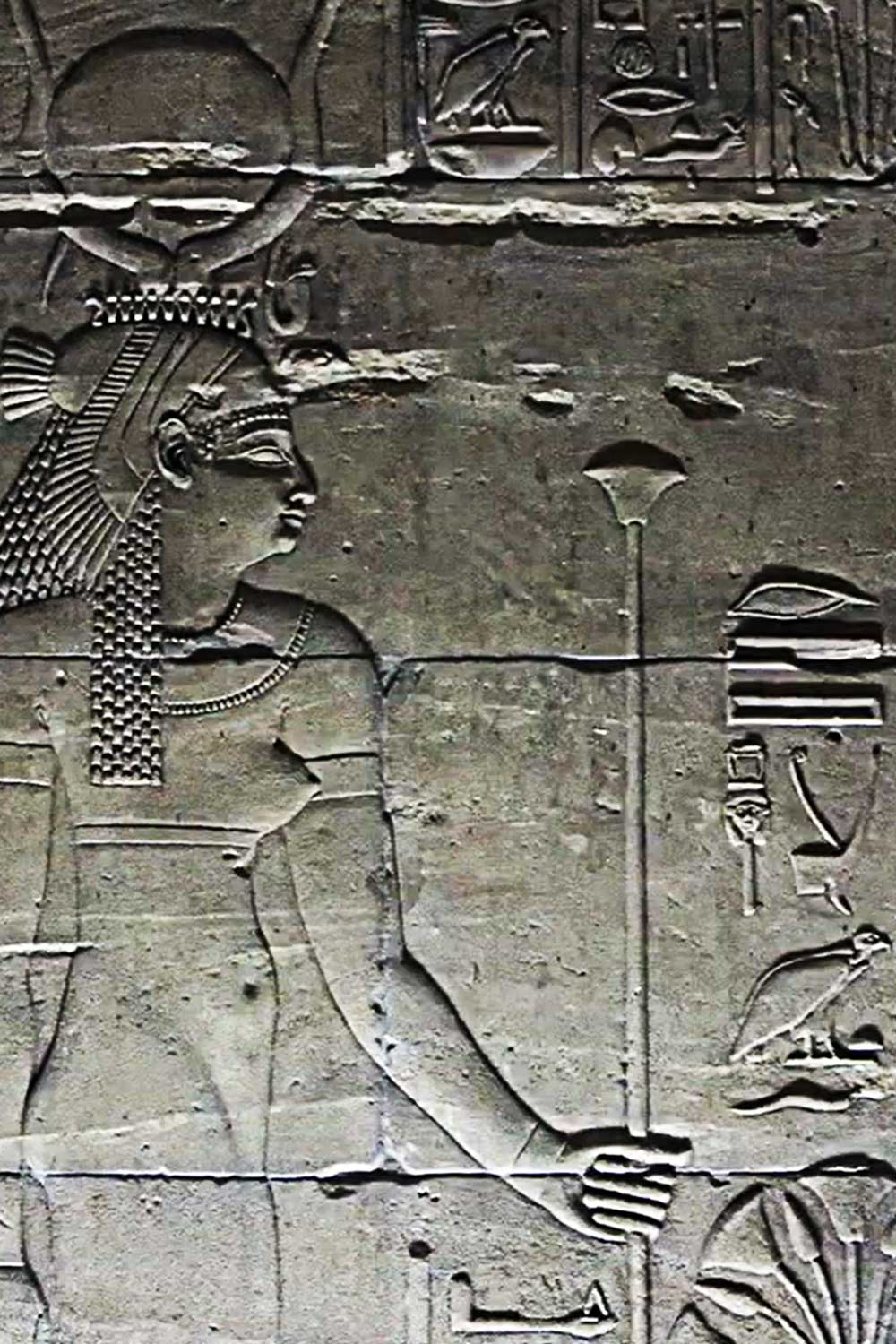
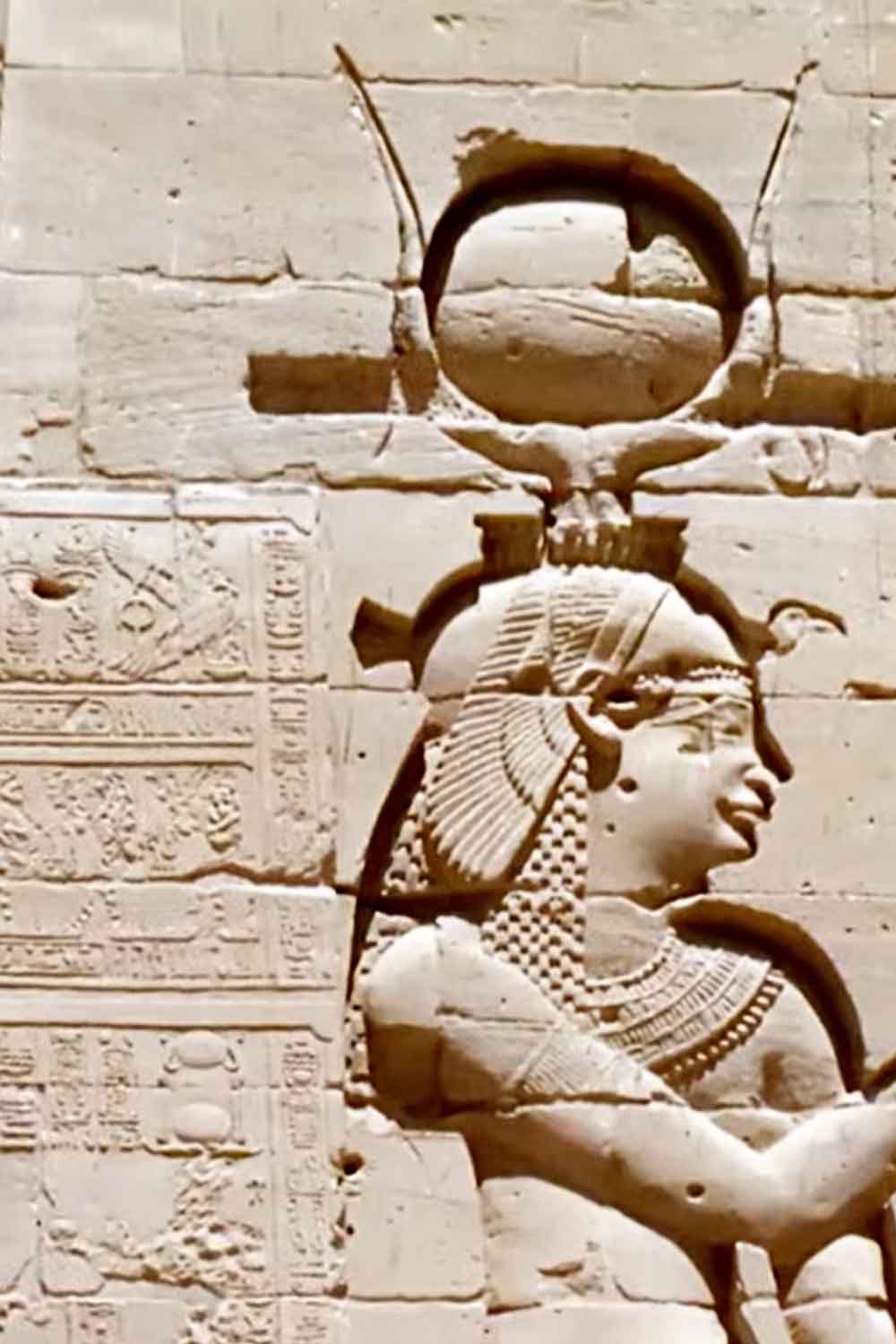
1.) Relief of Isis, Queen of the Universe,
embodying magic, motherhood,
2.) and healing, also: the wife of Osiris
and mother of Horus
3.)
Trajan's Kiosk, is a hypaethral (having no
roof) temple currently located on Agilkia Island is attributed to Trajan, Roman emperor from 98 to 117 AD, due to his depiction as pharaoh seen
on some of the interior reliefs, Agilkia Island, South of Aswan
Trajan's Kiosk, is a hypaethral temple, in
classical architecture, hypaethral describes a building with no roof and with columns forming a partial wall, Agilkia Island, South of Aswan
Eastern colonnade in the outer forecourt, The
temple of Isis on Philae, Agilkia Island, south of Aswan
Western colonnade in the outer forecourt and
the temple of Isis on Philae was the last stronghold of the pagan faith in Egypt, it closed in the 6th century AD, Agilkia Island, South of
Aswan
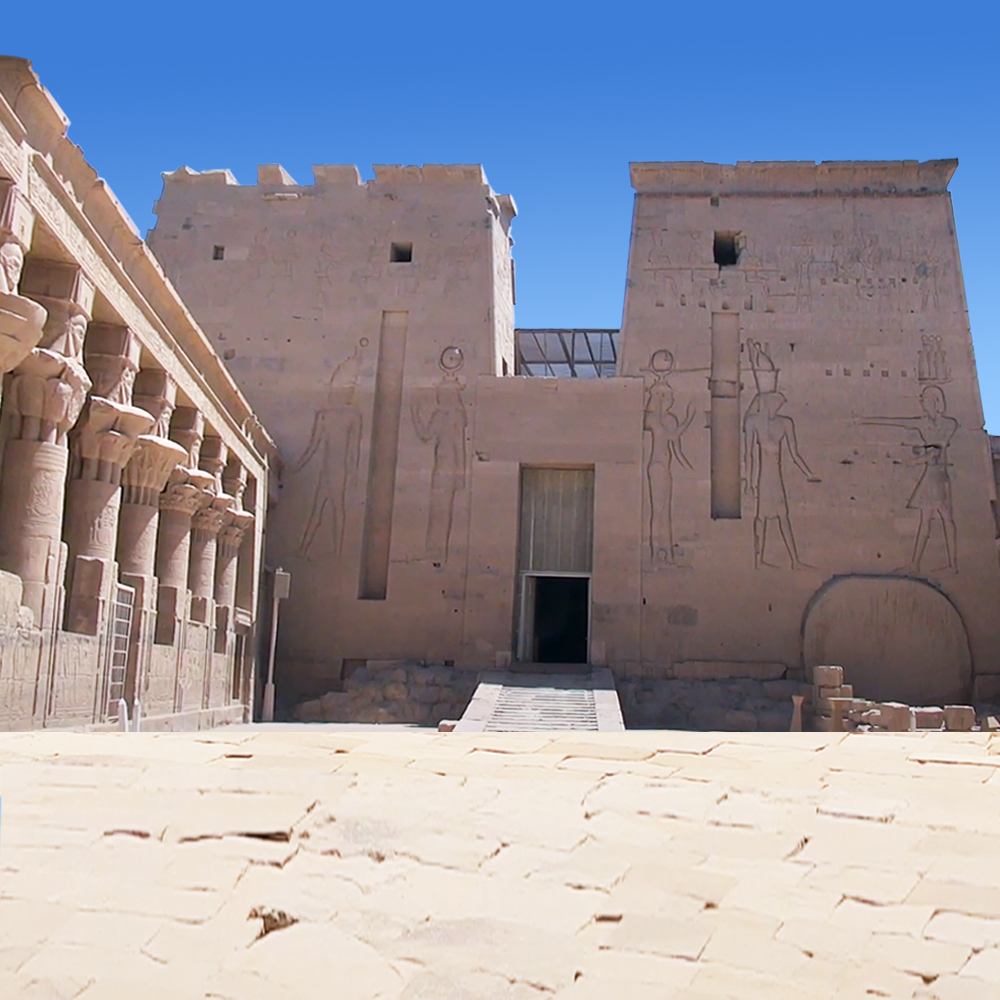
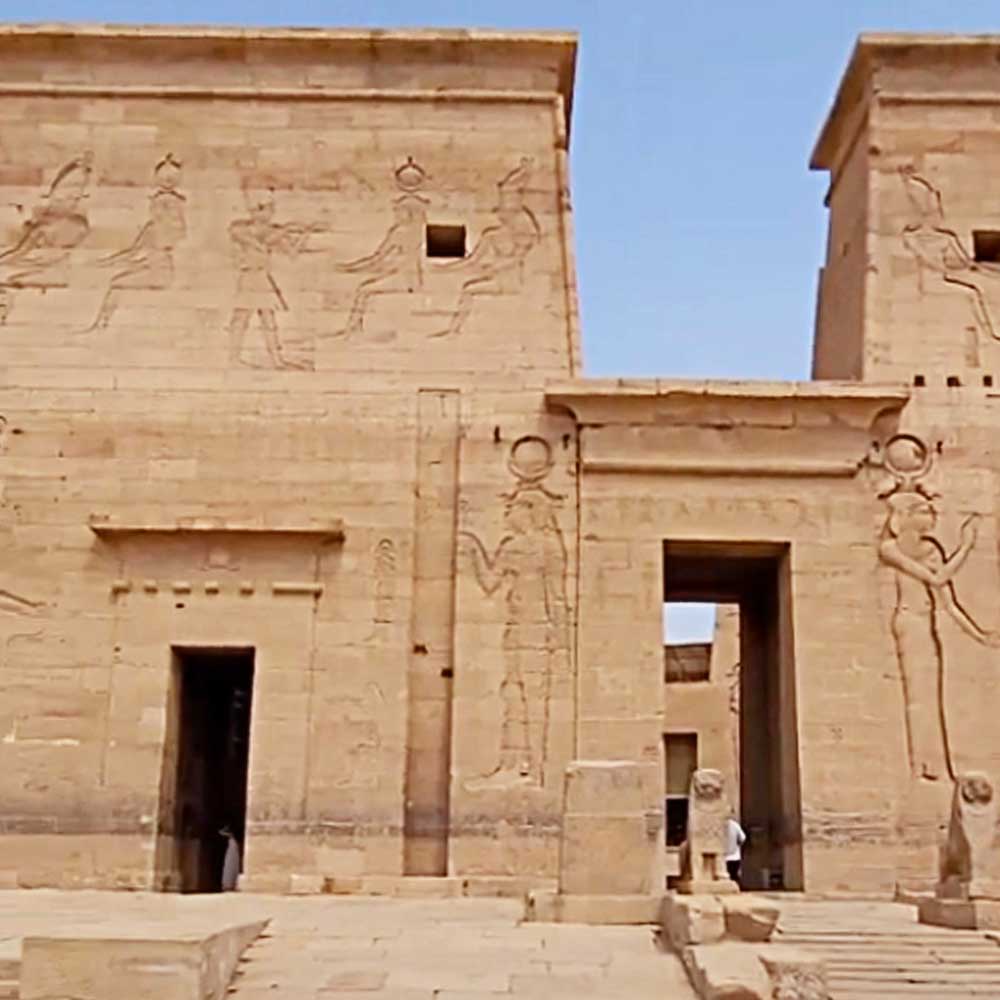
Entrance to the temple of Isis
The temple of Isis of Philae, Agilkia Island,
south of Aswan
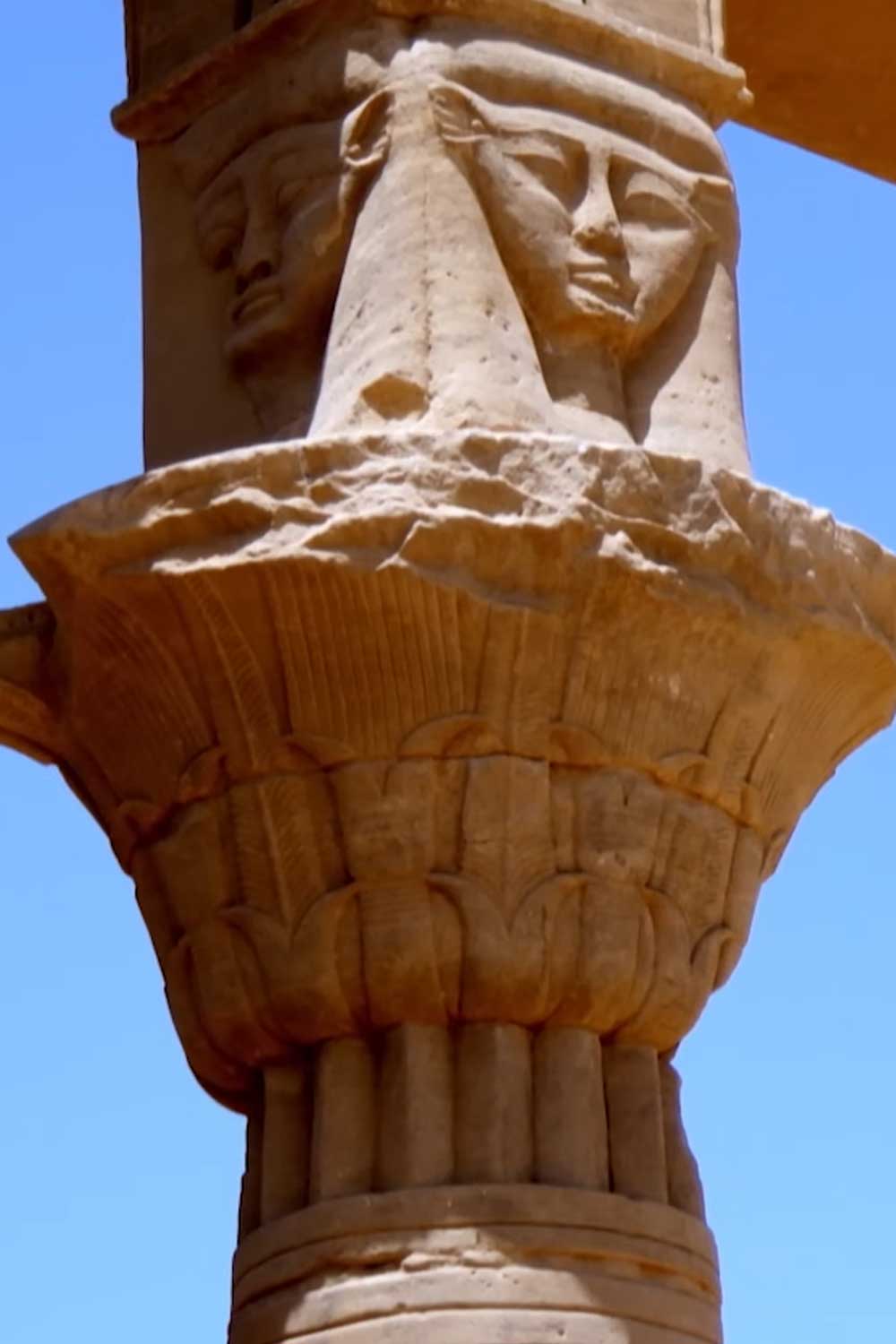
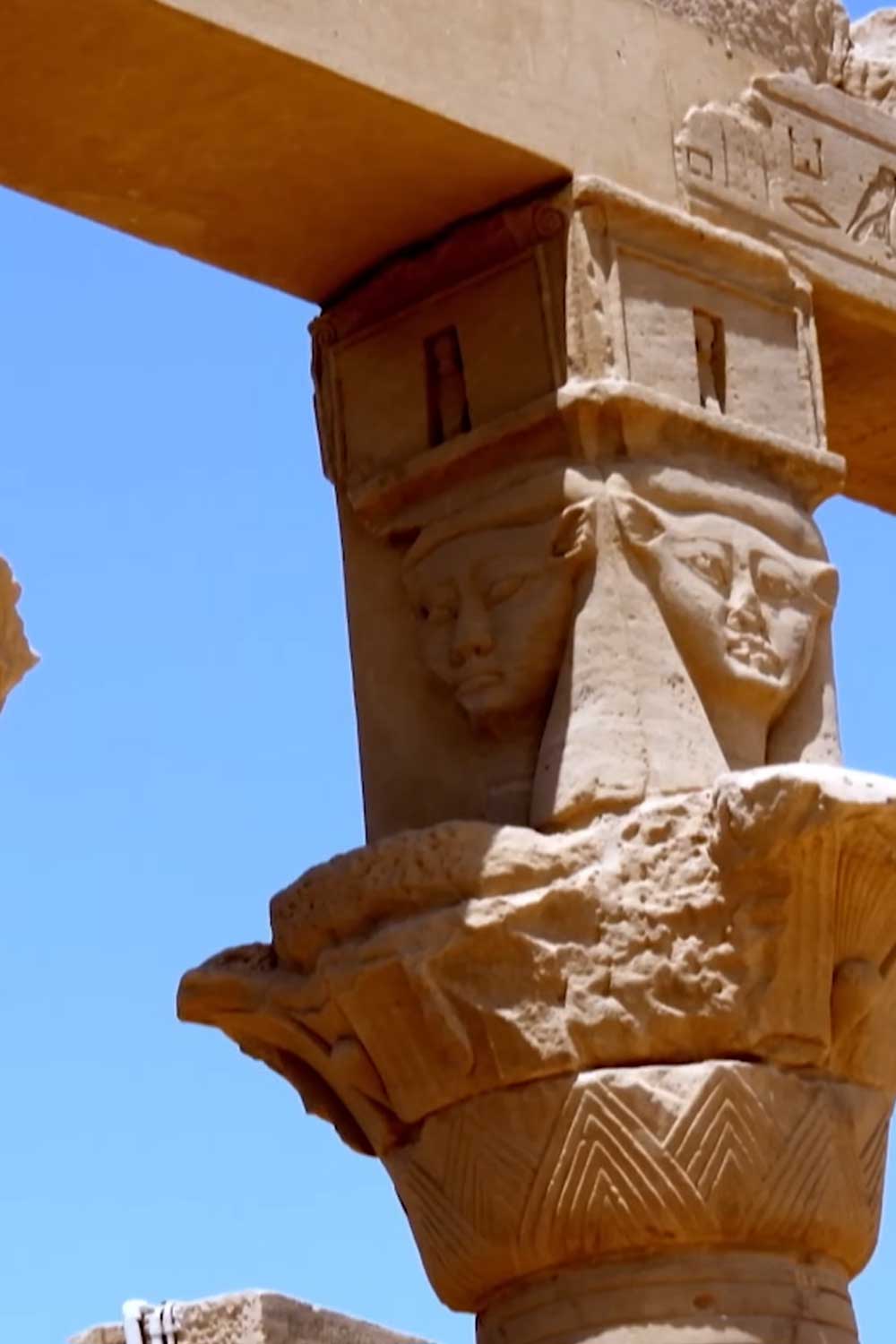
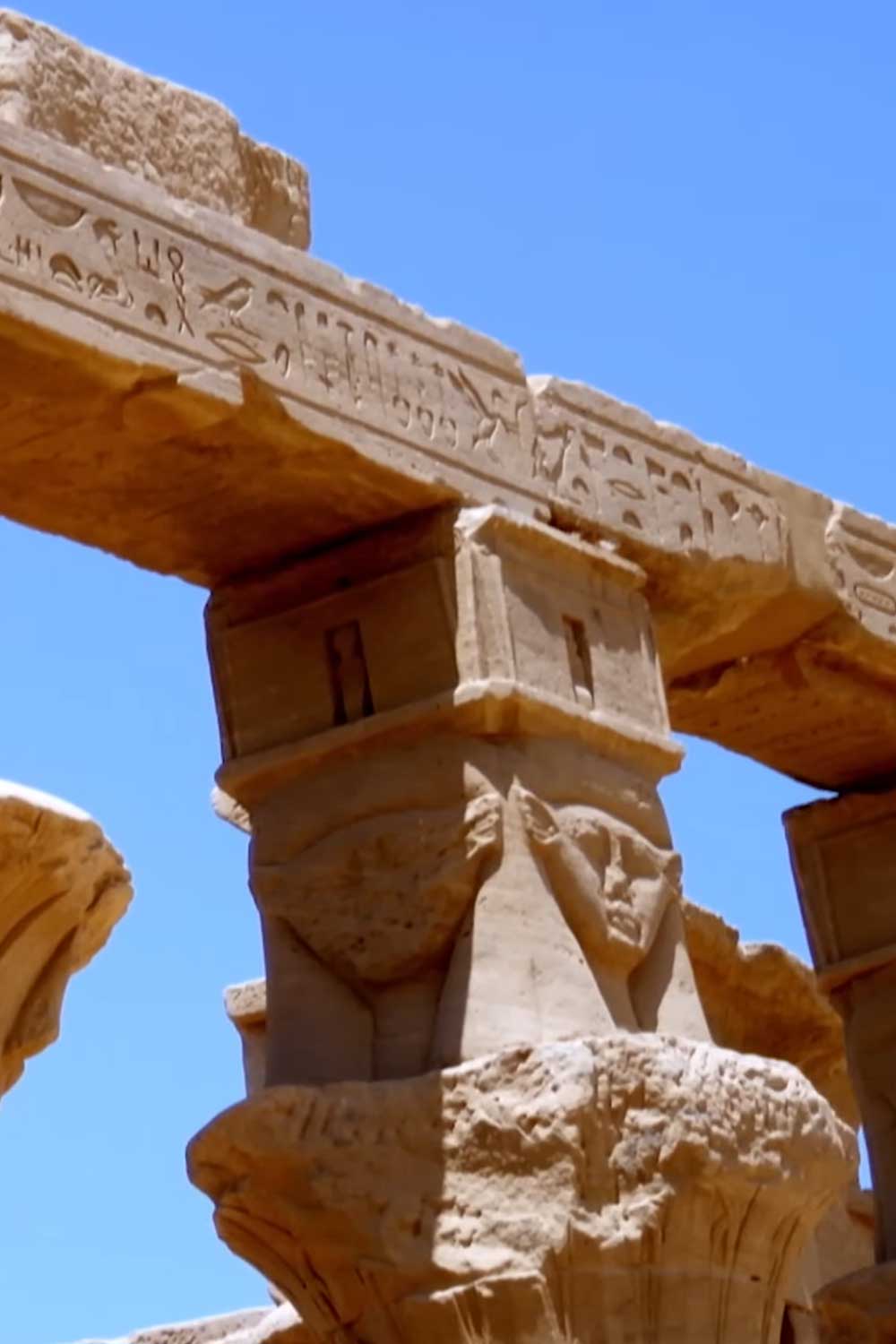
Colonnaded Birth House (Mamisi):
Hathor-headed temple,
consists of a colonnaded kiosk supported by
14 Hathor-headed pillars,
focused on Hathor as the embodiment of the
Eye of the Sun
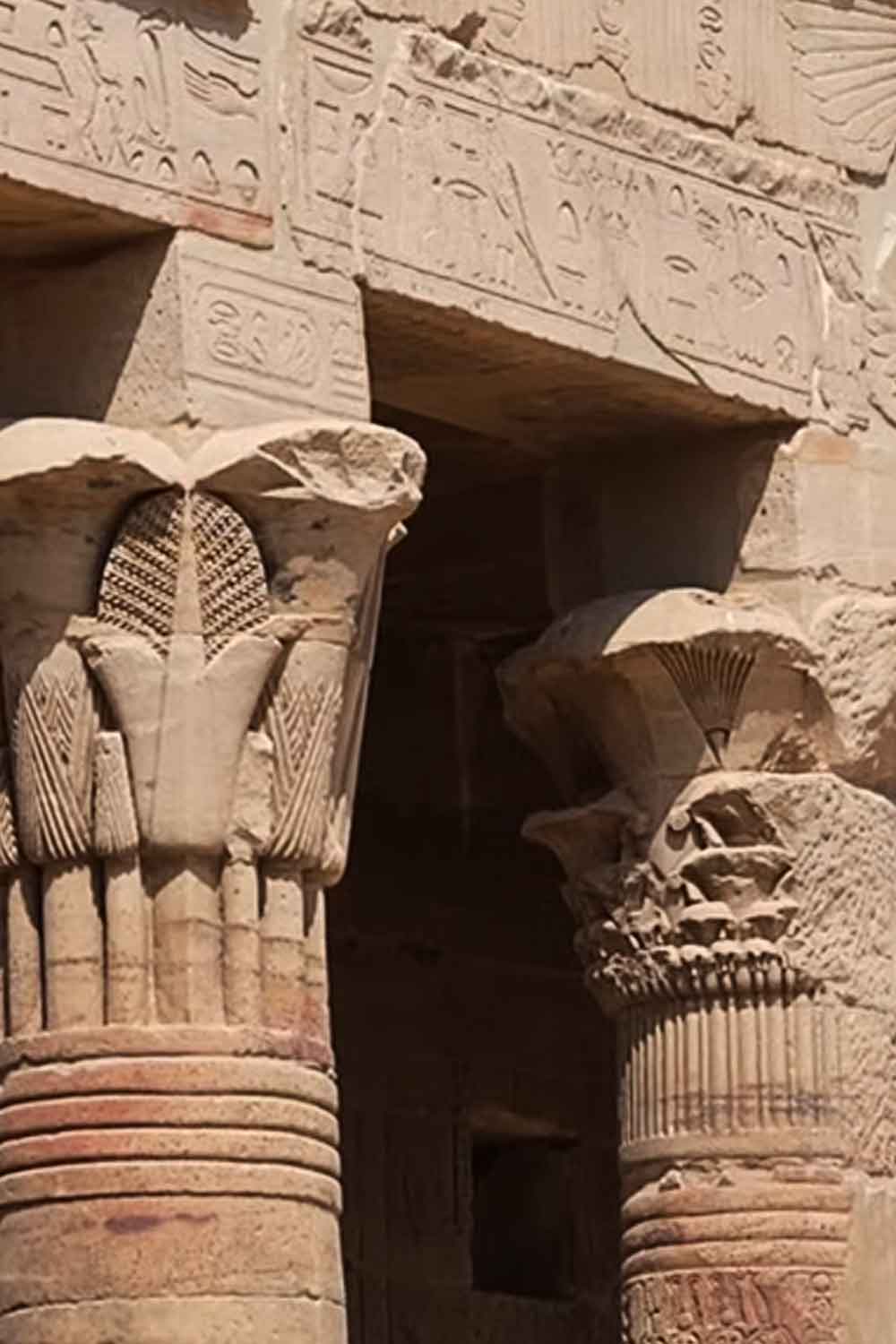
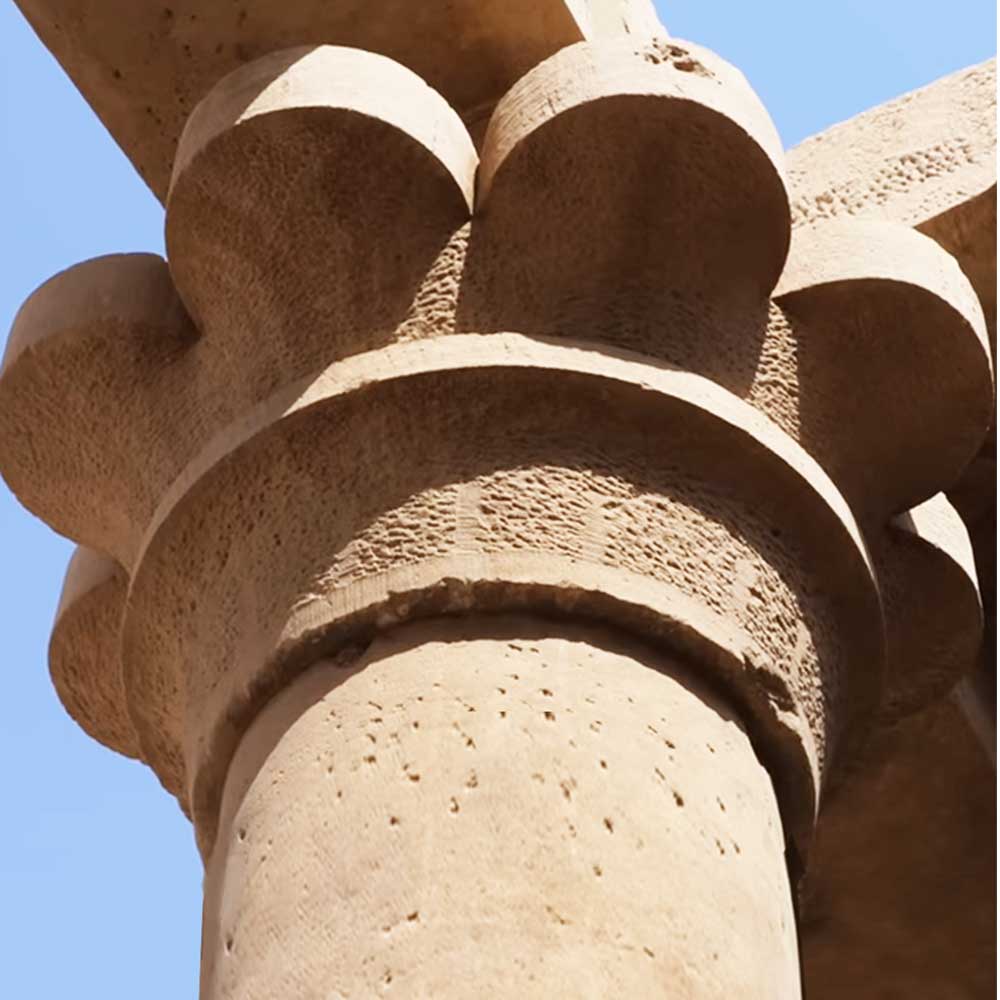
1.) 3 Philae columns that feature a
distinctive lotus-shaped capitals,
2.) which is characteristic of Ptolemaic
architecture,
3.) Open papyrus capital, Palm capital,
Palmettes capital
1.) Trajan's Kiosk, is a hypaethral (having
no roof) temple currently
2.) located on Agilkia Island is attributed
to Trajan
3.)
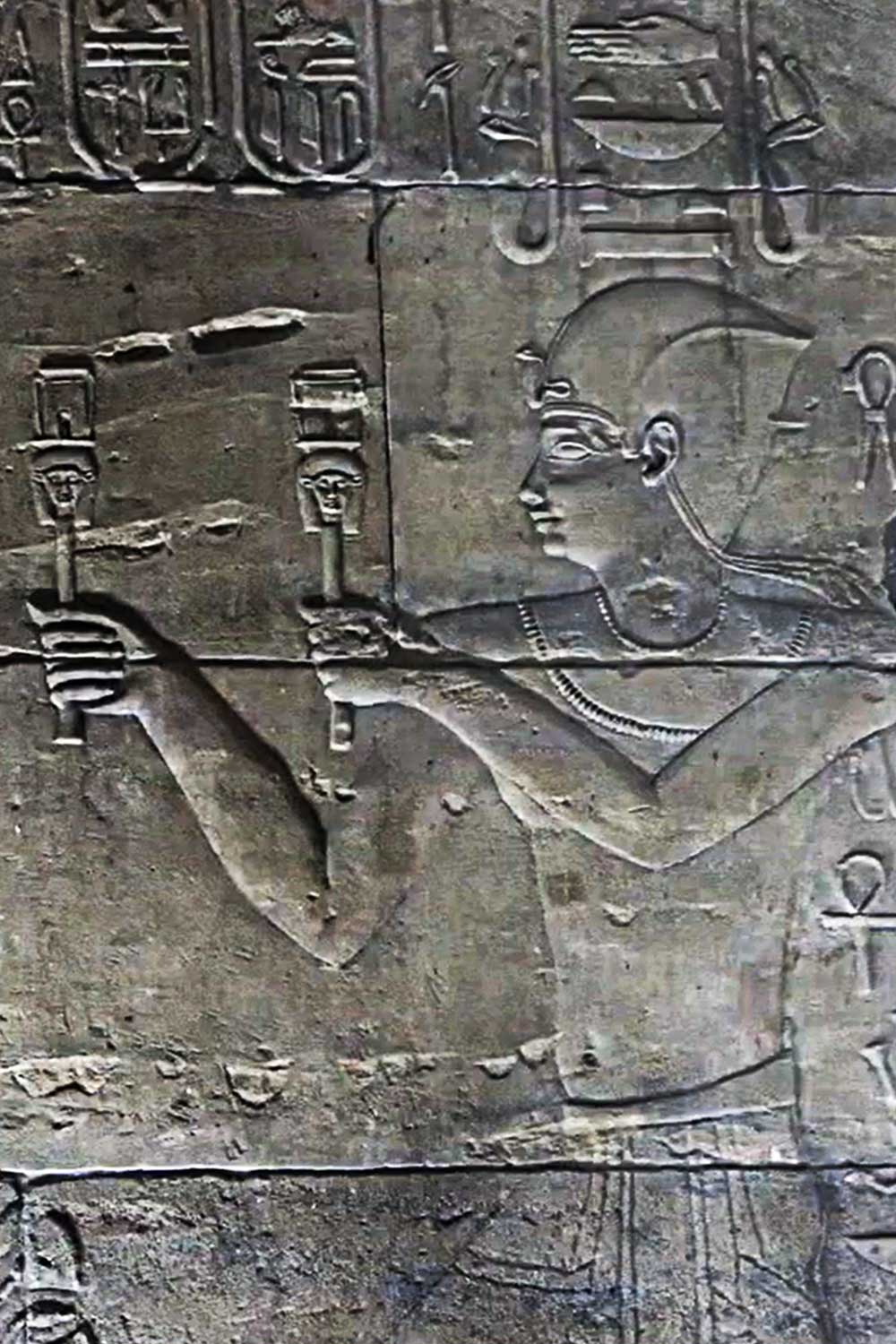
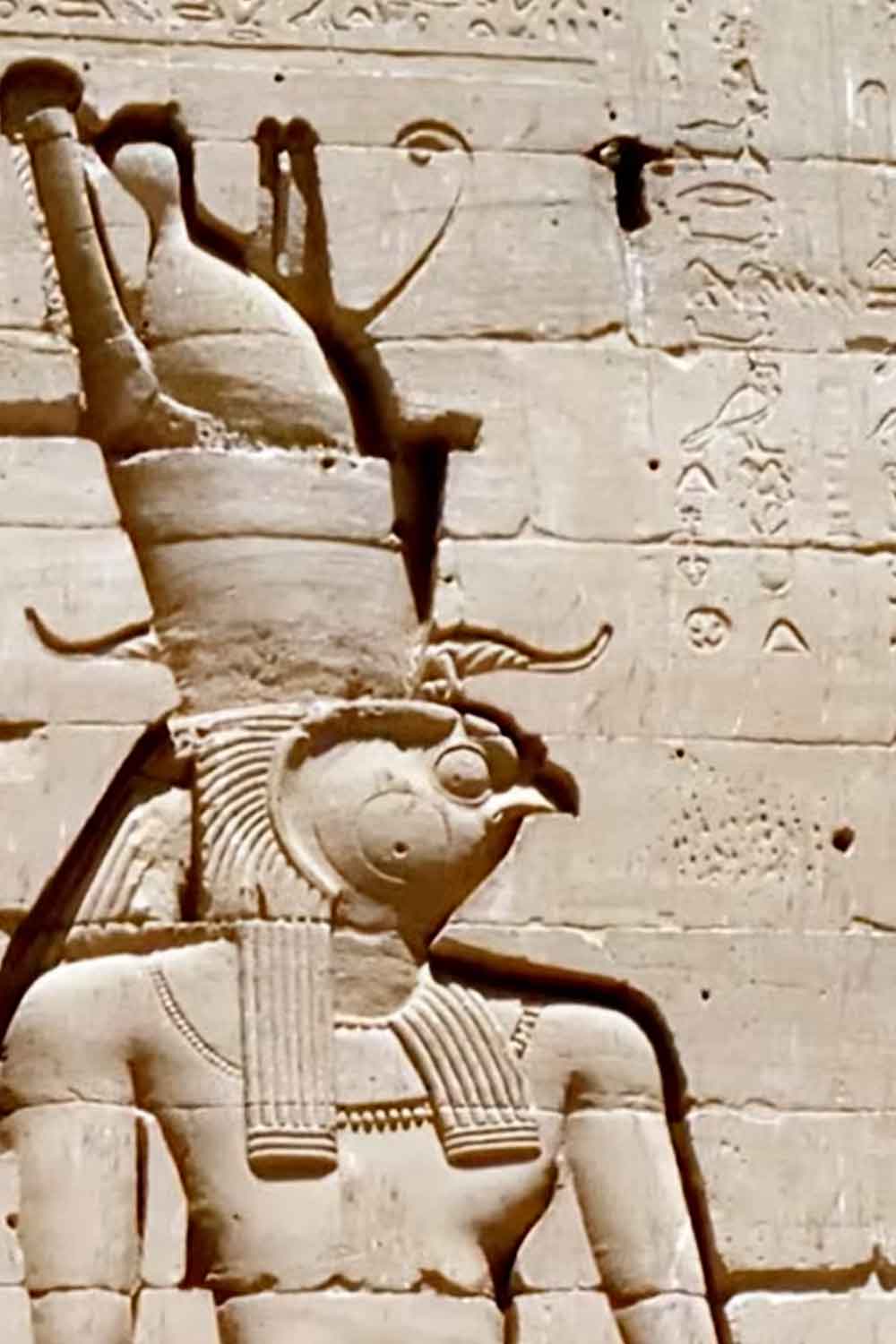
1.) Isis and Horus protectors of Philae,
Isis is the mother to Horus which
2.) made her the divine protector of
kings, who identified with Horus
3.) the Falcon Bird God
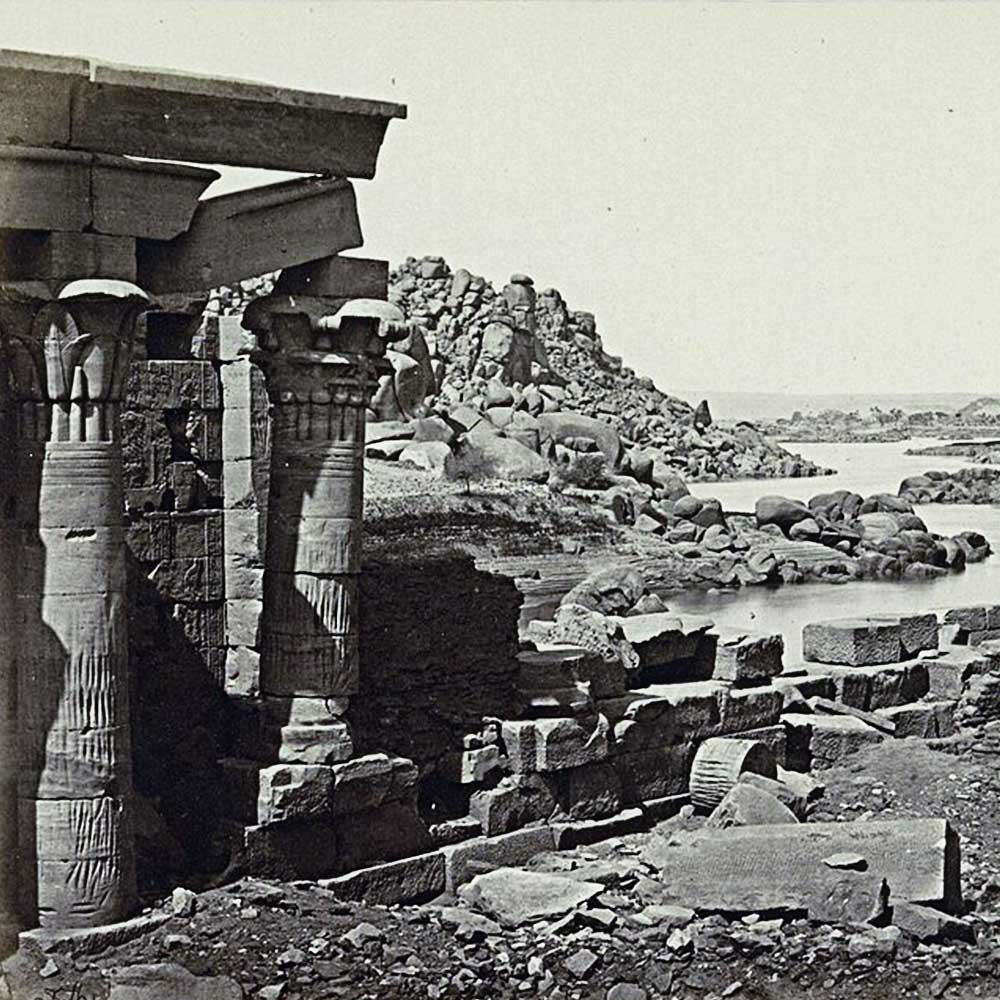
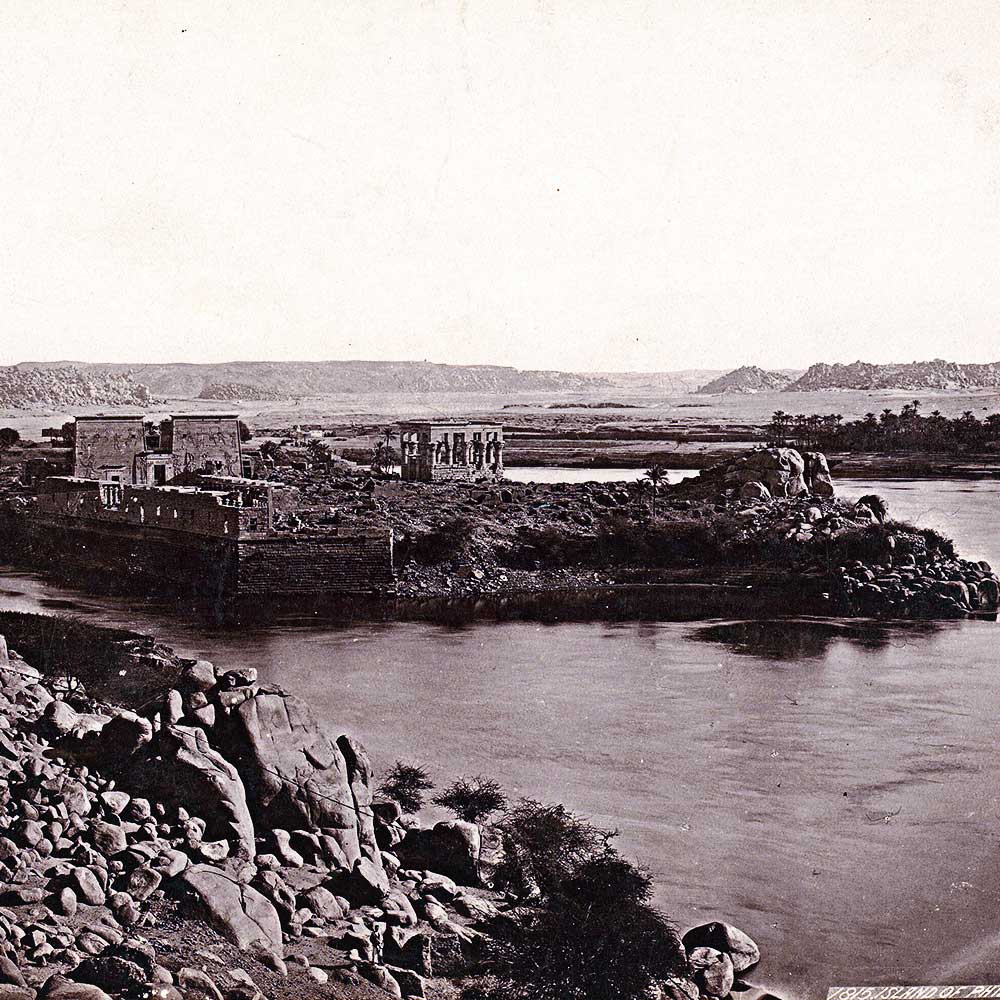
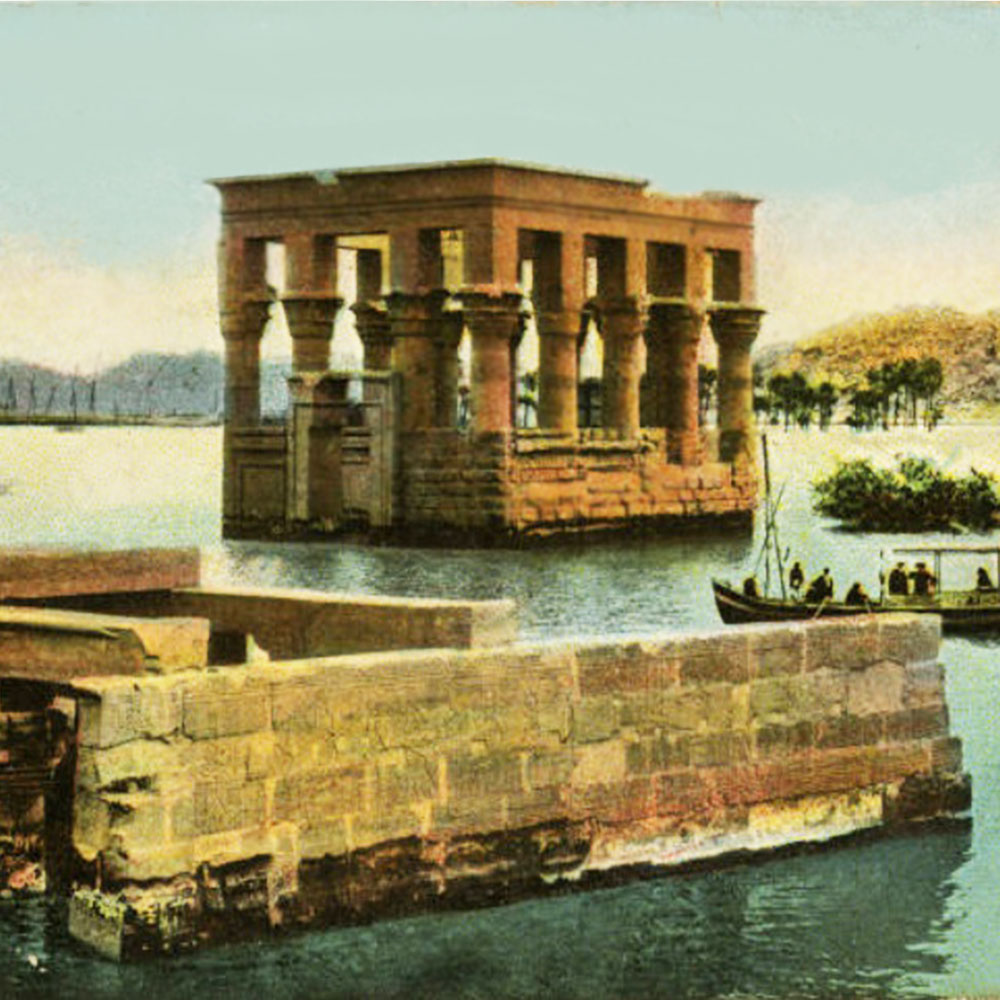
Philae Temple HISTORIC PHOTOS and artworkHistorical documentation of Philae Temple—through 19th‑century photography provides an invaluable record of the monument before modern
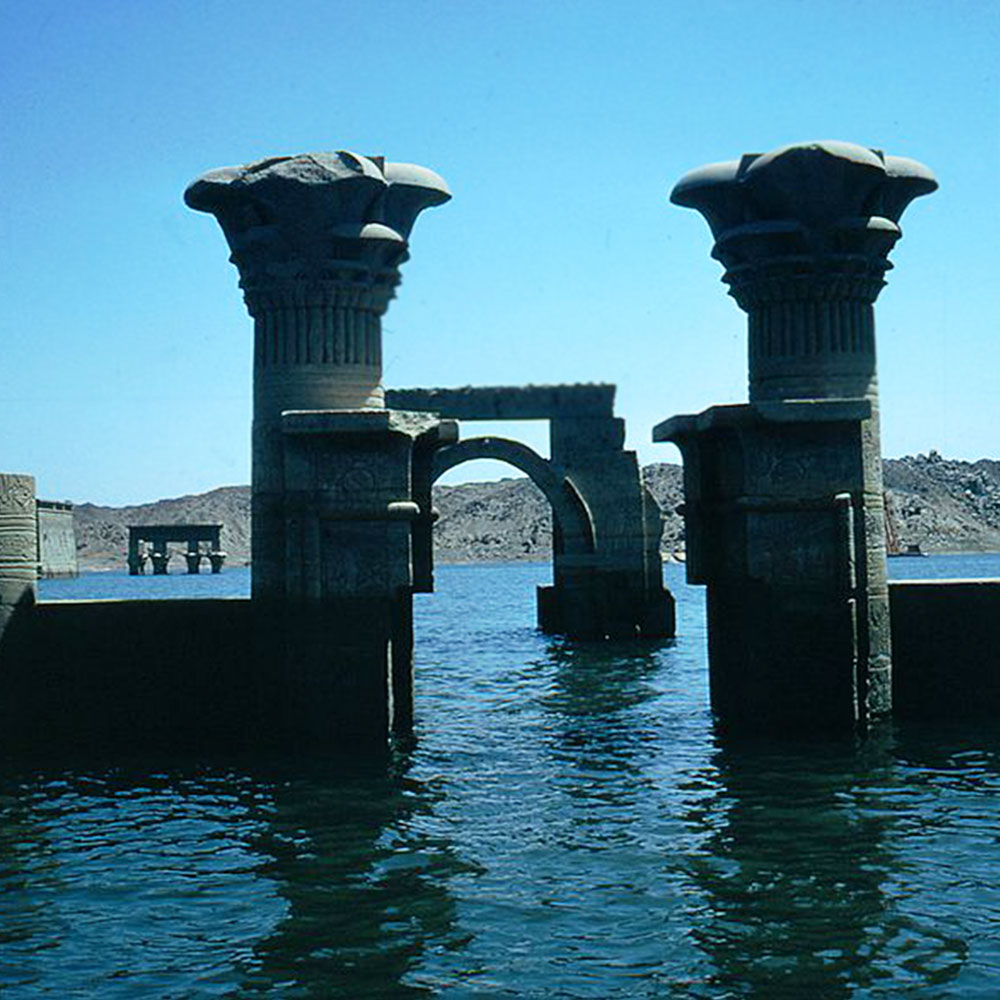
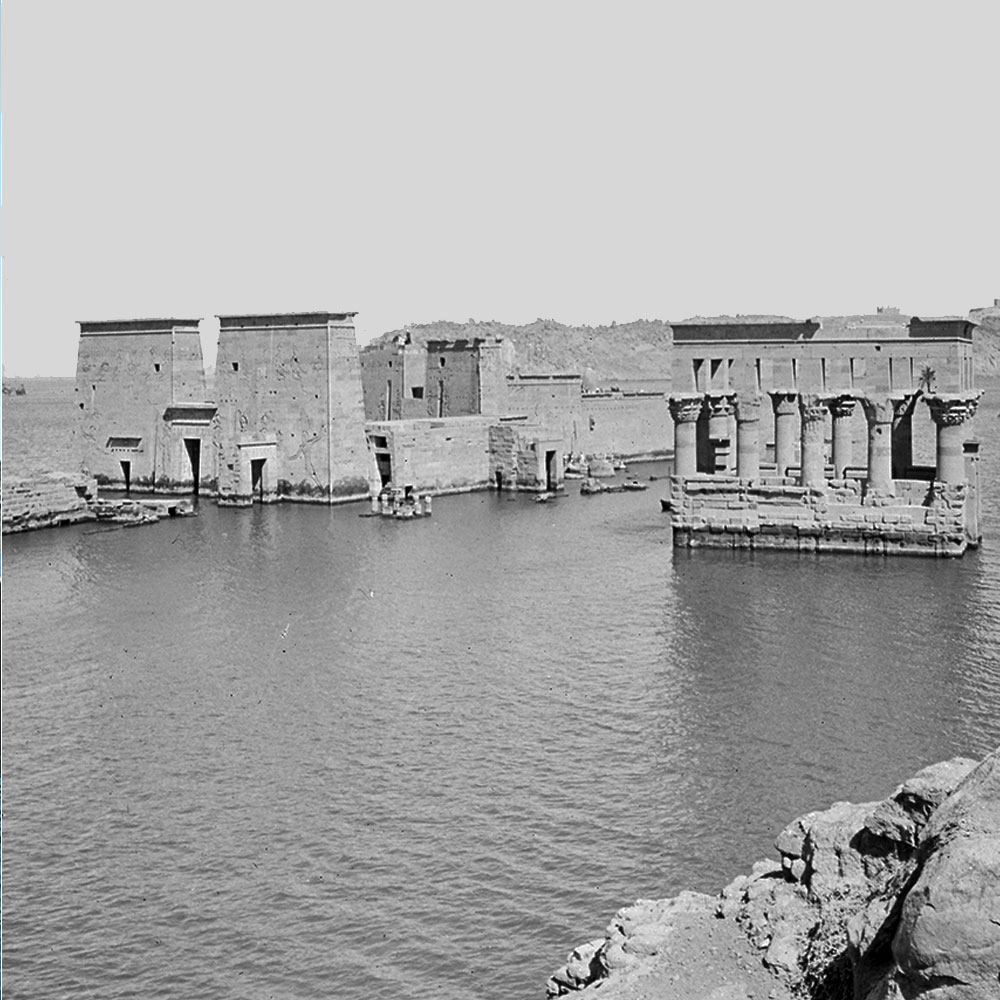
excavation and restoration. Philae Temple was seasonally flooded before 1902, then submerged most of the year after the Aswan Low Dam, and finally
permanently underwater after the High Dam, until UNESCO moved it block‑by‑block to Agilkia Island between 1960–1980.
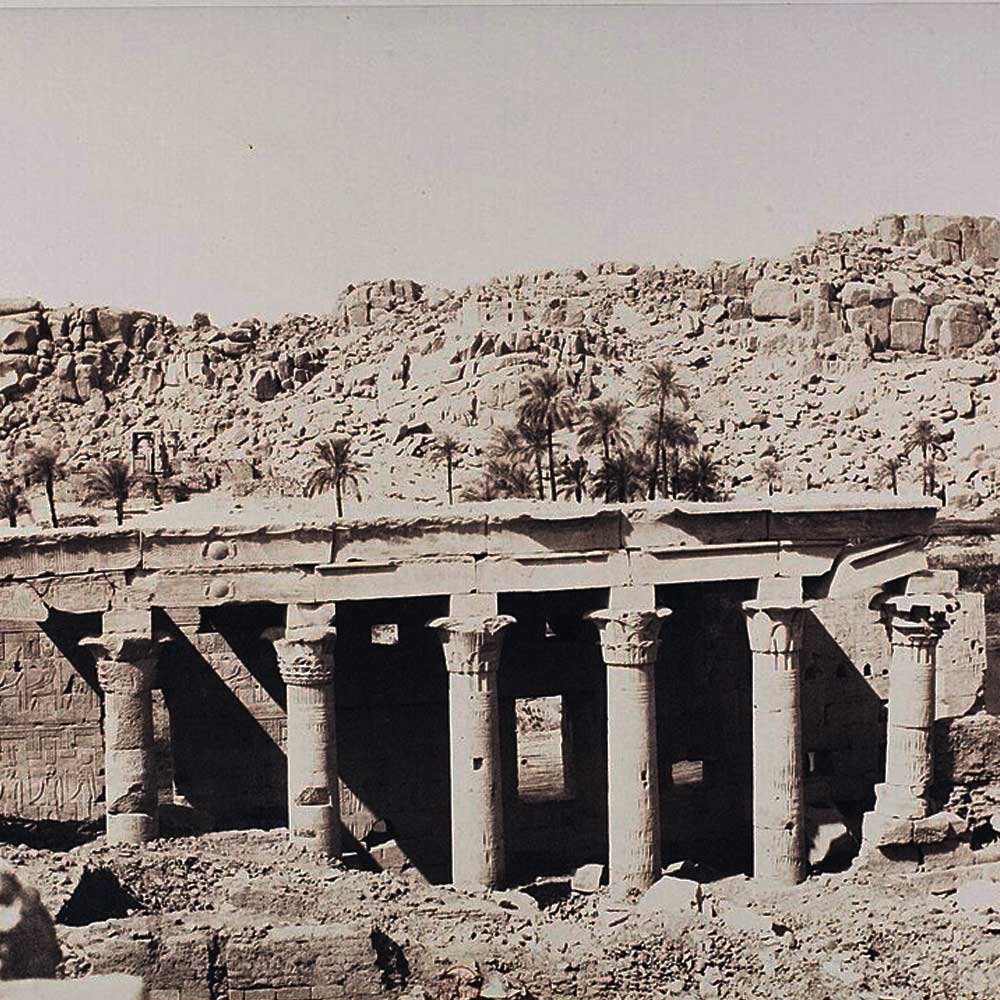
Ile de Fîleh (Philae), Colonnade Occidentale
- Ruines Vues du Point L - photograph by Félix Teynard, 1851, The Met, NYC, 🅮Public Domain
View from Philae - Looking North,
fotograaf: Francis Frith, 1857, 🅮Public Domain
Island of Philae, photographic print: albumen, 1856,
photographer: Frank Mason Good, (1839-1928), Library of Congress 🅮Public Domain
Sanctuary of Isis at the Temple of Philae,
during The flood on January 2, 1969, Photographer: UNESCO, 🅮Public Domain
Temple of Philae during the flood of 1908,
Lantern Slide Collection by Stereo-Travel Co., Photographer: William Henry Goodyear, 1846–1923 Brooklyn Museum Archives, 🅮Public Domain
A Vintage Postcard from, Rare Books and Special Collections designed by Lichtenstern & Harari, circa 1900, showing Philae flooded, before
relocation in the 1960's to Agilkia Island, 🅮Public Domain
 Top
Top