LUXOR temple

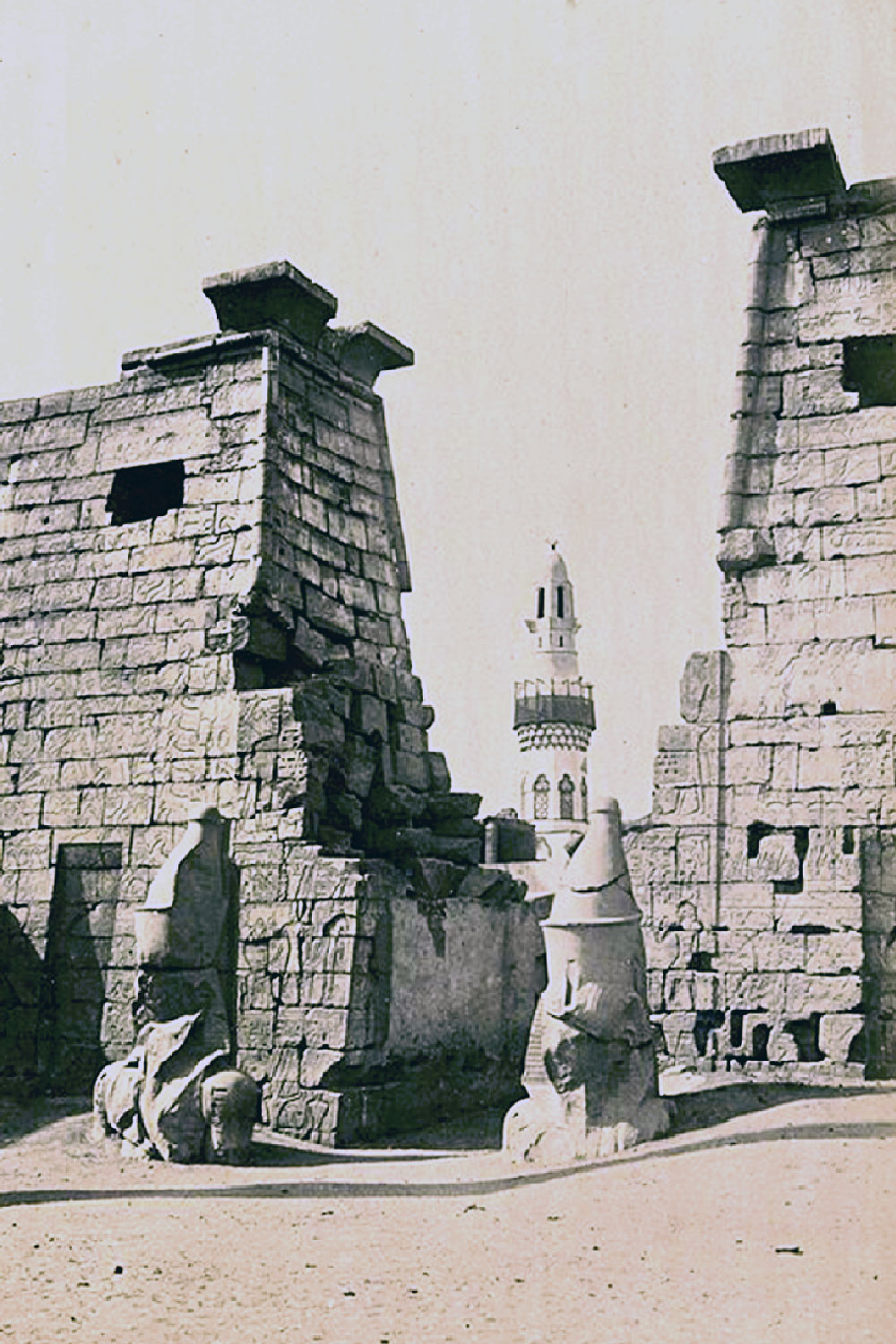
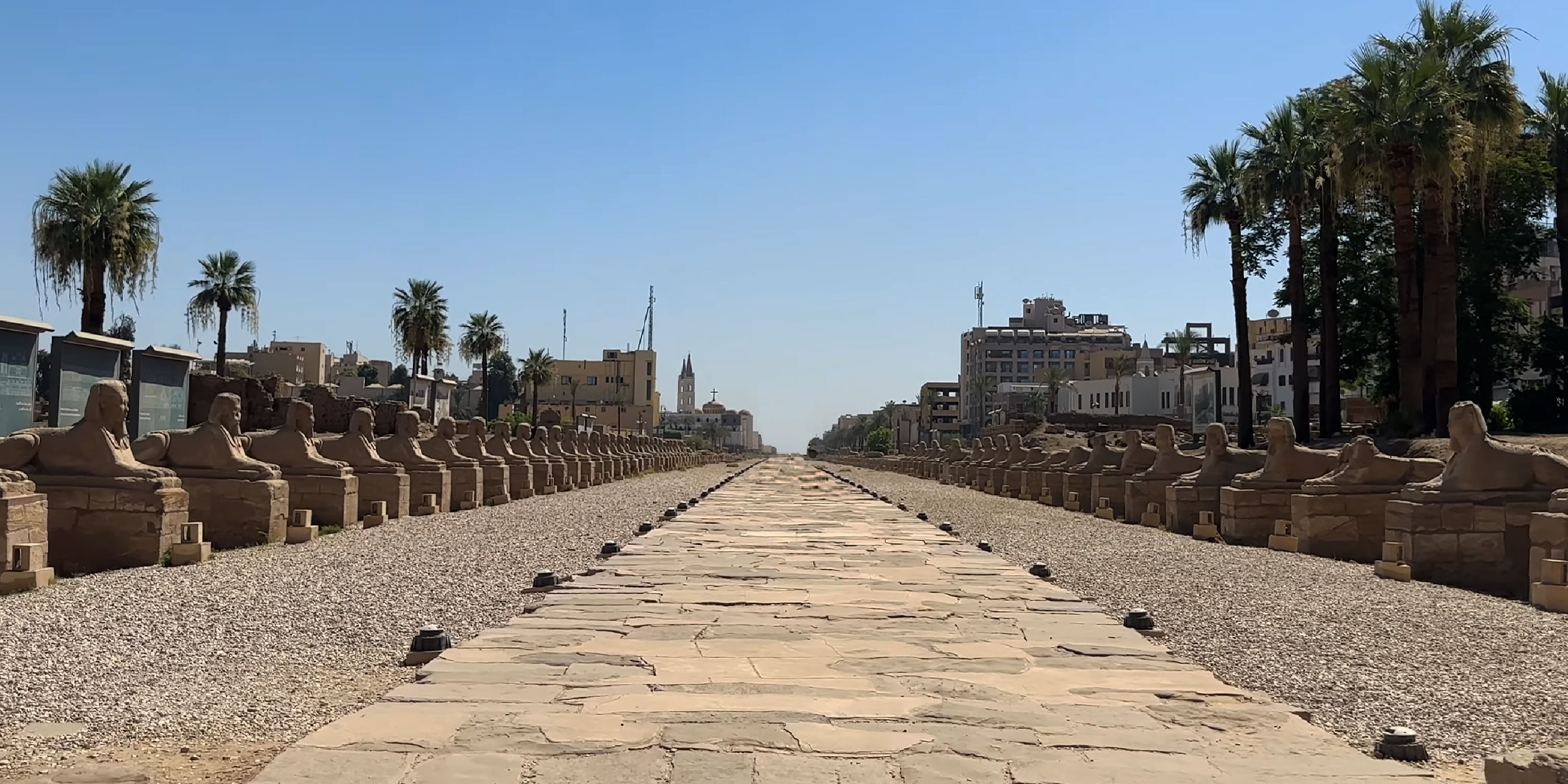
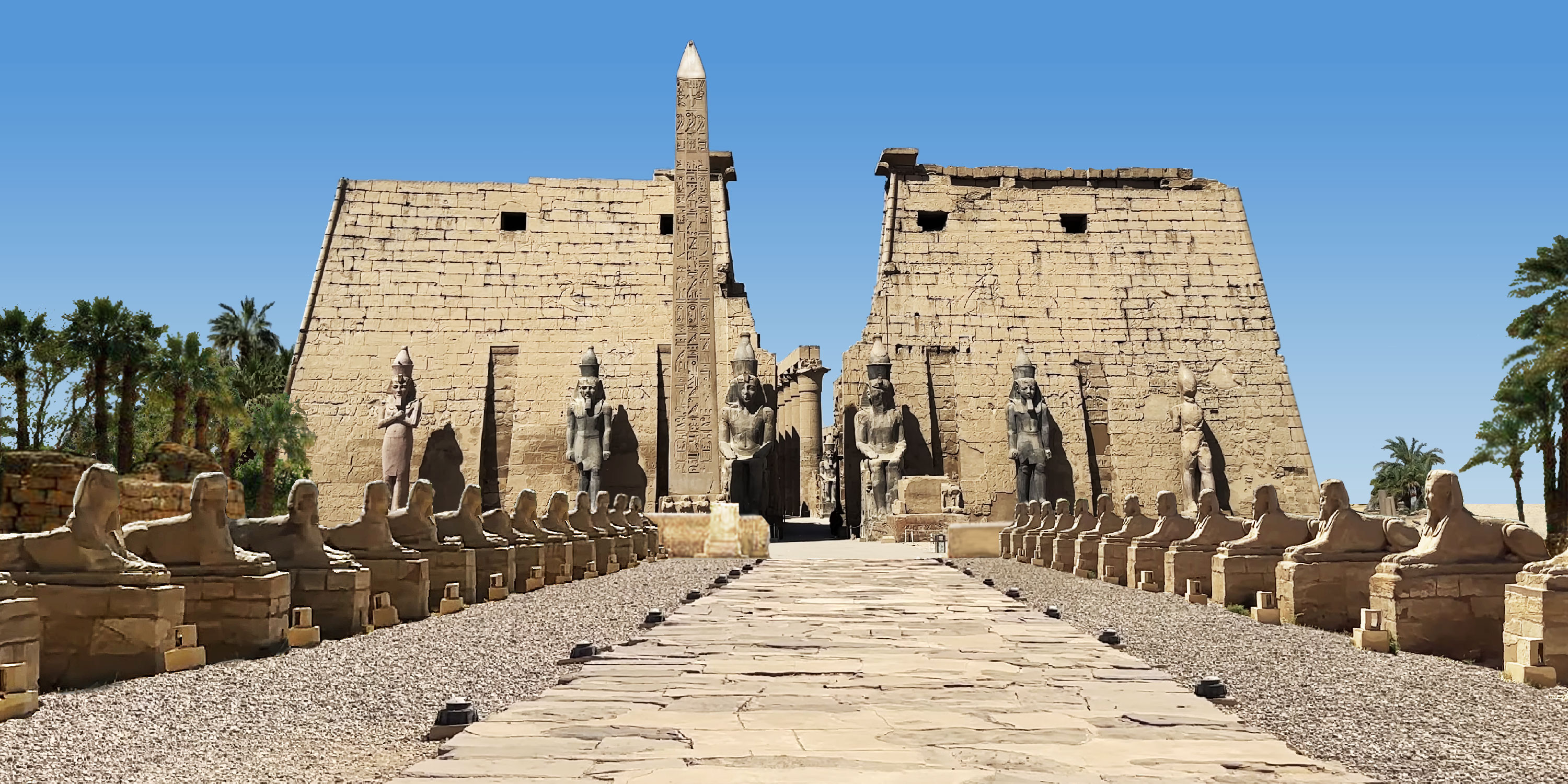
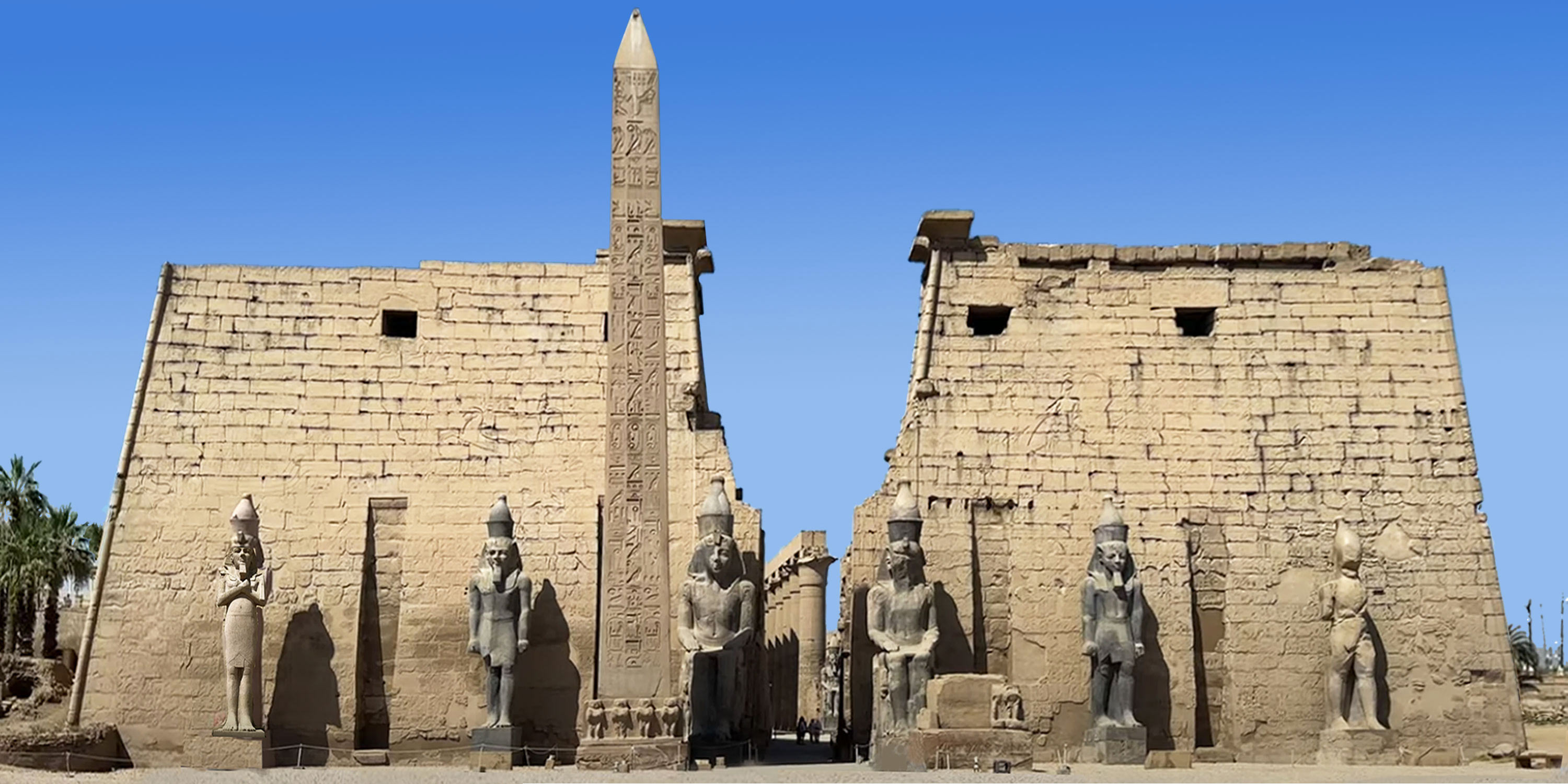
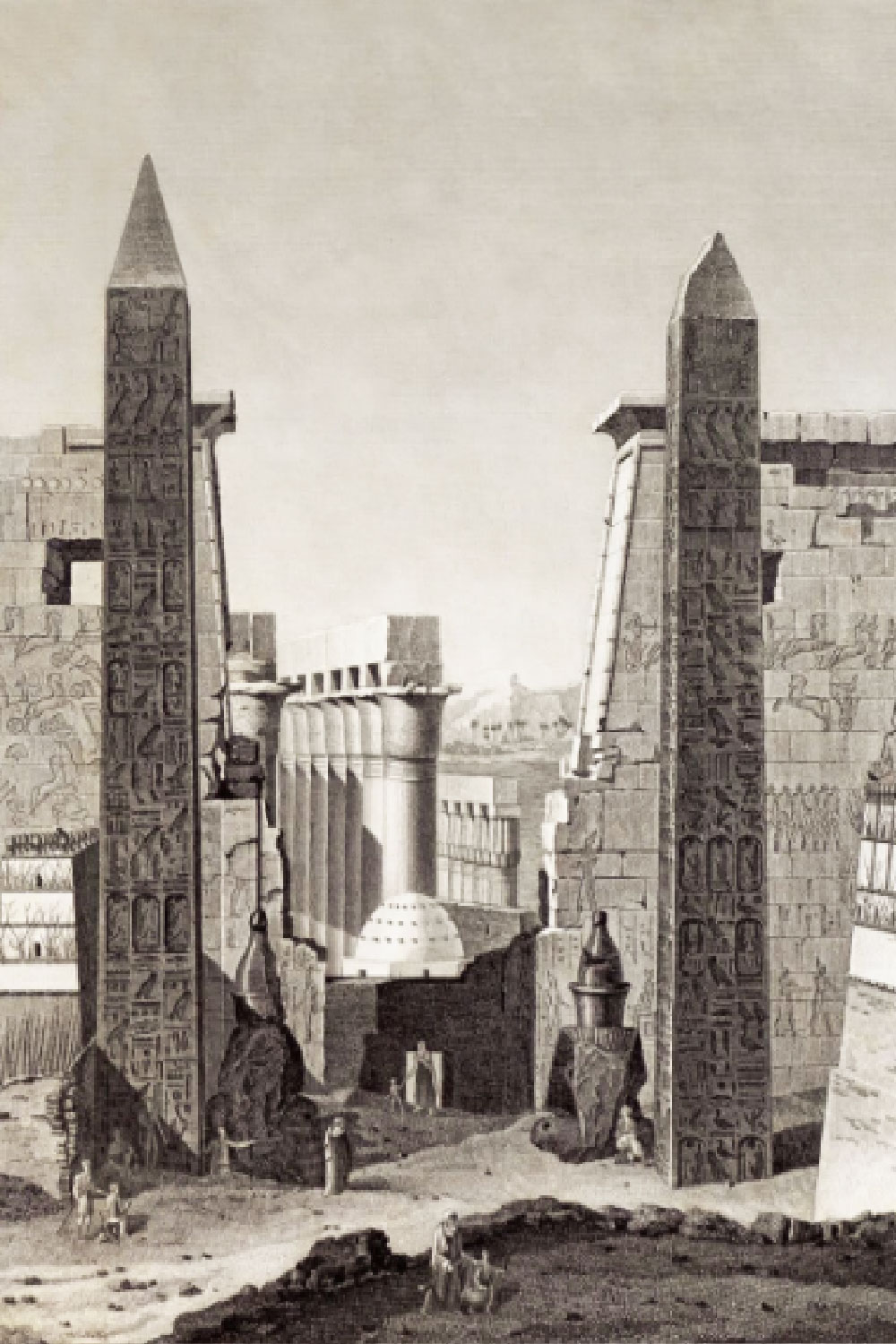
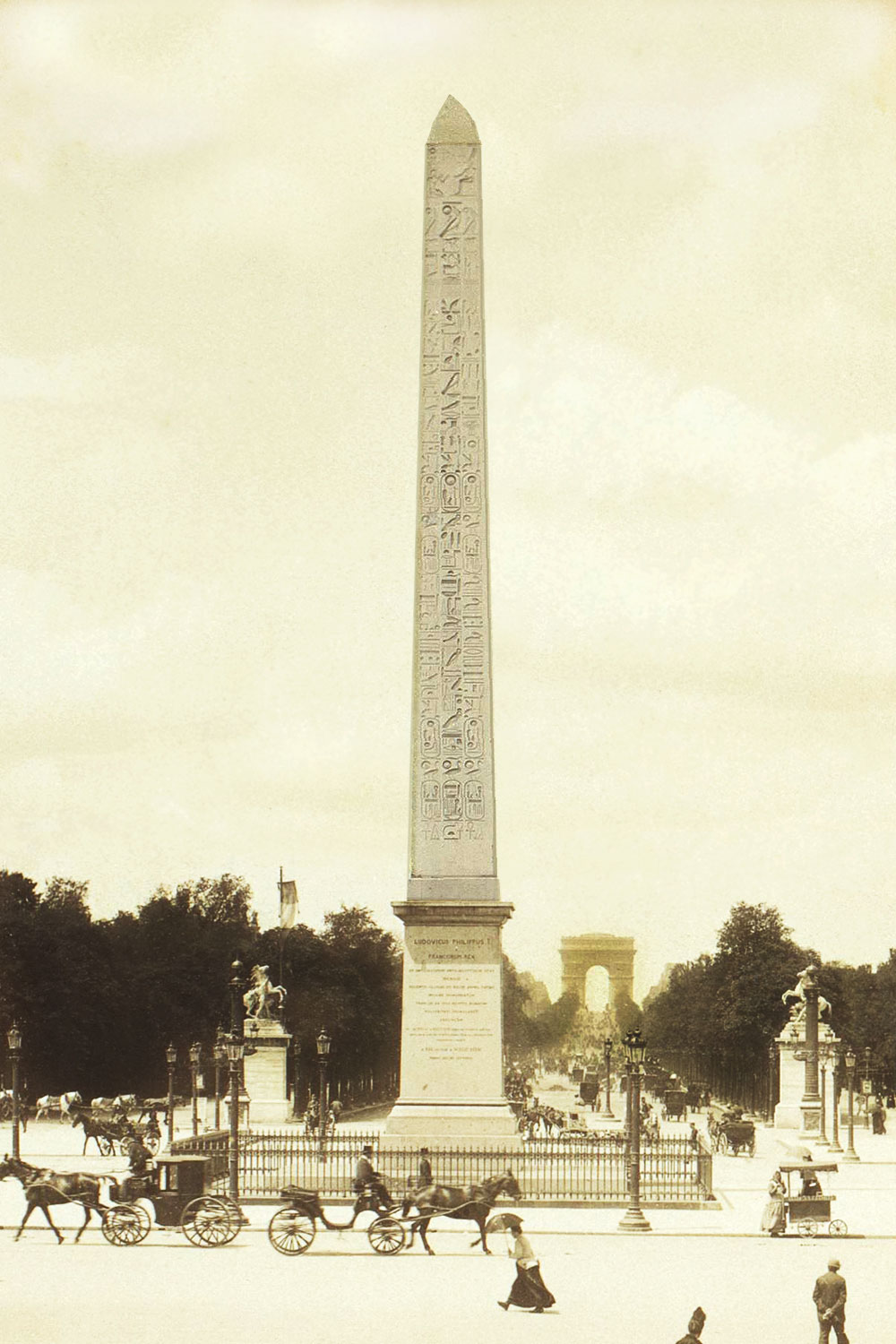
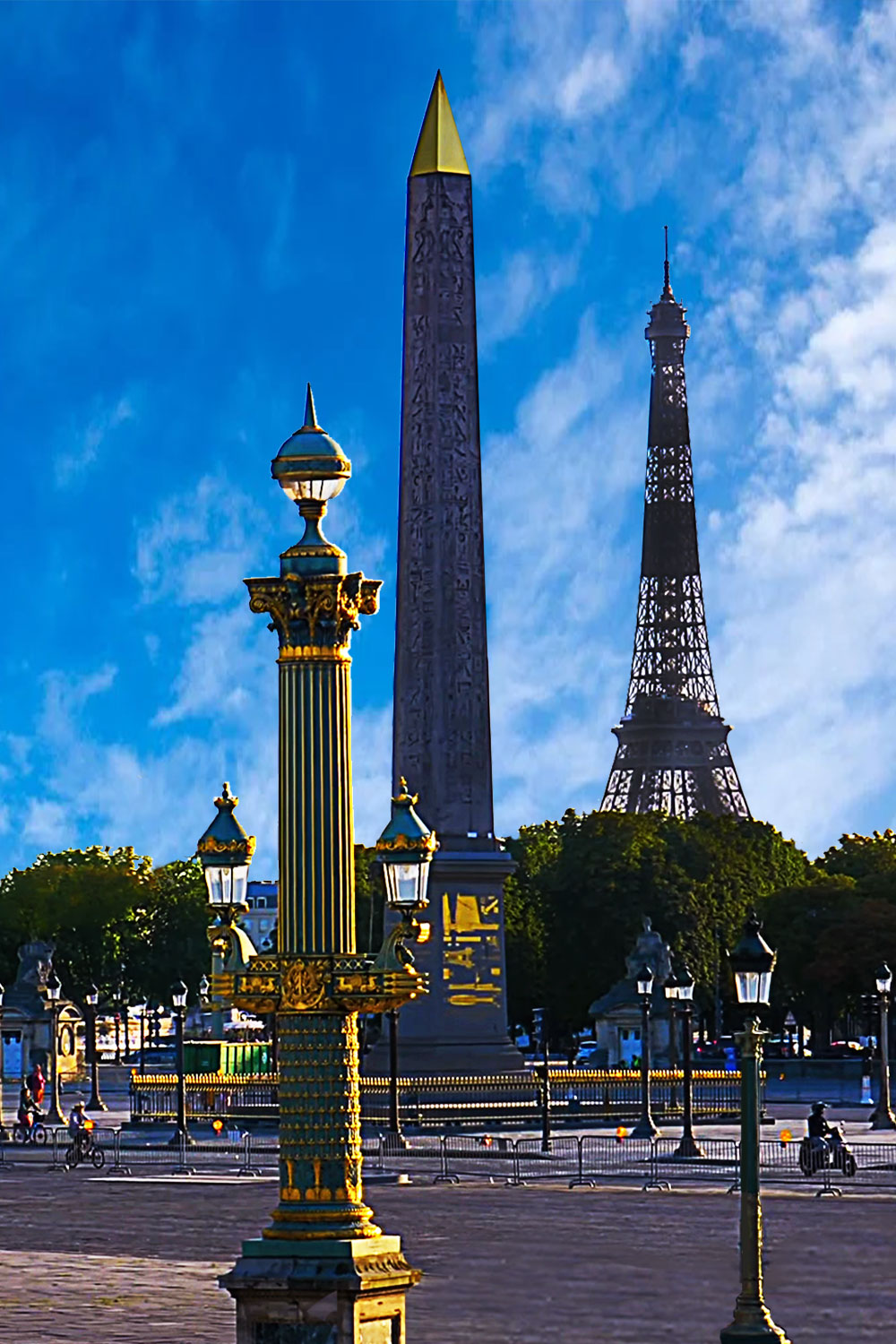
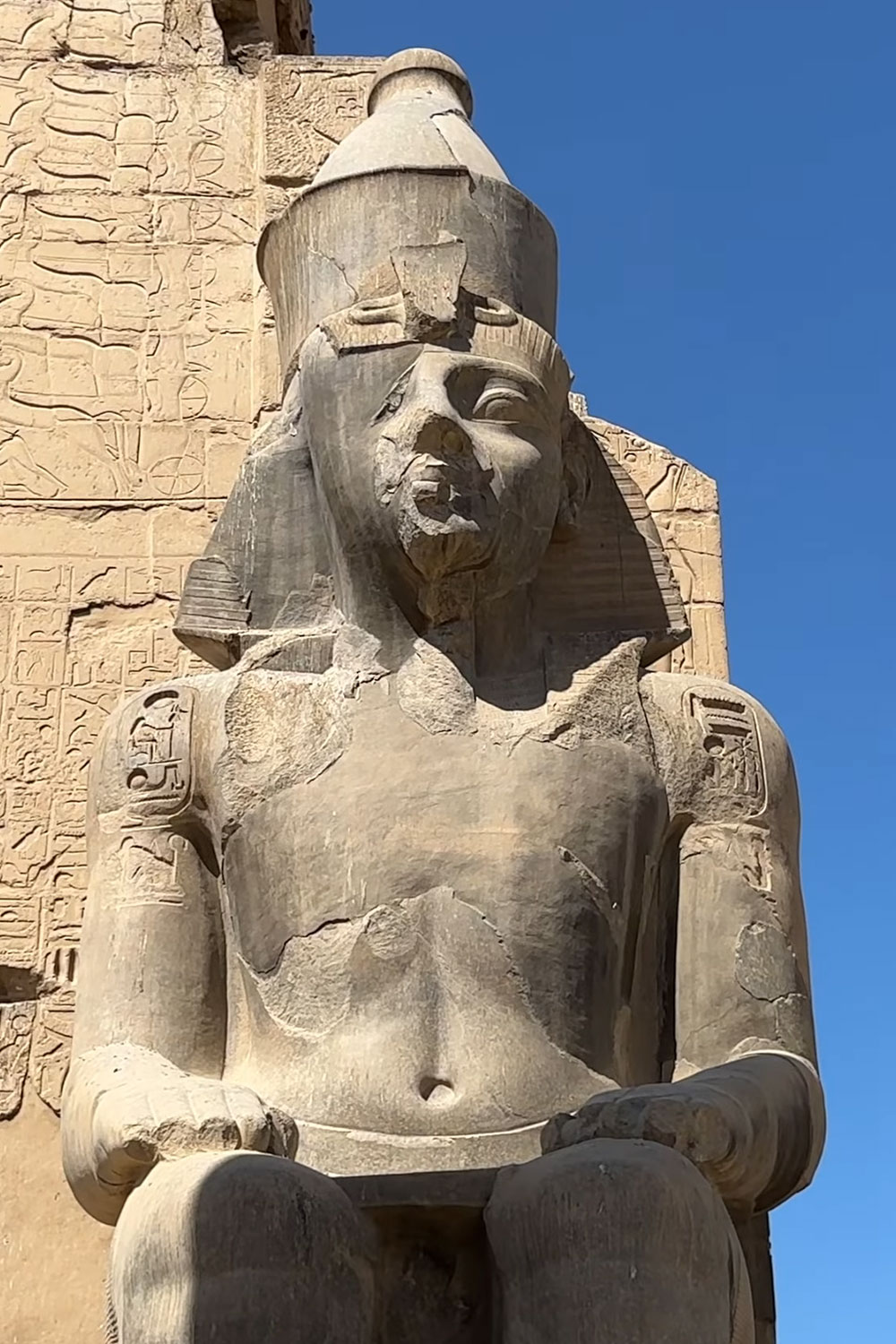
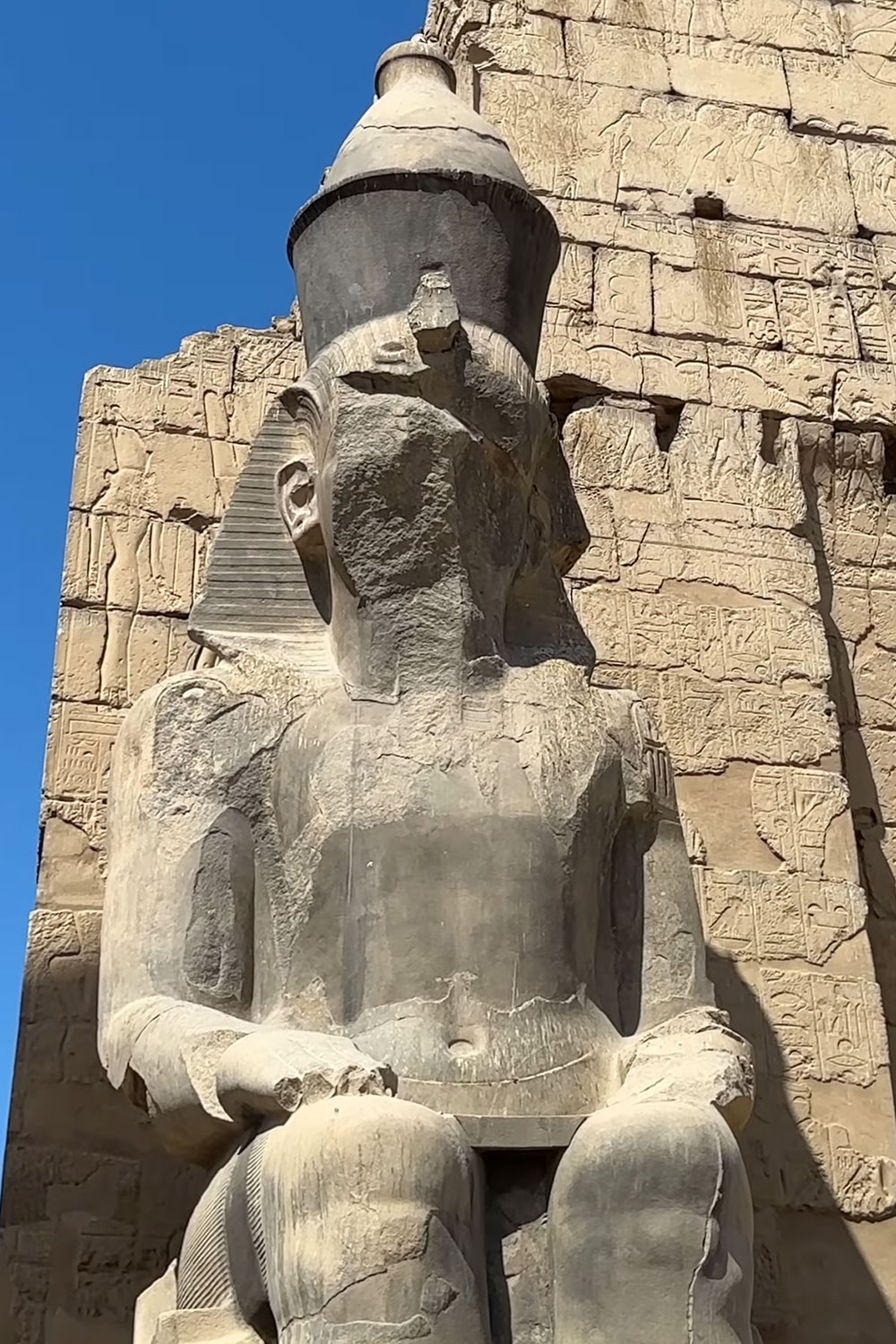
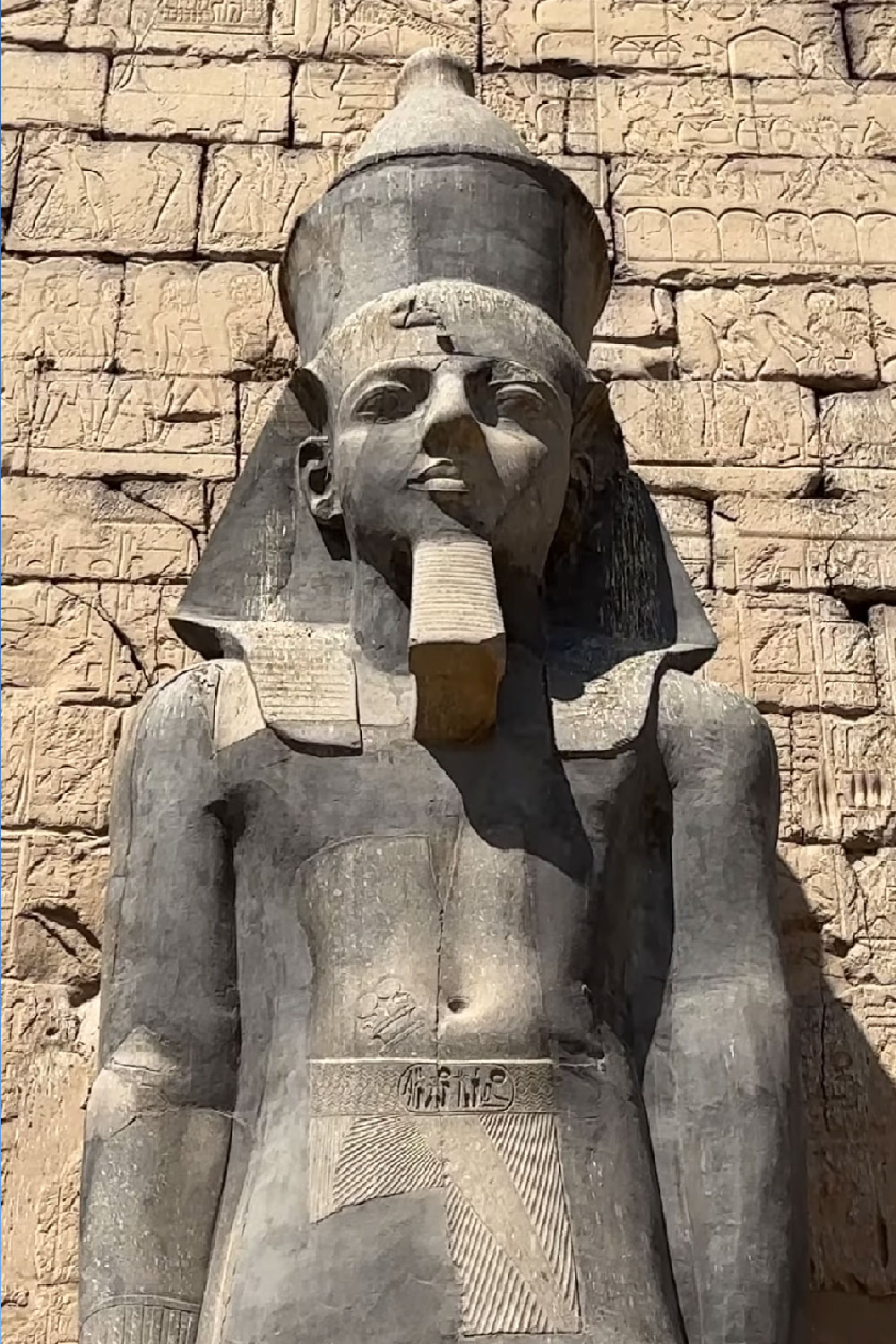
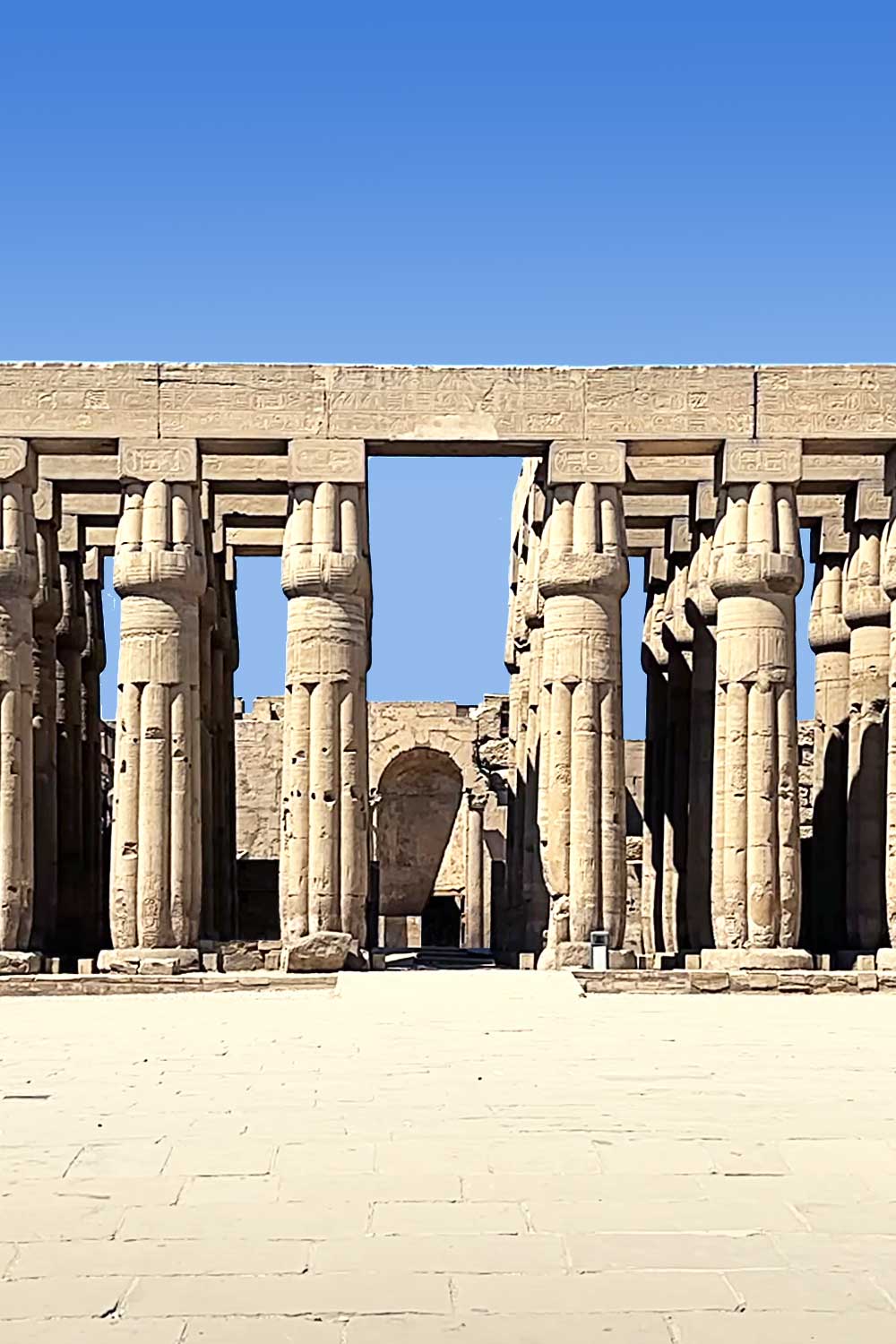
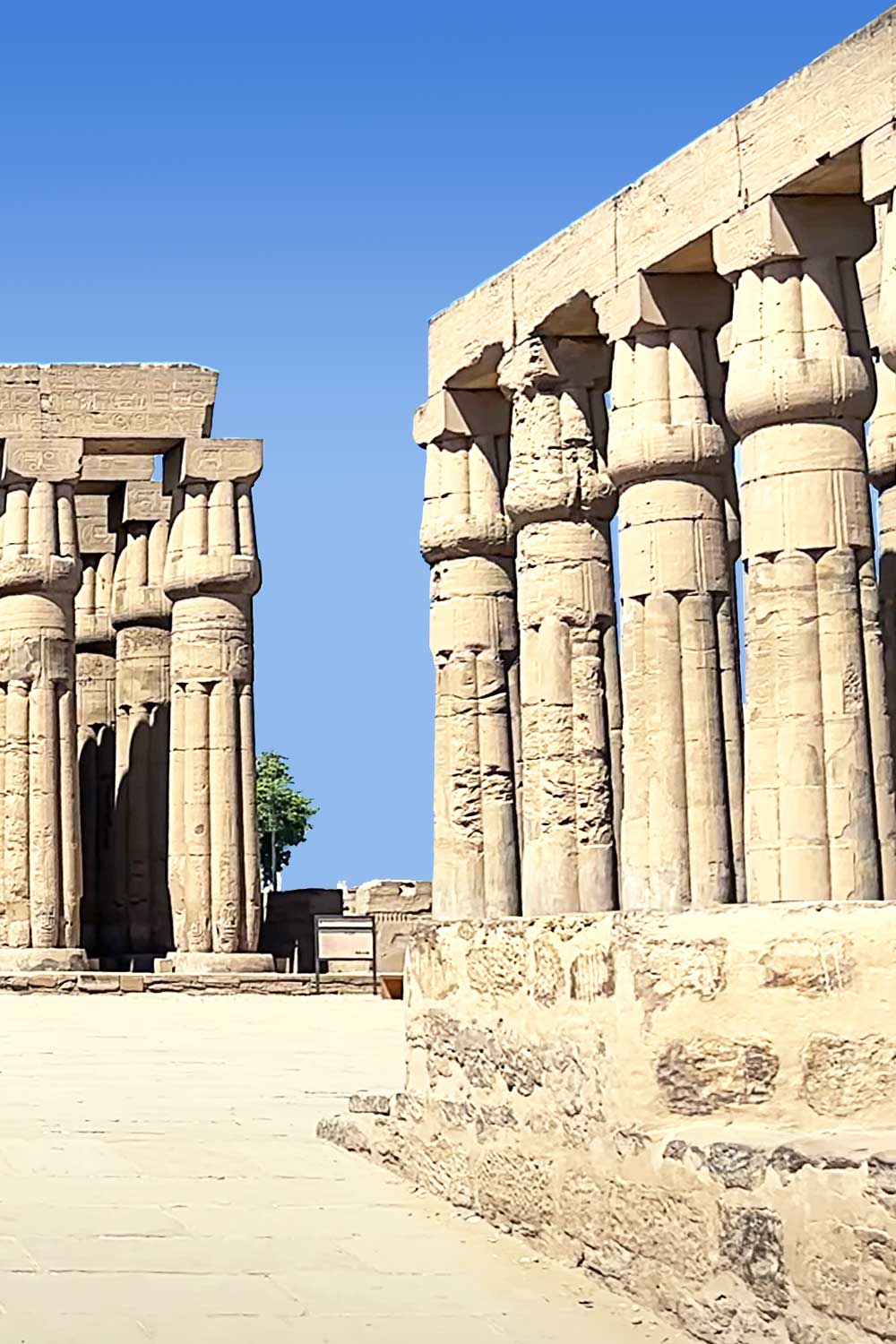
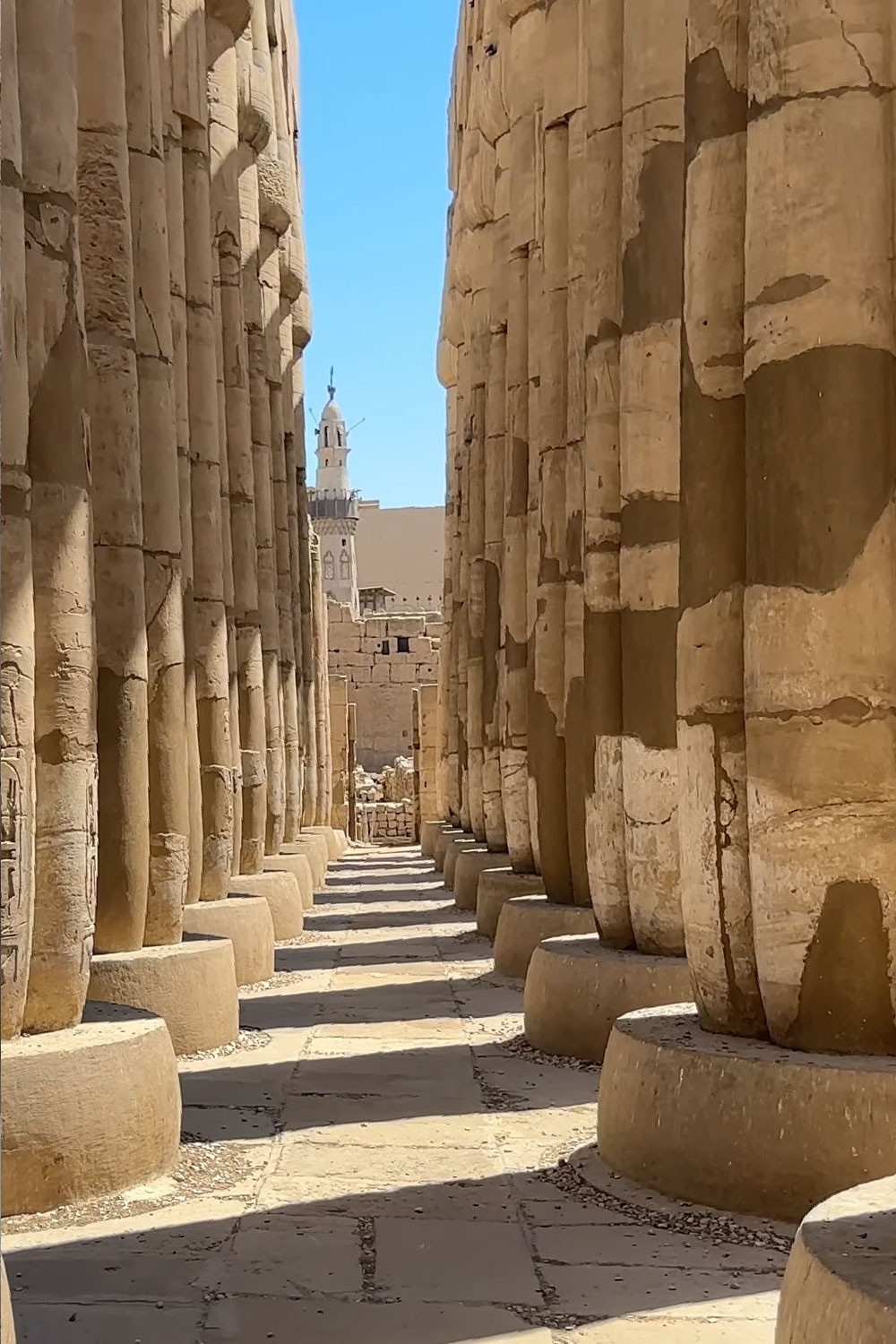
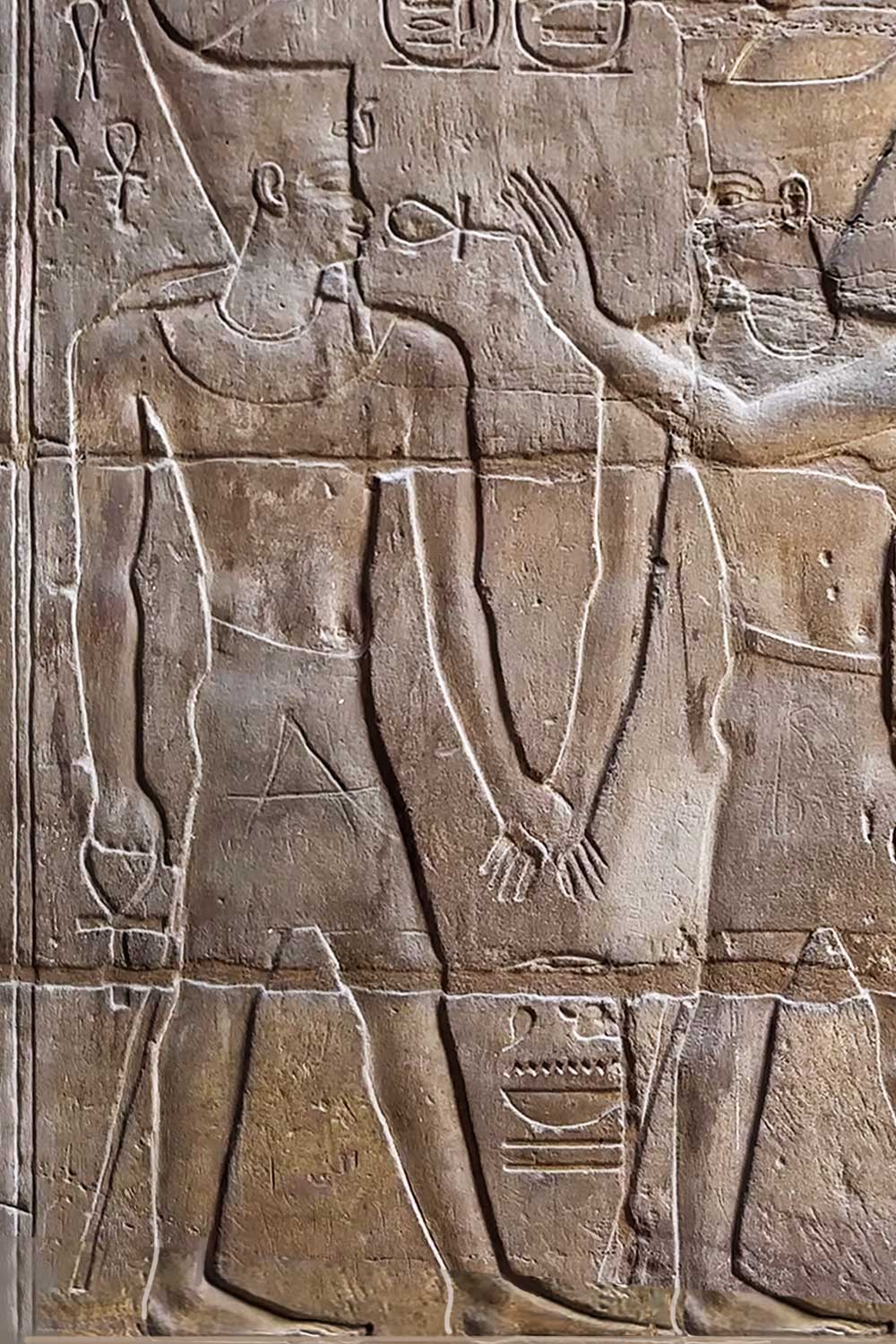
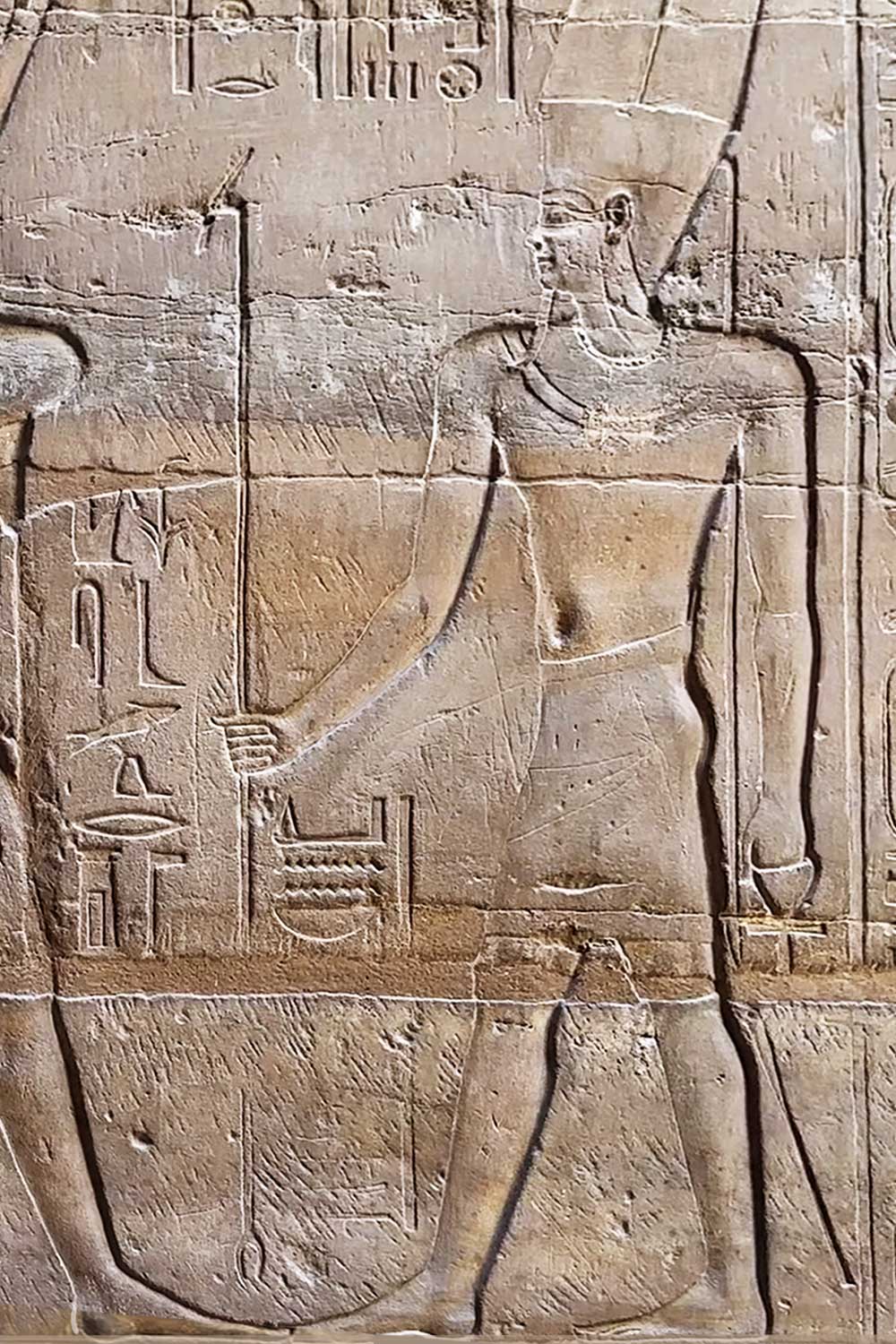
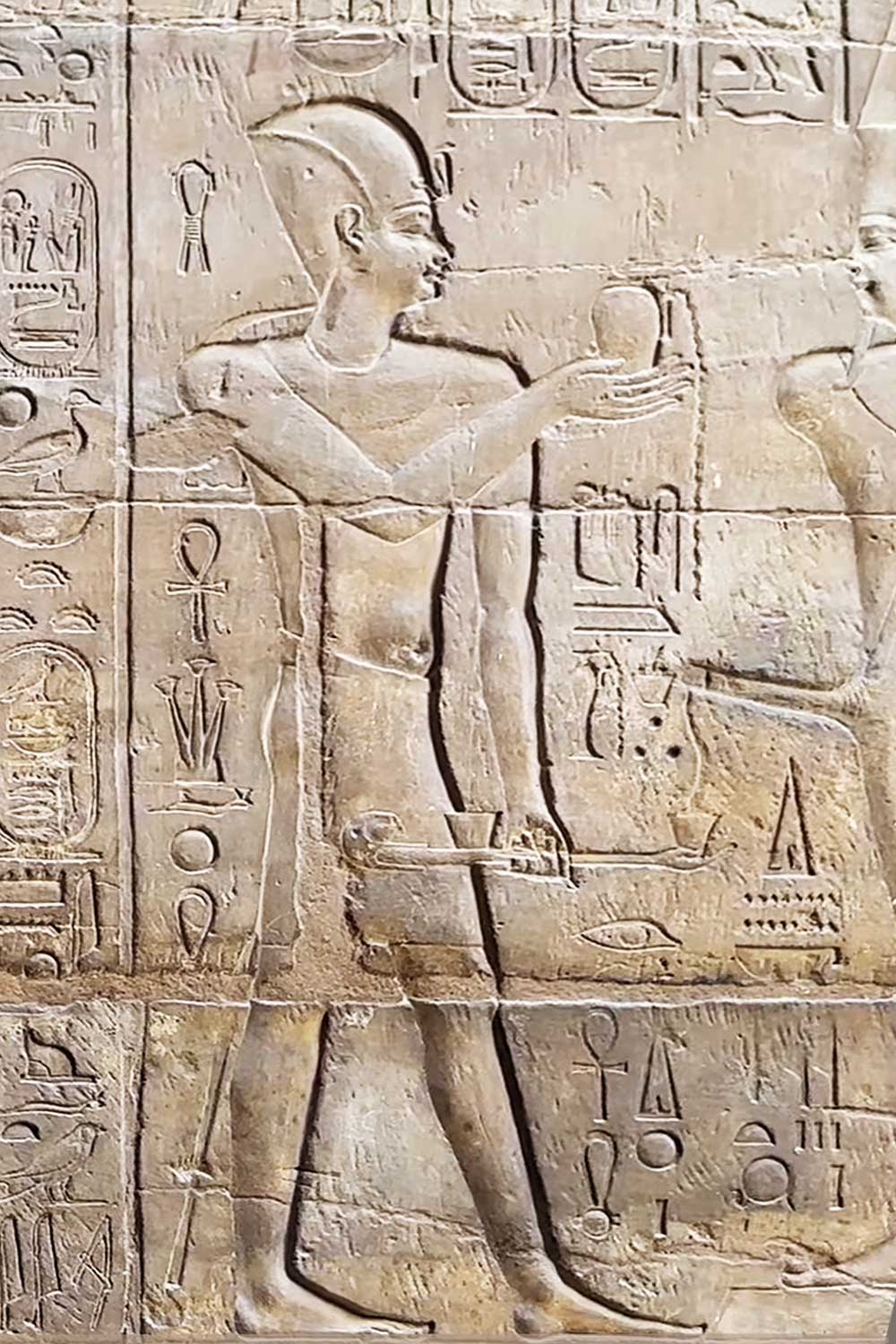
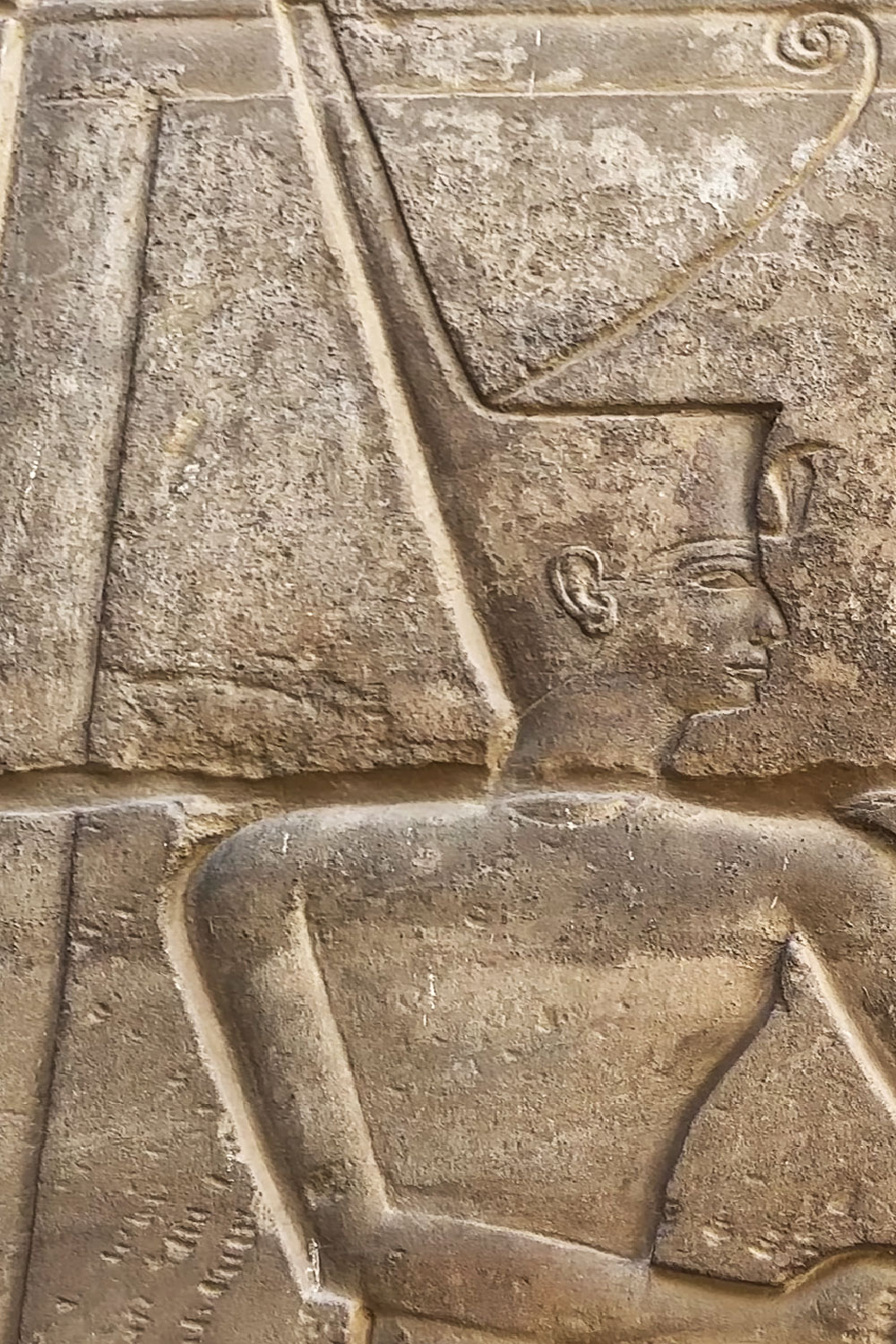
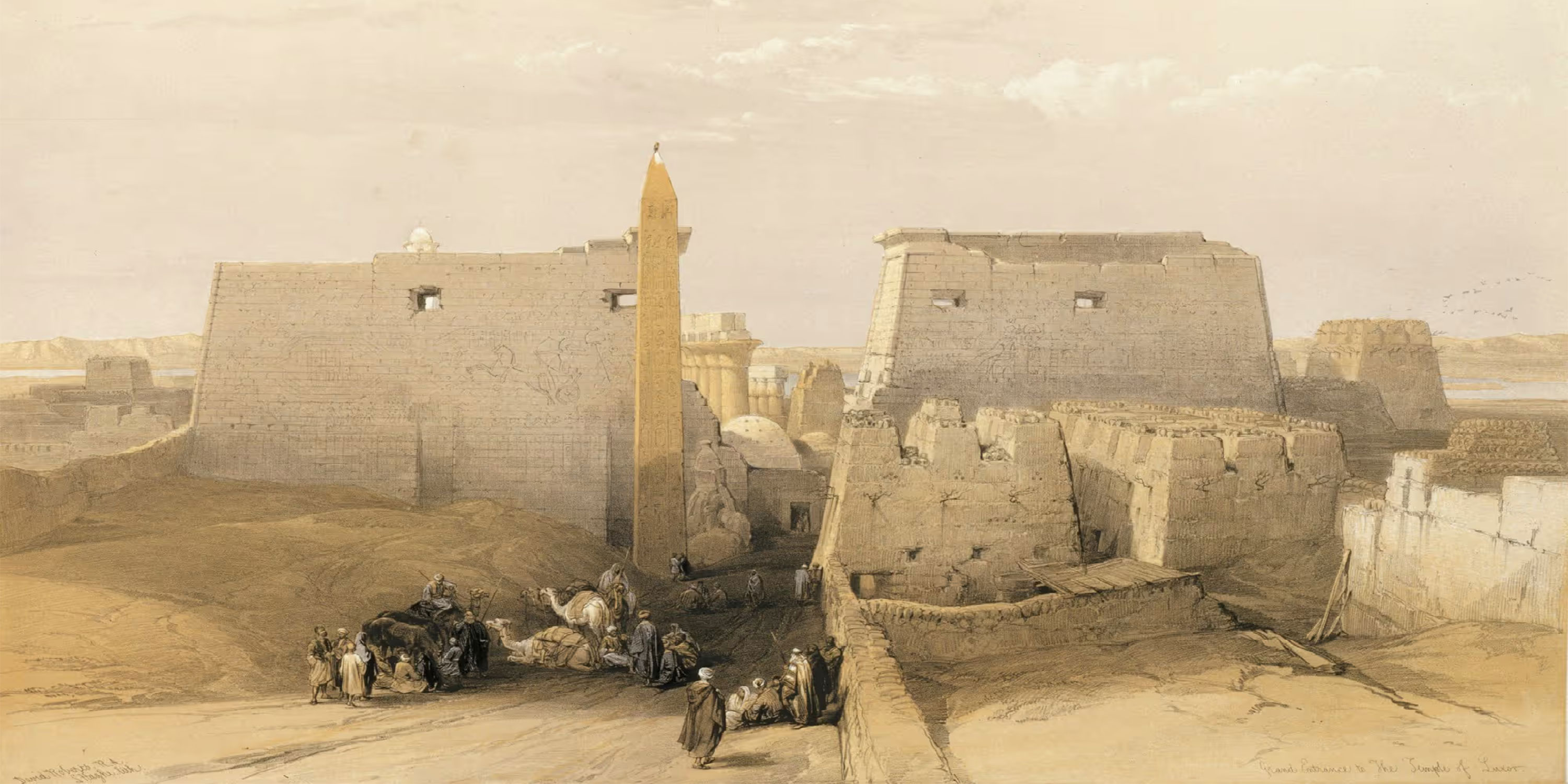
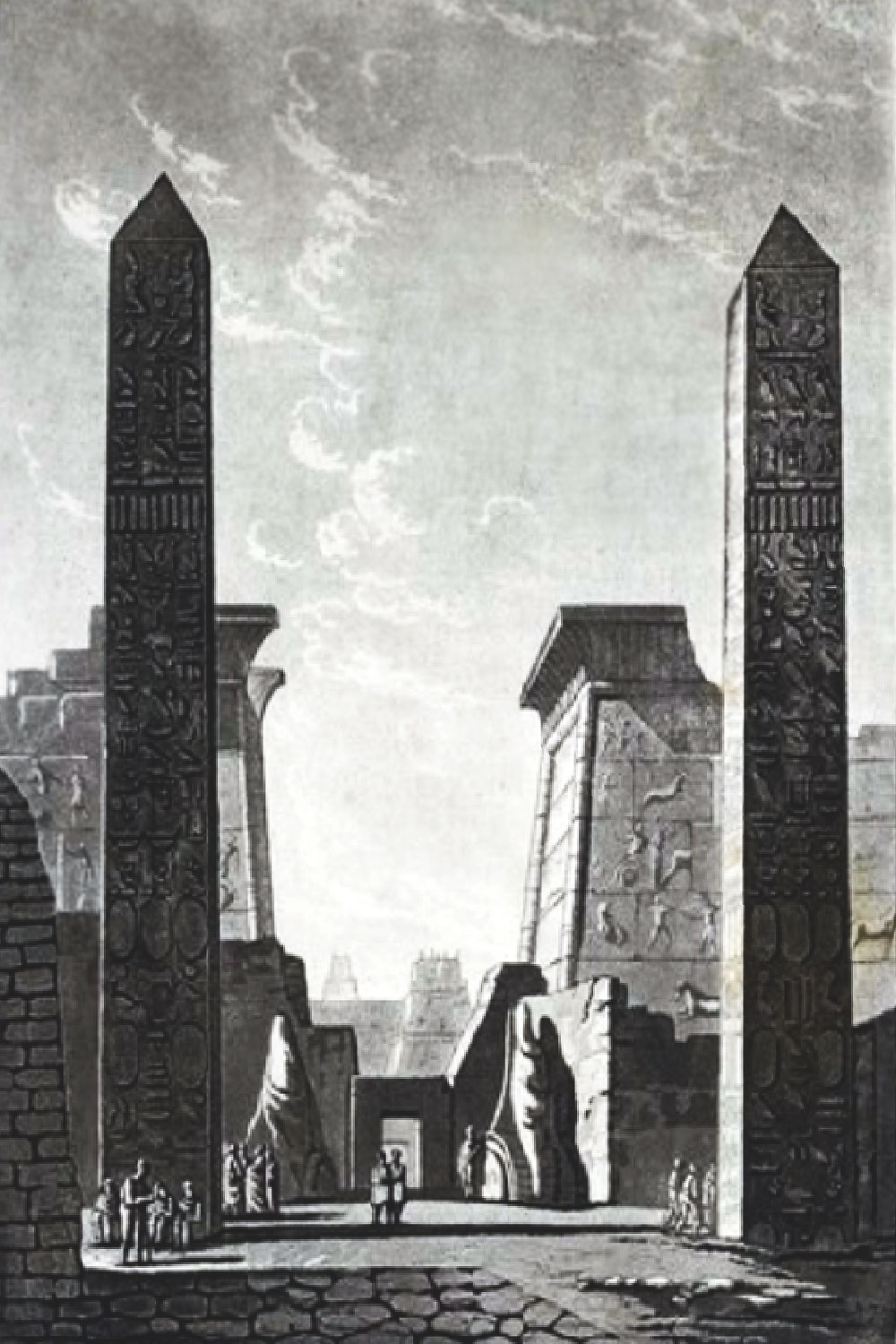
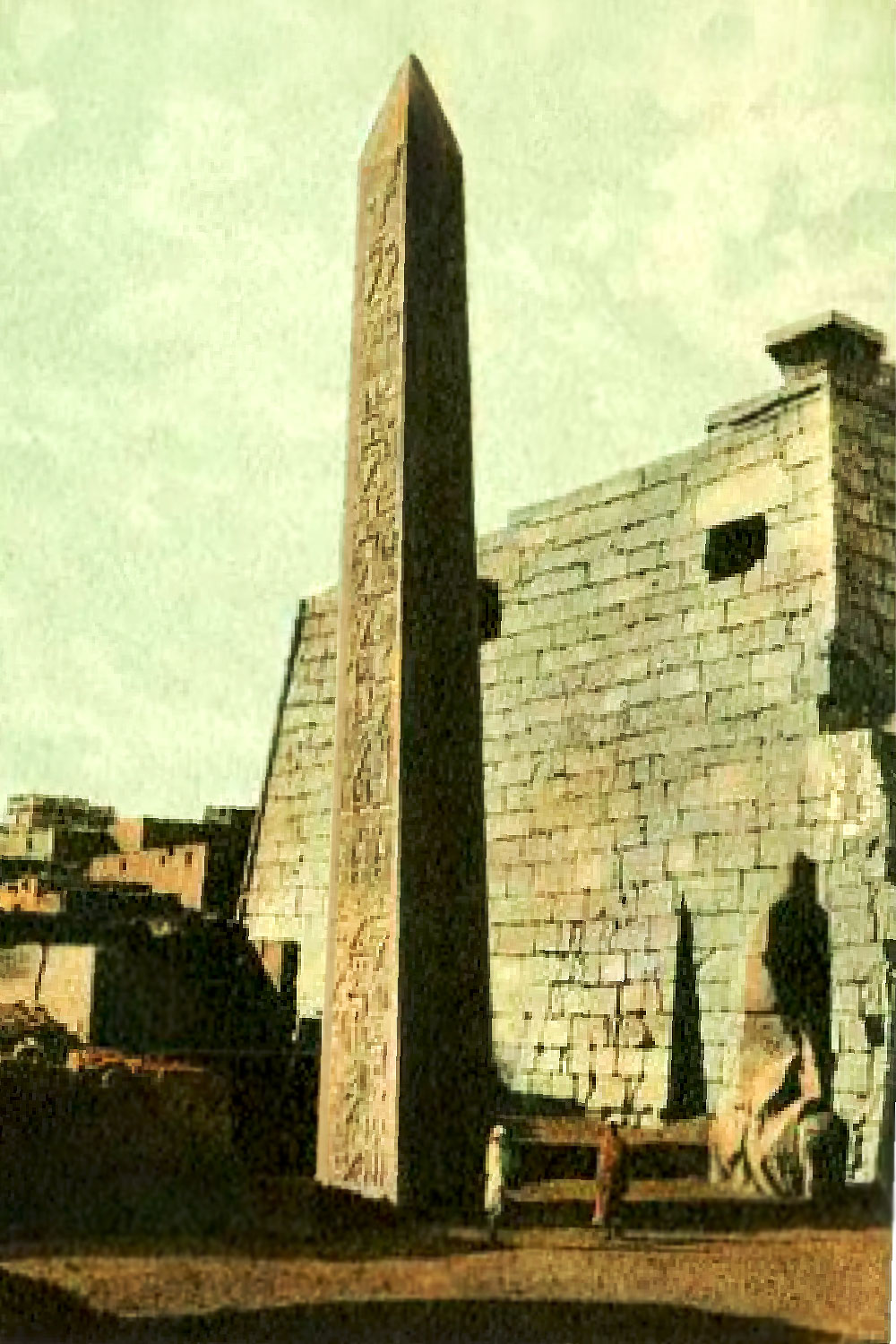
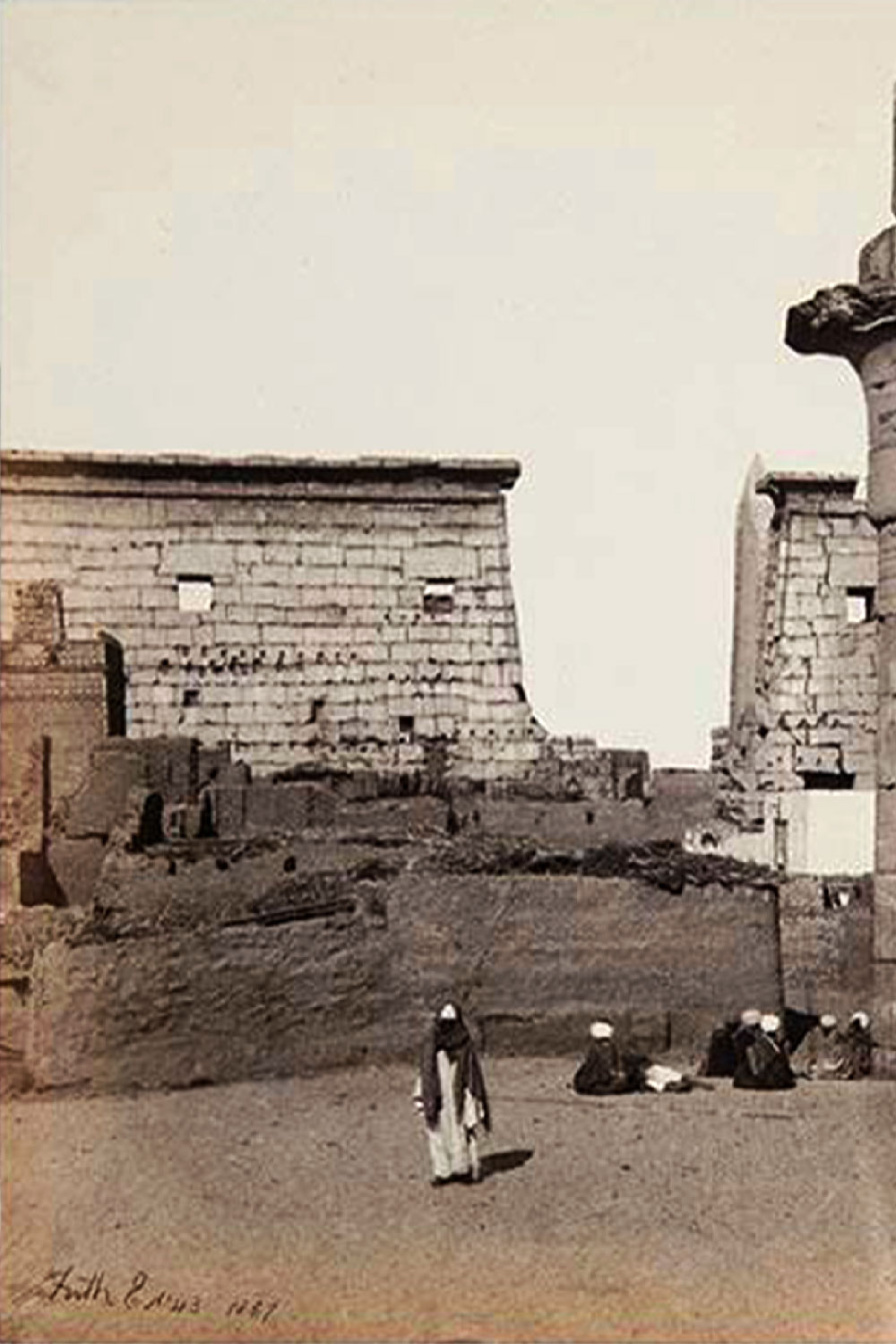
Luxor Temple: Monument to the Revival of Divine Sanctity serving as a primary spiritual center for the Theban Triad and the gods Amun, located a mile and a half south of Karnak Temple, Luxor Temple rises on the east bank of the Nile in the city of Luxor—the site of ancient Thebes. Constructed over centuries by pharaohs including Amenhotep III, Ramses II, and Tutankhamun, the temple embodies the grandeur of Egypt’s New Kingdom. For more than two thousand years, its entrance lay buried beneath 30 feet (9 meters) of sand, until excavations in the 1880s revealed its towering pylons. These monumental gateways stand 78 feet (24 meters) high and span 214 feet (65 meters) wide, adorned with sunken reliefs depicting Ramses II in the Battle of Kadesh—a vivid display of royal power and military triumph. Guarding the entrance are two colossal seated granite statues of Ramses II, flanked by four standing figures of the same pharaoh. Originally, a pair of 80-foot (25-meter) obelisks framed the gateway; today, only one remains in Luxor, while its twin stands in the Place de la Concorde in Paris. The Avenue of Sphinxes and the Great Colonnade Hall, Stretching 1.86 miles (3 kilometers), the Avenue of Sphinxes forms a majestic processional route lined with over 1,000 statues—some ram-headed, others human-headed. These sphinxes were first uncovered by archaeologists in 1949, and extensive excavations between 1984 and 2000 reconnected the temples of Karnak and Luxor, restoring the ancient ceremonial pathway. Among the architectural marvels of this complex is the Great Colonnade Hall, an imposing structure nearly 61 meters in length. It features 28 towering columns, each rising 21 feet high, their surfaces adorned with intricate reliefs. The hall’s decorative program was completed during the reign of Tutankhamun, around 1330 B.C., adding a layer of regal symbolism to this monumental space.
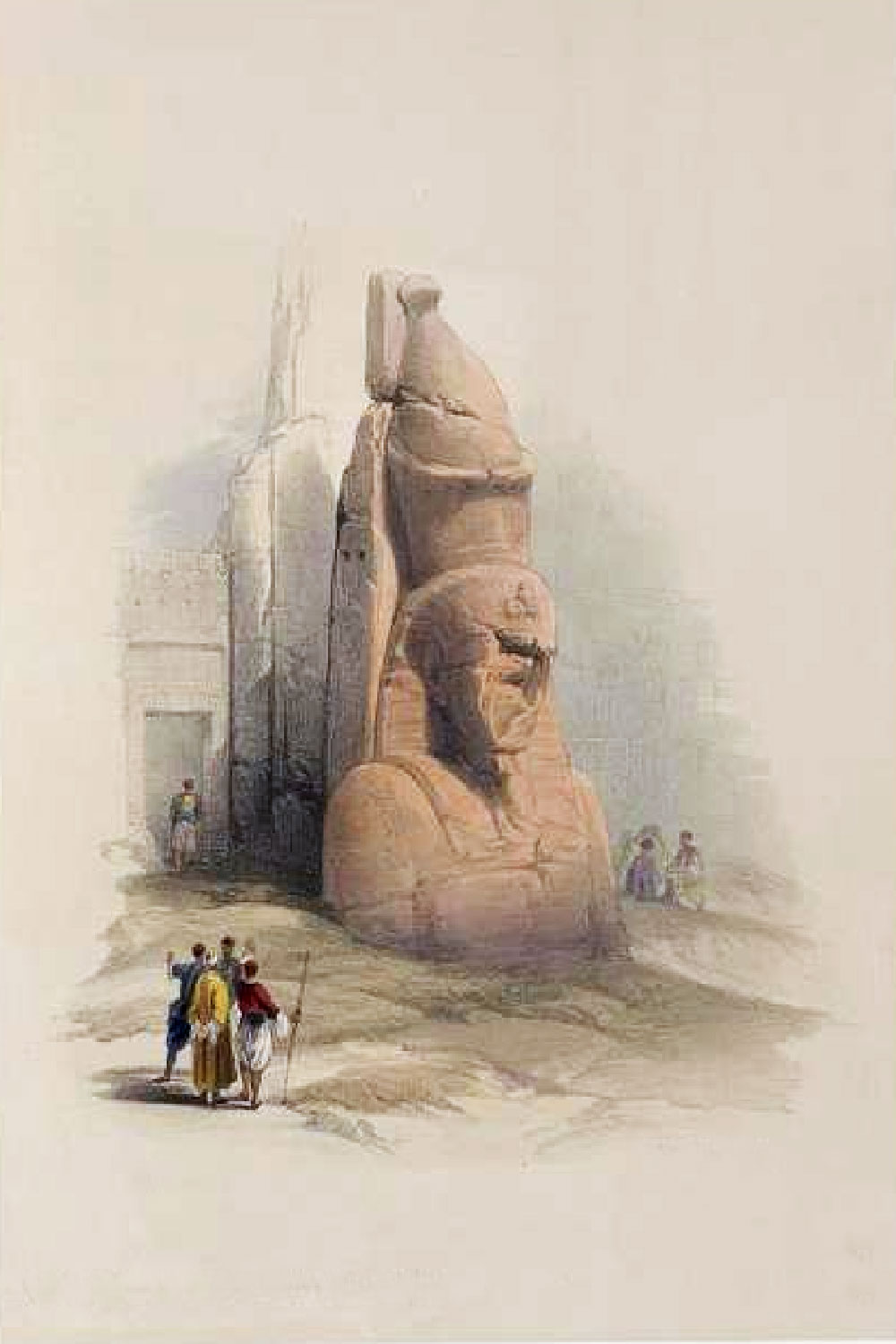
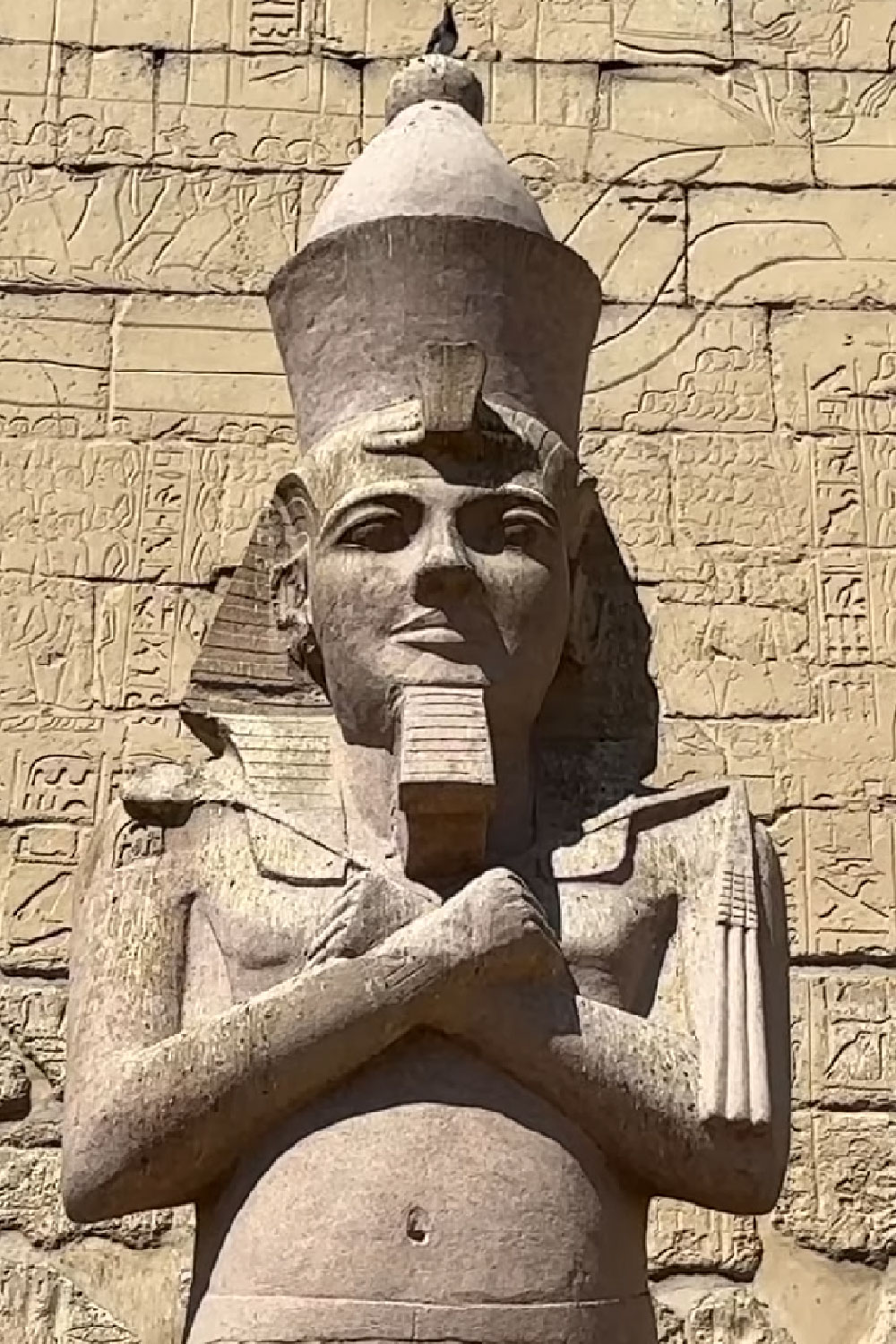
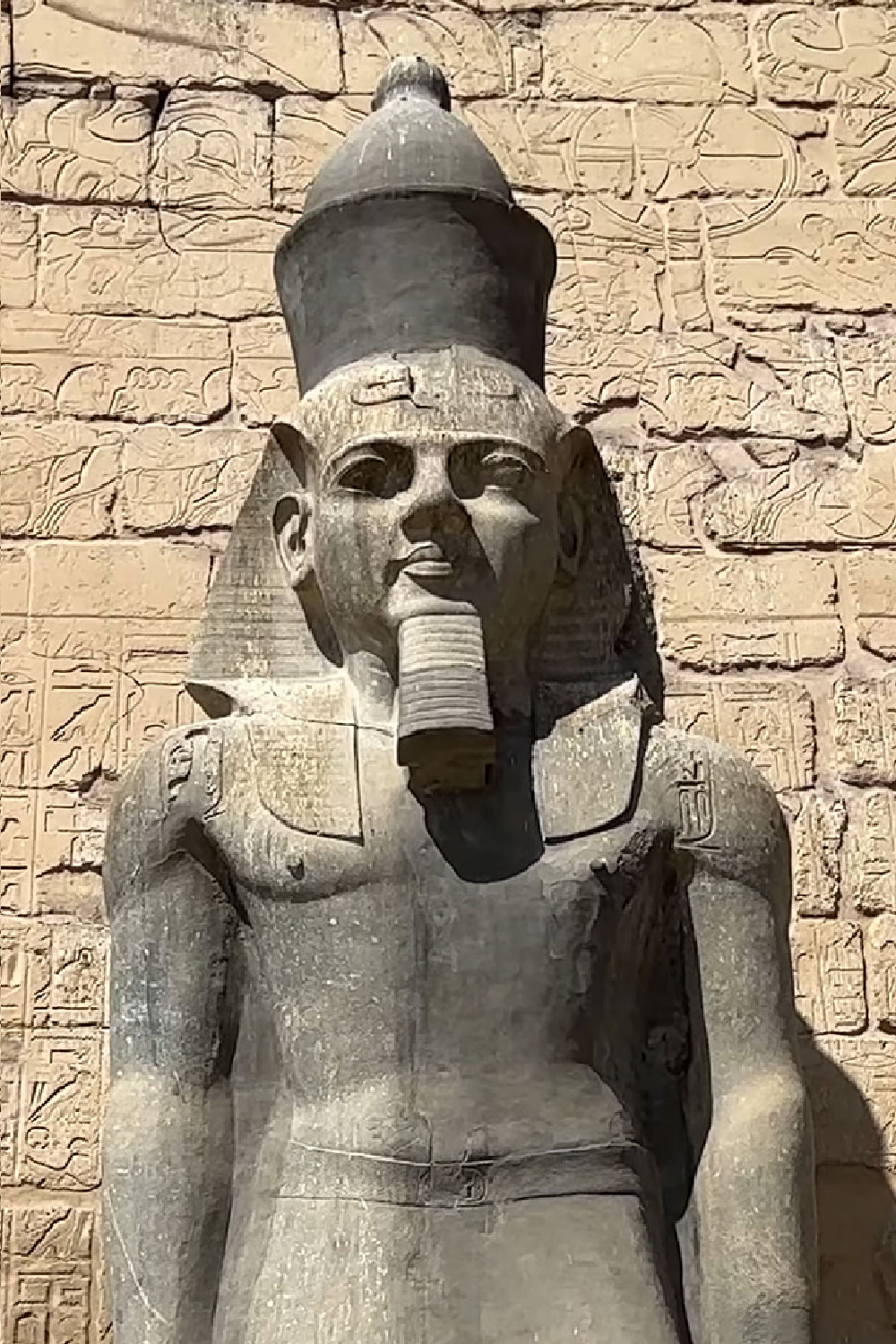
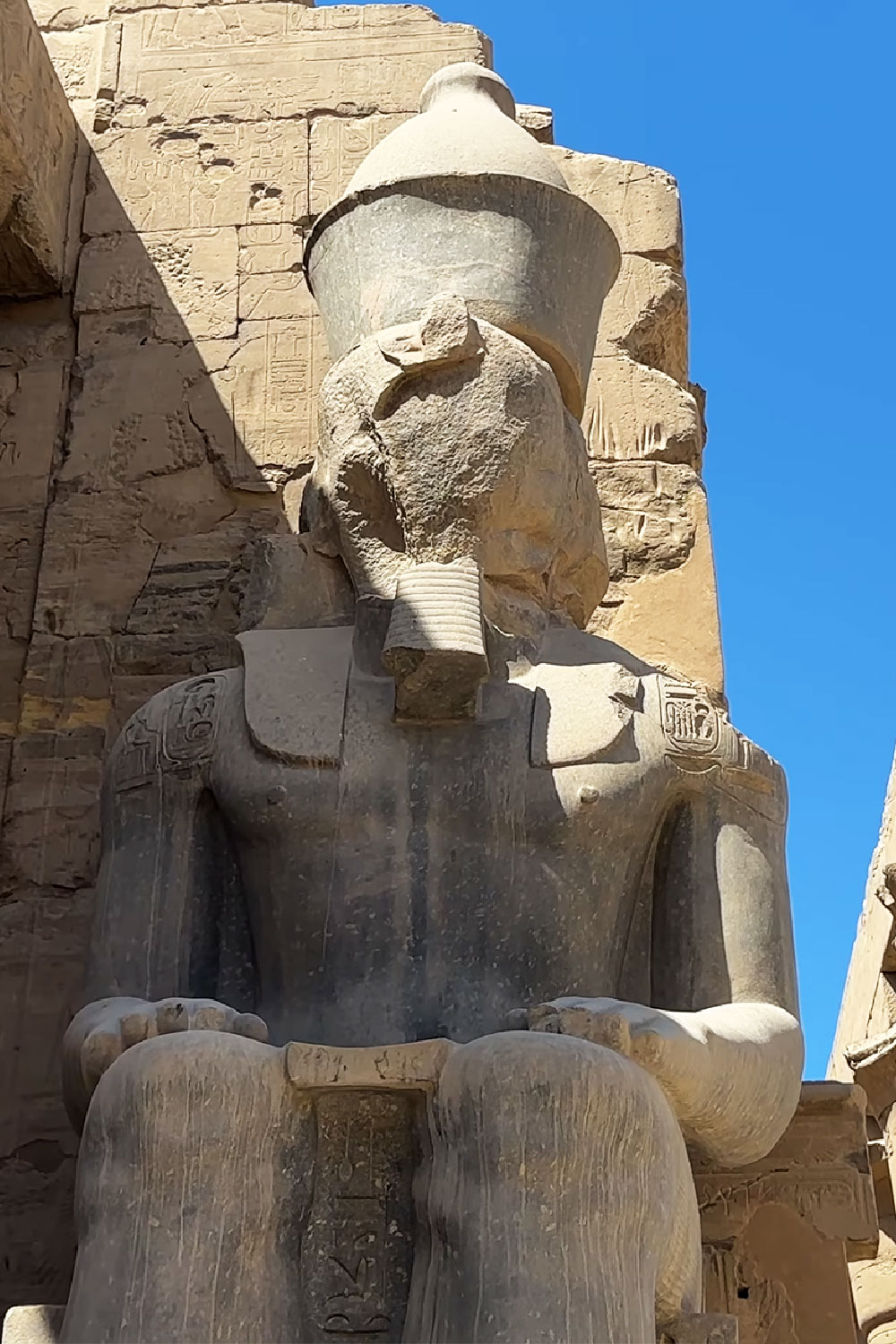
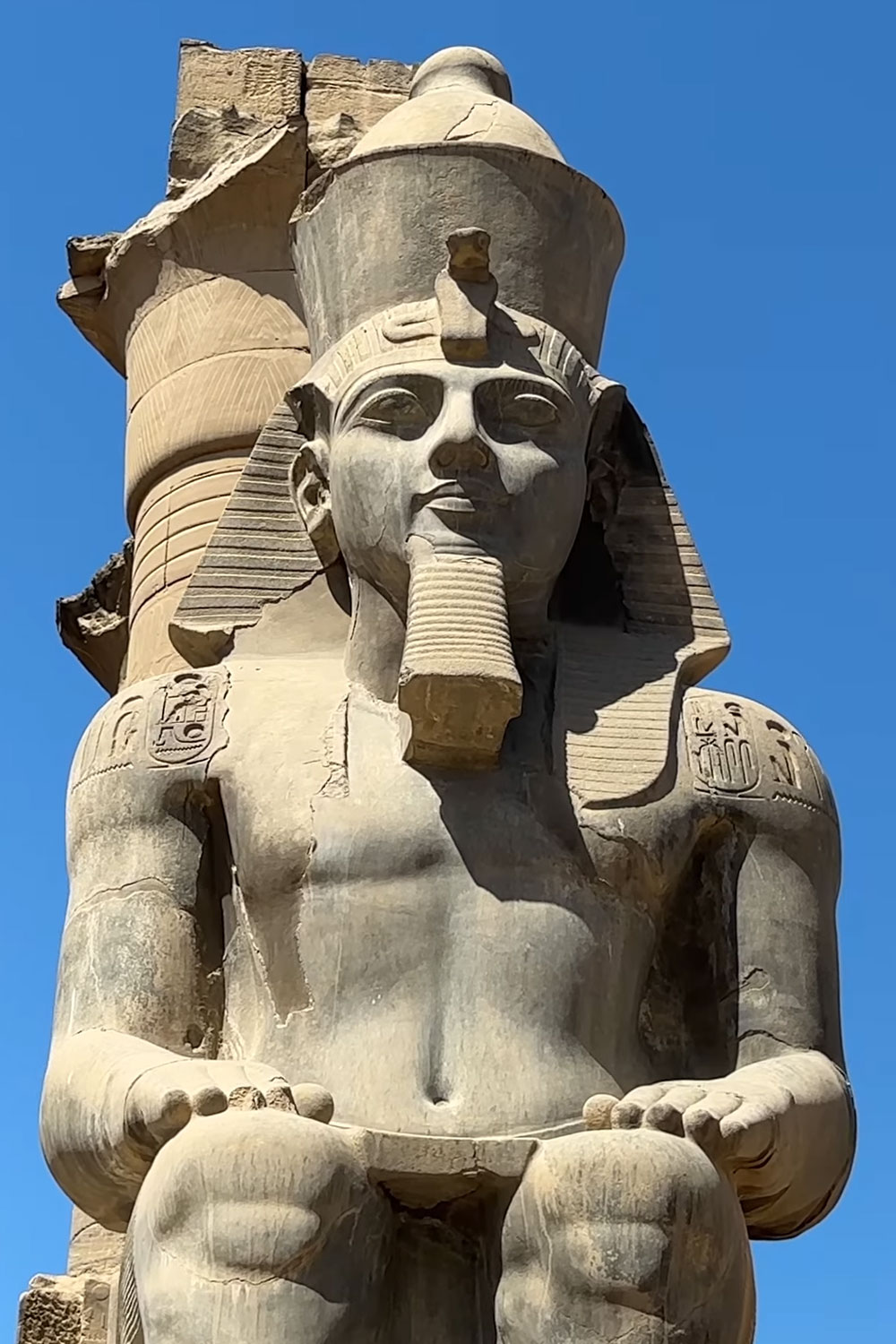
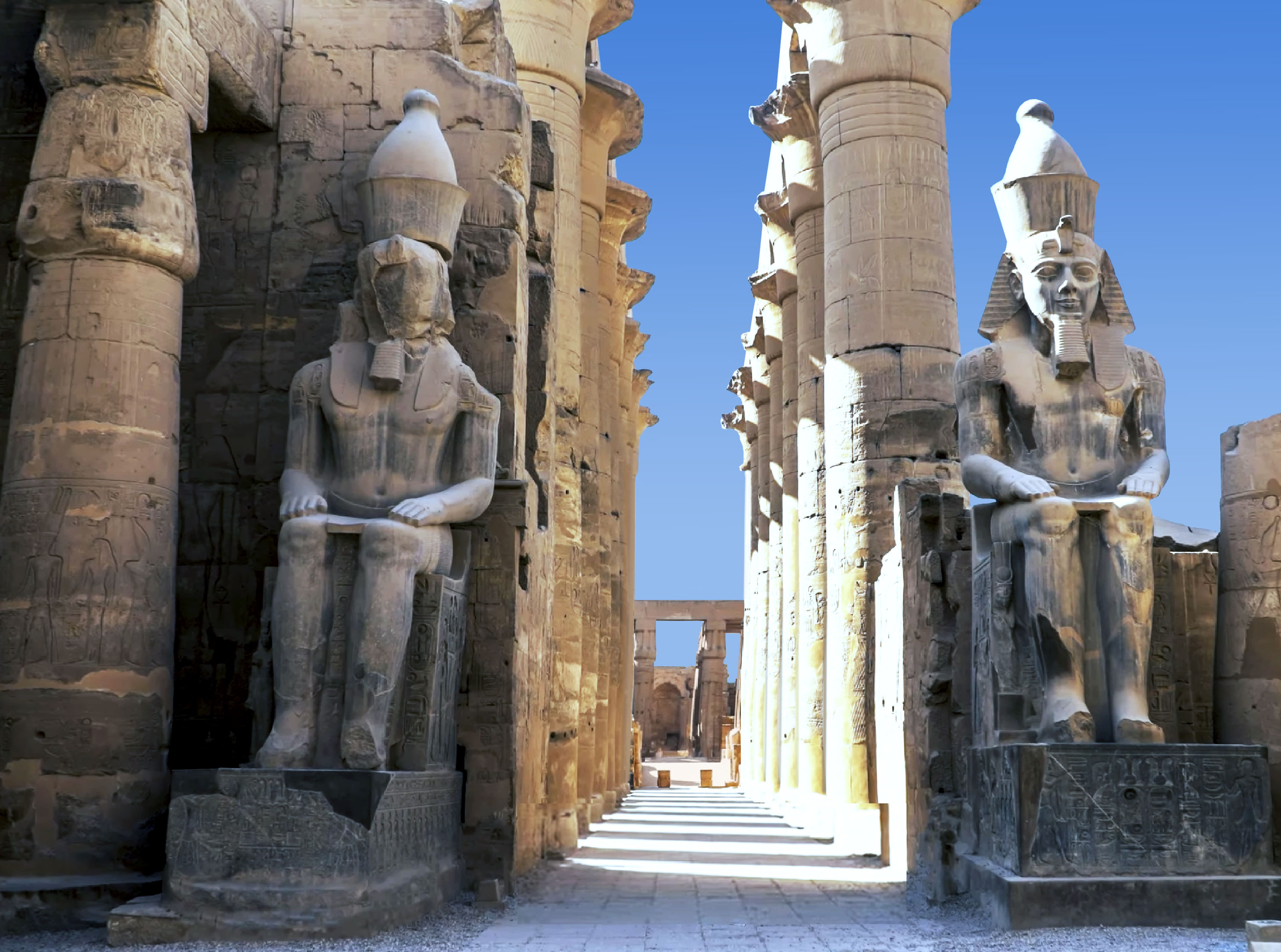
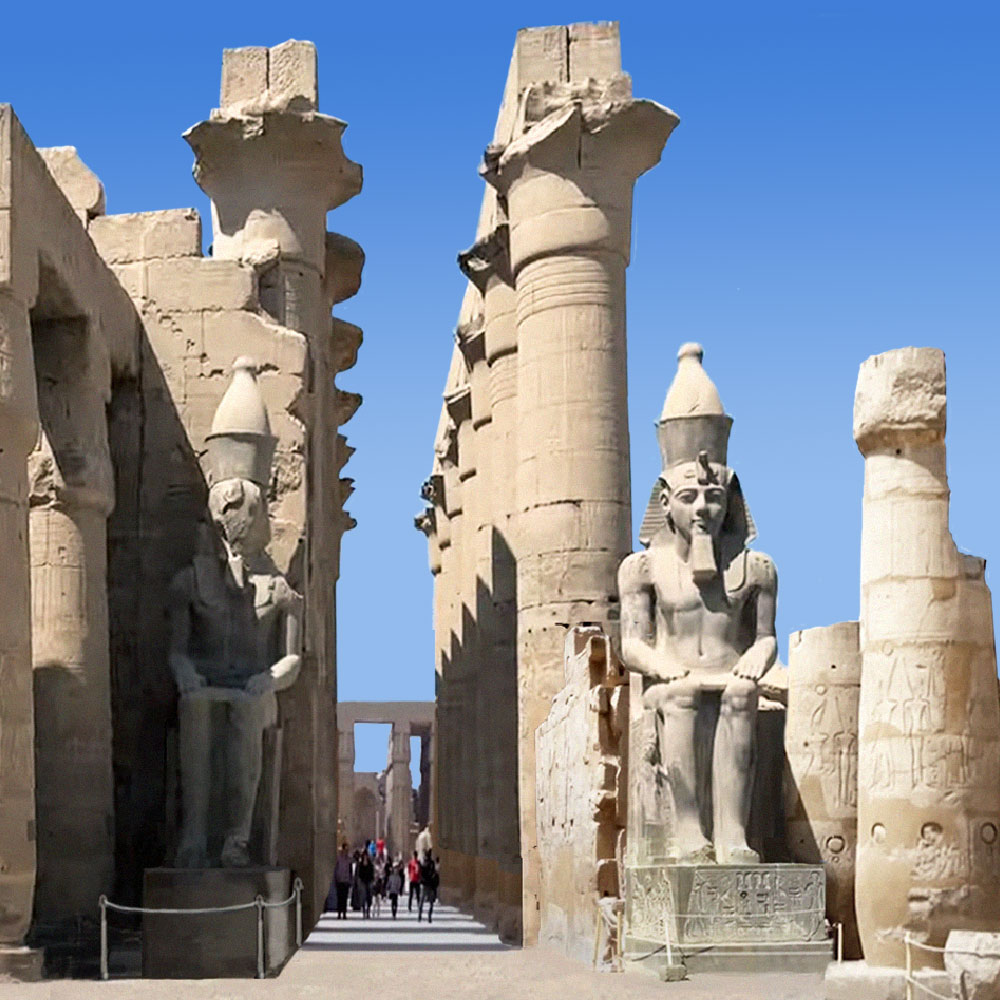
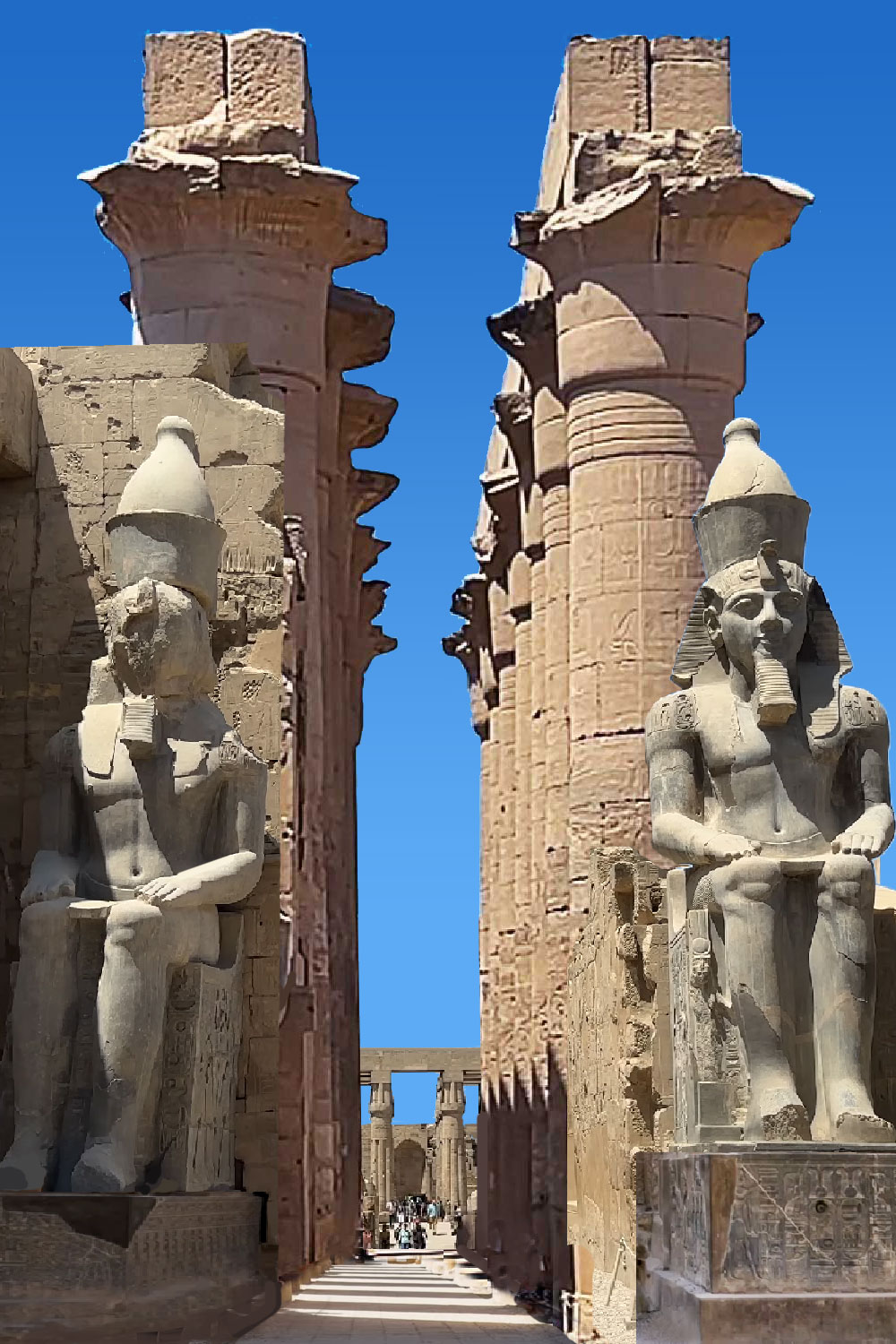
The two seated granite colossi of Ramesses II (The Great) flank the entrance pylon of Luxor Temple, both colossus is 45 feet (14 meters) in height, and topped with the Double Crown of Upper and Lower Egypt, Ramesses II, 82 foot, (25 meter) high pink granite obelisk, is still standing from the 13th century BCE, it is one of a pair, the other now stands in the Place de la Concorde in Paris, Luxor Temple was the largest religious center in ancient Egypt, built by eleven pharaohs named Ramesses, starting in the 13th Century BCE
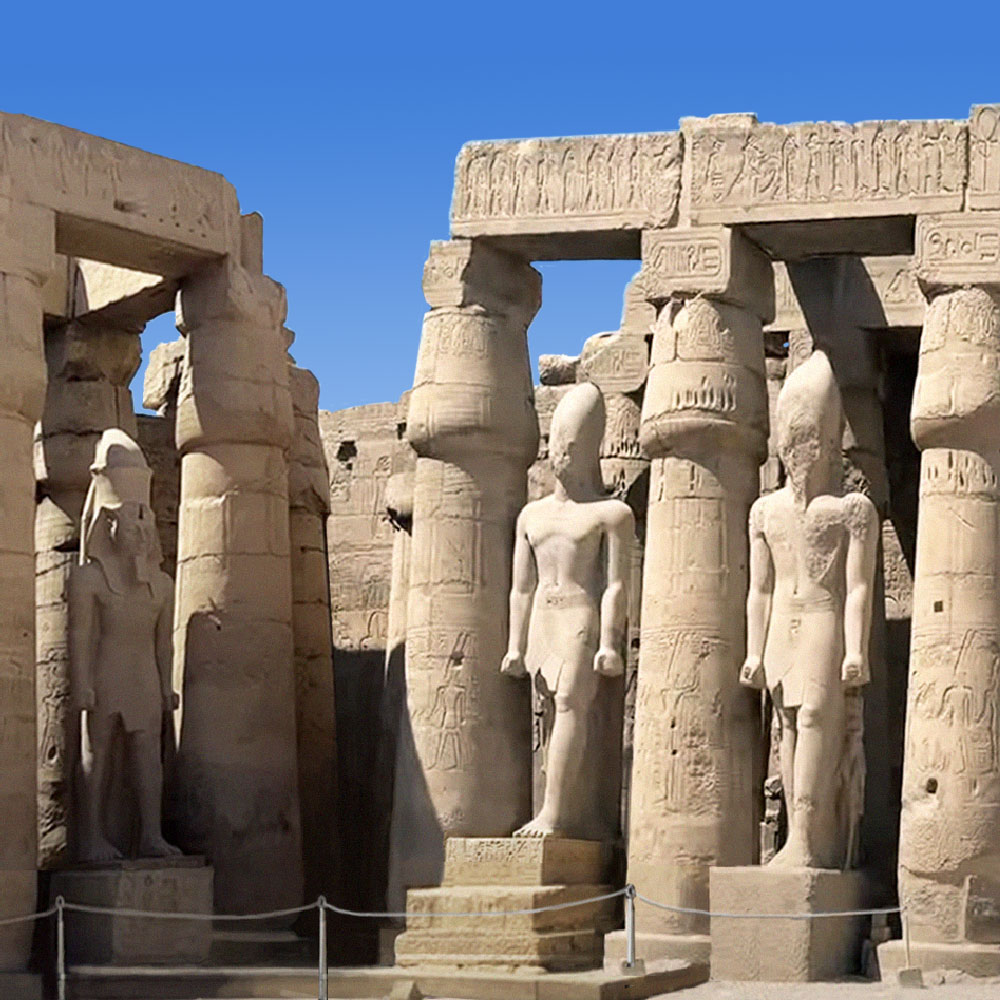
1.) After you enter through the pylon gateway you enter Ramesses II’s Peristyle Courtyard of papyrus bud columns and colossal statuary, Luxor Temple
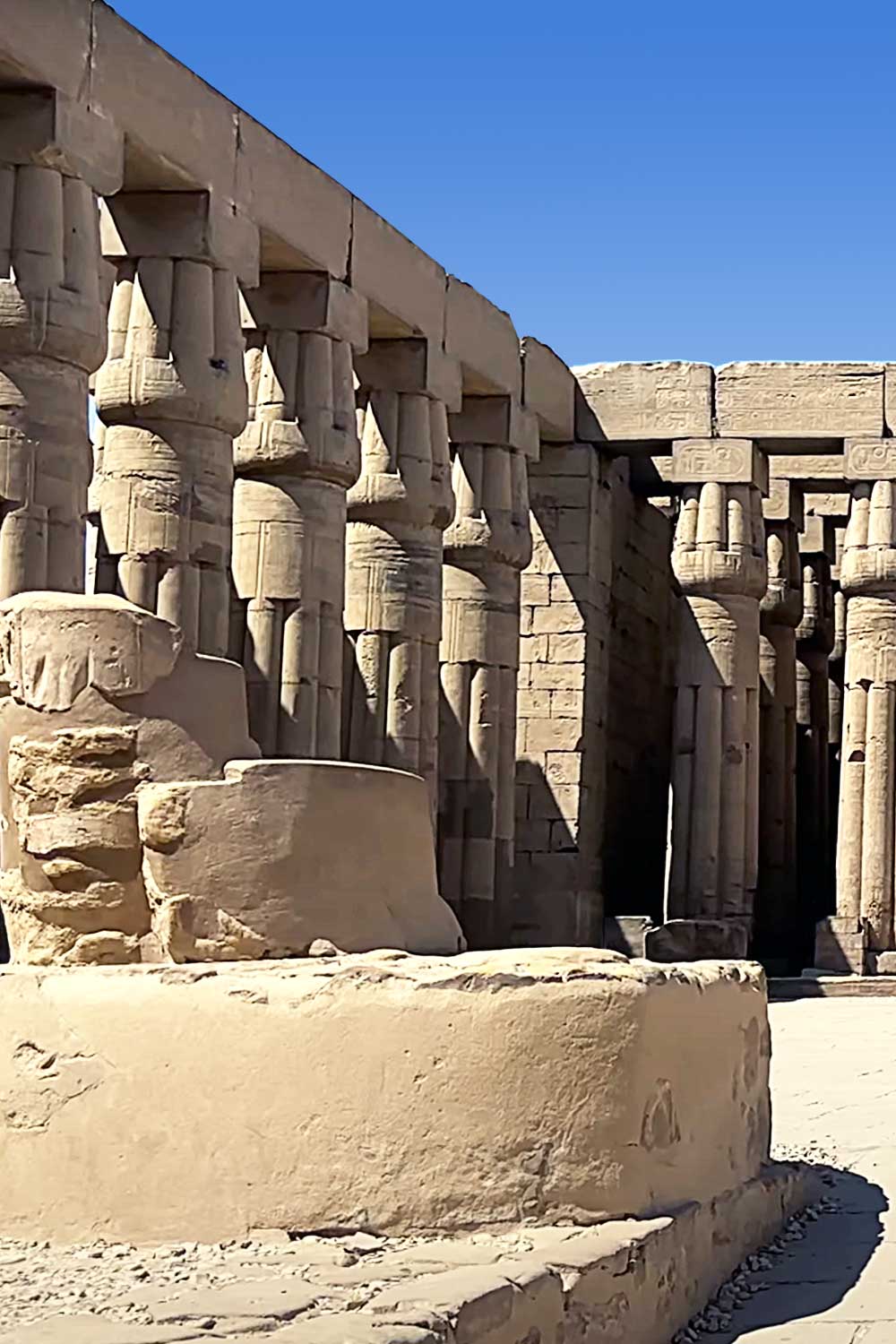
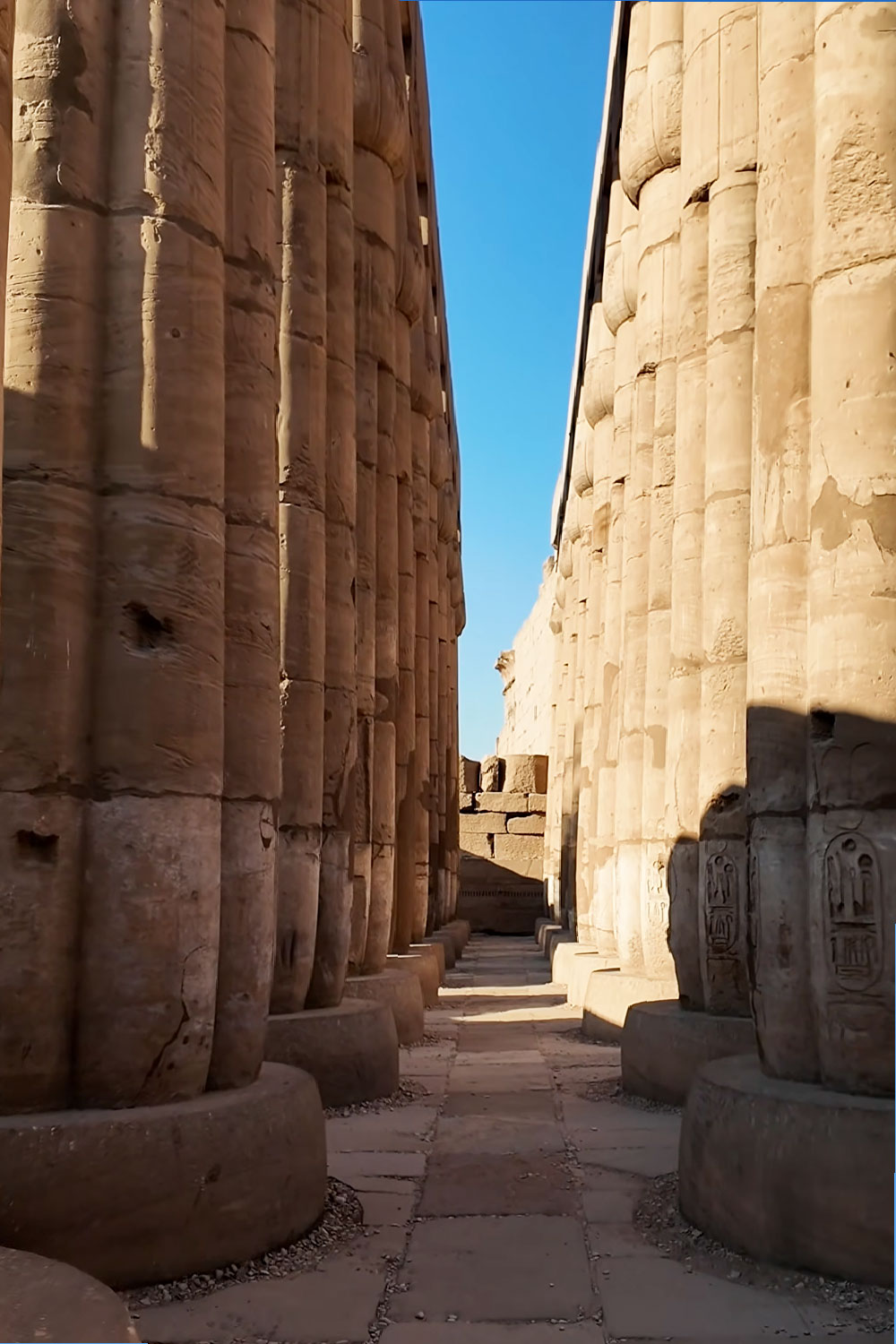
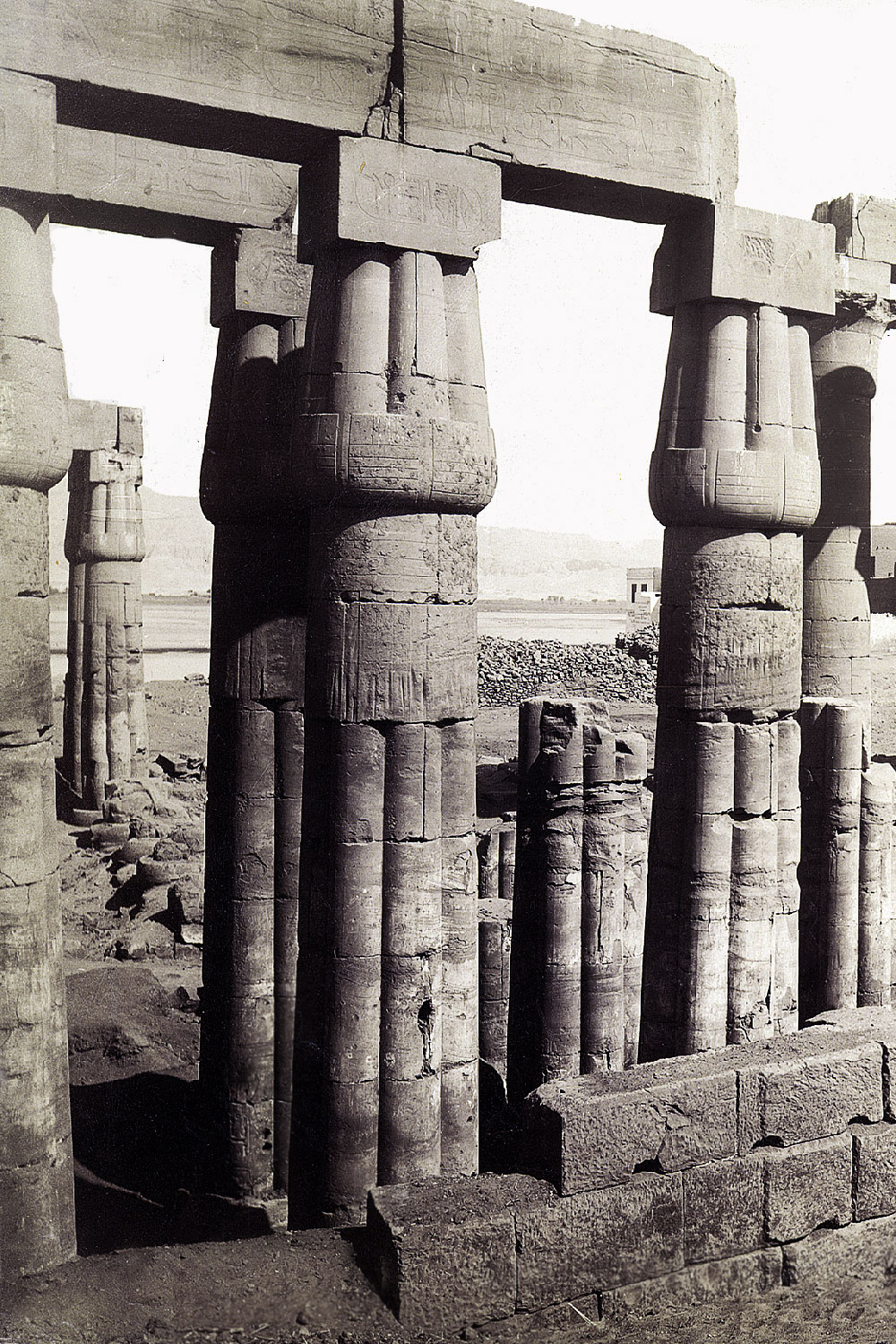
2.) The great Court of Rameses II is 188 feet (57 m) long and 168 feet (51 m) wide. Seventy four papyrus columns, with bud capitals surrounding it, Luxor Temple
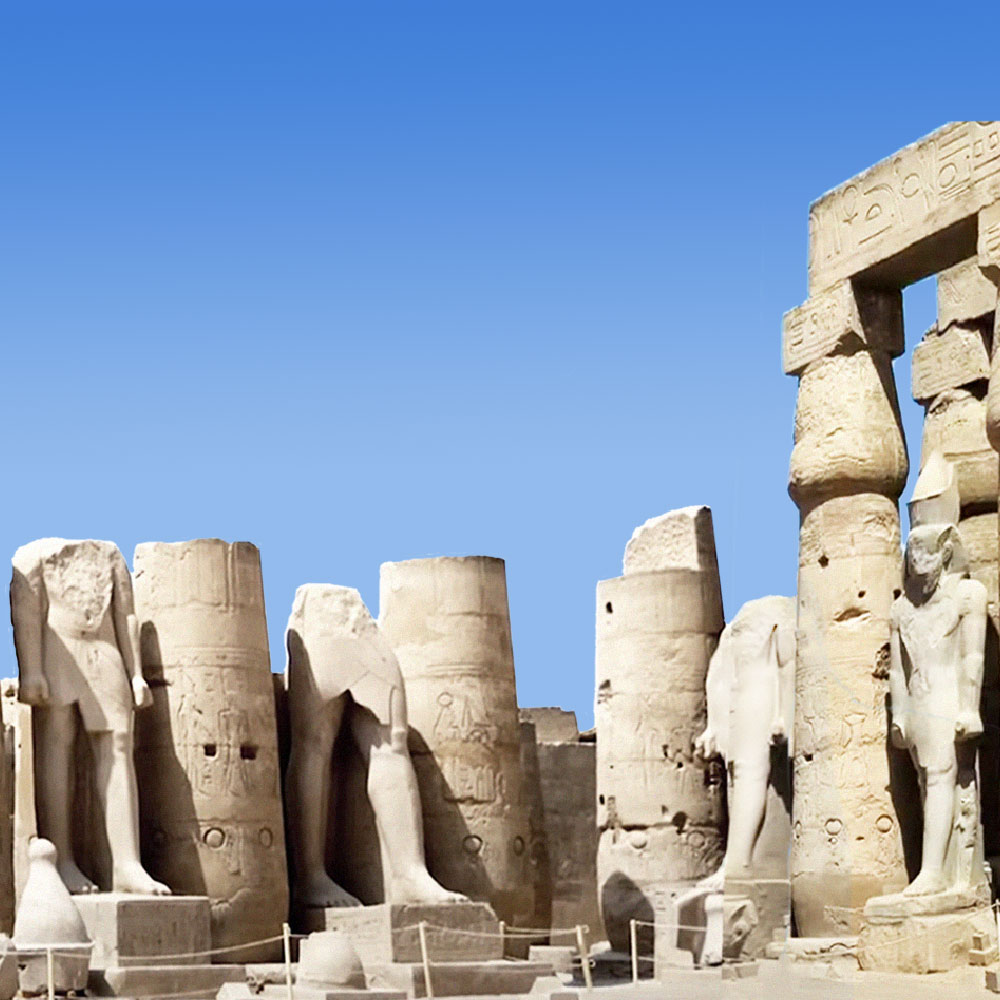
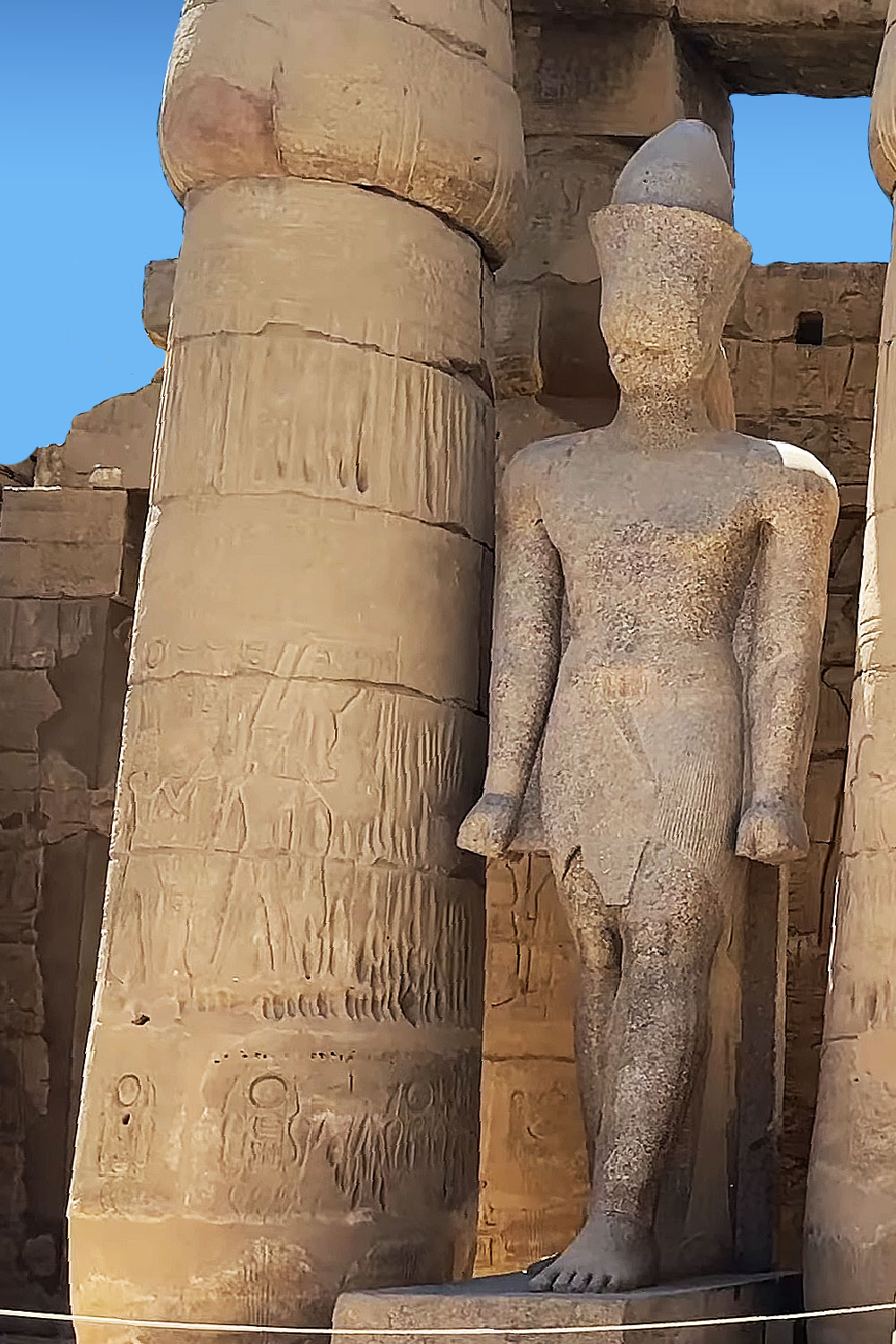
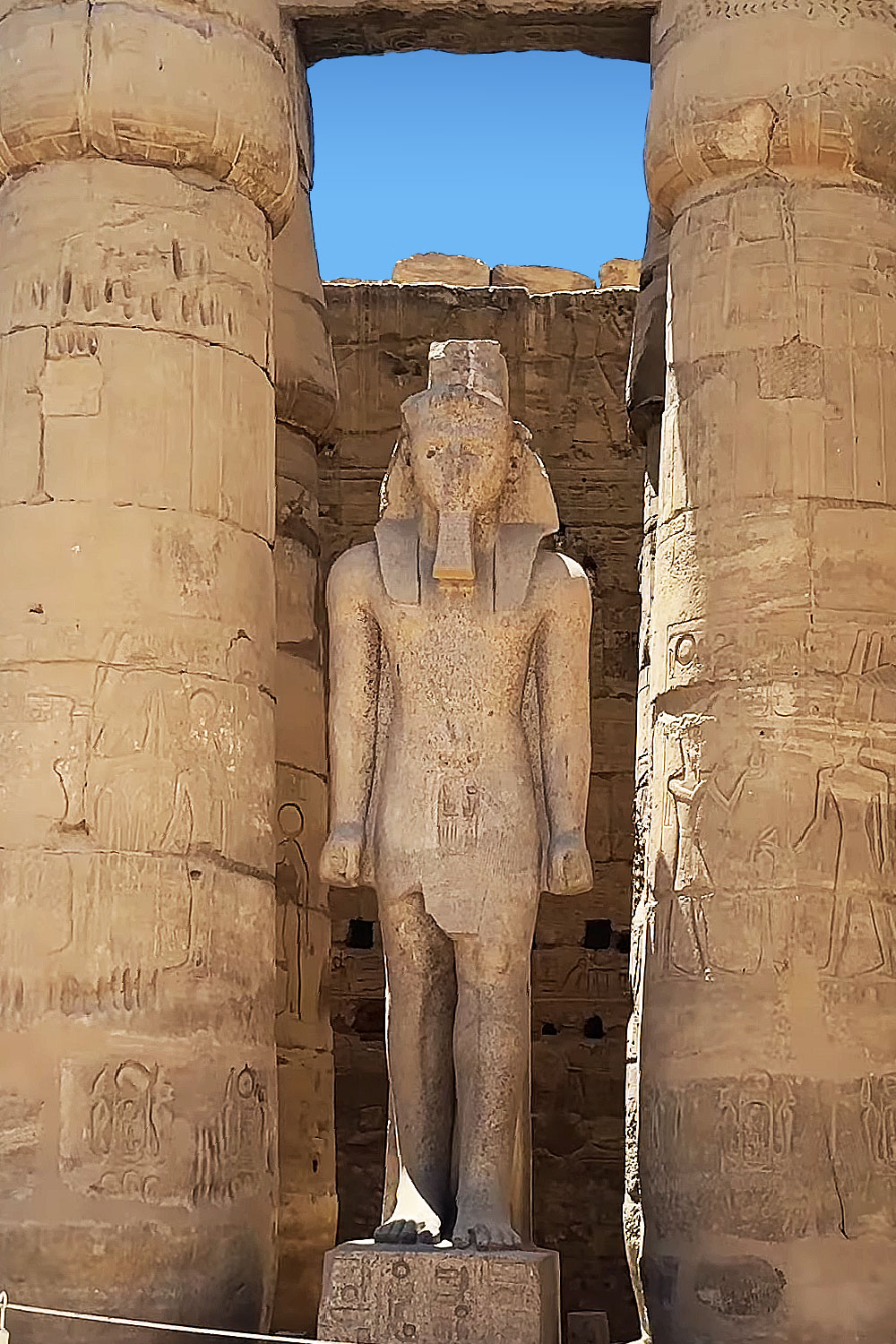
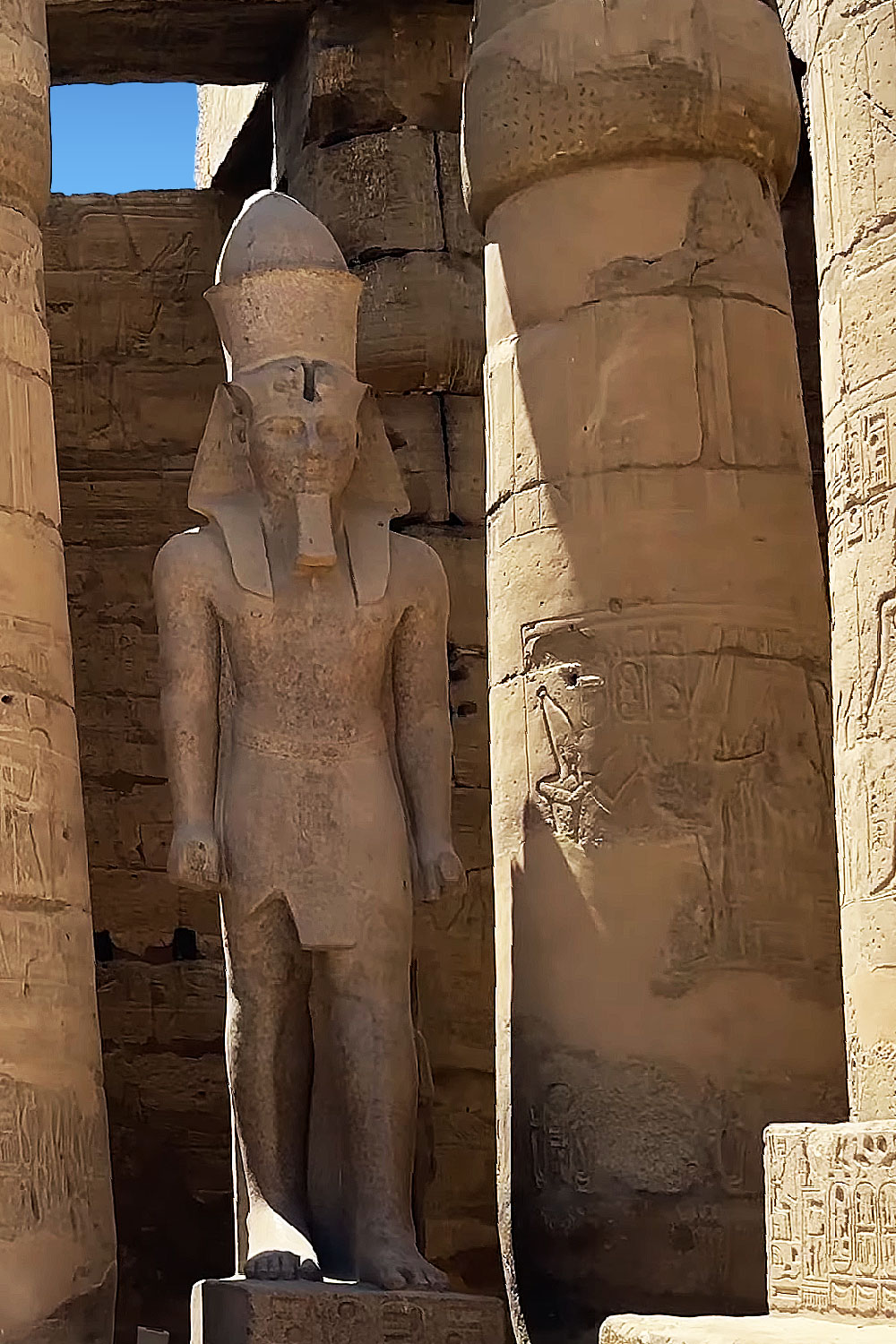
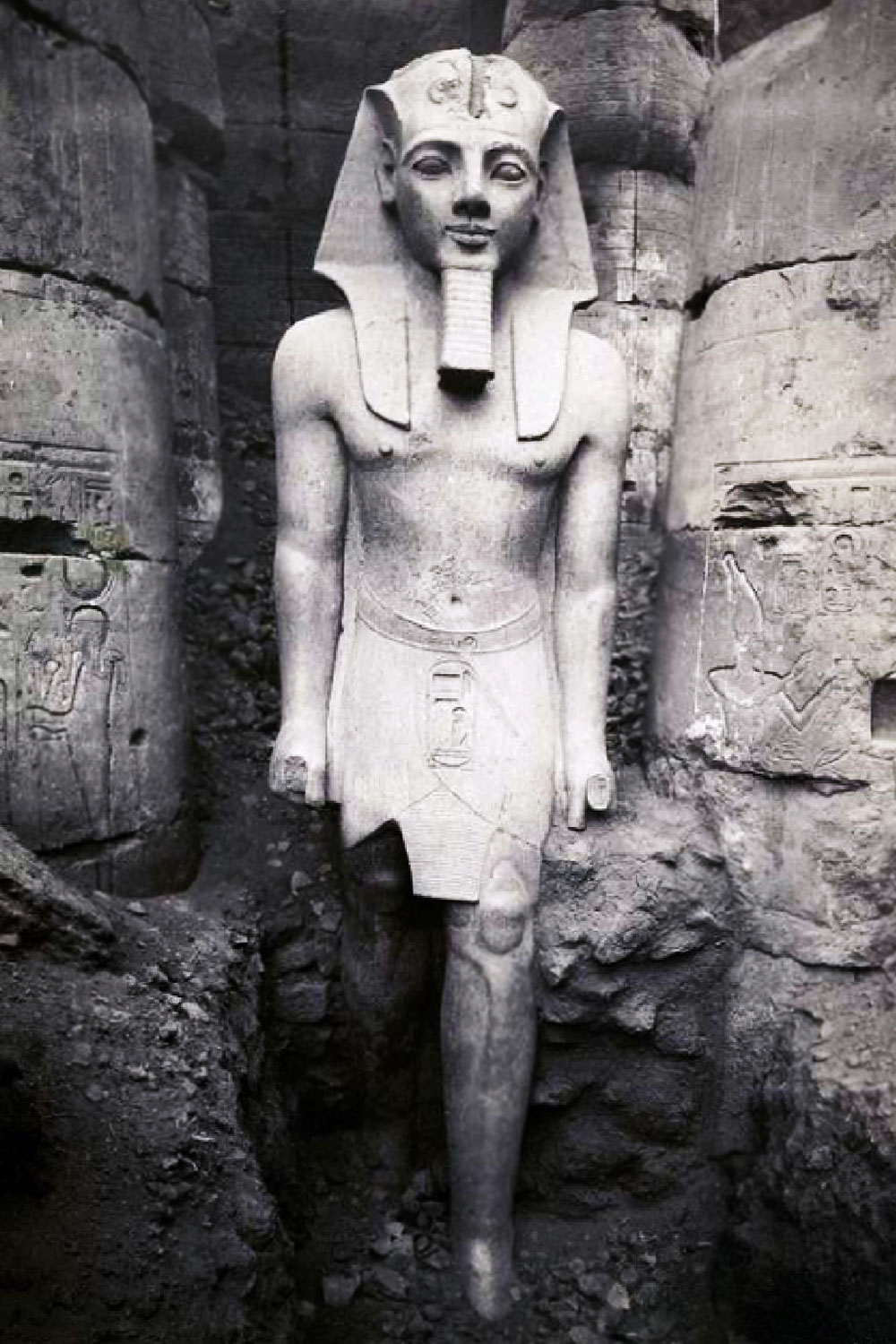
3.) In the Northwest corner of the court there is a shrine to Thutmose III, while in the southern part of the court you are surrounded by standing granite colossal statuary of Ramses II, Luxor Temple
1.) The Court of Amonhotep III measures 148 feet long (45 meters) by 184 feet wide (56 meters), with double rows of papyrus columns on three sides, Luxor Temple
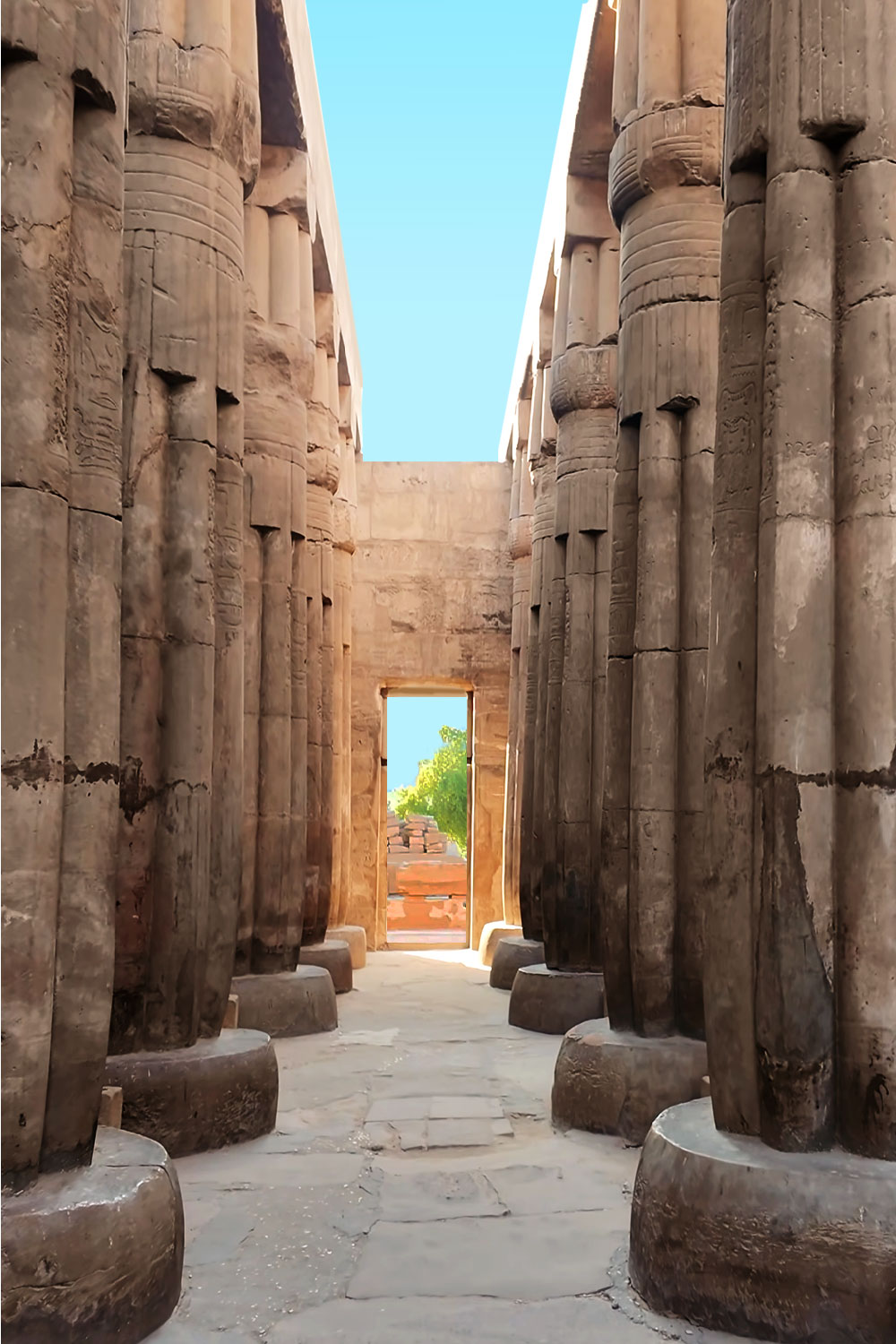
2.) The Court of Amonhotep III leads into the Hypostyle Hall, which has 32 papyrus columns, arranged in four rows of eight columns, Luxor Temple
3.) At the rear of the Hypostyle Hall are four small rooms and an antechamber leading to the birth room, the chapel of Alexander the Great and the sanctuary, Luxor Temple
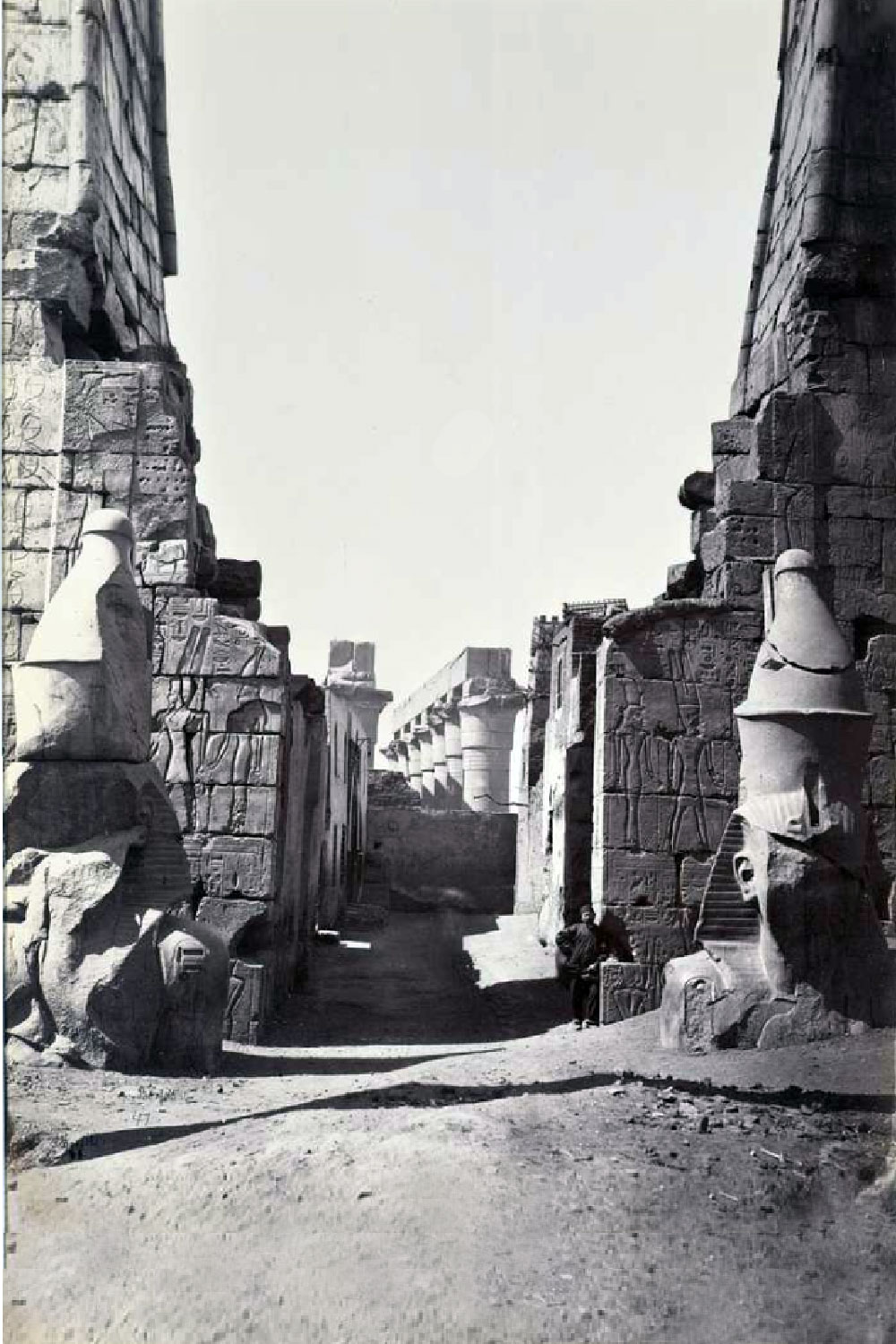
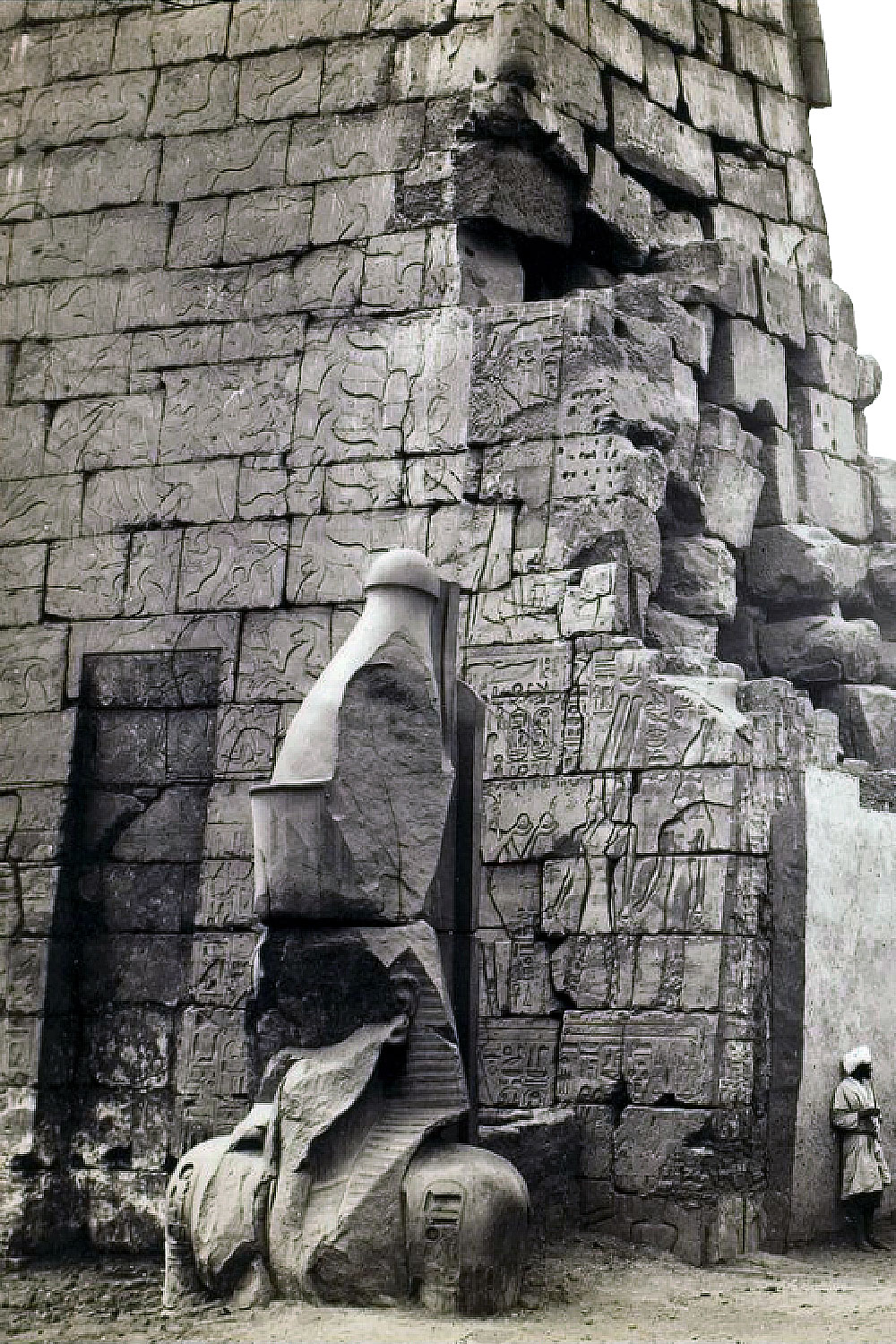
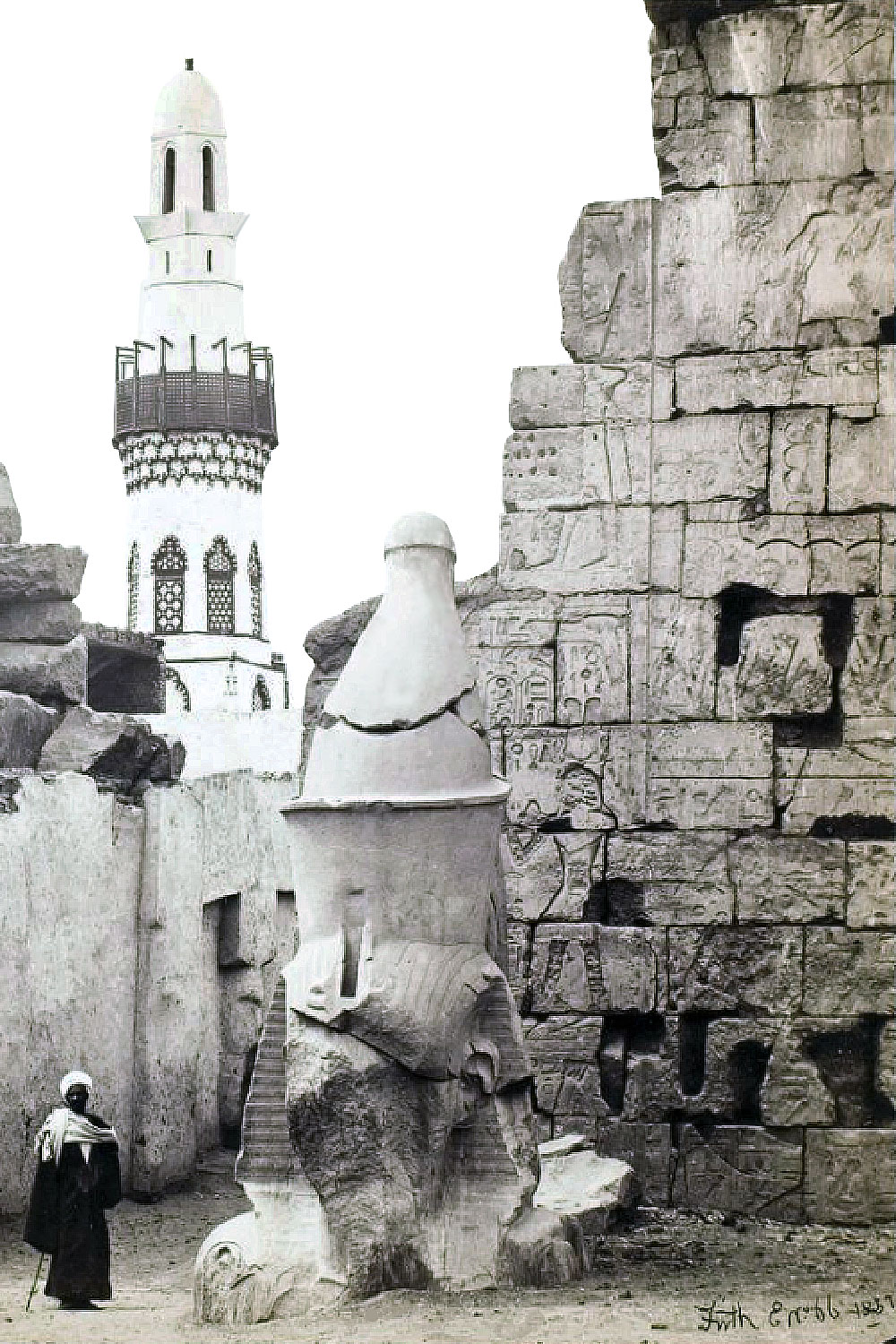
Colossal Head of Ramesses II in front of Luxor Temple's entrance pylon, 45 feet (14 meters) in height, and topped with the Double Crown of Upper and Lower Egypt, 12th century BCE, Luxor Temple
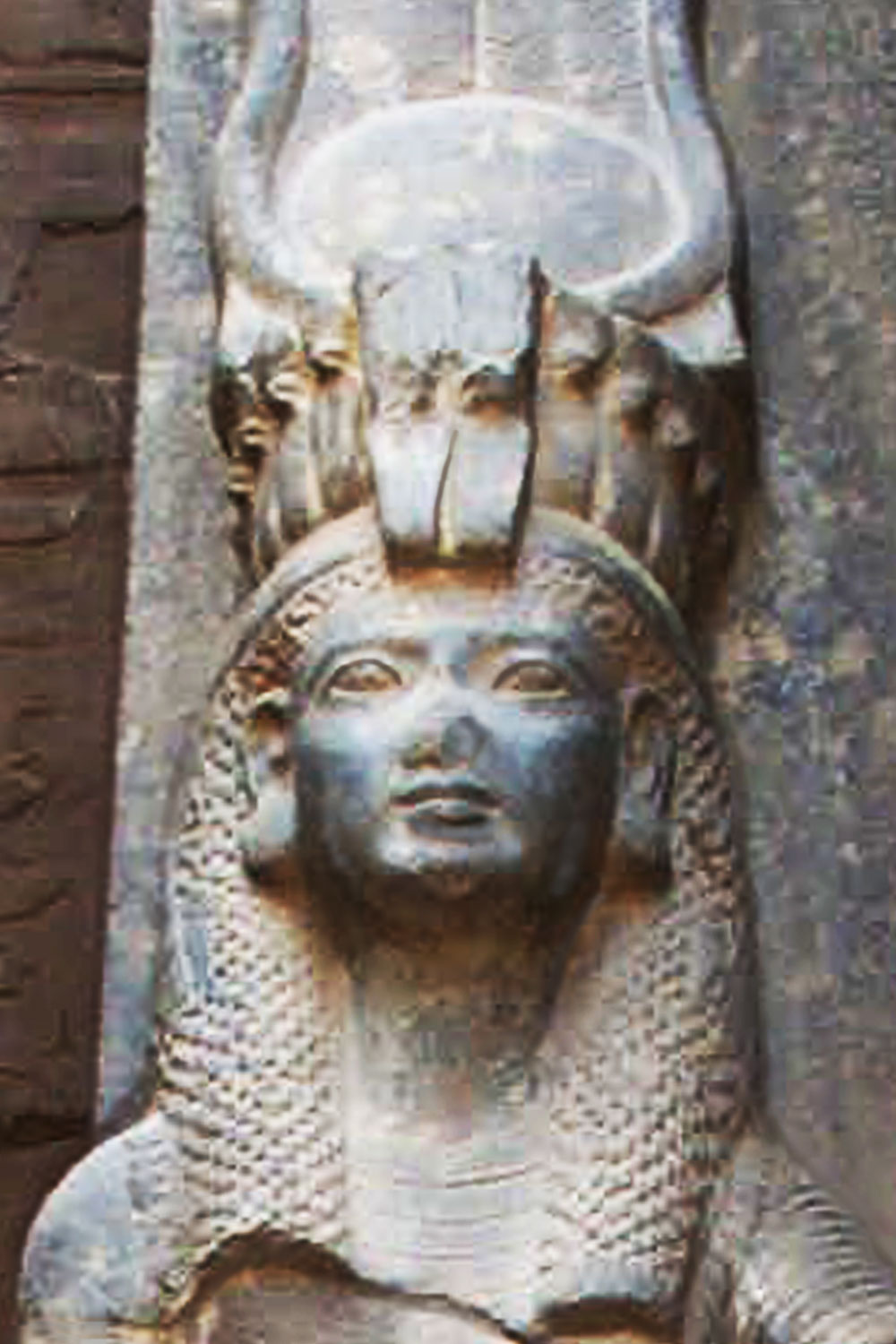
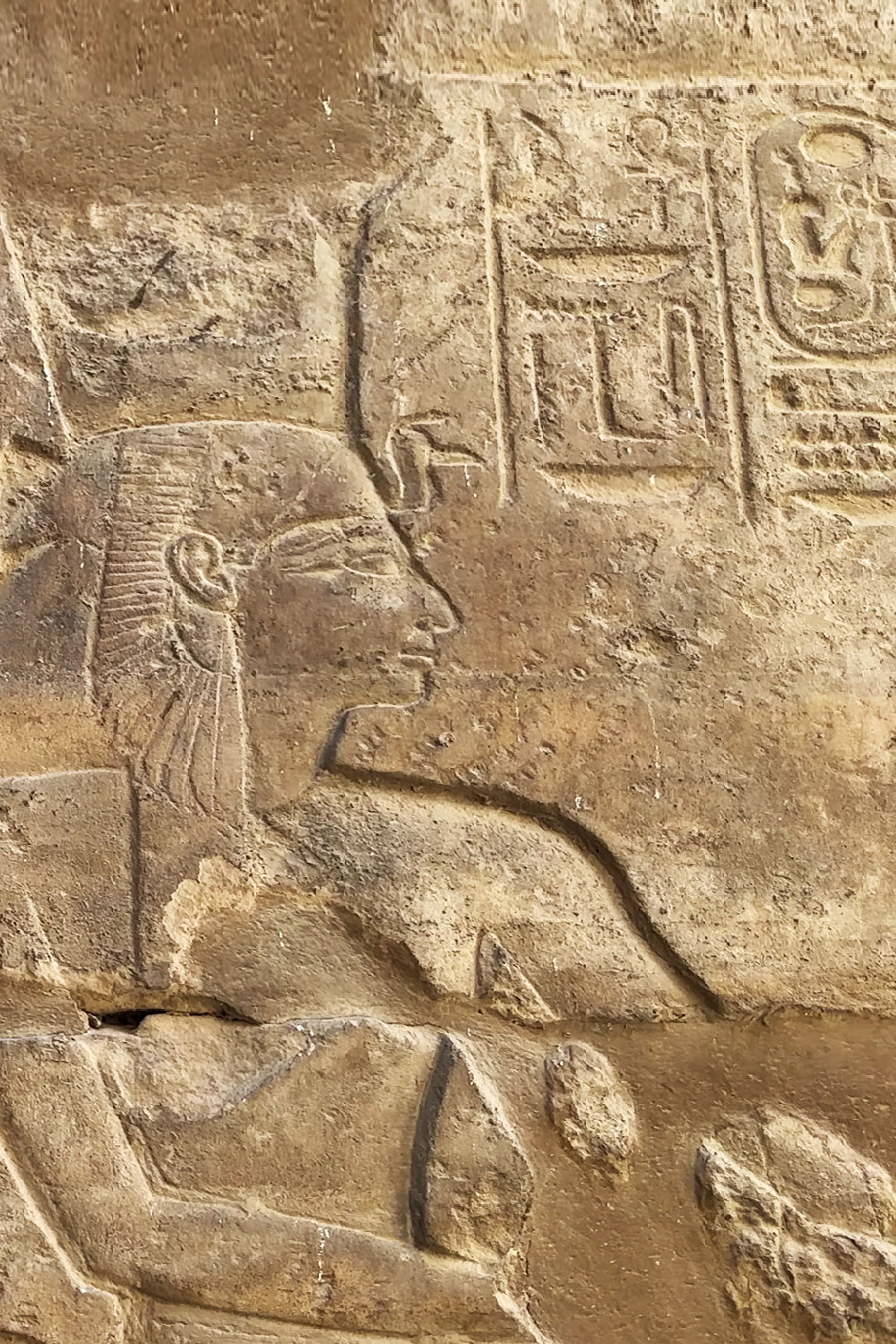
Statue of Isis, Nineteenth Dynasty, (1292 BC–1189 BC), Luxor Temple
Colossal Head of Ramesses II in front of Luxor Temple's 2nd entrance pylon, 45 feet (14 meters) in height, and topped with the Double Crown of Upper and Lower Egypt, 12th century BCE, Luxor Temple
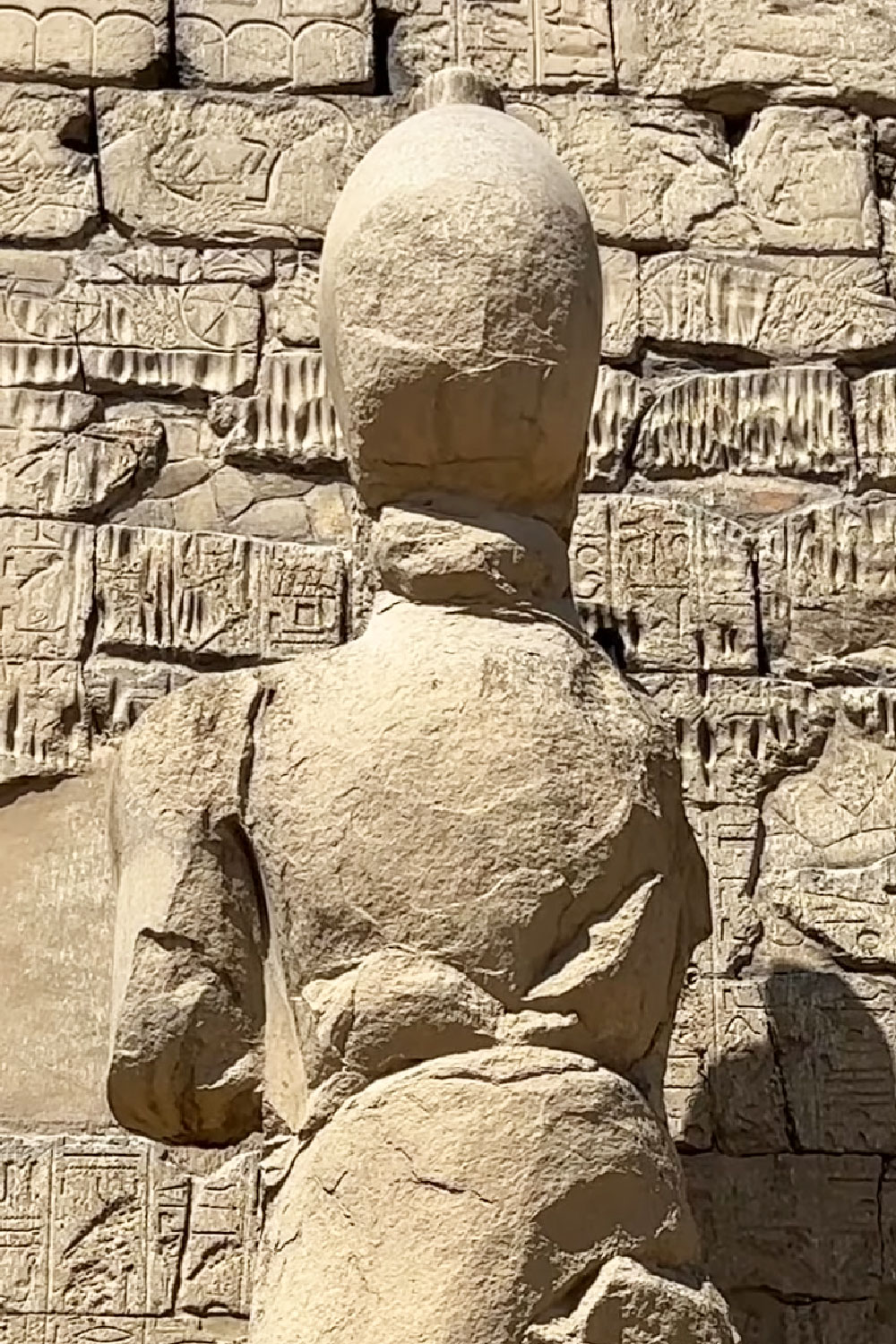
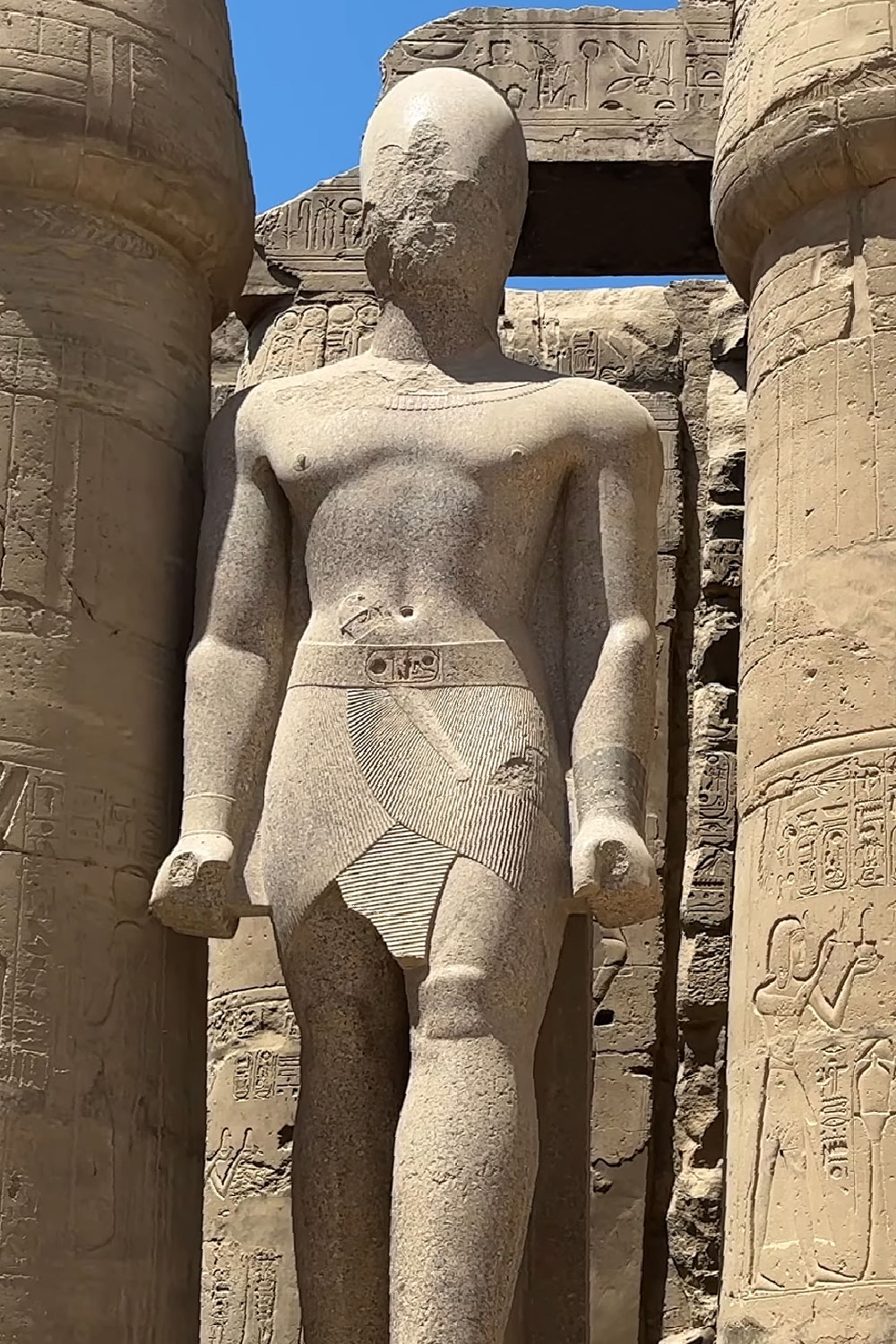
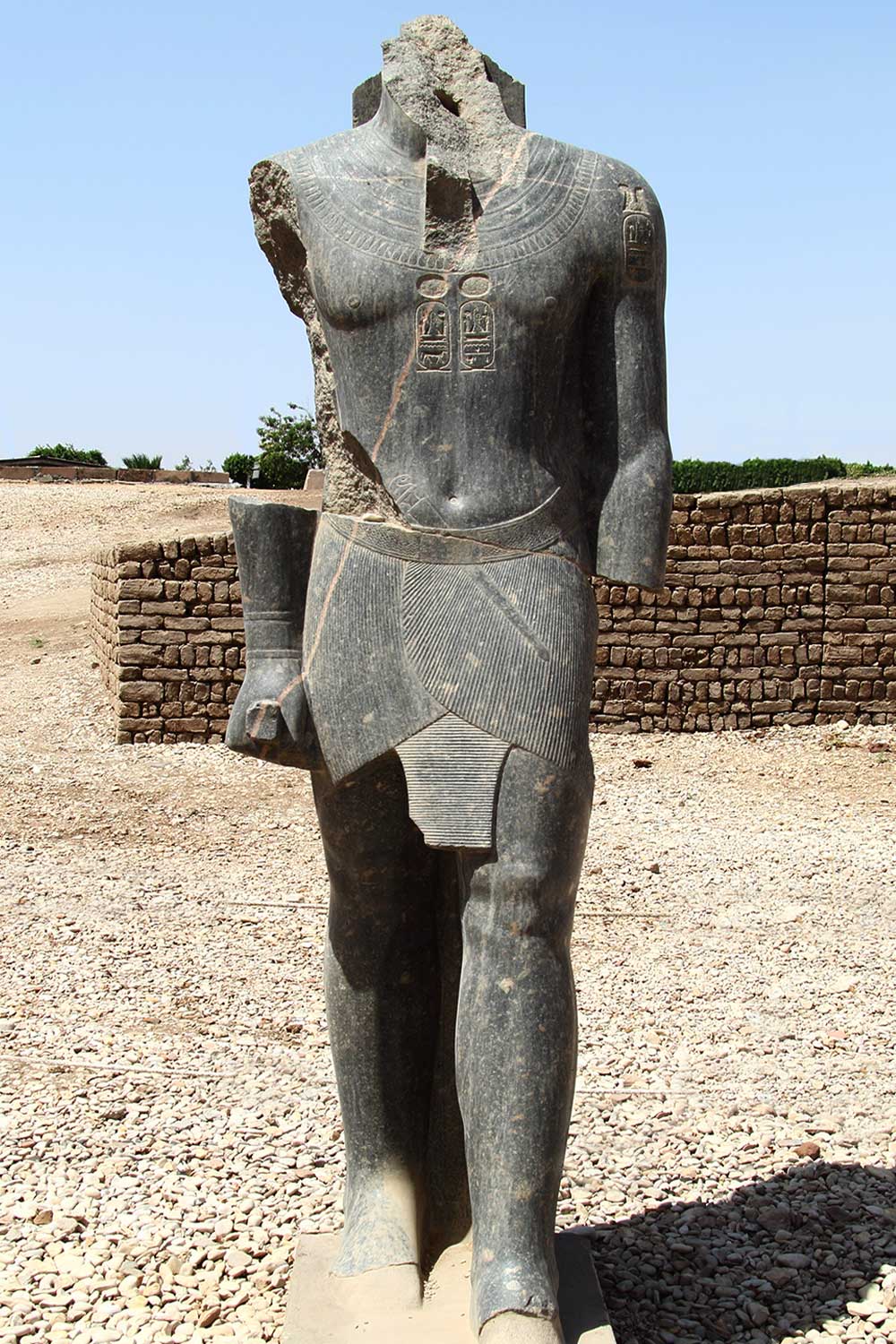
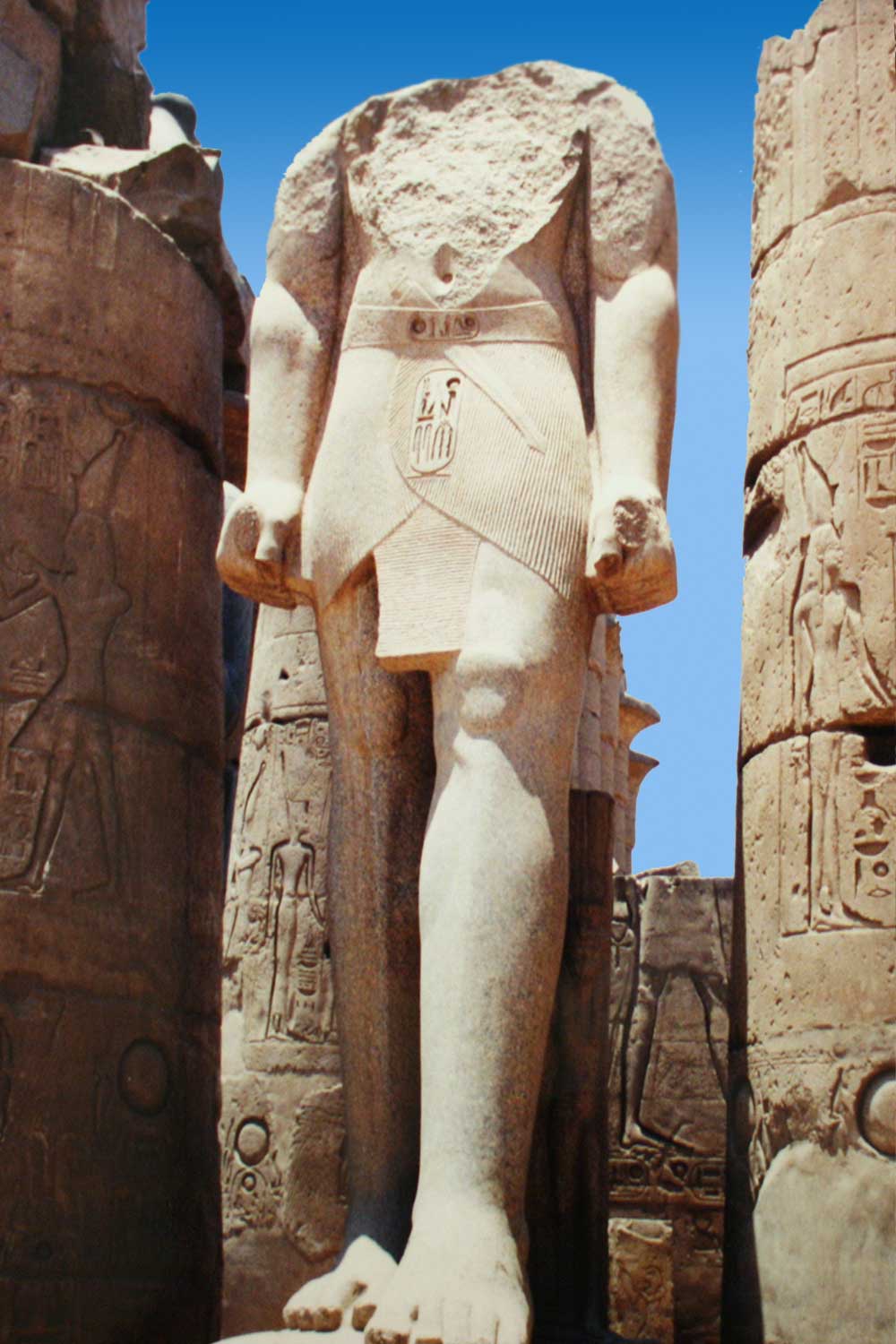
Headless Ramesses II, 1230 BCE. Luxor Temple
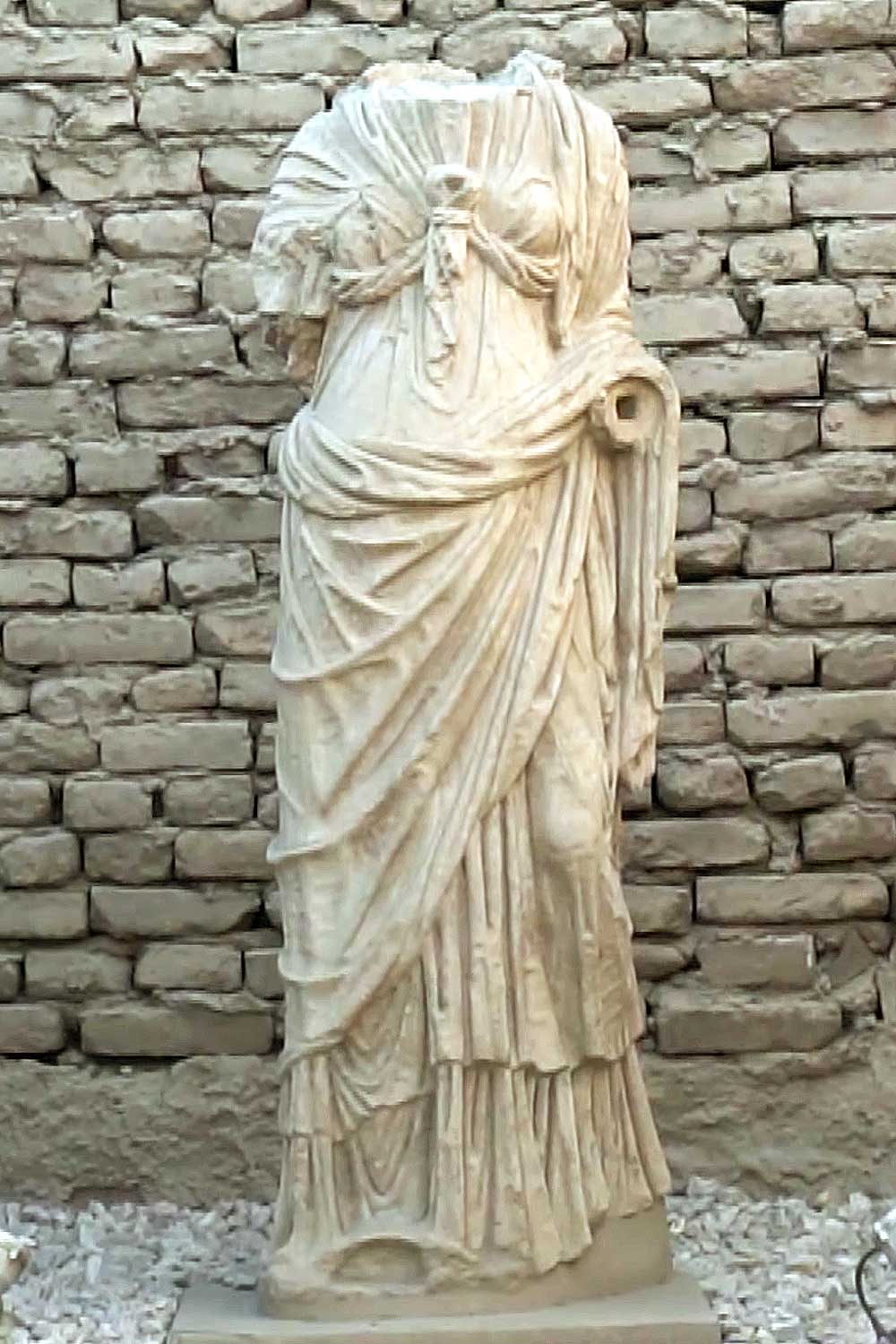
Headless Statue of Isis in the shrine to Serapis, created by Emperor Hadrian (76-138 AD), Luxor Temple
HeadlessStatue of Pharaoh Merenptah, (1213-1204 BCE) son of Ramses II, Temple of Luxor, East Bank (Thebes)
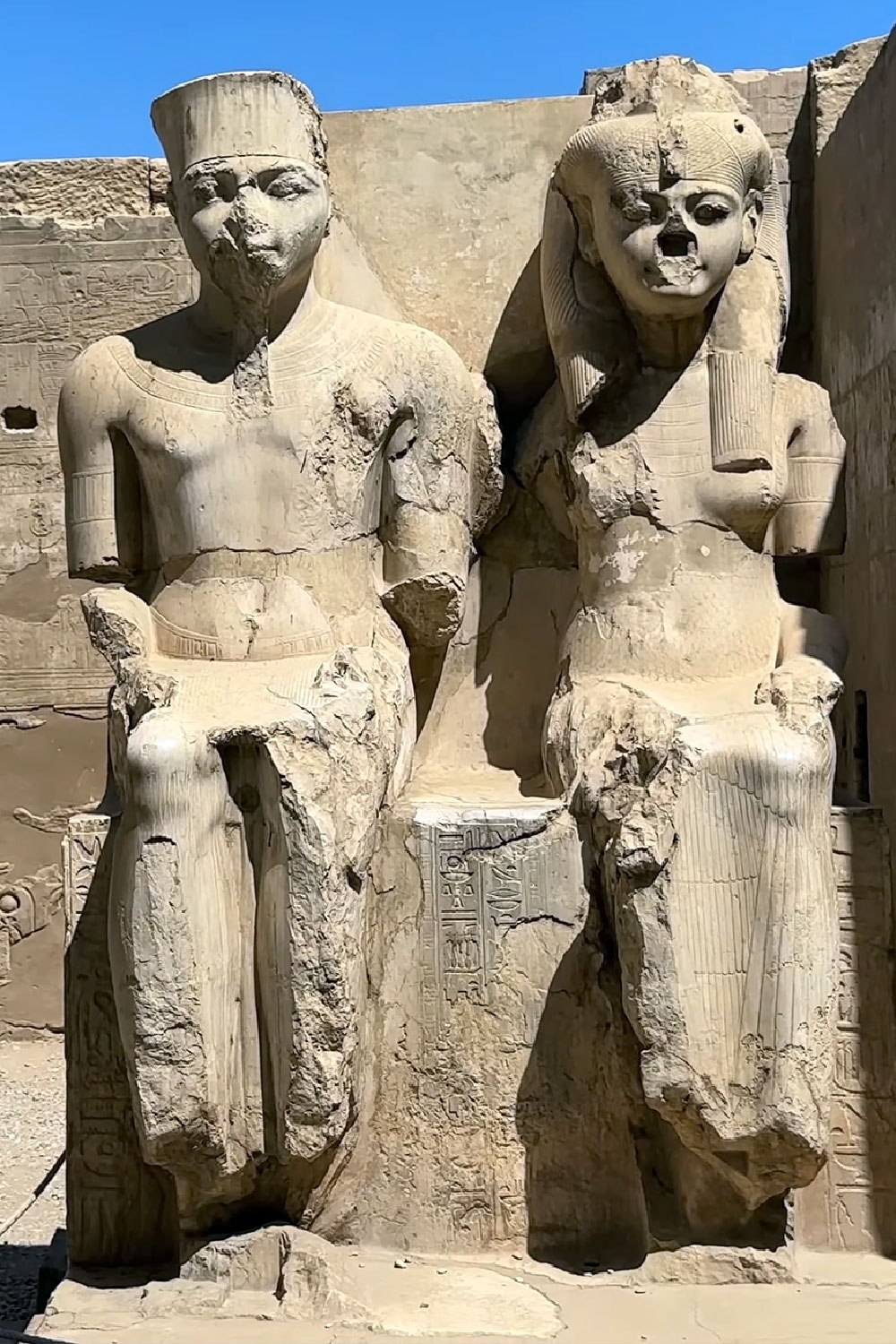
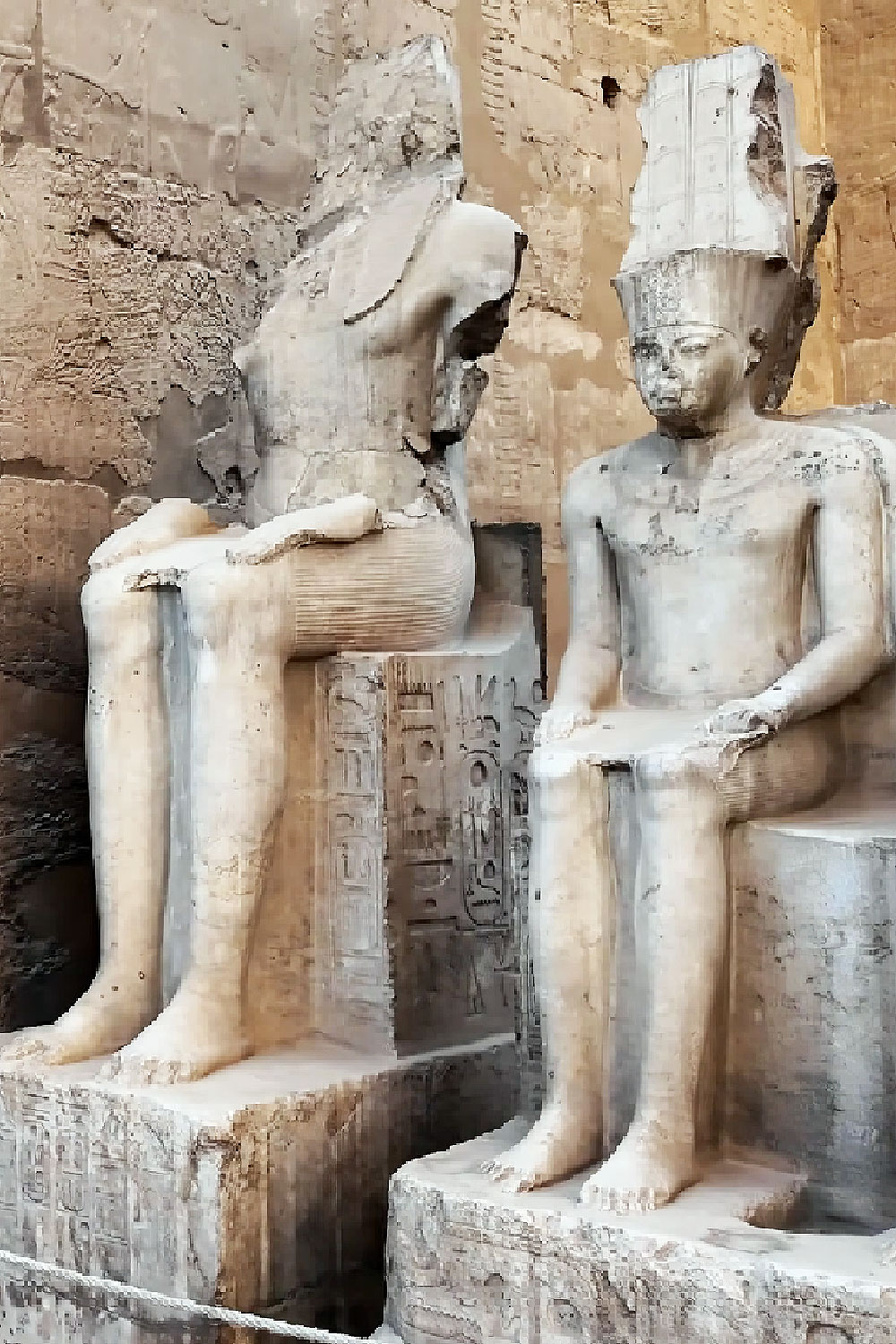
A broken statue of a young King Tutankhamun and his consort Ankesenamun, carved sand stone, 1230 BCE. Luxor Temple
Tuthmosis III at Precinct of Amun-Re, Temple of Amun, Luxor Temple
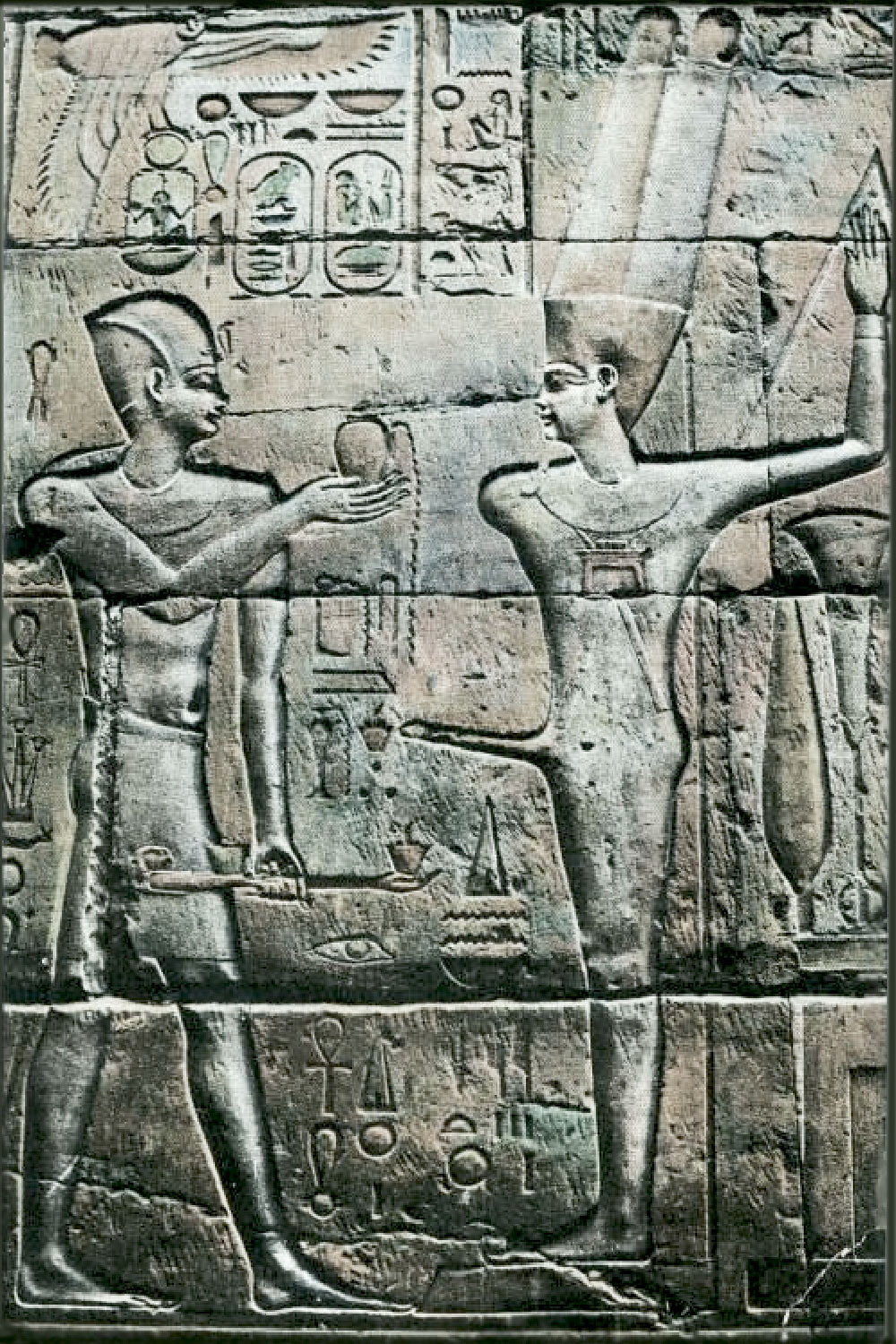
A double statue of Amun and Mut with the facial features of Tutankhamun and Ankhesenamun, Luxor Temple, 13th century BCE,
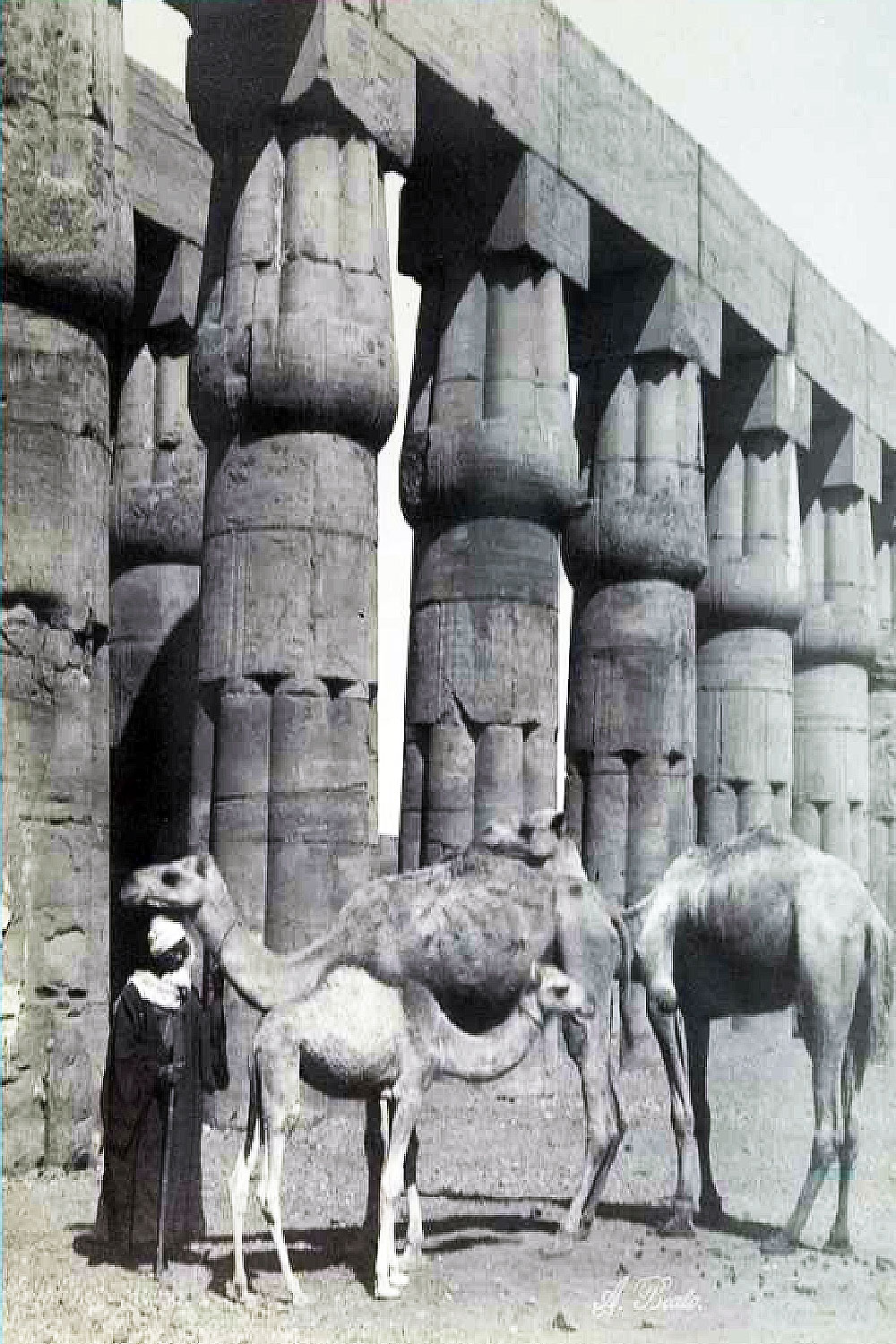
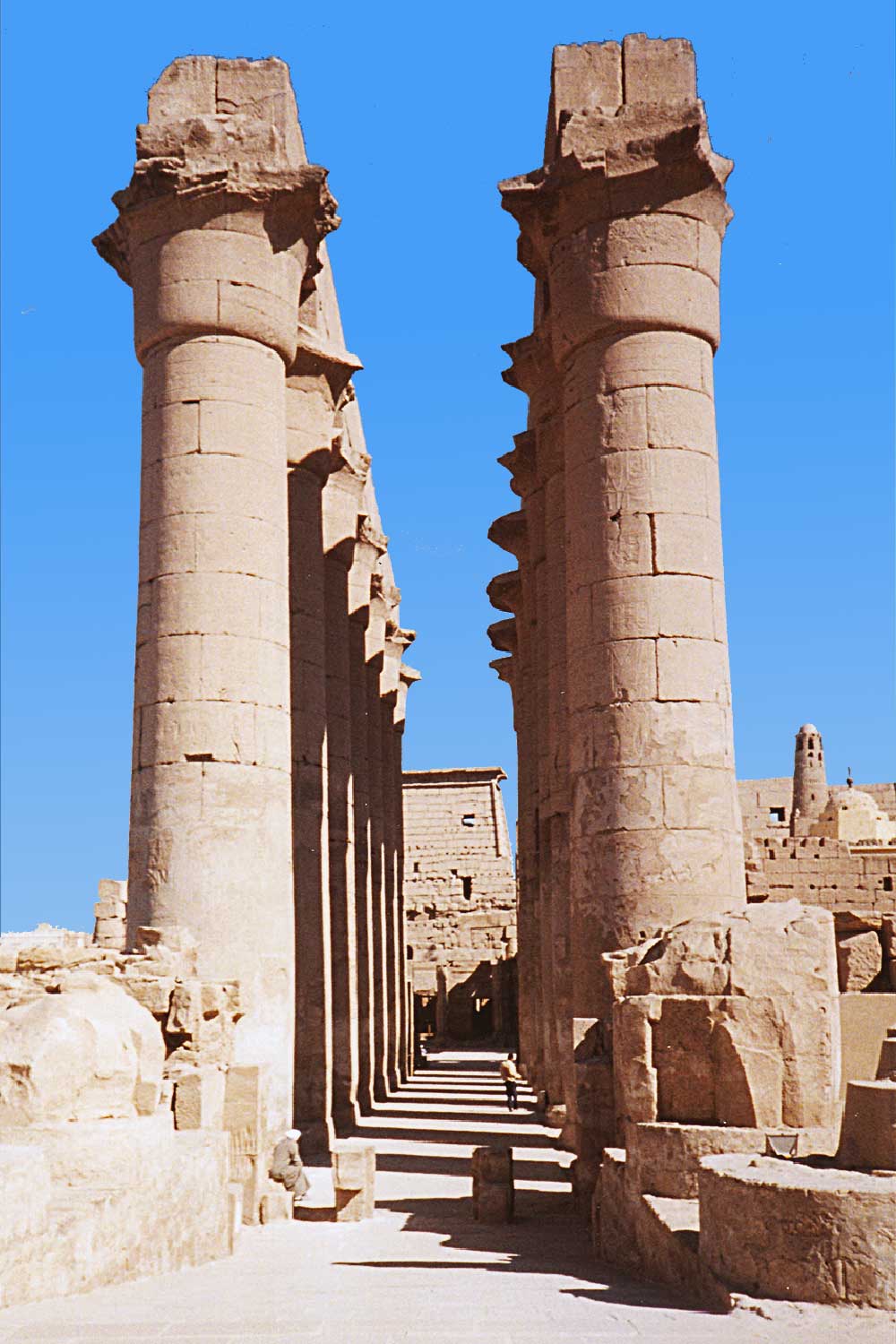
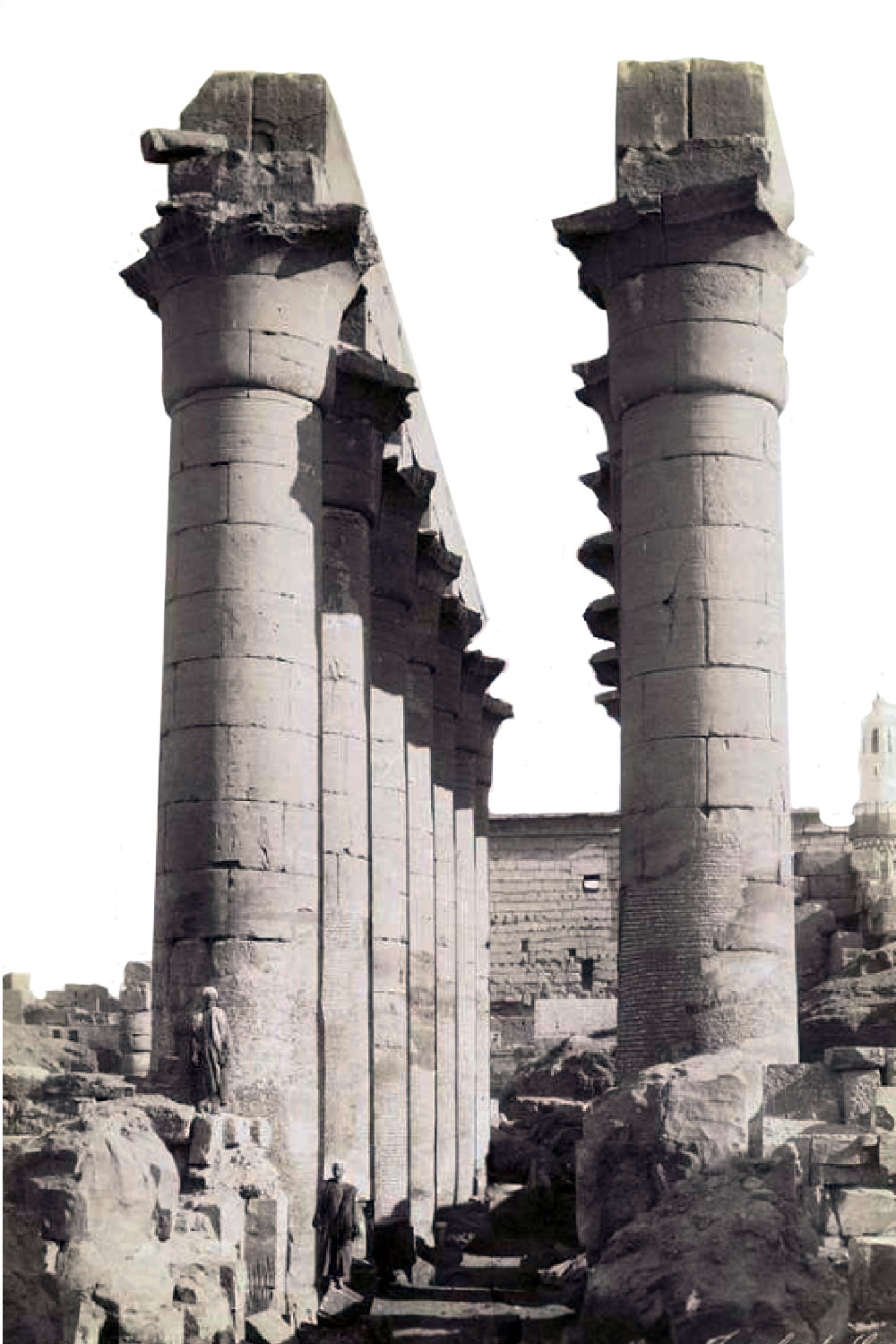
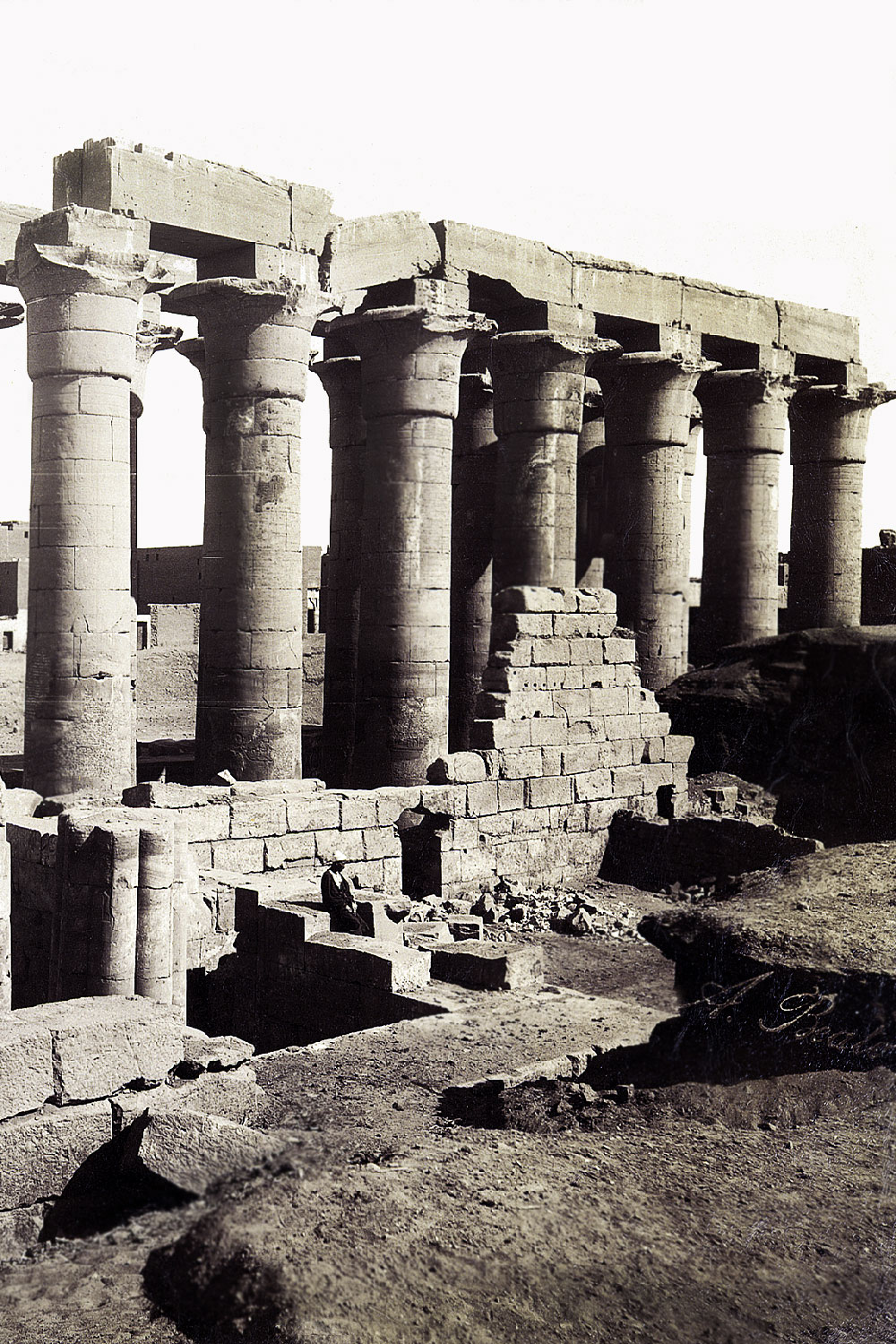
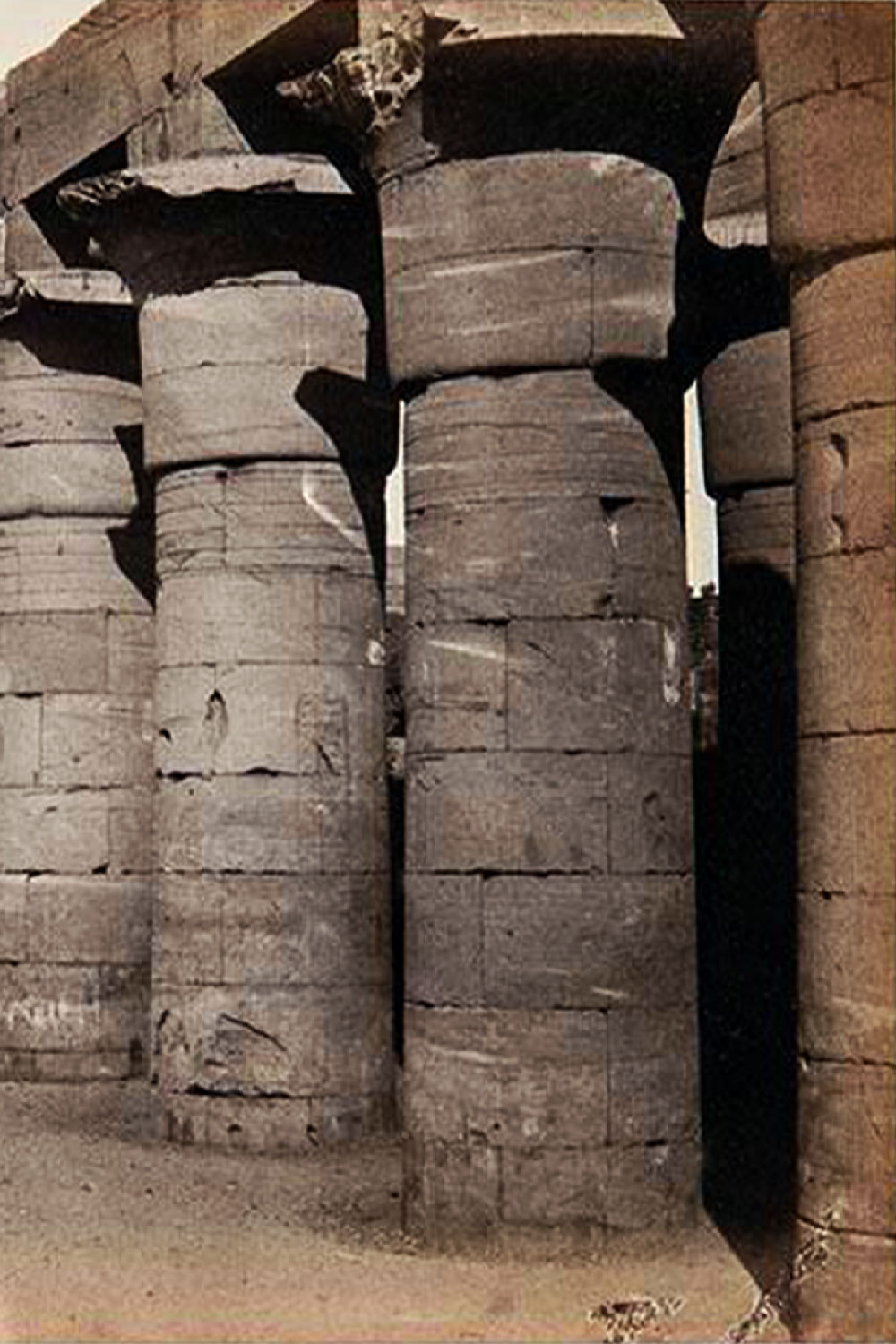
The Great Colonnade of Amenhotep III measures 148 feet long, has seven pairs of 52 foot (16m) high open-flower papyrus columns, which still support their huge architrave blocks, Luxor Temple
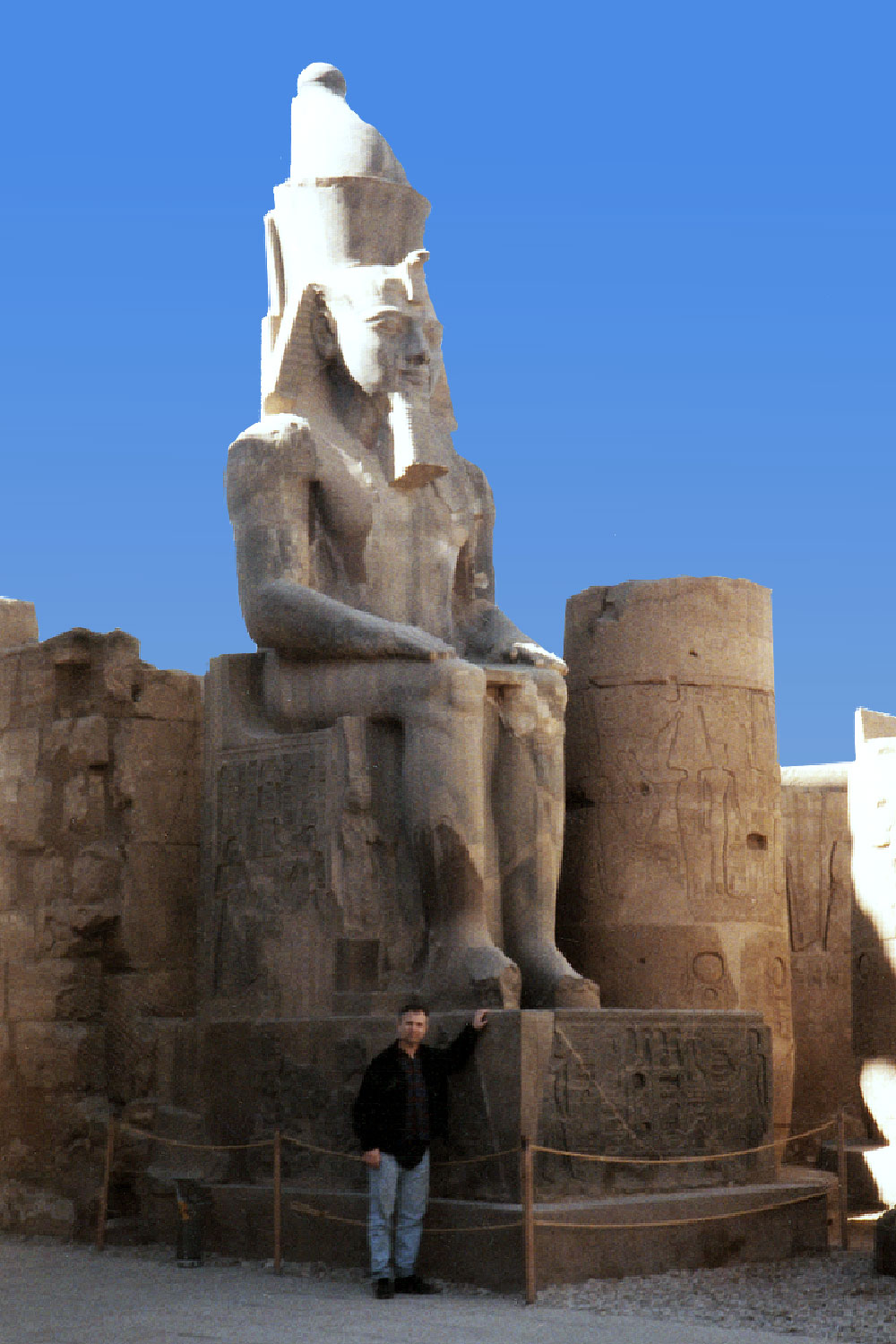
I next to the Sitting Ramesses II Colossus inside Luxor Temple, sits at 45 feet (14 meters) high, carved granite
Two seated granite colossi of Ramesses II flank The Great Colonnade of Amenhotep III both colossus is 45 feet (14 meters) in height, and topped with the Double Crown of Upper and Lower Egypt,
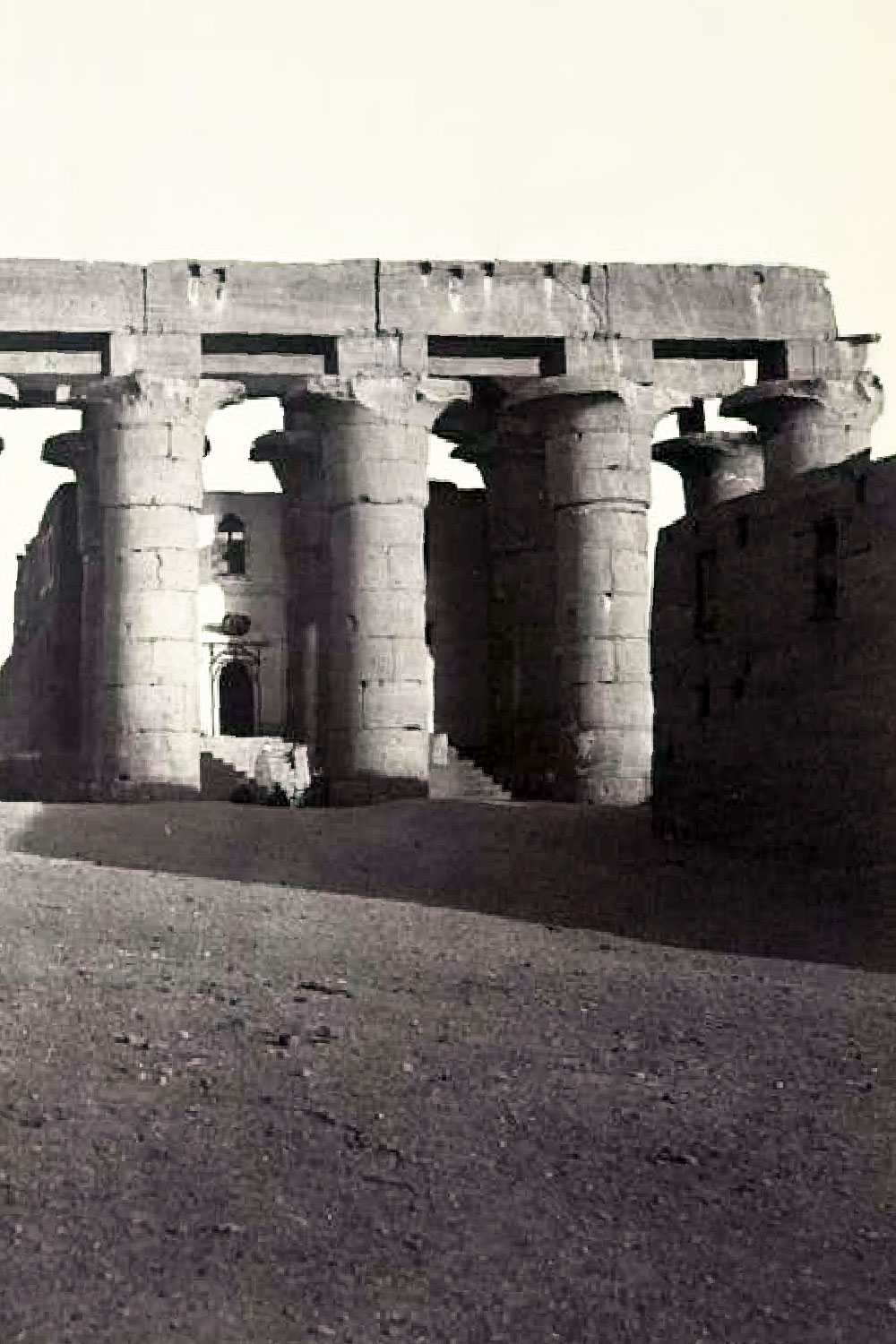
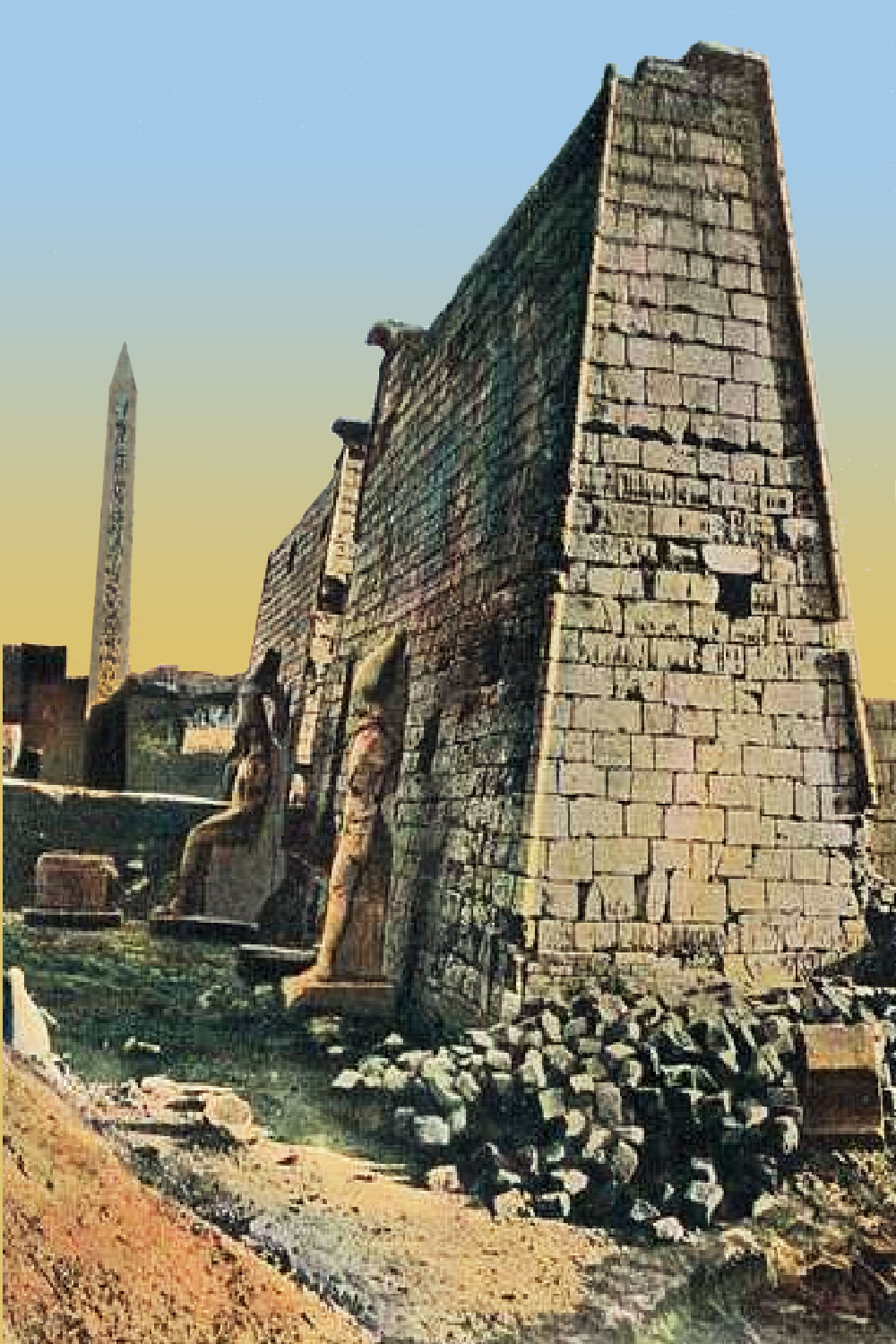
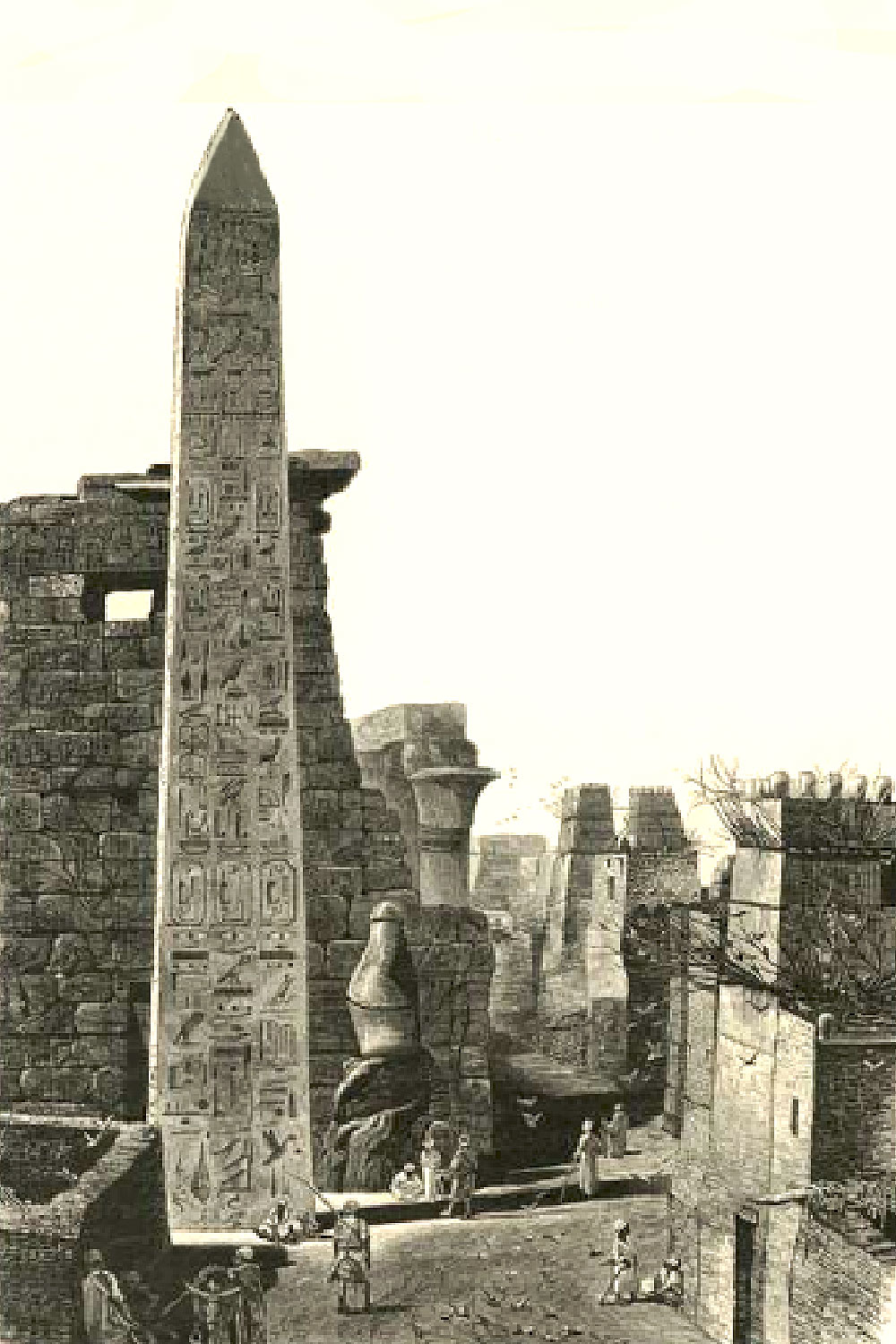
The remaining obelisk and ruins at Luxor Temple in 1881
Star Lore Of All Ages, The Temple at Luxor, Photo by Félix Bonfils, 1911
L'Égypte, Vues photographiques, 1870, Photographe; Bisson, Auguste Rosalie (1826-1900), Luxor Temple
Website & Website & Content Created by Richard Brafford, © 2025, All Rights Reserved, Fair Use Disclaimer for Non-Commercial Use for Educational & Entertainment Purposes OnlyTop