Jaipur the Pink City
Jaipur, the capital of Rajasthan, was founded in 1727 by the Rajput rulers and is famed for its Old City—nicknamed
the “Pink City” for its distinctive rose‑colored architecture. The city’s major landmarks include the lakeside Jal Mahal and the hilltop
Amber Fort. At the center of Jaipur’s planned street grid stands the Hawa Mahal, or “Pink Palace,” adjoining the opulent City Palace complex,
part of which still serves as a royal residence. Today, Jaipur is celebrated for its vibrant bazaars, grand forts, ancient temples, palaces,
gardens, courtyards, wildlife sanctuaries, and museums, making it one of India’s most atmospheric historic capitals.
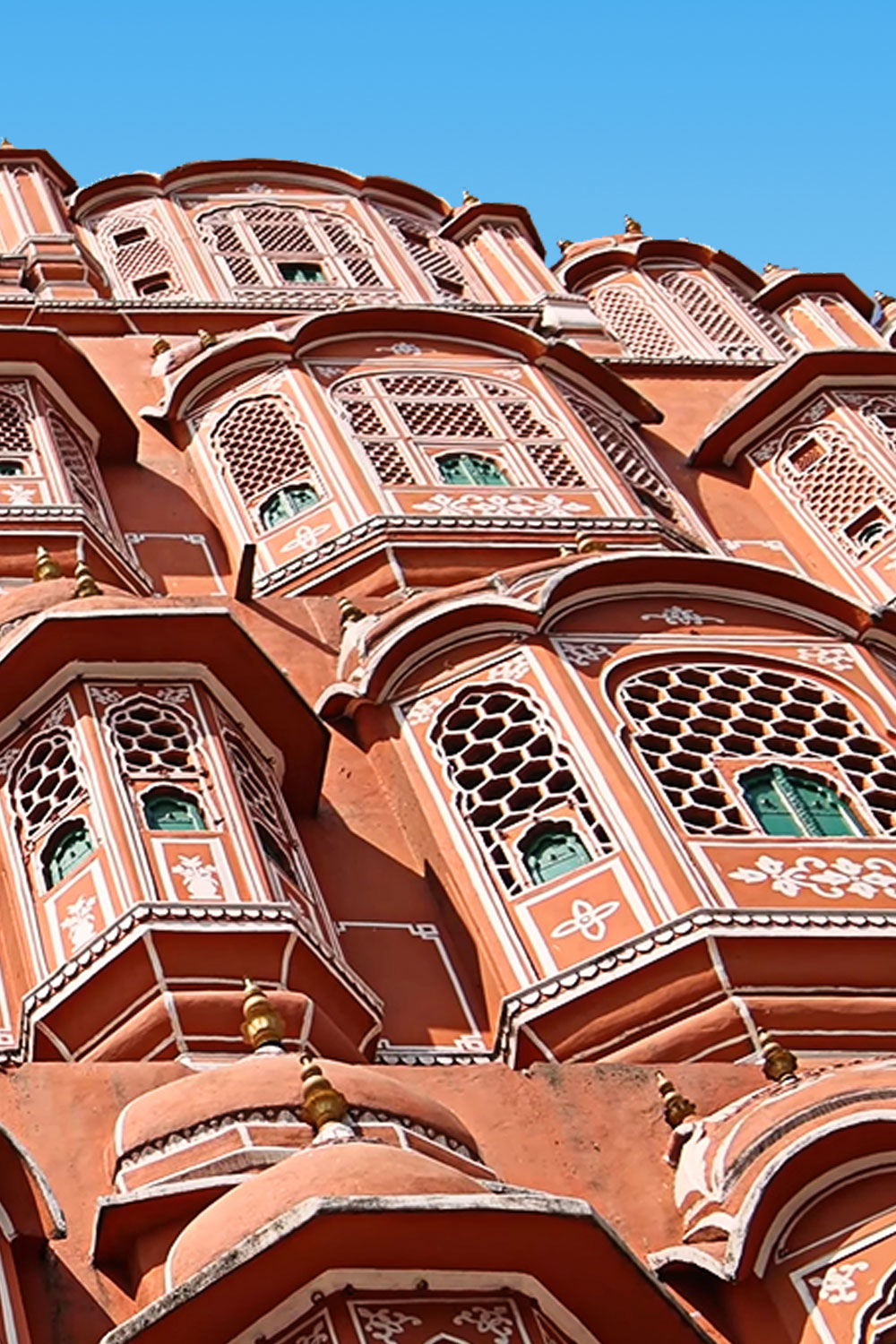
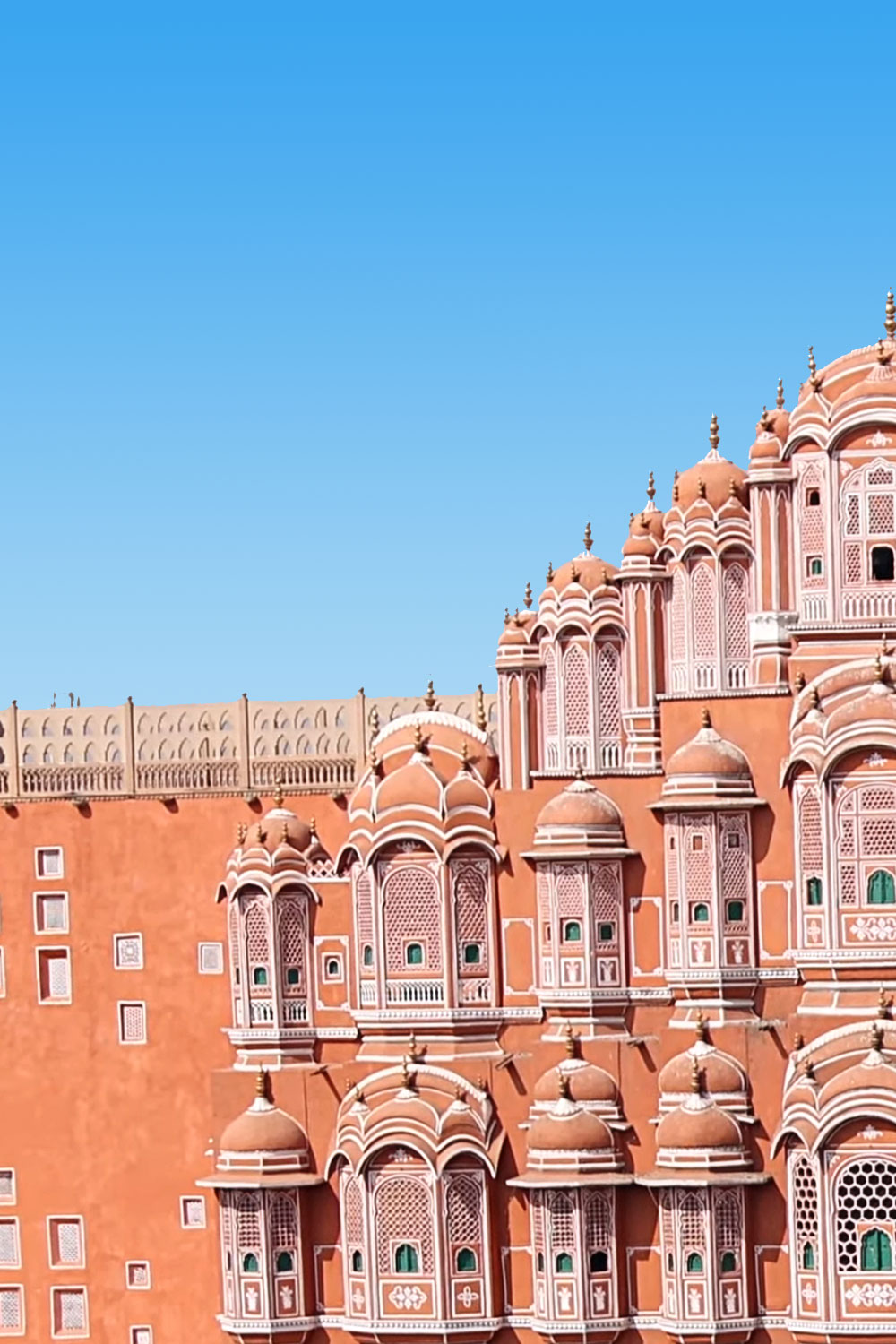 1.) The top row of windows of the Hawa Mahal
Palace in the city built from red and pink sandstone known as the Pink Palace,
1.) The top row of windows of the Hawa Mahal
Palace in the city built from red and pink sandstone known as the Pink Palace,
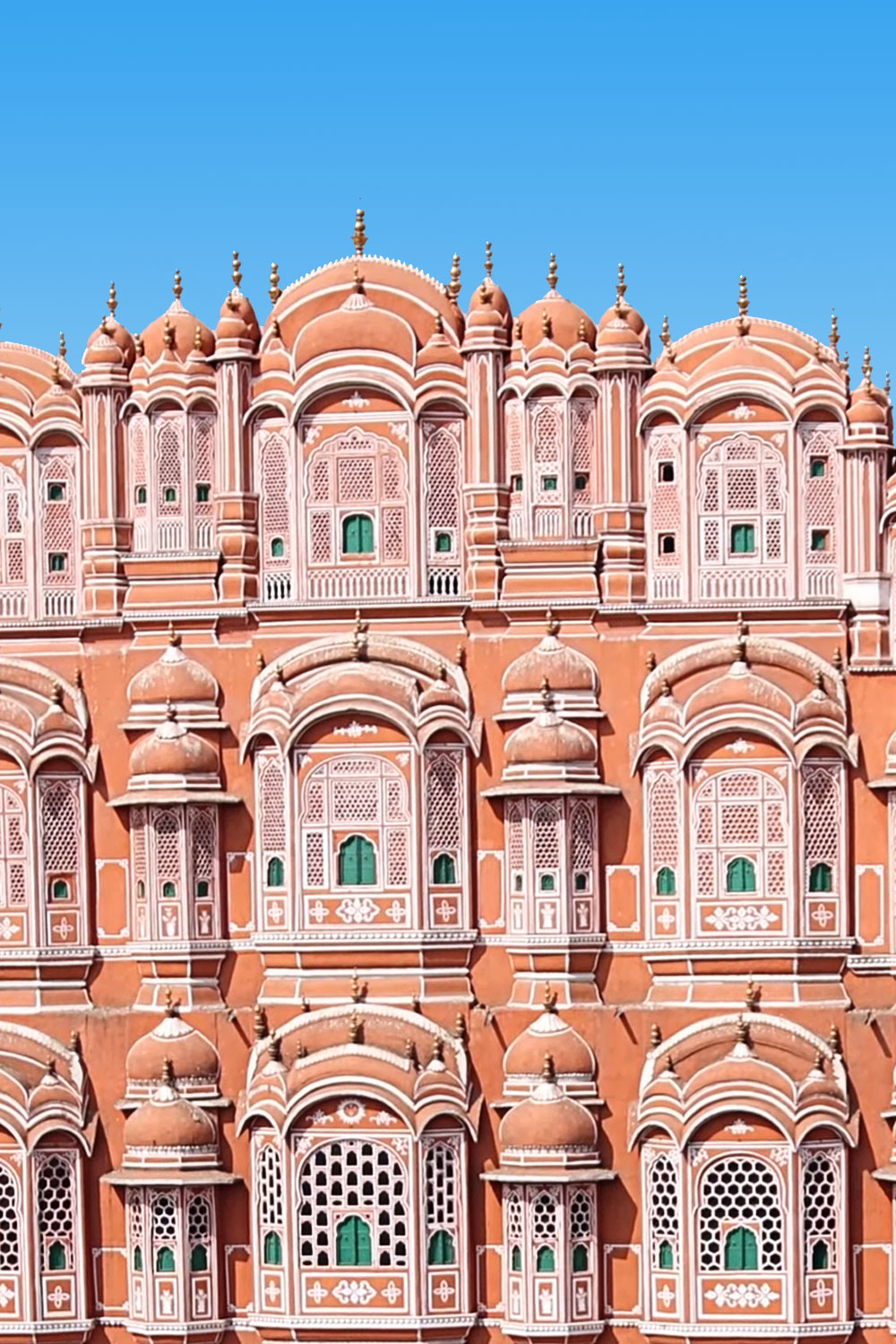 2.) Jaipur was founded by Rajput chief of
Kachhwaha clan Jai Singh II on 18 November 1727,
2.) Jaipur was founded by Rajput chief of
Kachhwaha clan Jai Singh II on 18 November 1727,
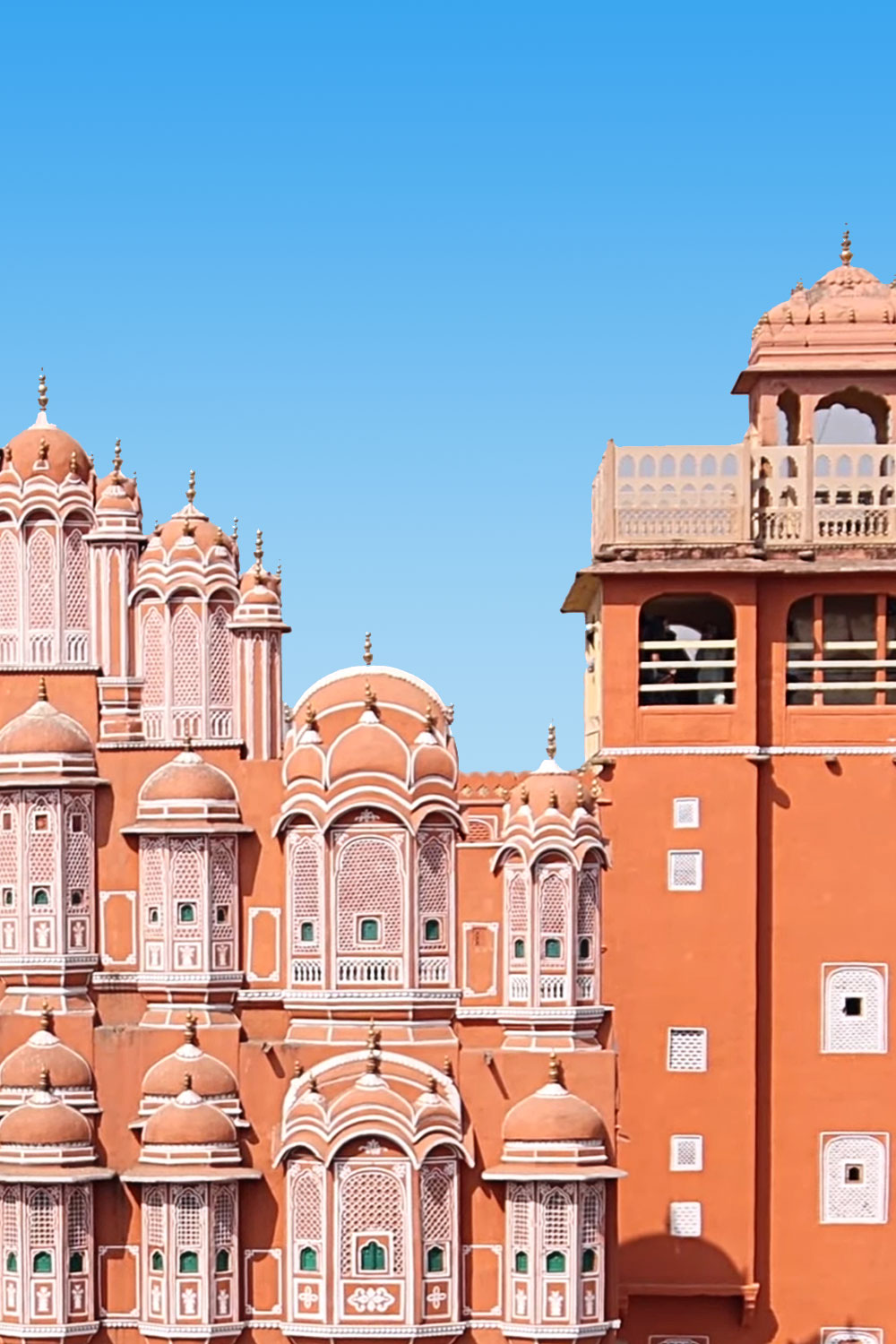 3.) who ruled the region from 1699 to 1743.
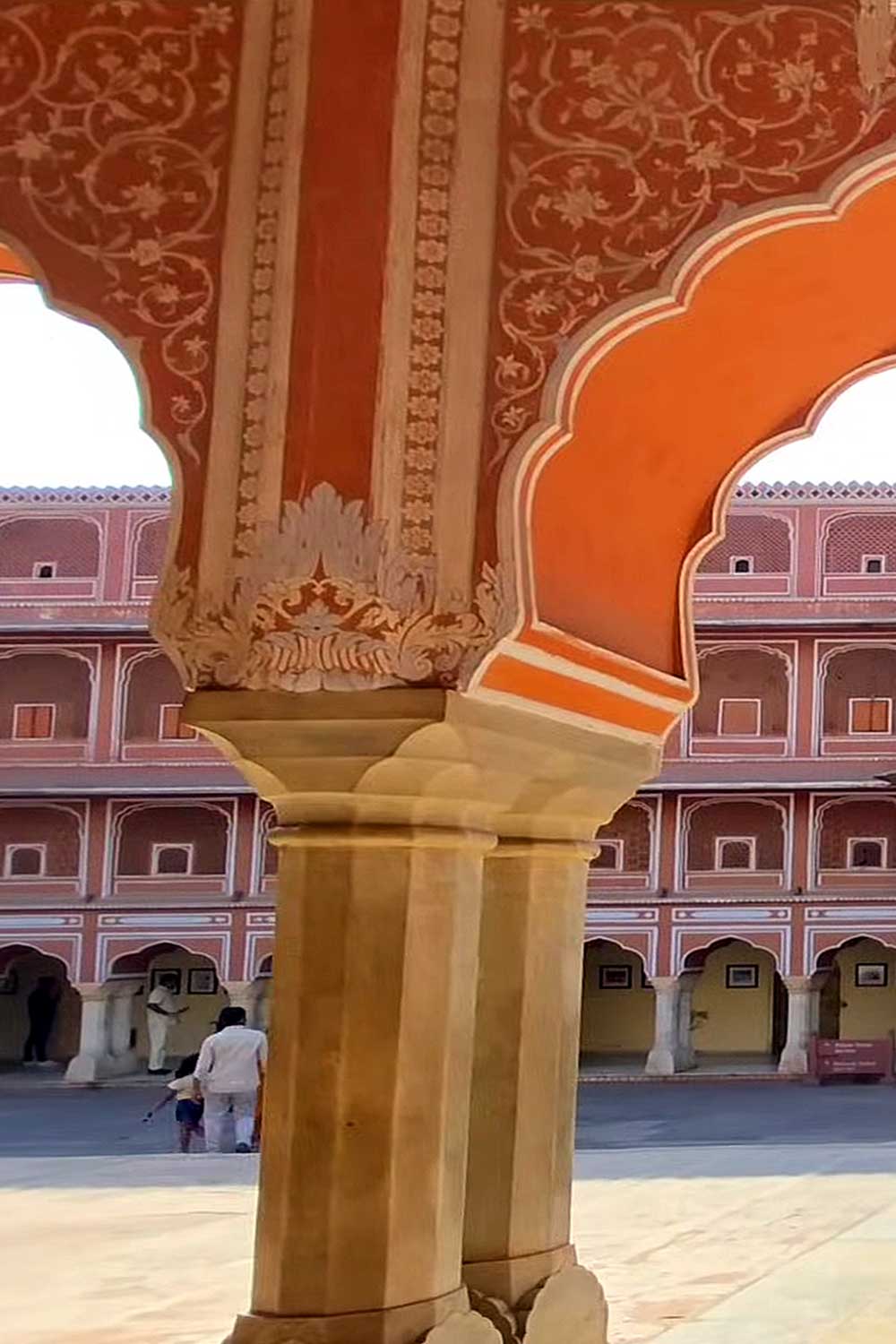 1.) The City Palace was founded by Maharaja Sawai Jai Singh II in 1727,
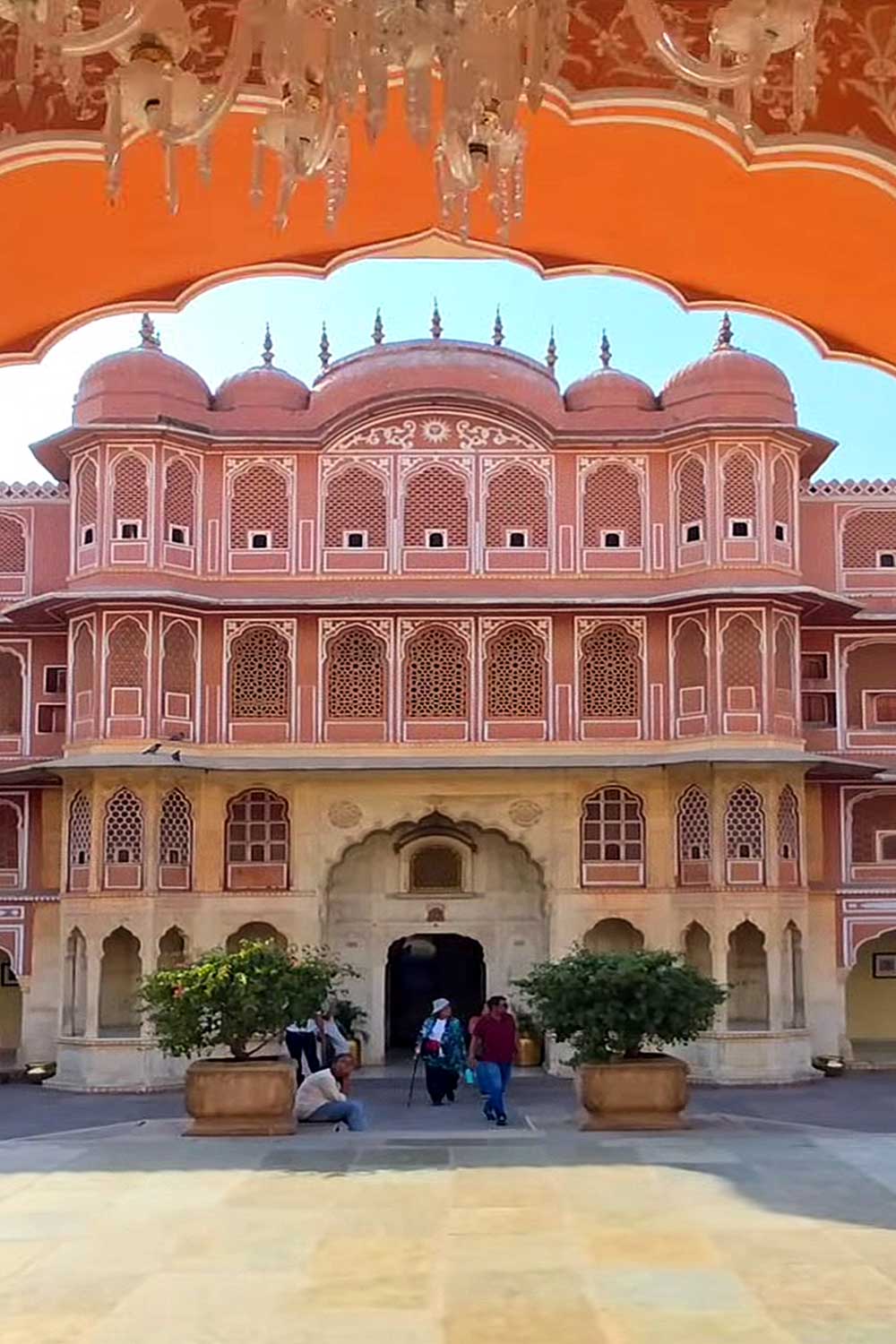 2.) it serves as the royal residence for the Kachwaha dynasty, located in the heart of Jaipur,
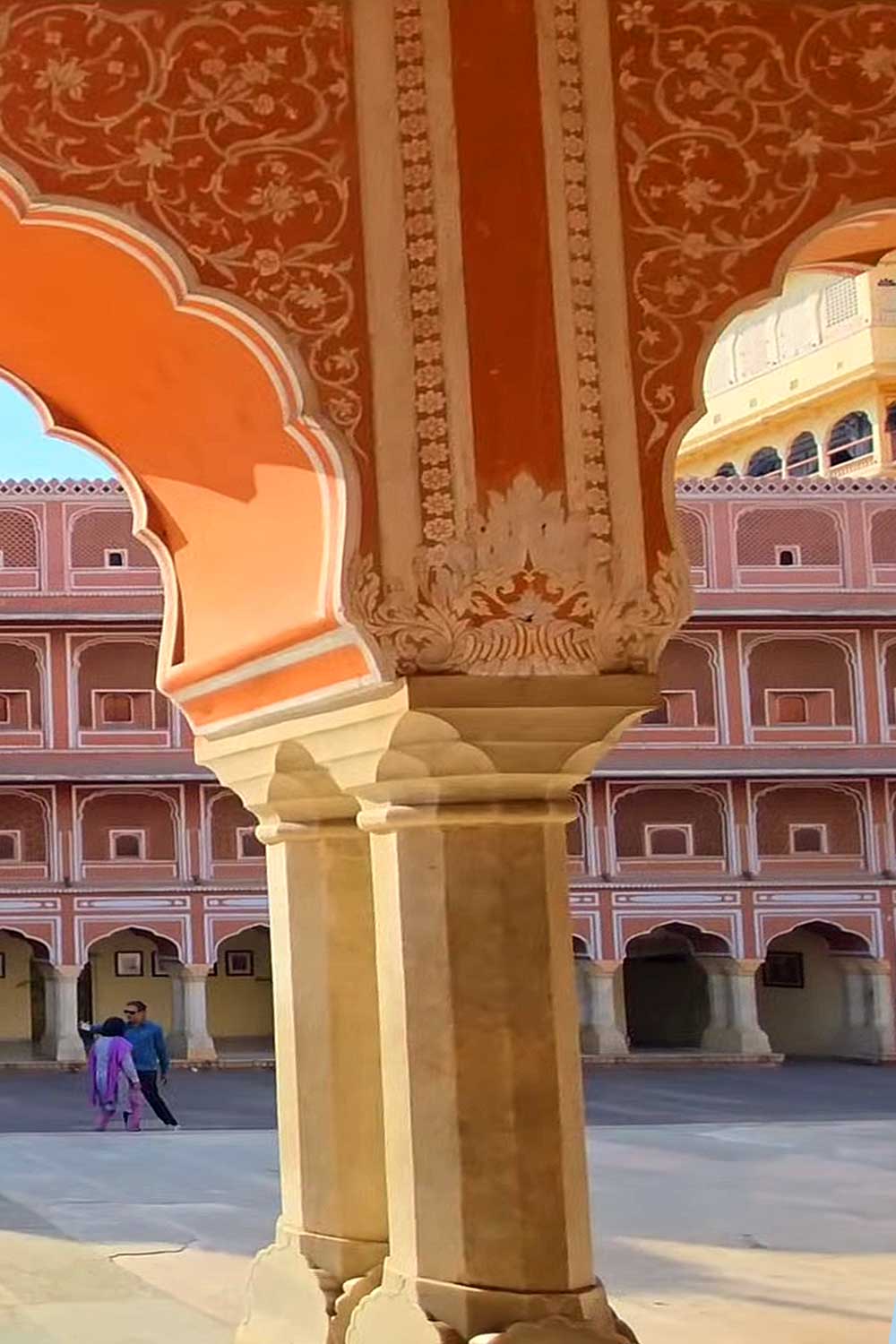 3.) the complex features a fusion of Mughal and Rajput architecture, containing pavilions, buildings, courtyards, gardens, and the Chandra Mahal, a seven-storied palace.
 intricate frescos inside the Ganesh Pol (Ganesh Gate) at the Amber Fort in Jaipur, India.
 The Ganesh Pol is a masterpiece of Rajput architecture, serving as the entrance to the Maharaja's private palaces.
 The decorations reflect a blend of Hindu and Mughal artistic traditions, combining floral motifs, geometric patterns, and figural art.
 intricate frescos inside the Ganesh Pol (Ganesh Gate) at the Amber Fort in Jaipur, India.
 The Ganesh Pol is a masterpiece of Rajput architecture, serving as the entrance to the Maharaja's private palaces.
 The decorations reflect a blend of Hindu and Mughal artistic traditions, combining floral motifs, geometric patterns, and figural art.
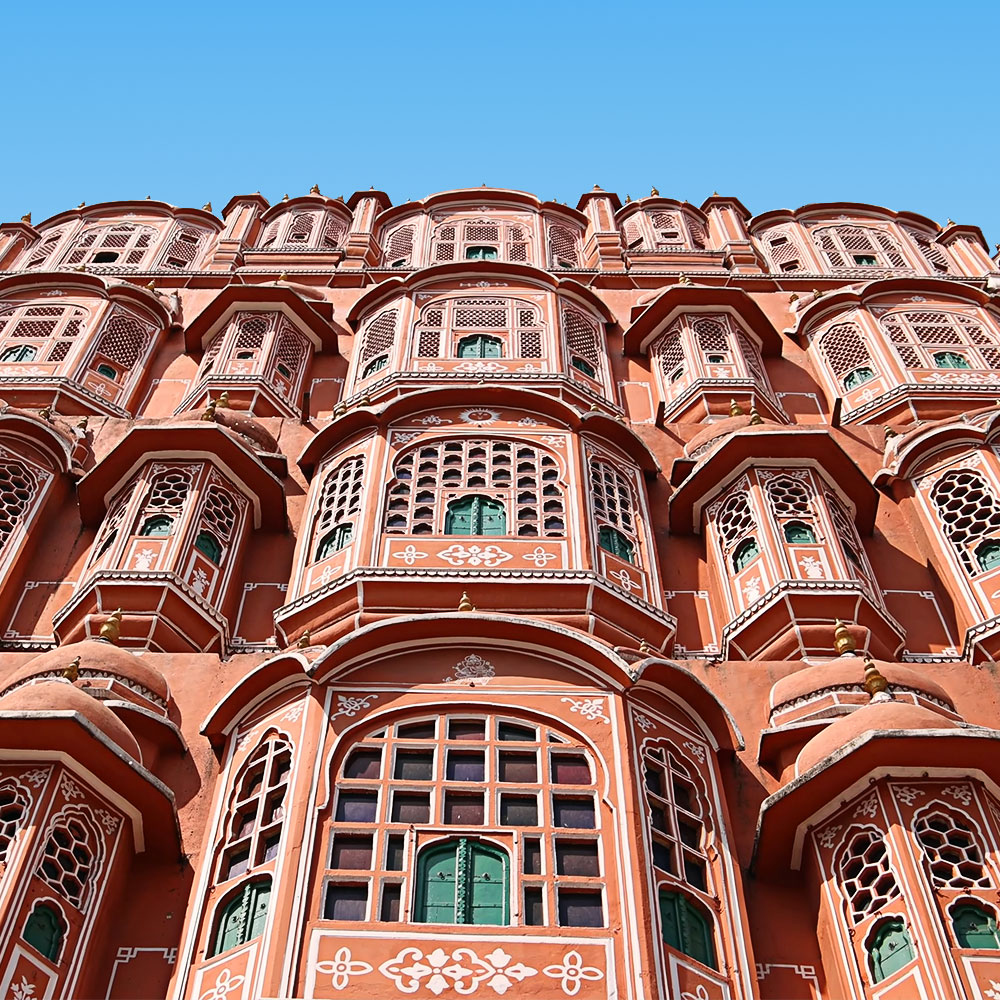 intricate frescos inside the Ganesh Pol (Ganesh Gate) at the Amber Fort in Jaipur, India.
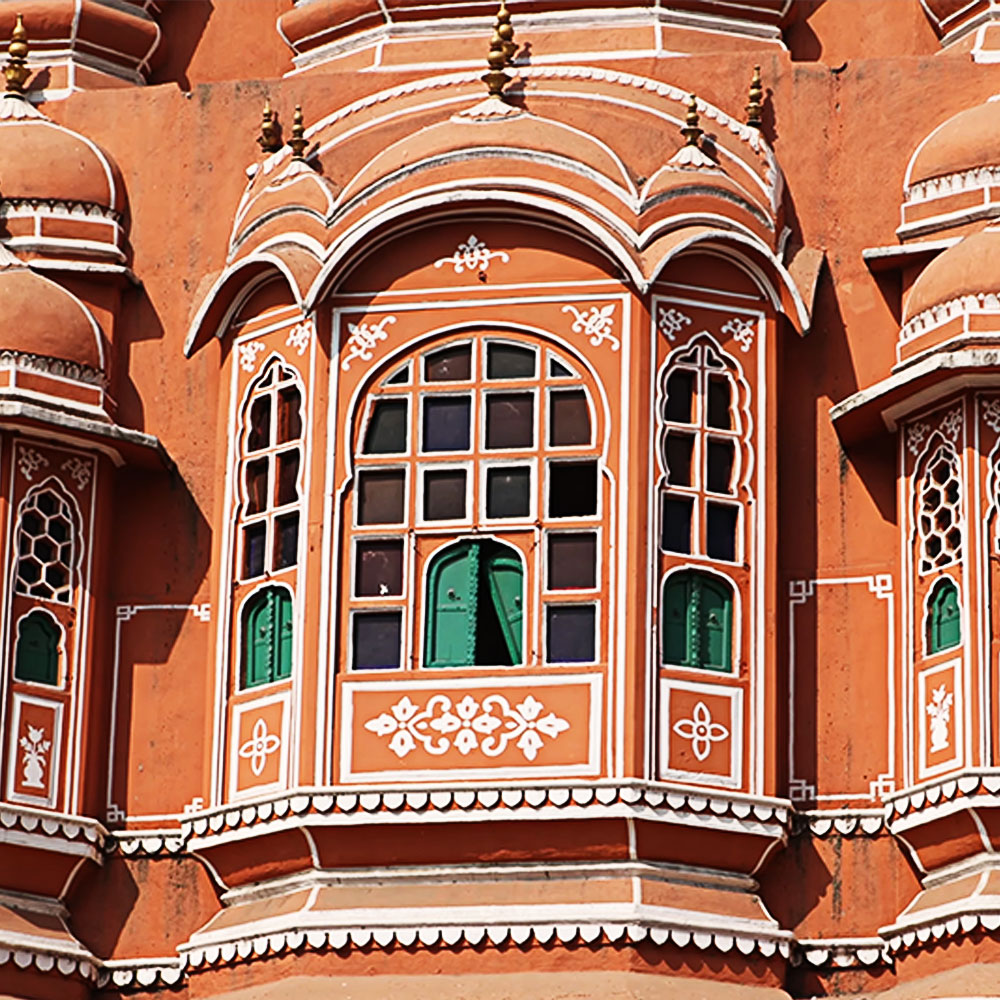 The Ganesh Pol is a masterpiece of Rajput architecture, serving as the entrance to the Maharaja's private palaces.
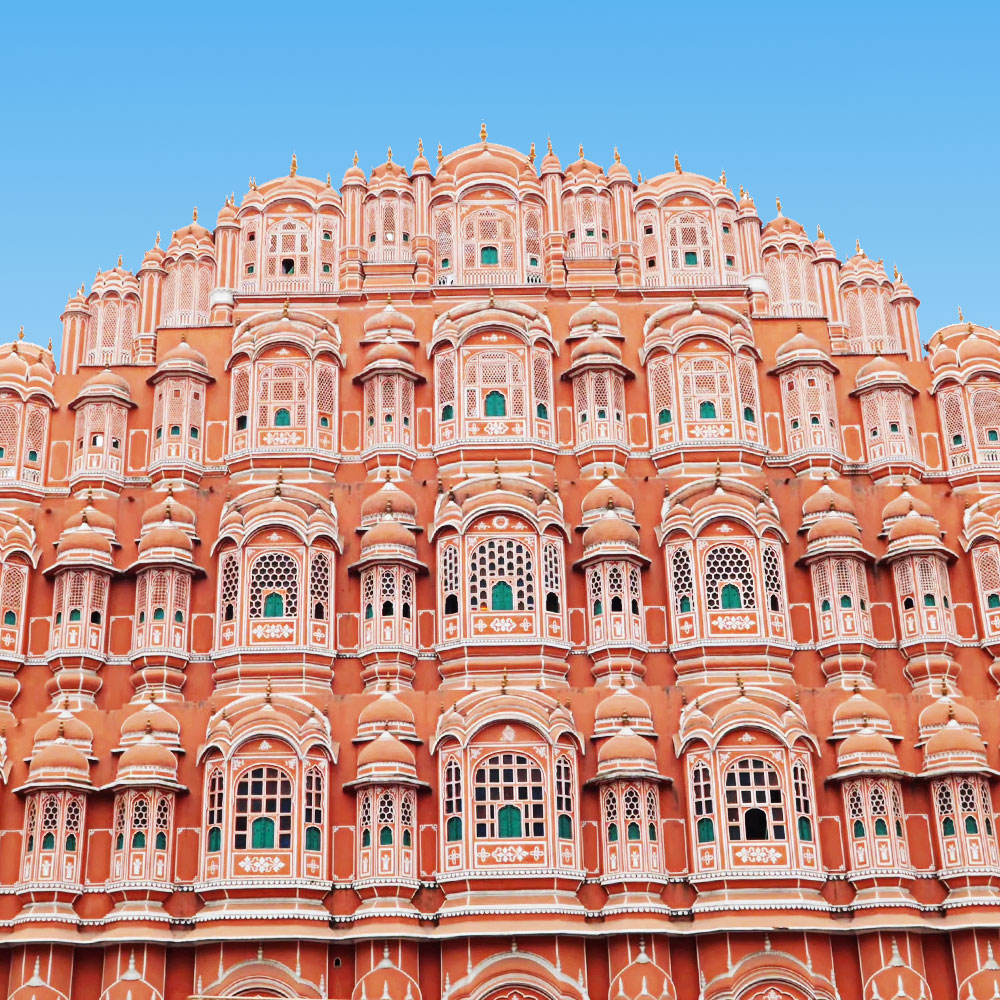 The decorations reflect a blend of Hindu and Mughal artistic traditions, combining floral motifs, geometric patterns, and figural art.
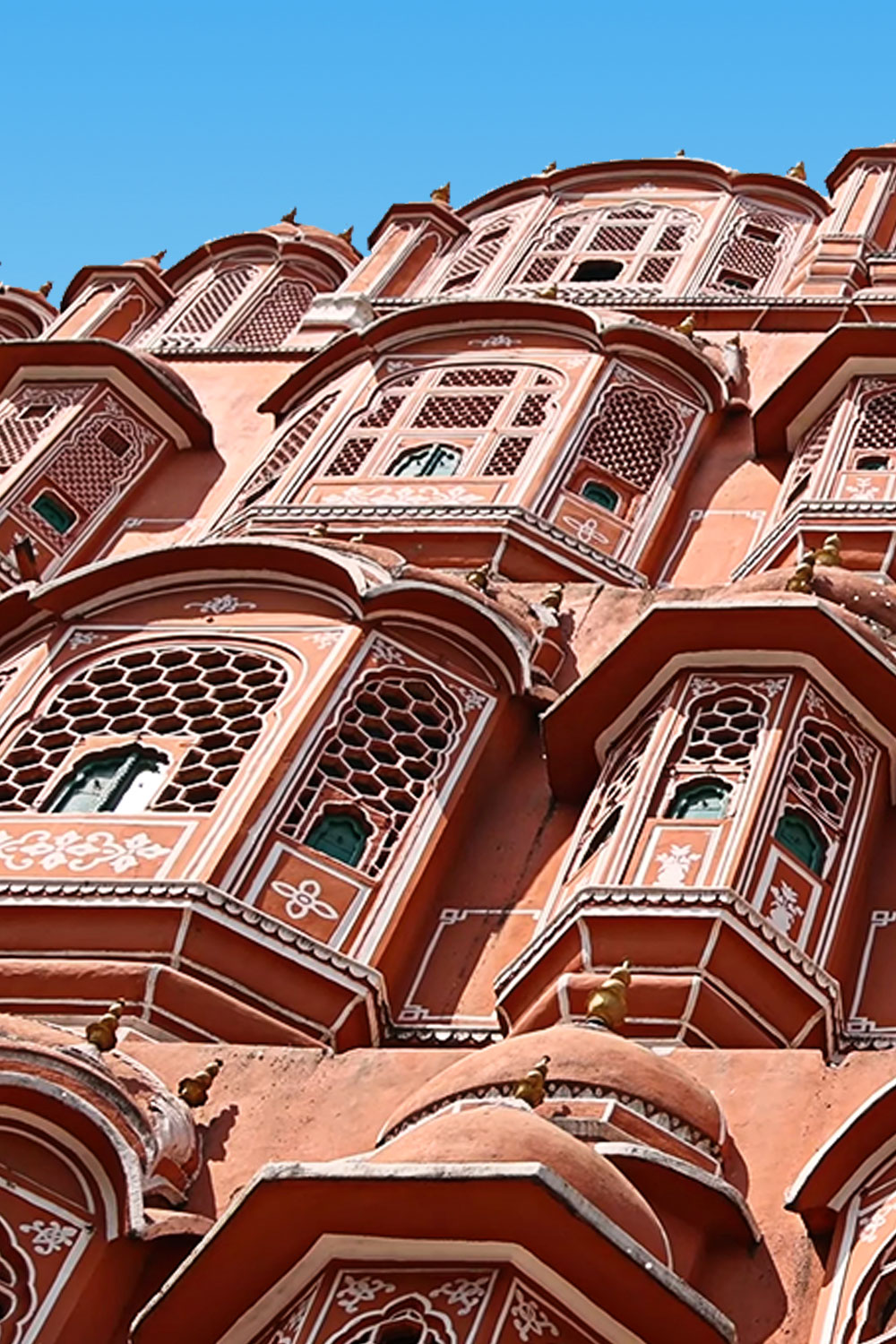
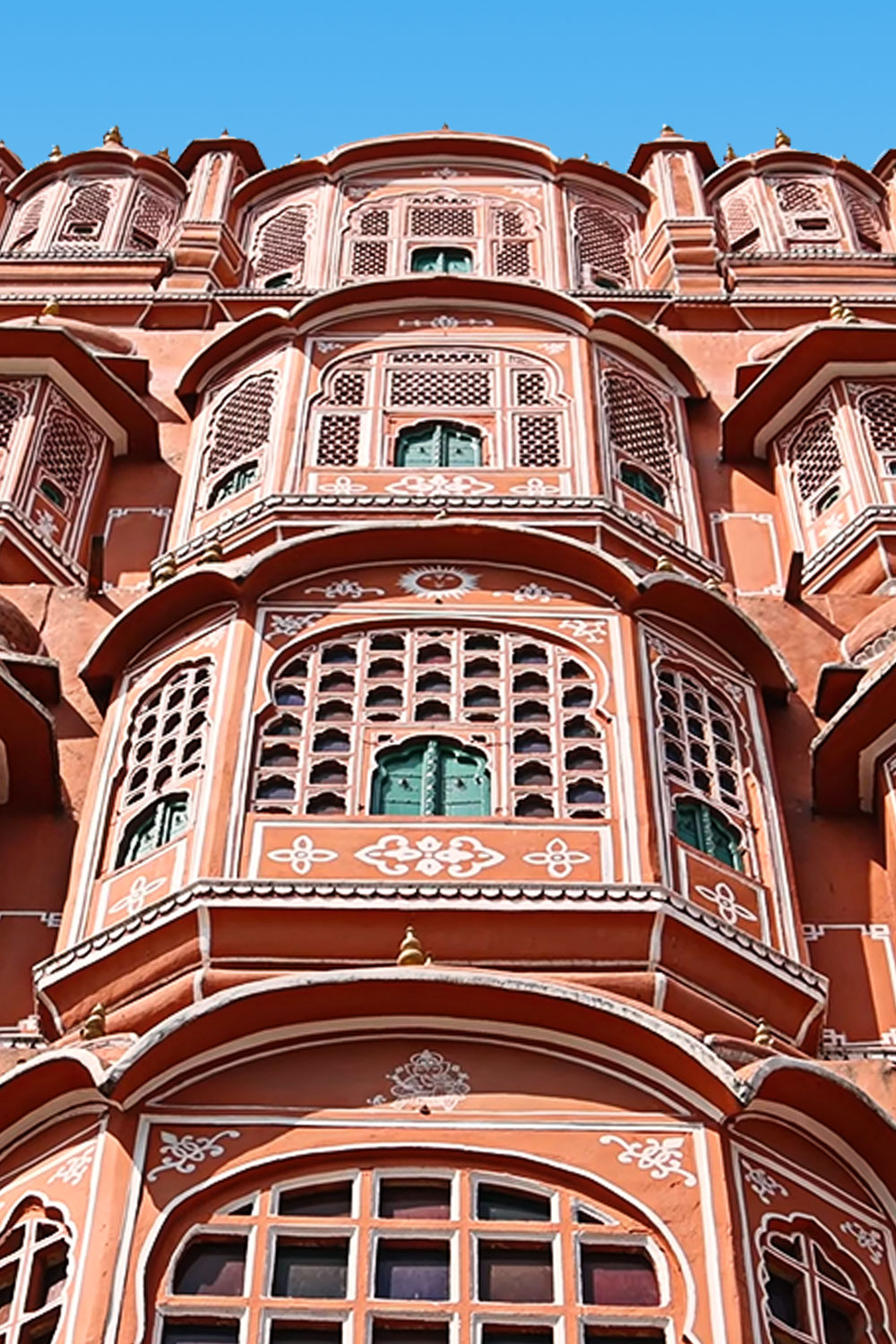
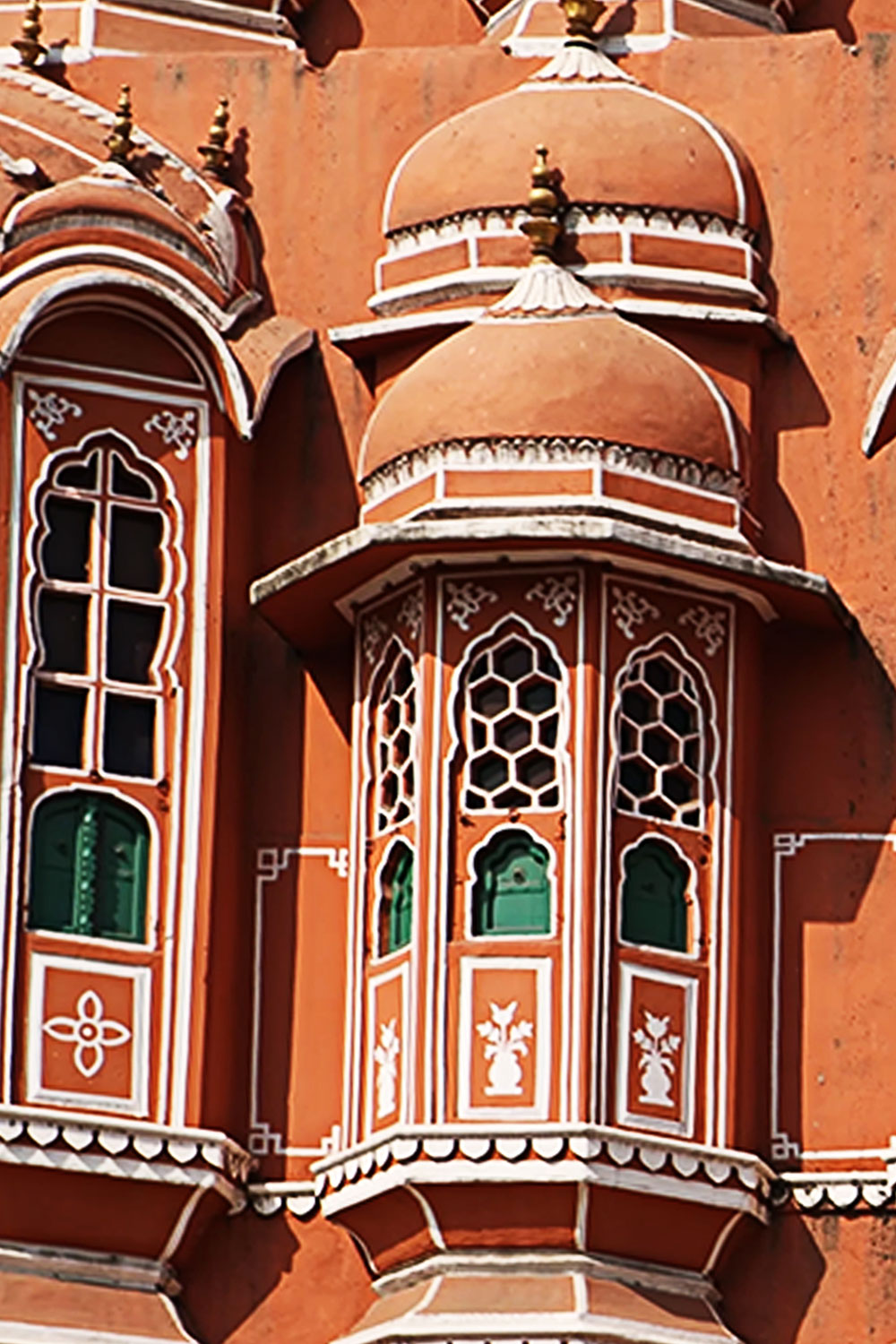
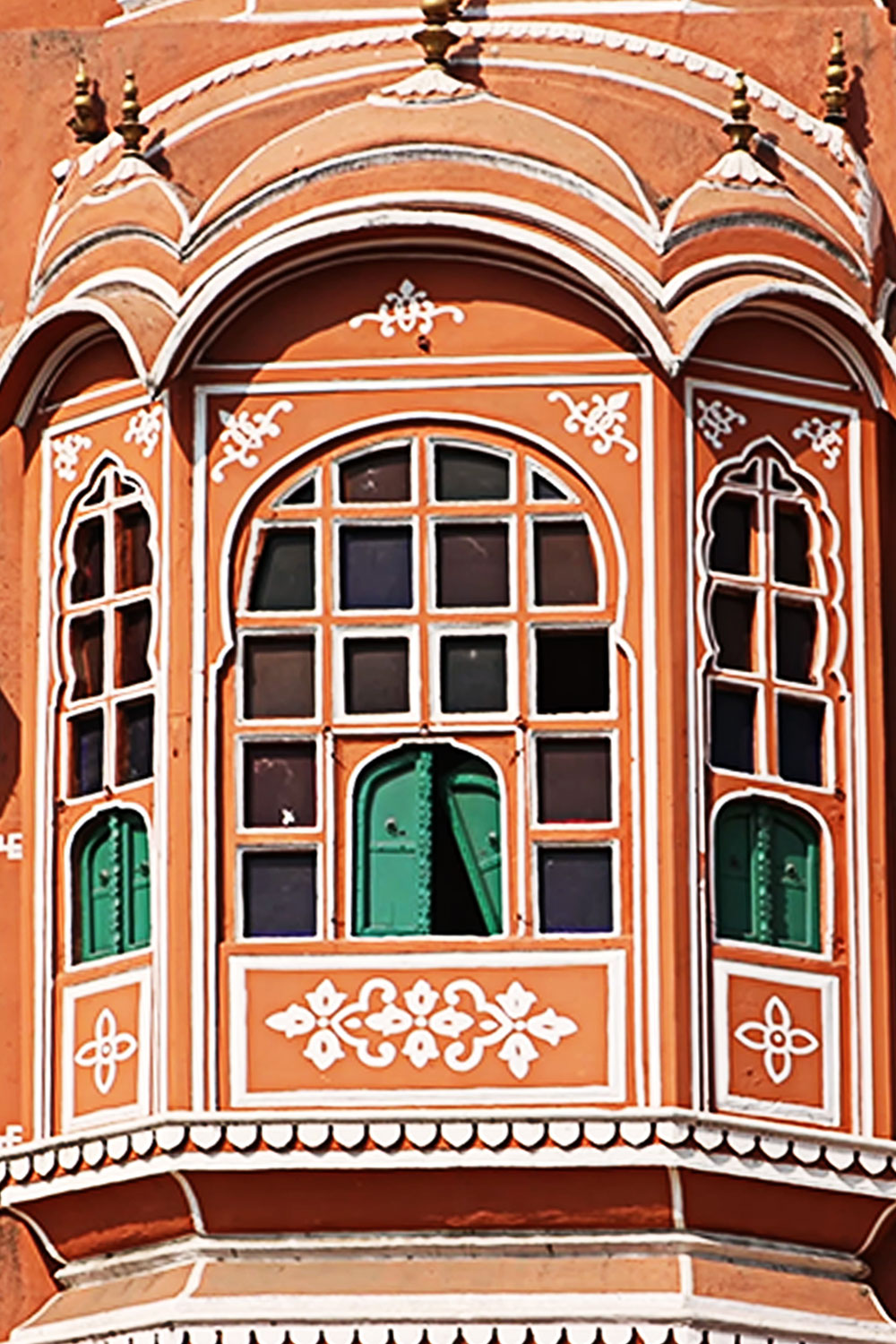
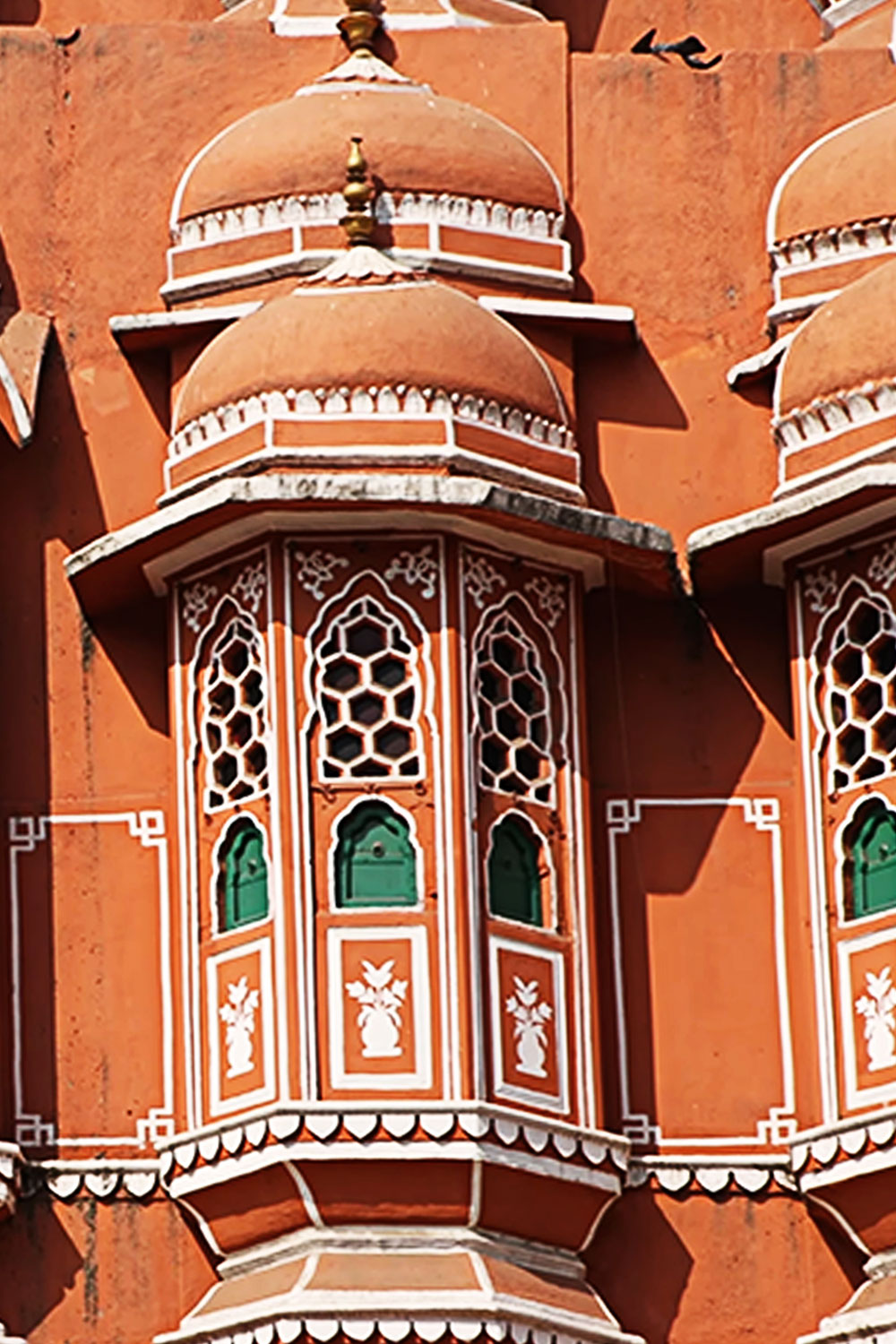
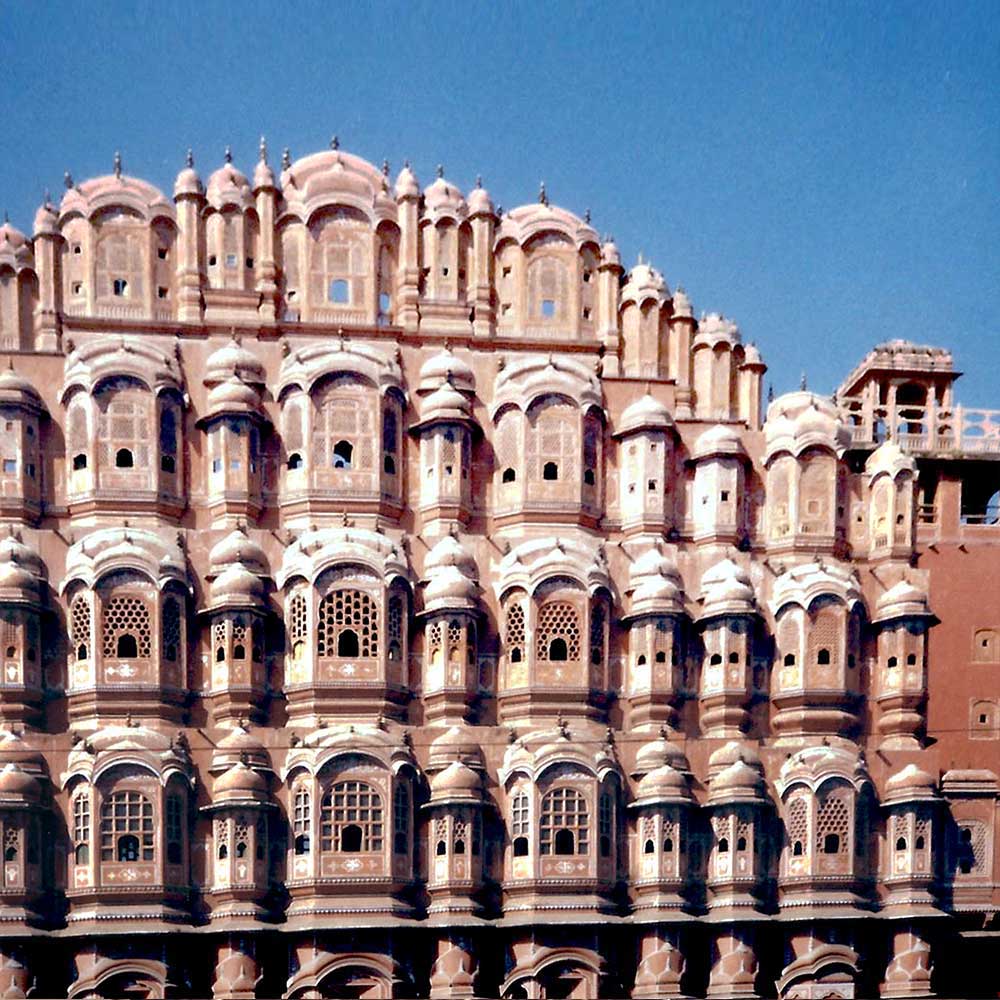
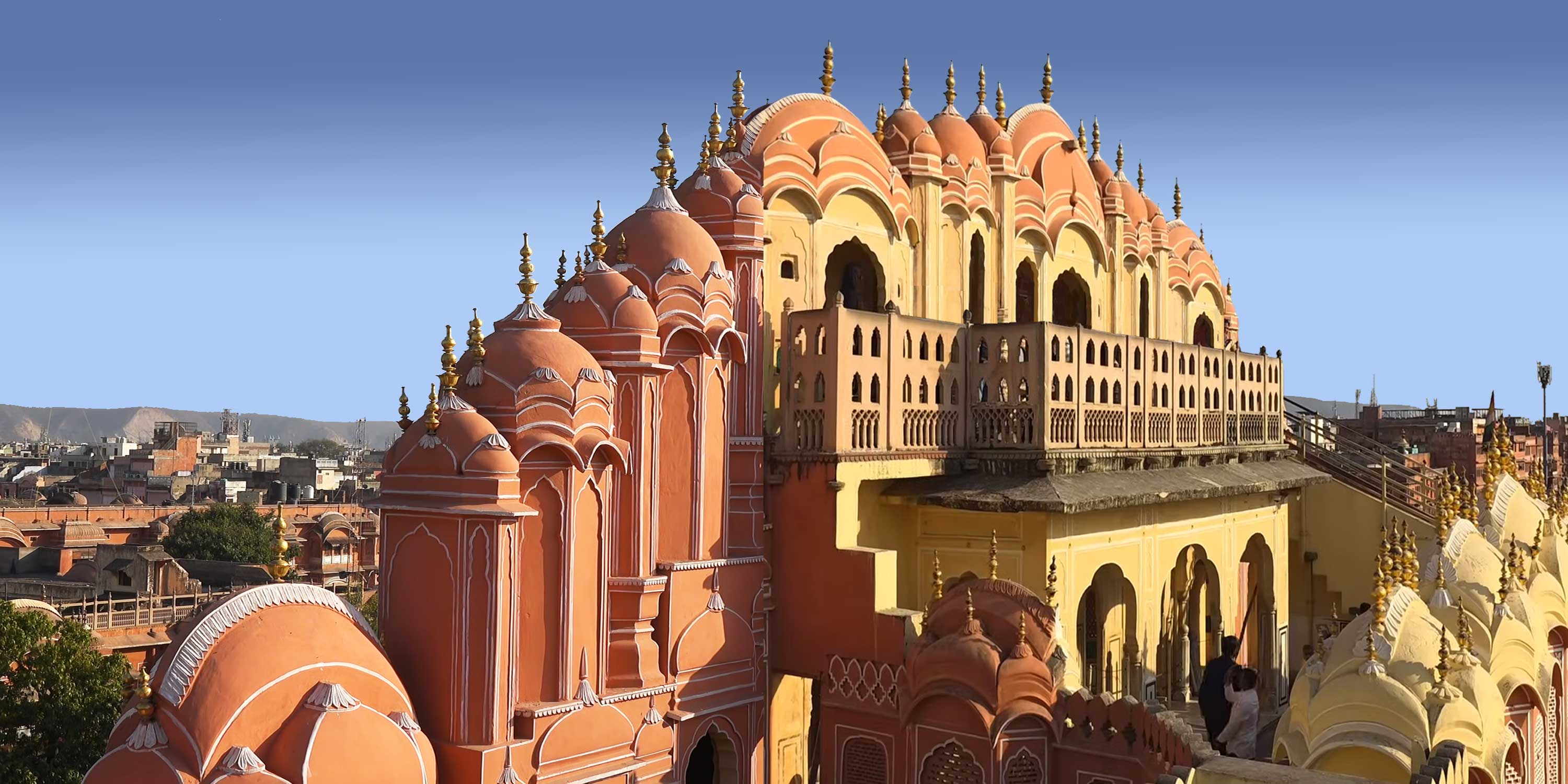 The back end of the Hawa Mahal, also known as the "Palace of Winds," built in 1799 by Maharaja Sawai Pratap, constructed from red and pink sandstone, the palace features a unique five-story façade with 953 small windows, known as jharokhas, designed to allow royal women to observe street festivities while remaining unseen from the outside.
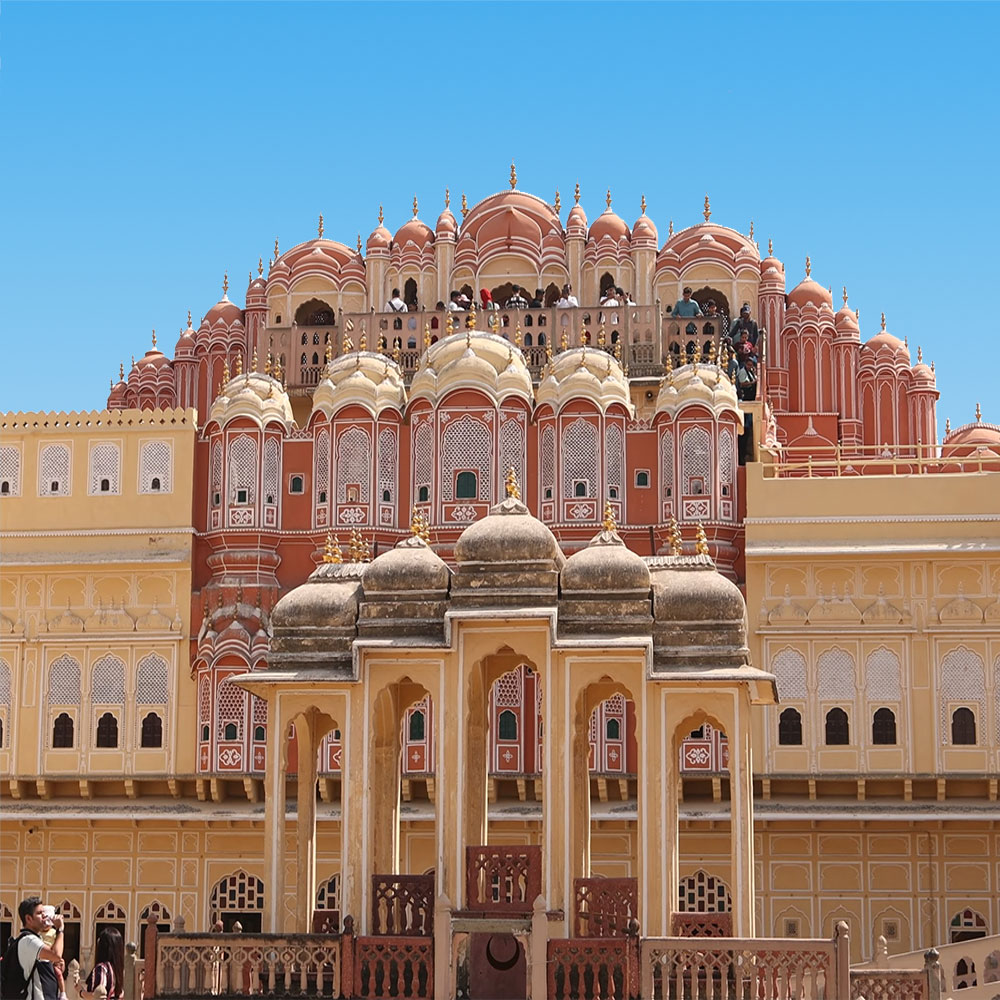 Interiors of the Hawa Mahal or Wind Palace,
built from red and pink sandstone in Jaipur
Interiors of the Hawa Mahal or Wind Palace,
built from red and pink sandstone in Jaipur
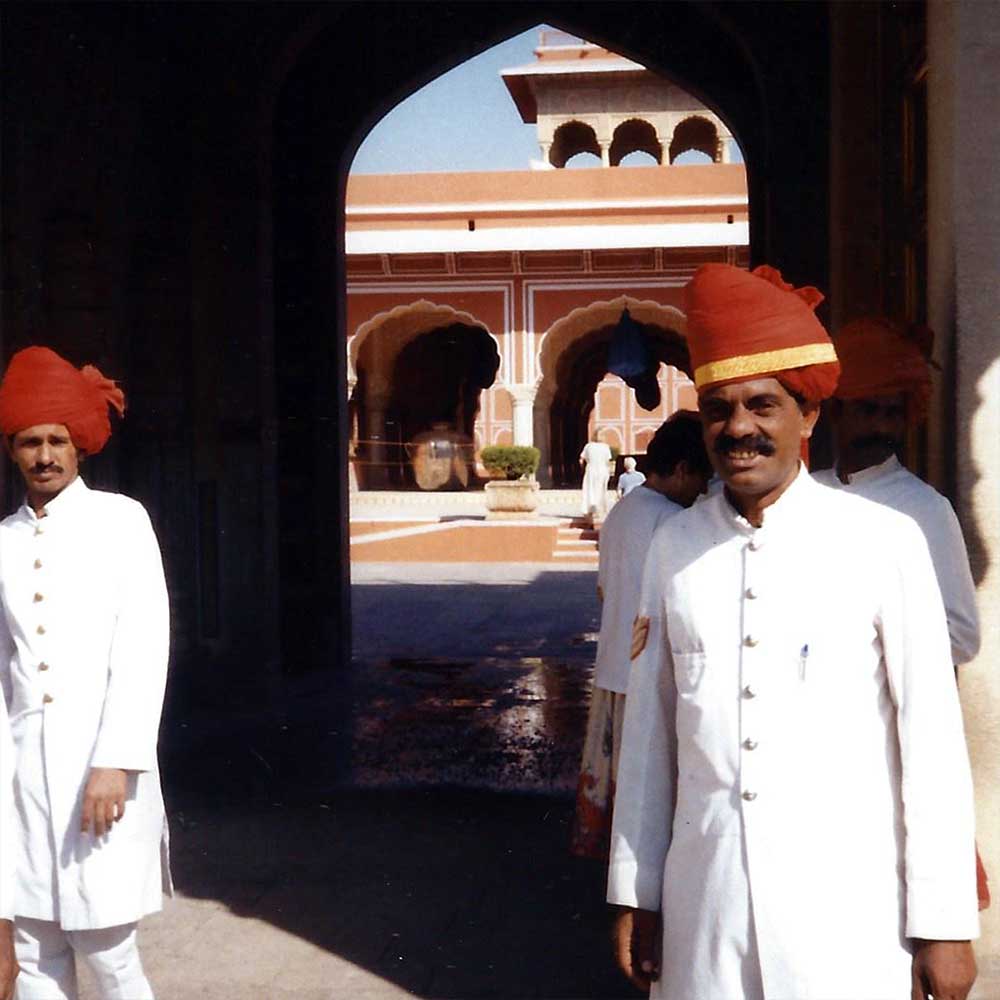 Imperial Guards at the Palace Gate entrance, Jaipur
known as the Pink City due to the dominant color scheme of its buildings in the old city.
Imperial Guards at the Palace Gate entrance, Jaipur
known as the Pink City due to the dominant color scheme of its buildings in the old city.
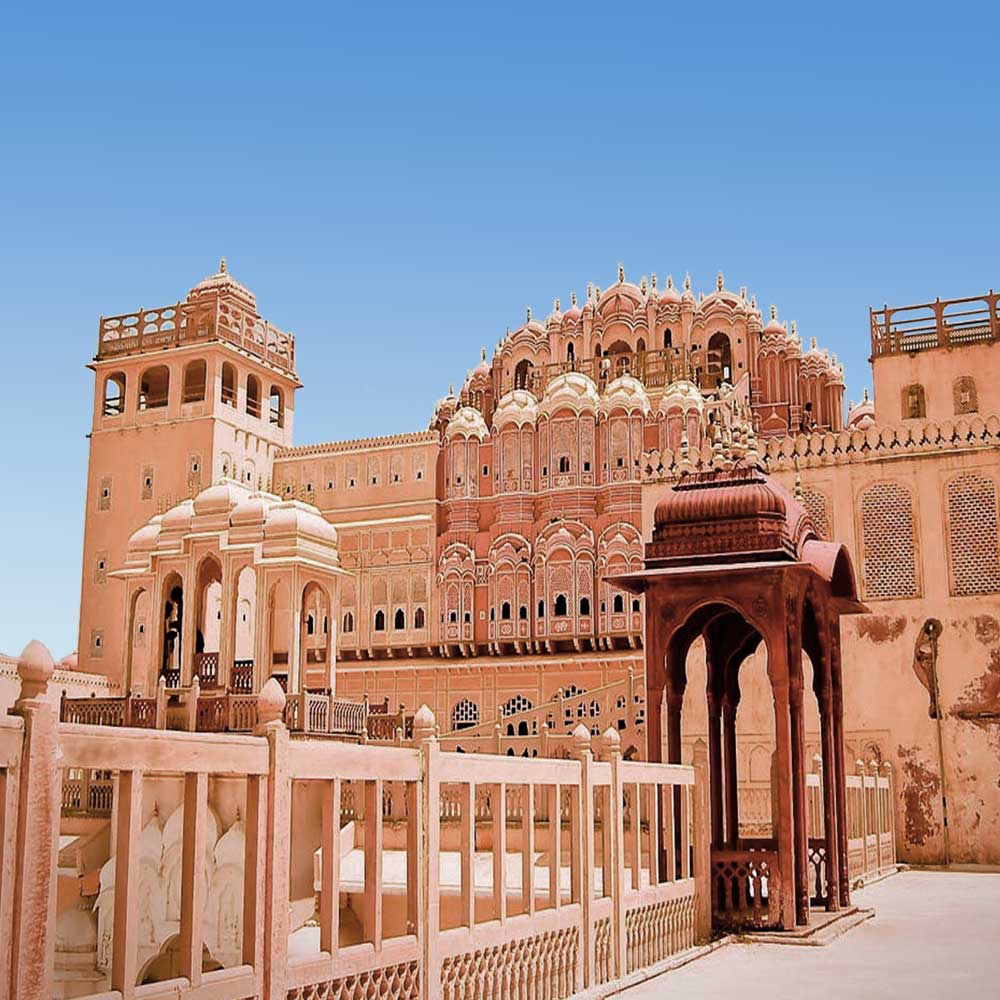 The inside view of Hawa Mahal Palace
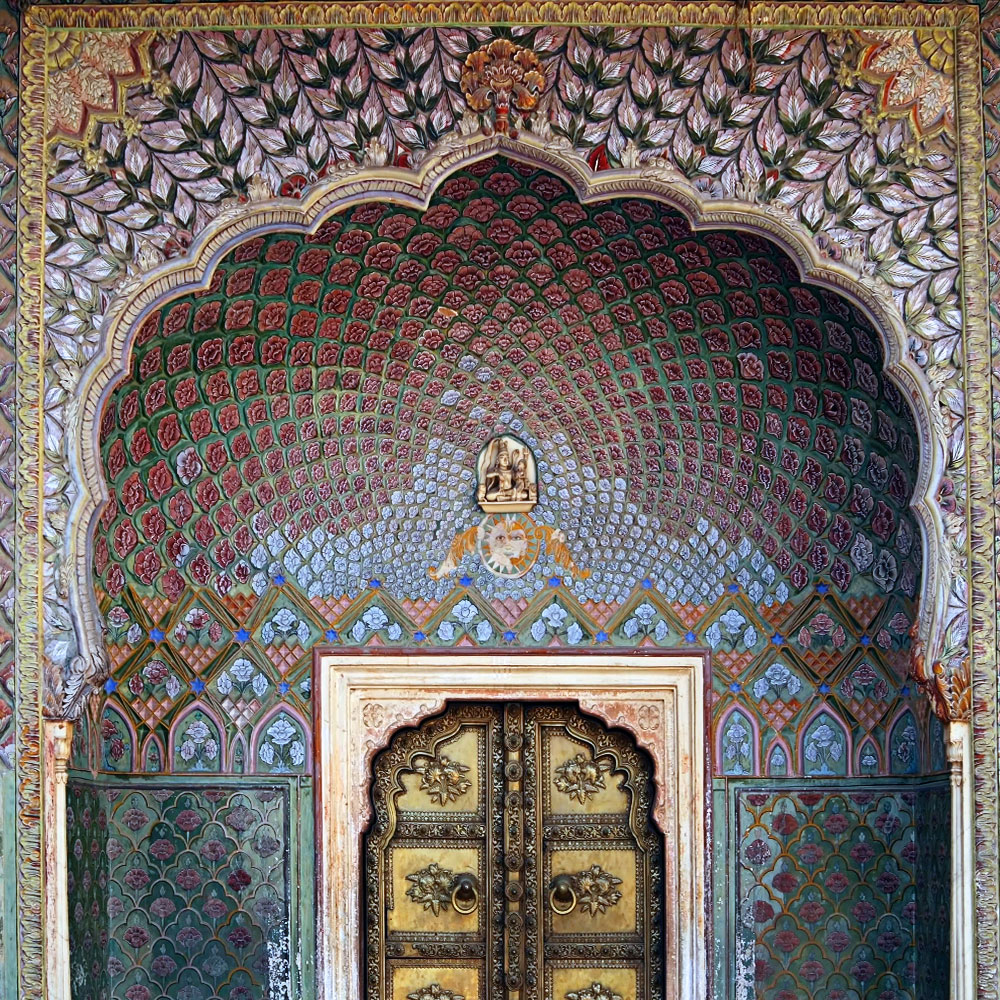 One of four gates to the Pink Palace designed
by Pritam Niwas Chowk the Peacock Gate (Mor Gate) that represents Lord Krishna's enchanting form playing his flute amidst the peacocks in Vrindavan.
One of four gates to the Pink Palace designed
by Pritam Niwas Chowk the Peacock Gate (Mor Gate) that represents Lord Krishna's enchanting form playing his flute amidst the peacocks in Vrindavan.
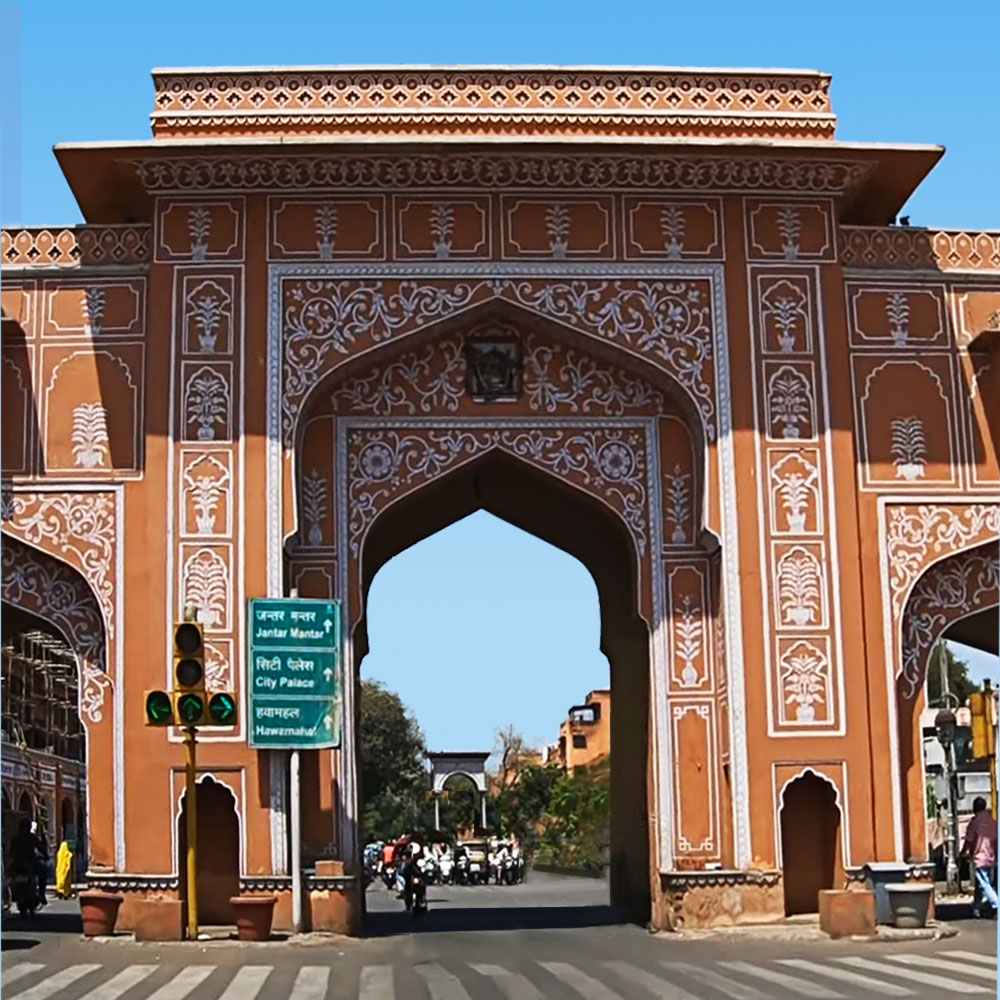 City Palace Gate entrance to Jaipur known as
the Pink City
City Palace Gate entrance to Jaipur known as
the Pink City
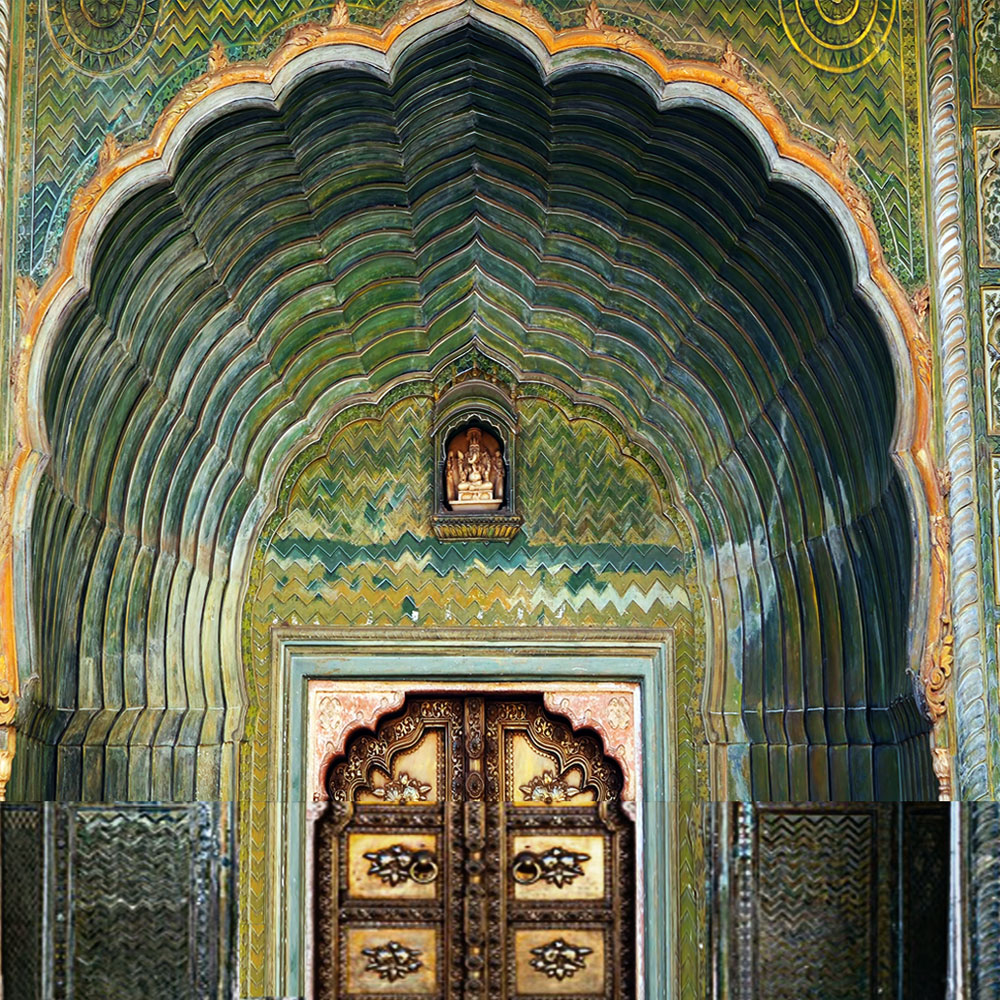 Green Gate (Vatika Gate): The third gate to the
Pink Palace, Leheriya Gate, designed by Pritam Niwas Chowk, This green gate is called the Leheriya (waves) gate, dedicated to Lord Ganesha.
Green Gate (Vatika Gate): The third gate to the
Pink Palace, Leheriya Gate, designed by Pritam Niwas Chowk, This green gate is called the Leheriya (waves) gate, dedicated to Lord Ganesha.
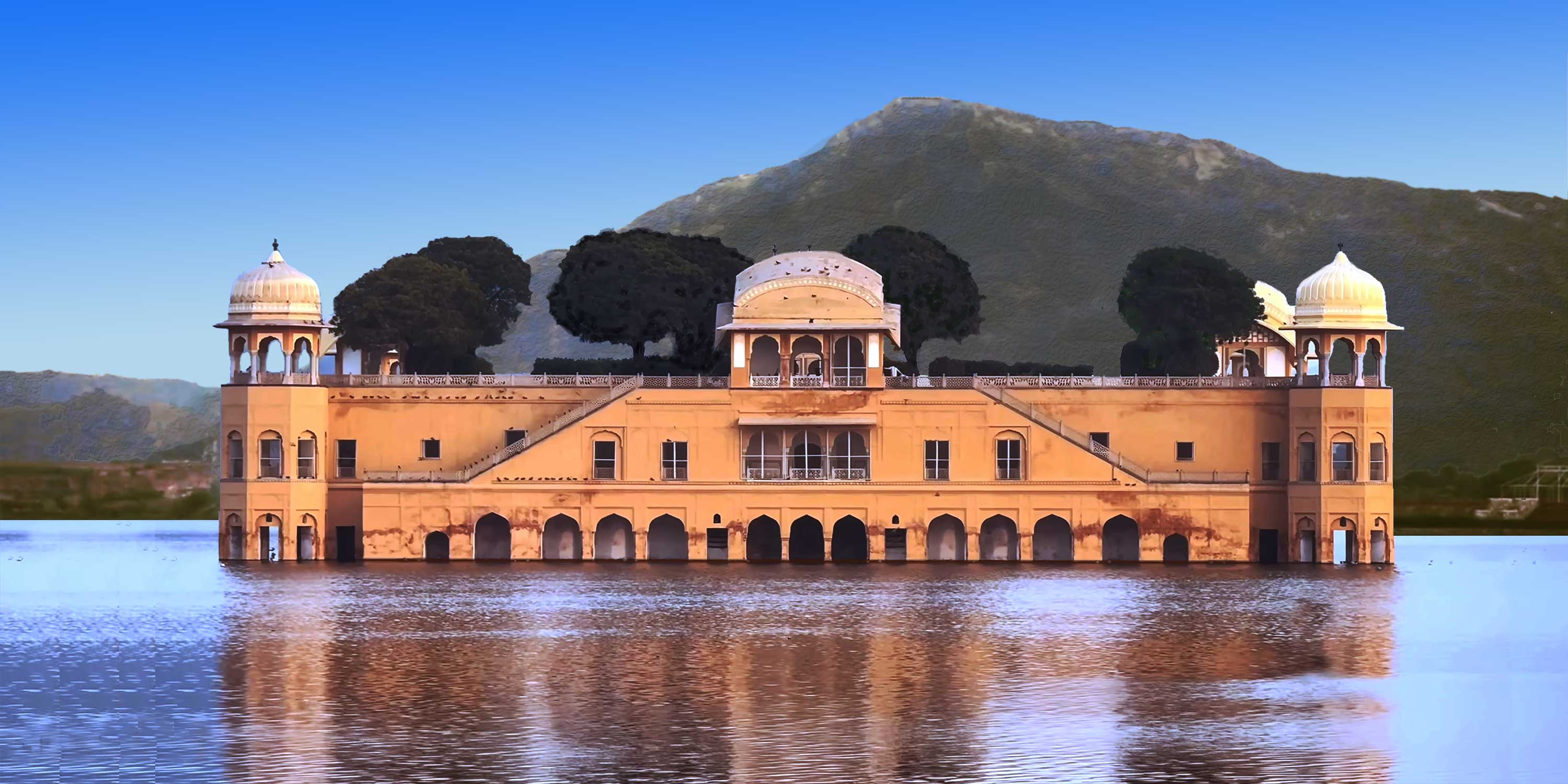 The Jal Mahal (Water Palace) situated in the middle of Man Sagar Lake in Jaipur, Built in the 18th century, the structure is crafted from red sandstone and features five stories, historically, it served as a hunting lodge for the Maharajas of Amber.
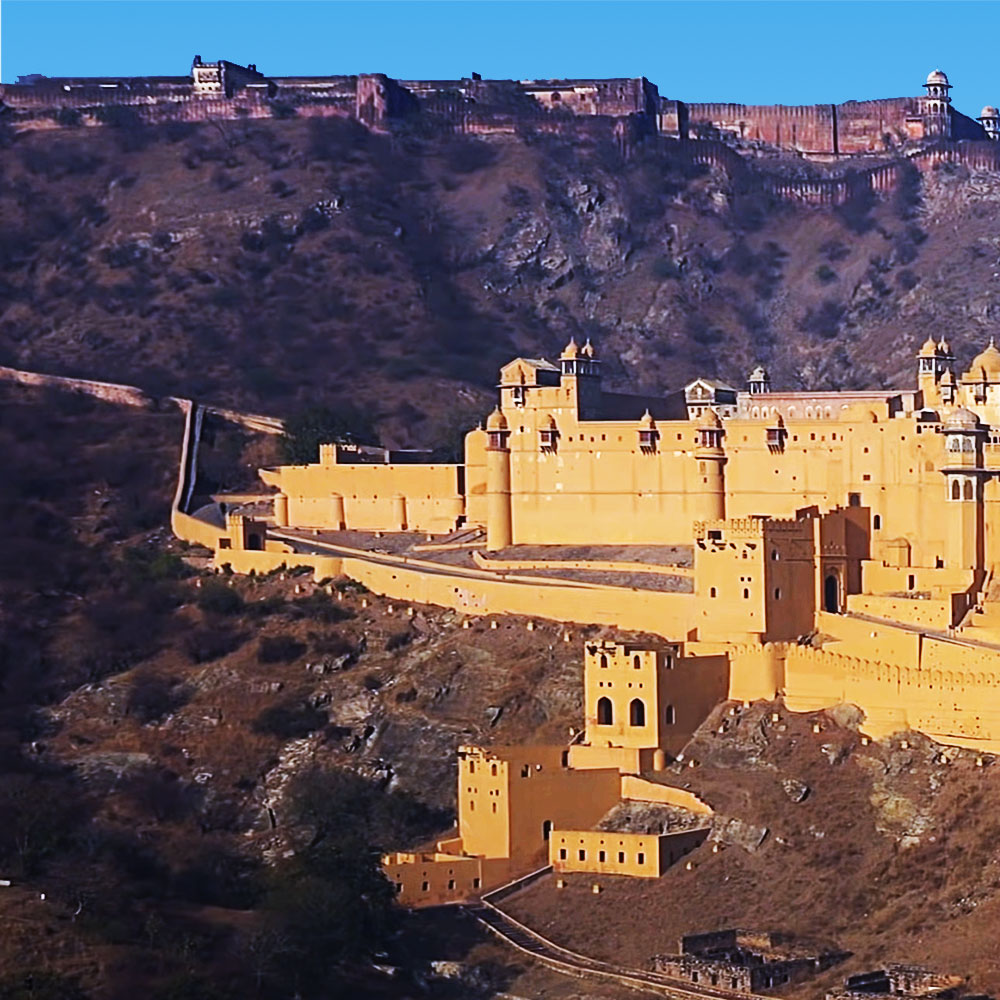 1.) The Amber Fort and Palace, built in the 16th
century
1.) The Amber Fort and Palace, built in the 16th
century
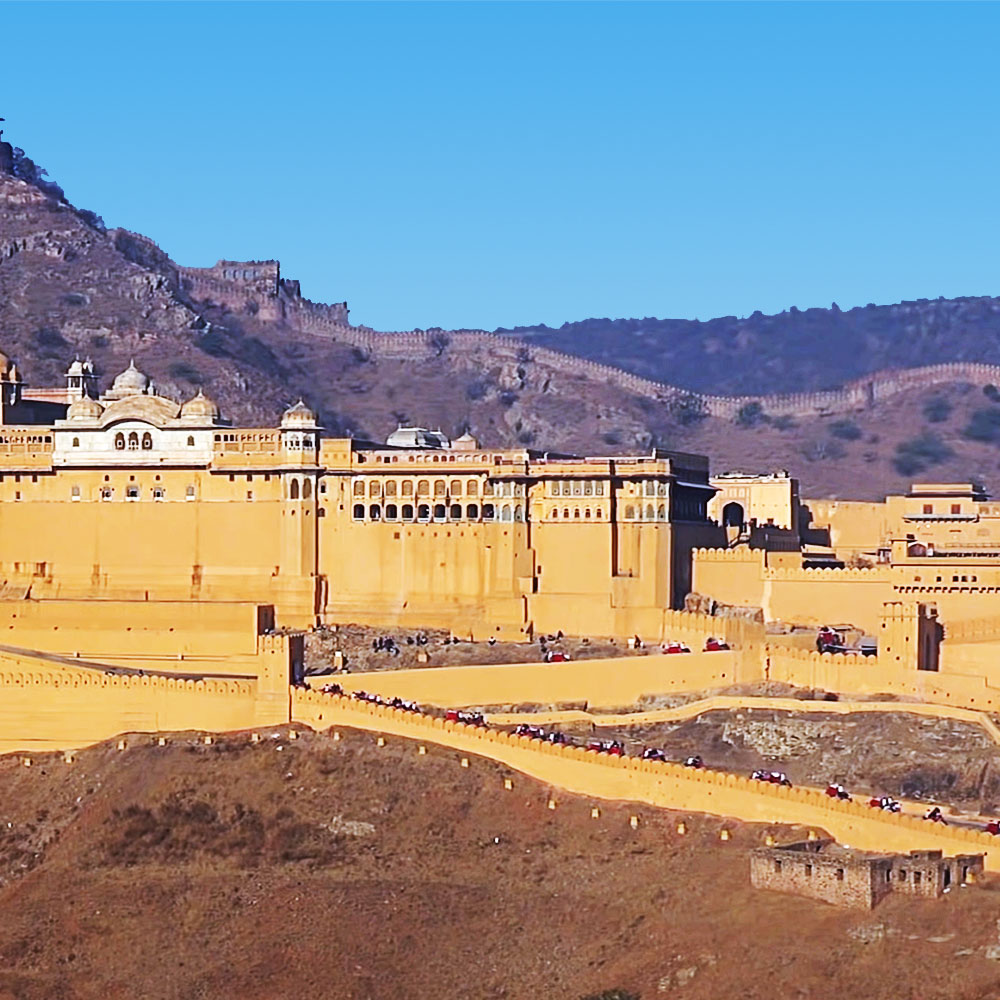 2.) It served as the residence of the Kachwaha
rulers for centuries, highlighting its role as a royal palace.
2.) It served as the residence of the Kachwaha
rulers for centuries, highlighting its role as a royal palace.
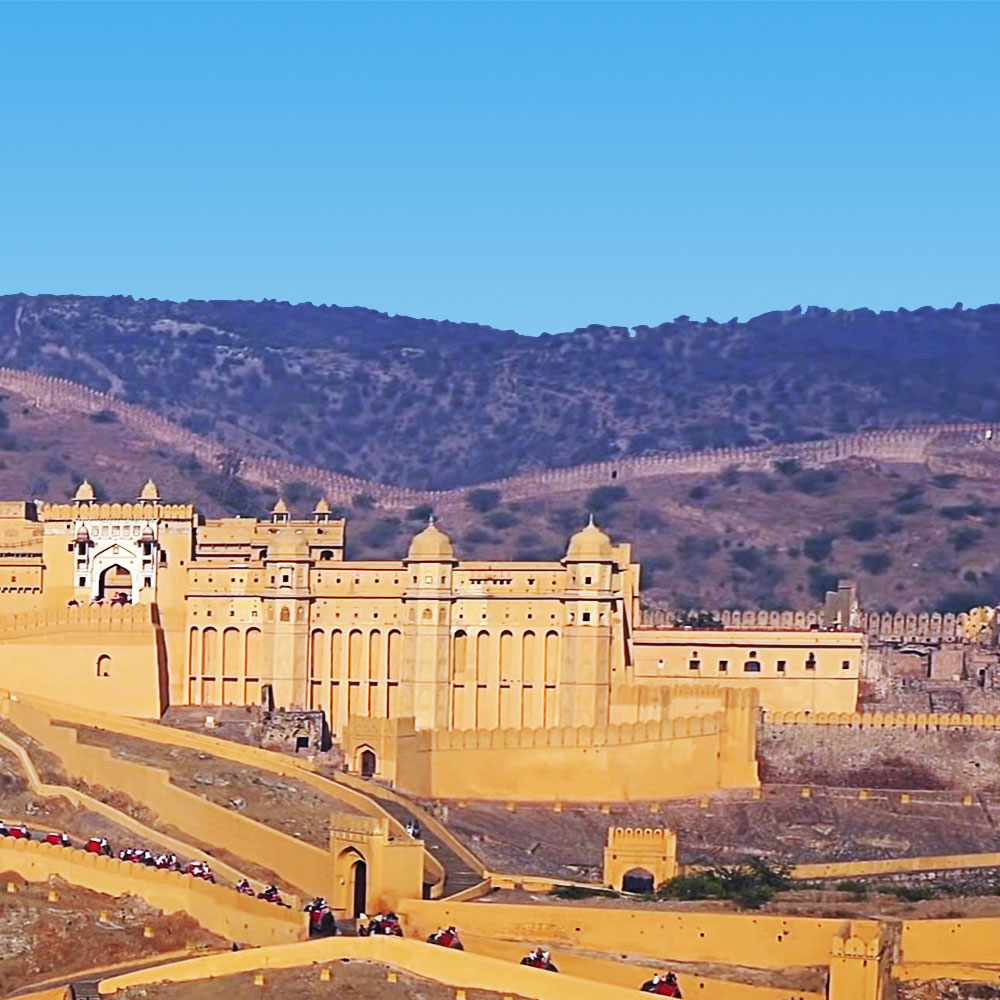 3.) The fort's intricate architecture,
courtyards, gates, and palaces represent the opulence and artistic grandeur of the era.
3.) The fort's intricate architecture,
courtyards, gates, and palaces represent the opulence and artistic grandeur of the era.
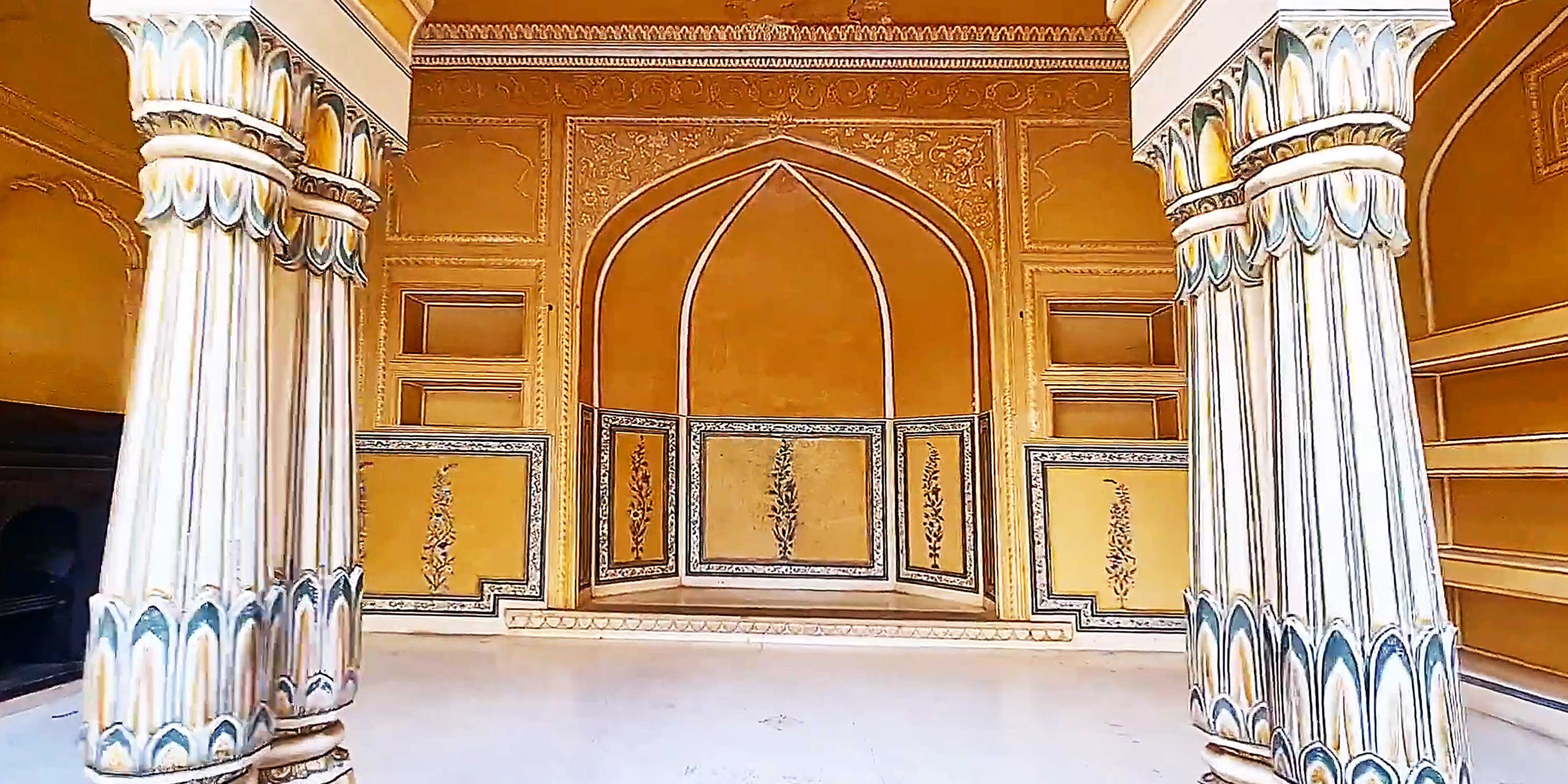 Interior room within the Nahargarh Fort in Jaipur, Rajasthan, constructed in 1734 by Maharaja Sawai Jai Singh II, features intricate Rajput-style wall paintings, traditional alcoves, and decorative pillars that highlight the architectural artistry of the era,
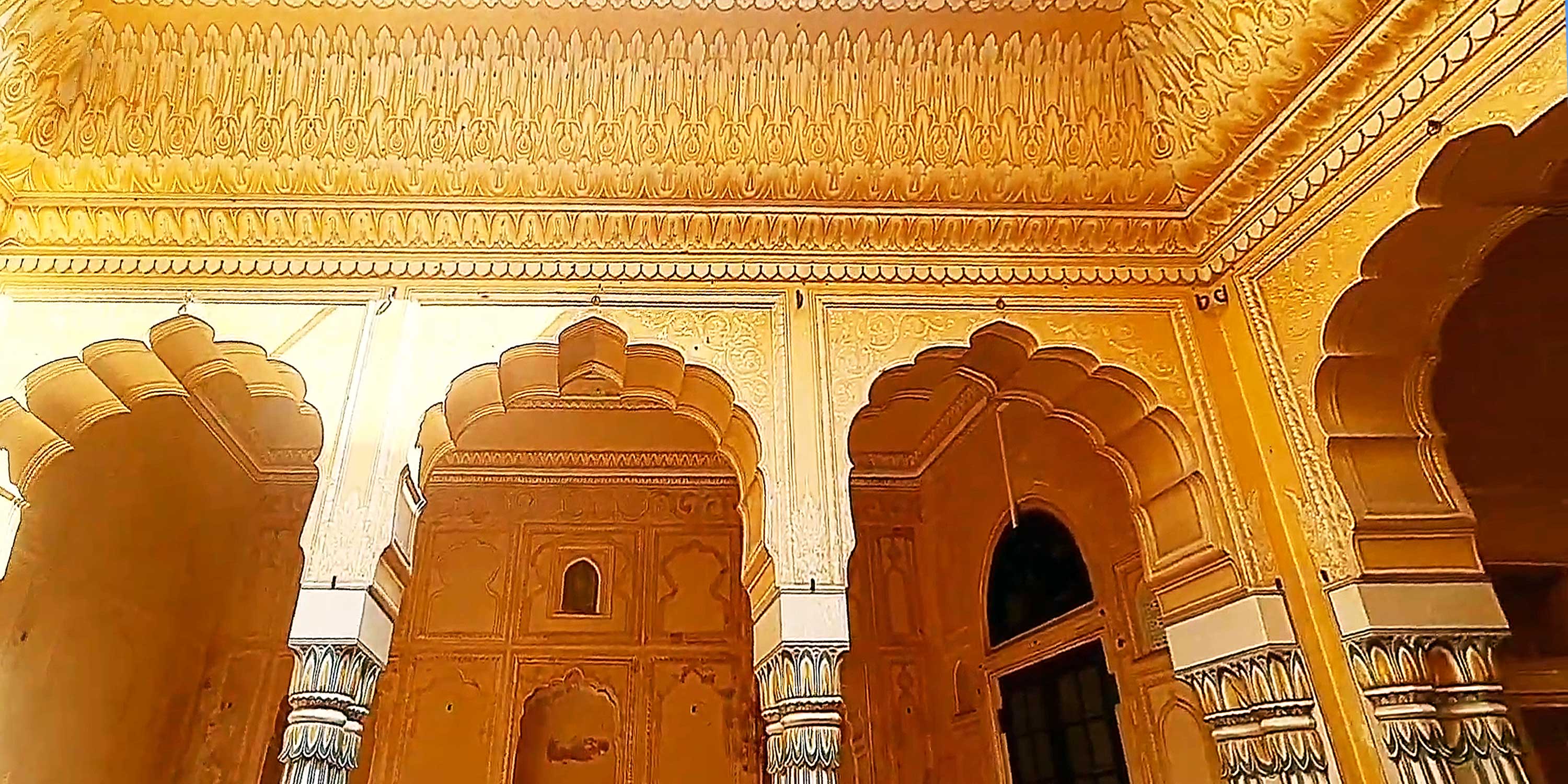 The interior architecture of the Madhavendra Bhawan palace located within the Nahargarh Fort in Jaipur, built in 1734 by Maharaja Sawai Jai Singh II, it served as a retreat for the kings and queens of Jaipur
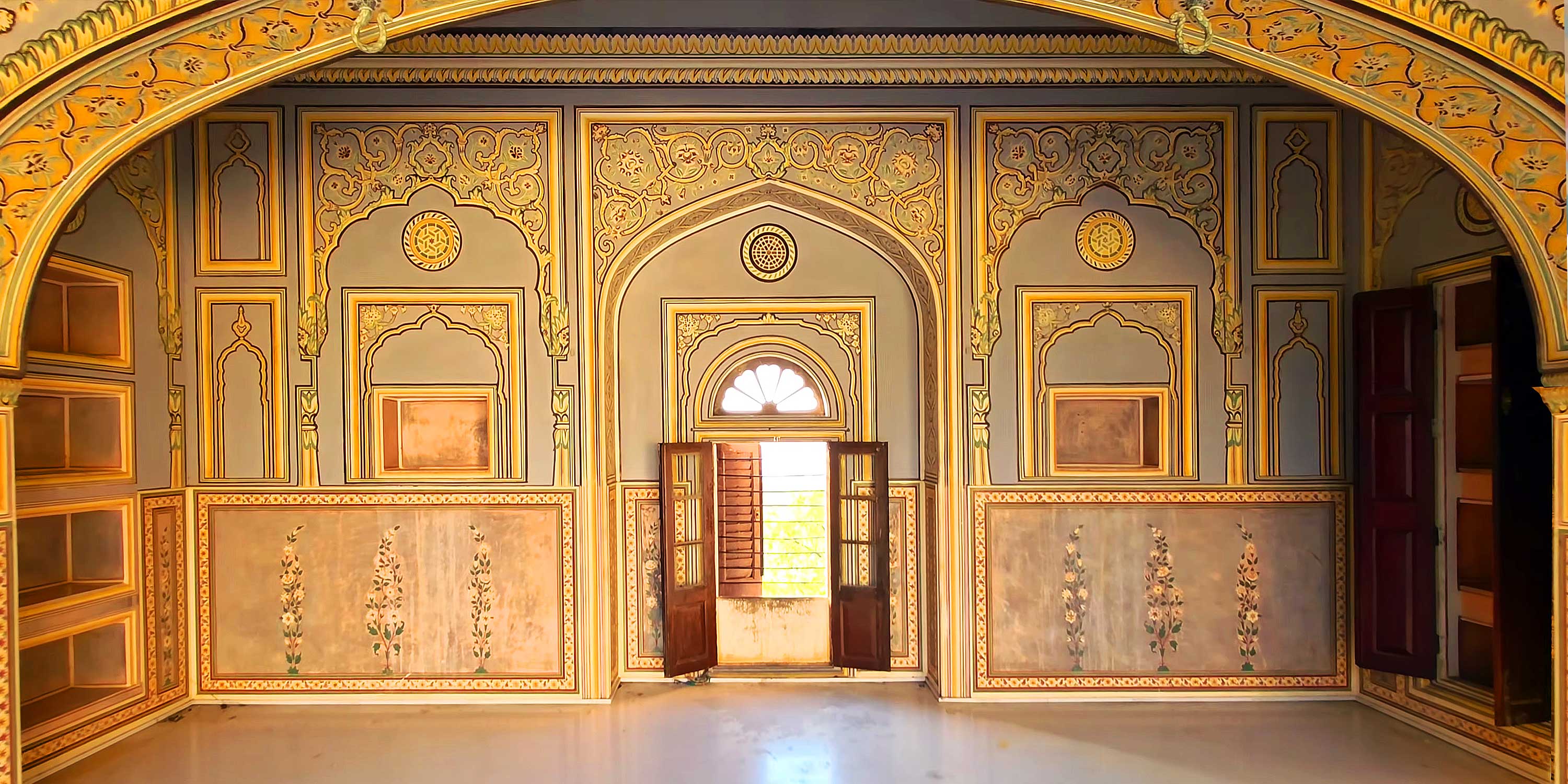 An ornate interior room within the Madhavendra Palace, located inside the historic Nahargarh Fort in Jaipur, the room is part of a complex built in 1892 by Maharaja Sawai Madho Singh for his nine queens, the space features intricate Rajasthani frescoes, carved sandstone, and arched doorways, typical of traditional havelis and palaces in the region.
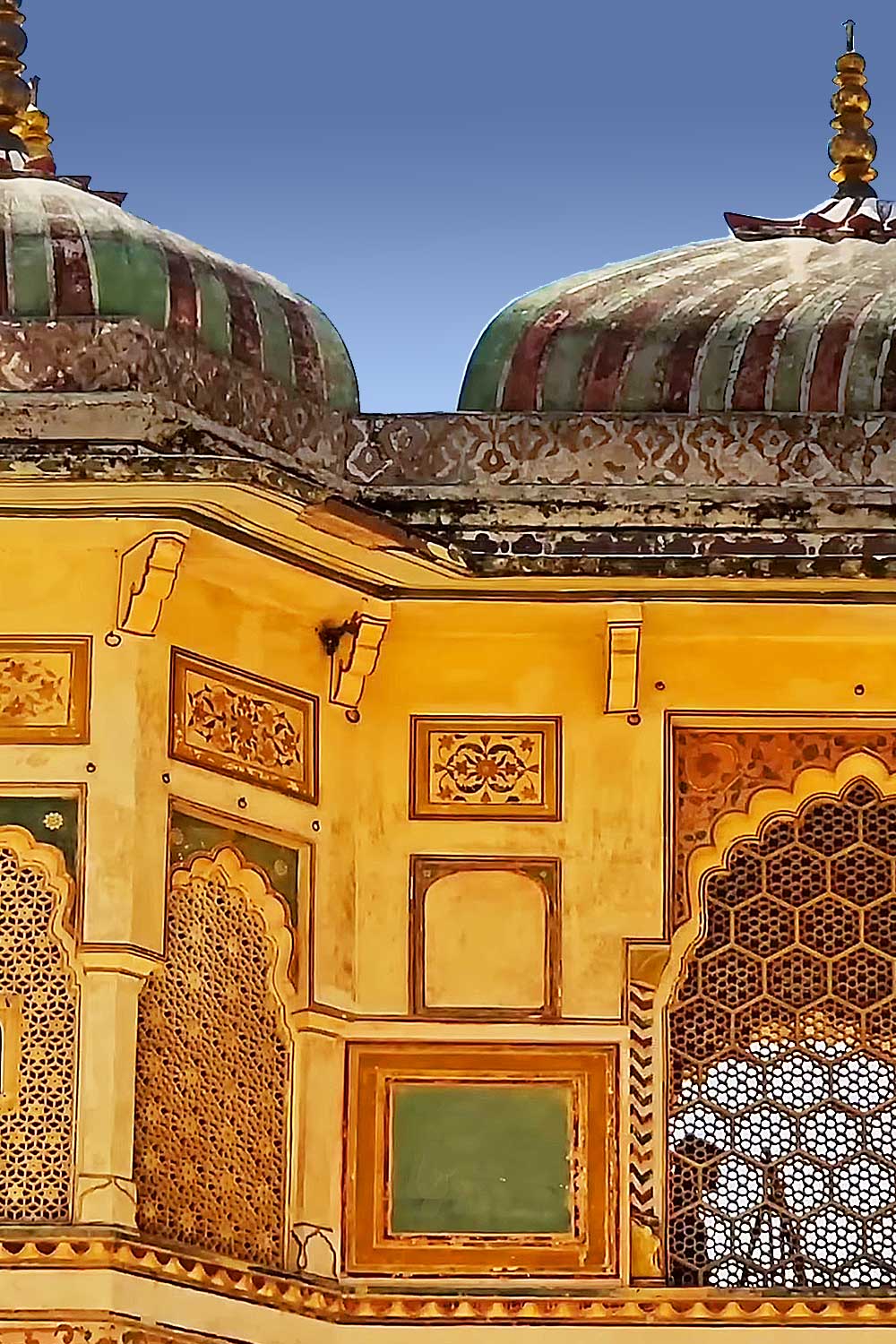 1.) Top of the Ganesh Pol, a famous gateway within the Amber Fort
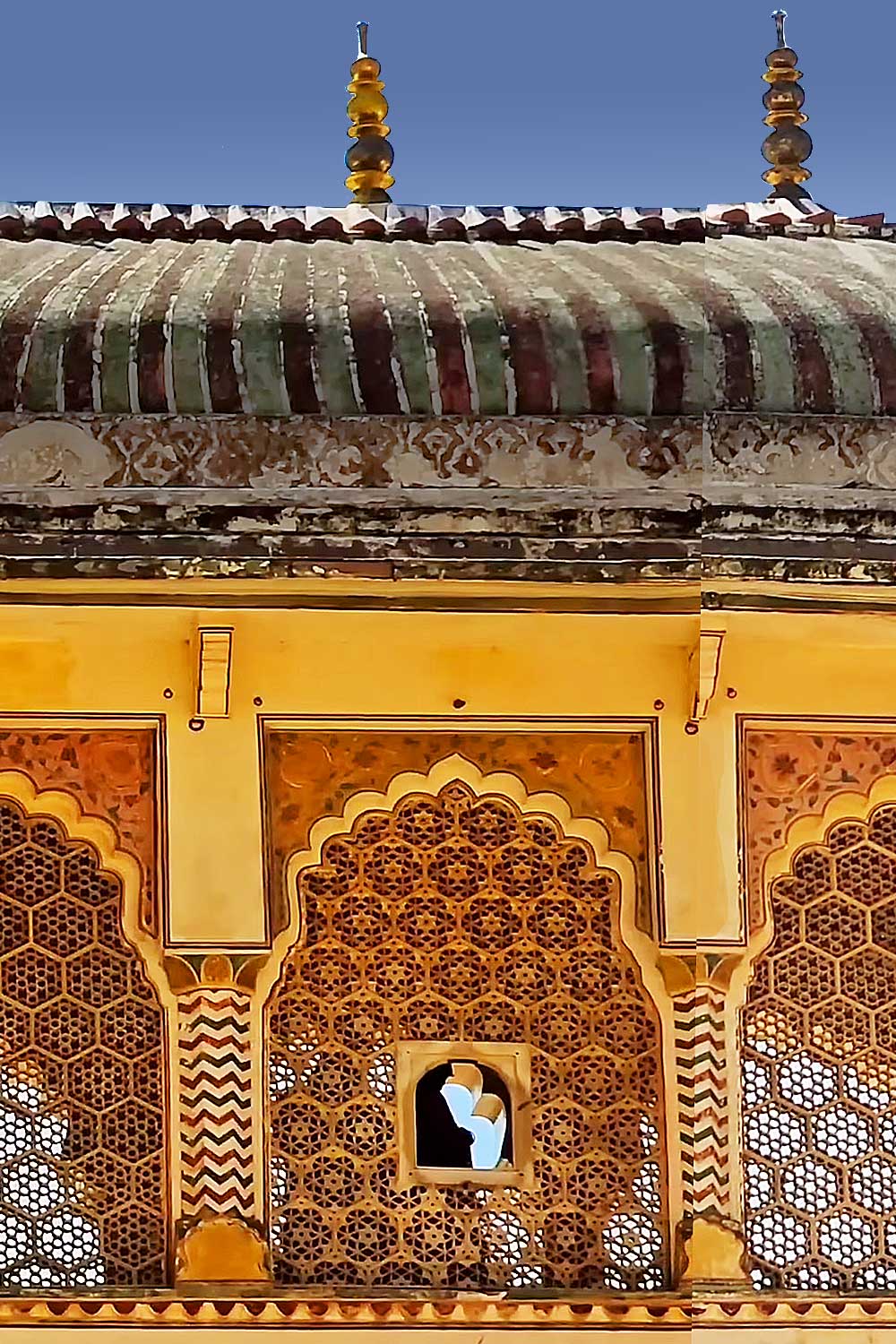 2.) is a stunning fusion of Mughal and Rajput architectural styles, constructed from yellow sandstone,
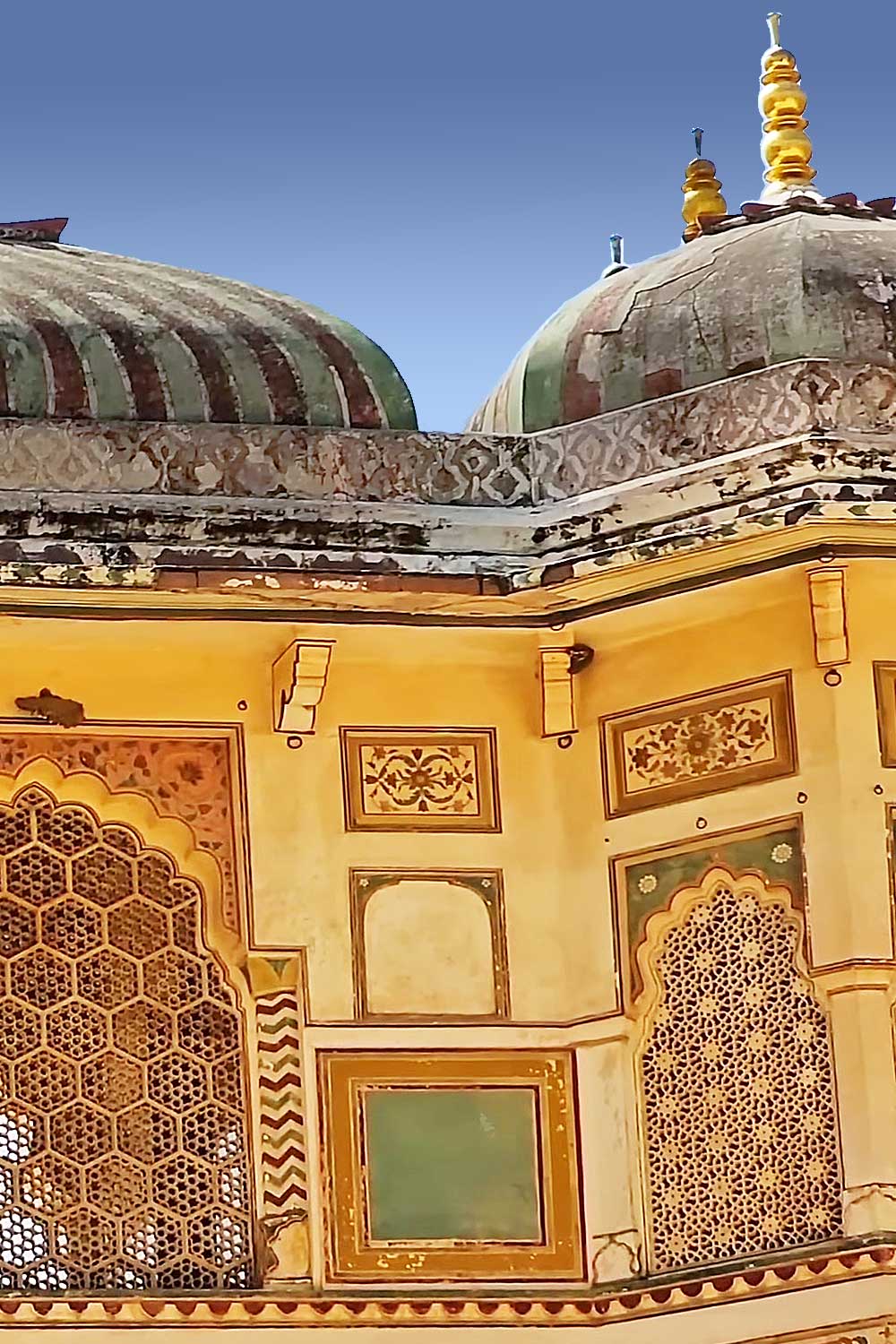 3.) it features exterior detailed jali screens, perforated, latticed stone or wood, featuring intricate geometric or floral patterns
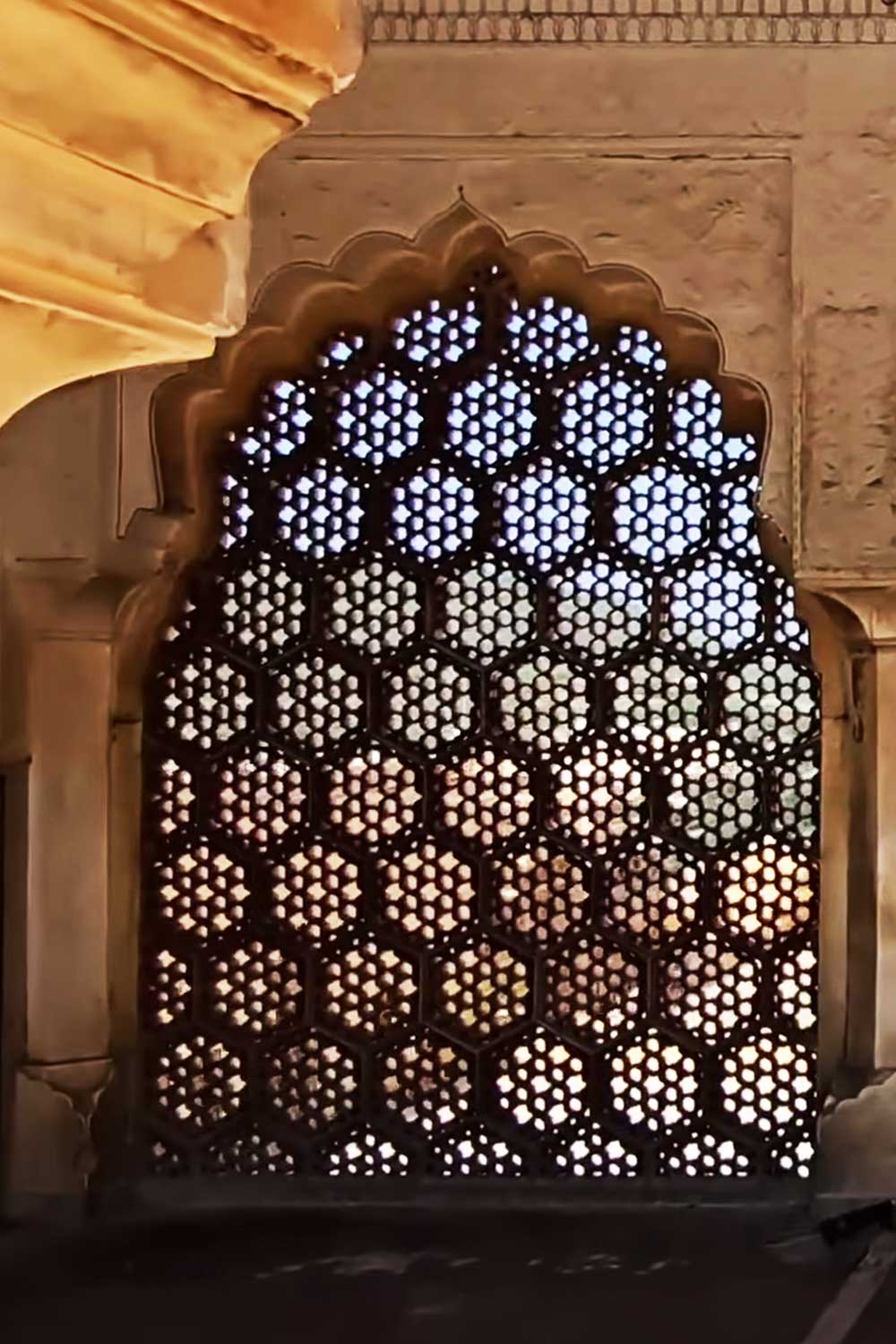 A detail of the 16th century Jas Mandir pavillion inside Amber Fort (also known as Amber Palace) near Jaipur, India.
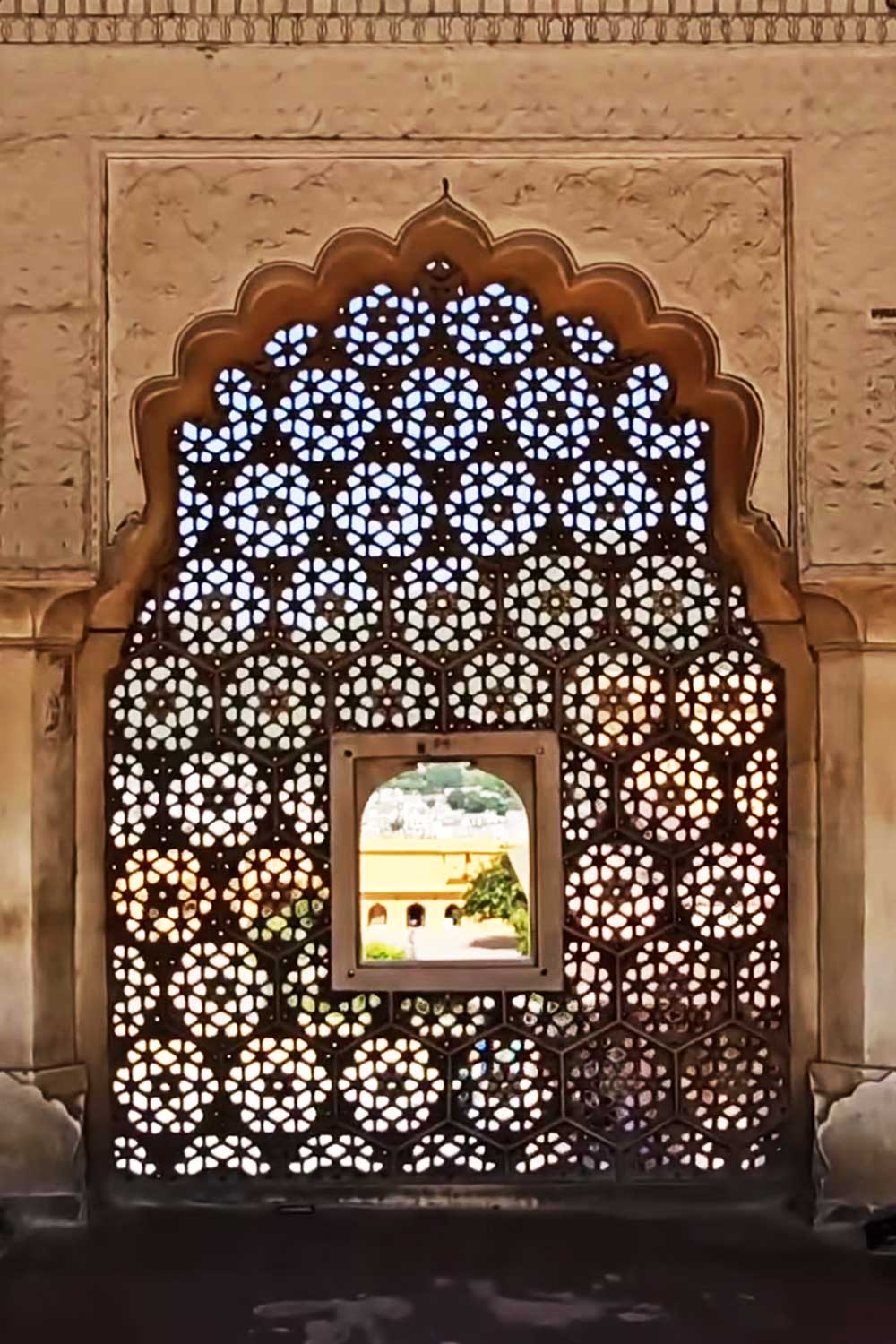 The windows are a Jali, which is a traditional carved stone lattice screen characteristic of Mughal architecture.
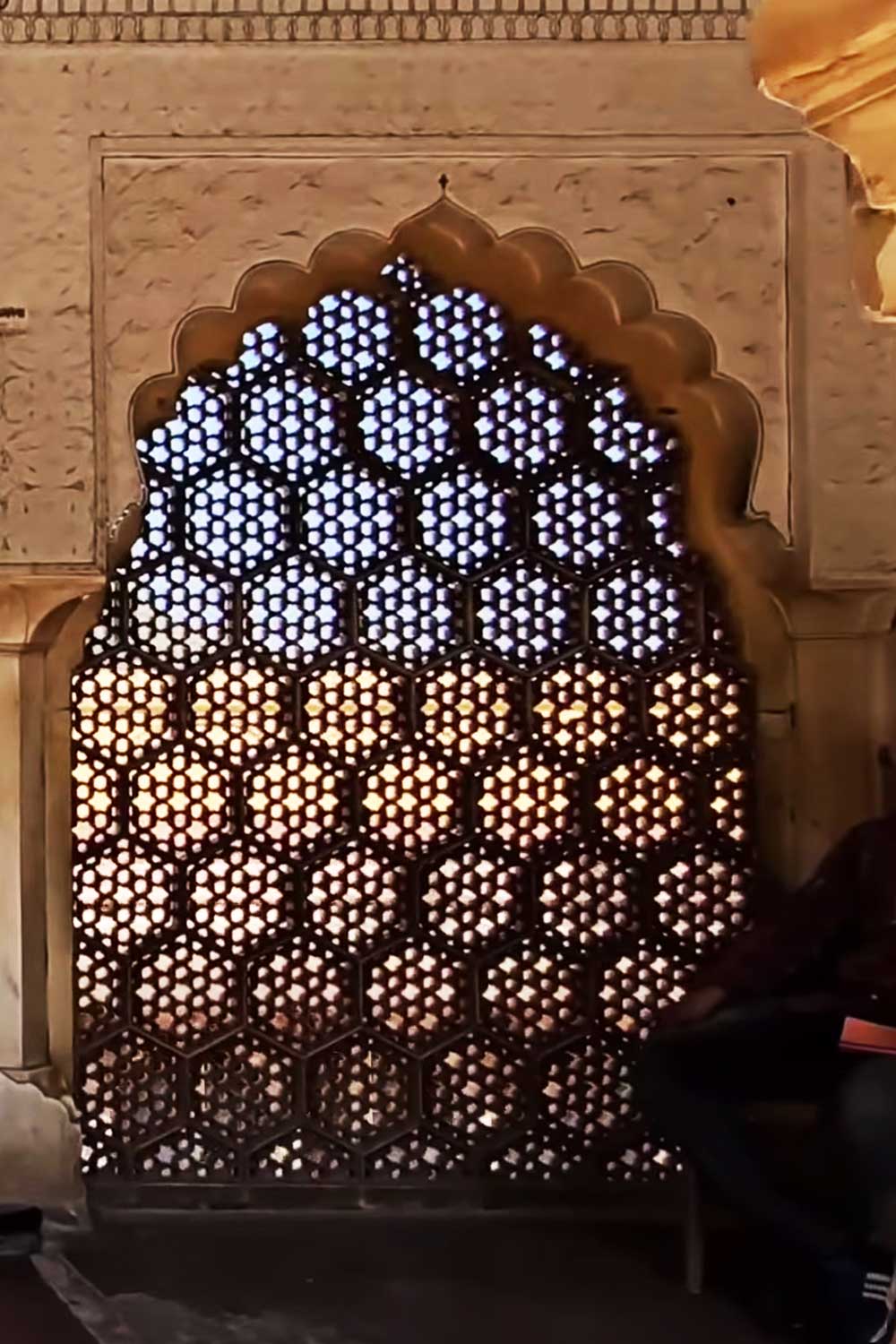 Jali screens were designed to allow light and air to pass through while reducing harsh sunlight and maintaining privacy for inhabitants.
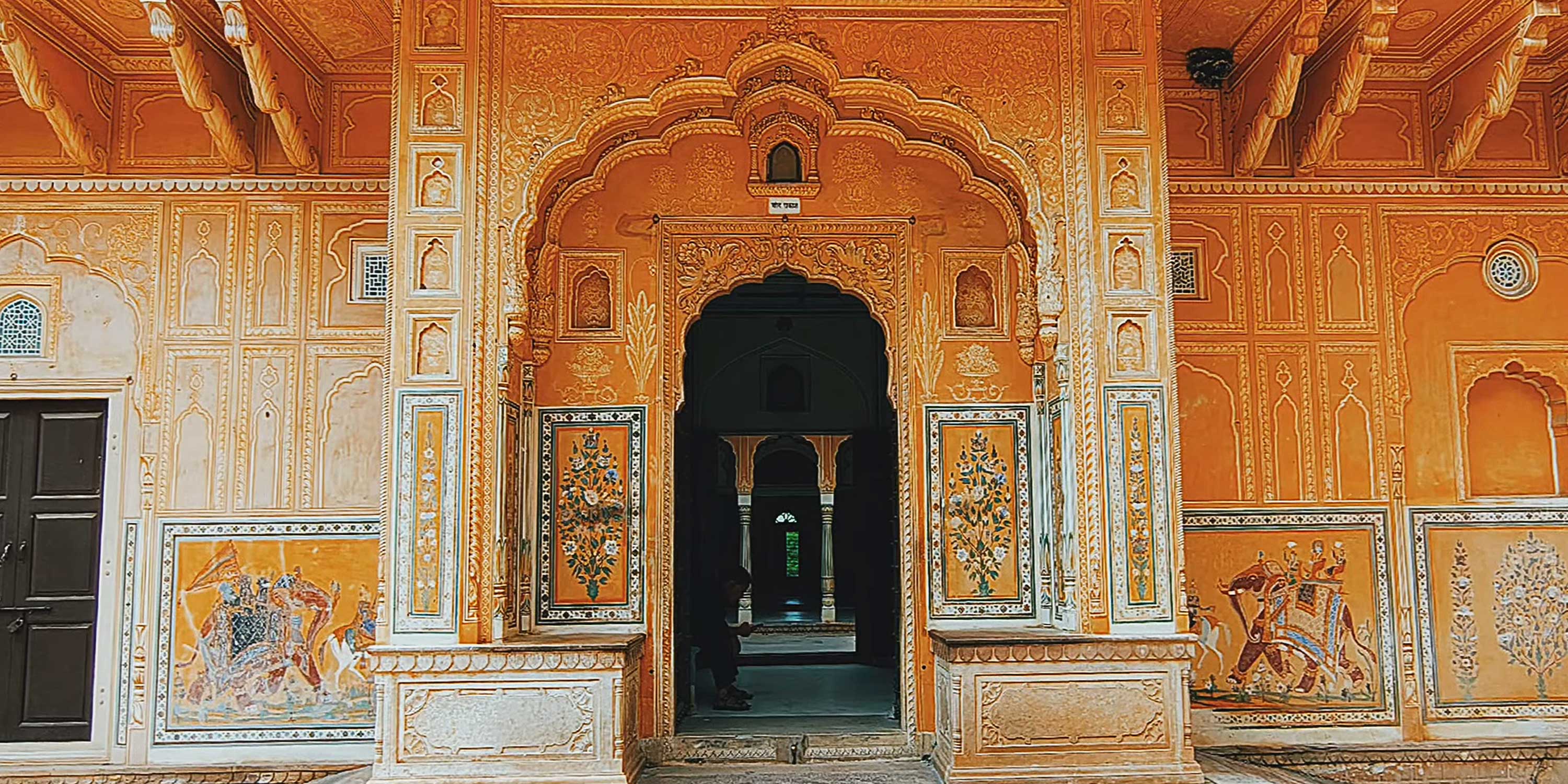 The intricate architecture within the Madhavendra Bhawan inside Nahargarh Fort in Jaipur, it was designed as a royal retreat rather than strictly for defense, overlooking the city of Jaipur from the Aravalli Hills.
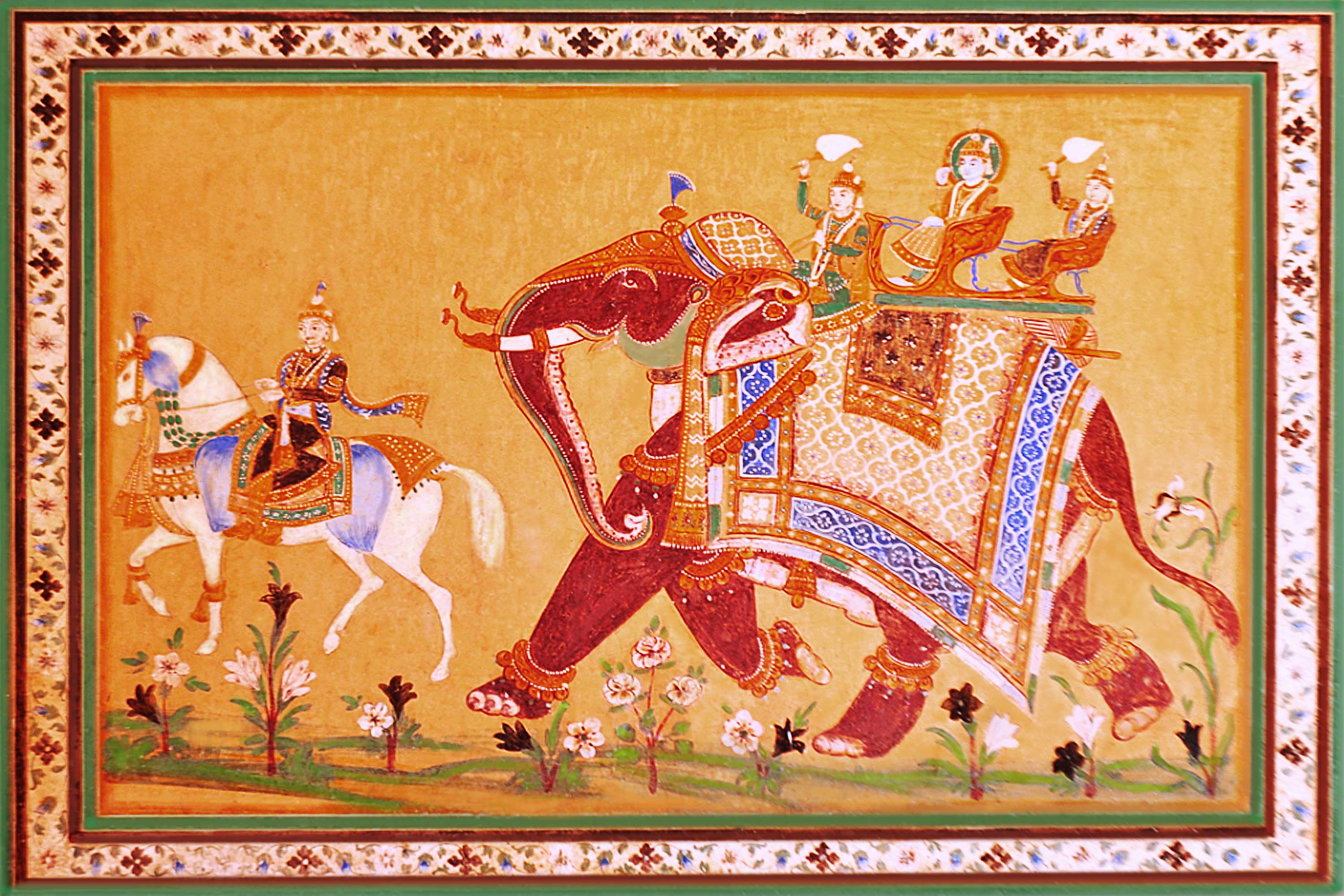 (detail of wall mural fresco right of entrance of the Madhavendra Bhawan) a traditional Indian variation wall painting known as the Jaipur Fresco or Arayash, a classic example of Rajput or Rajasthani miniature painting, that depicts a royal procession featuring a Maharaja and Maharani (King and Queen) riding a highly decorated royal elephant while a figure on a white horse follows the elephant, dressed in traditional royal attire, such wall paintings often utilize natural stone colors and are sometimes executed using squirrel-hair brushes for fine, minute details like the elephant adorned with a traditional howdah (a seat for riding) and elaborate decorative coverings, while the main figures are often painted into the wet plaster, finer details like jewelry or intricate patterns may be added using the secco (dry) technique, where paint is applied over the dried surface with an organic binder.
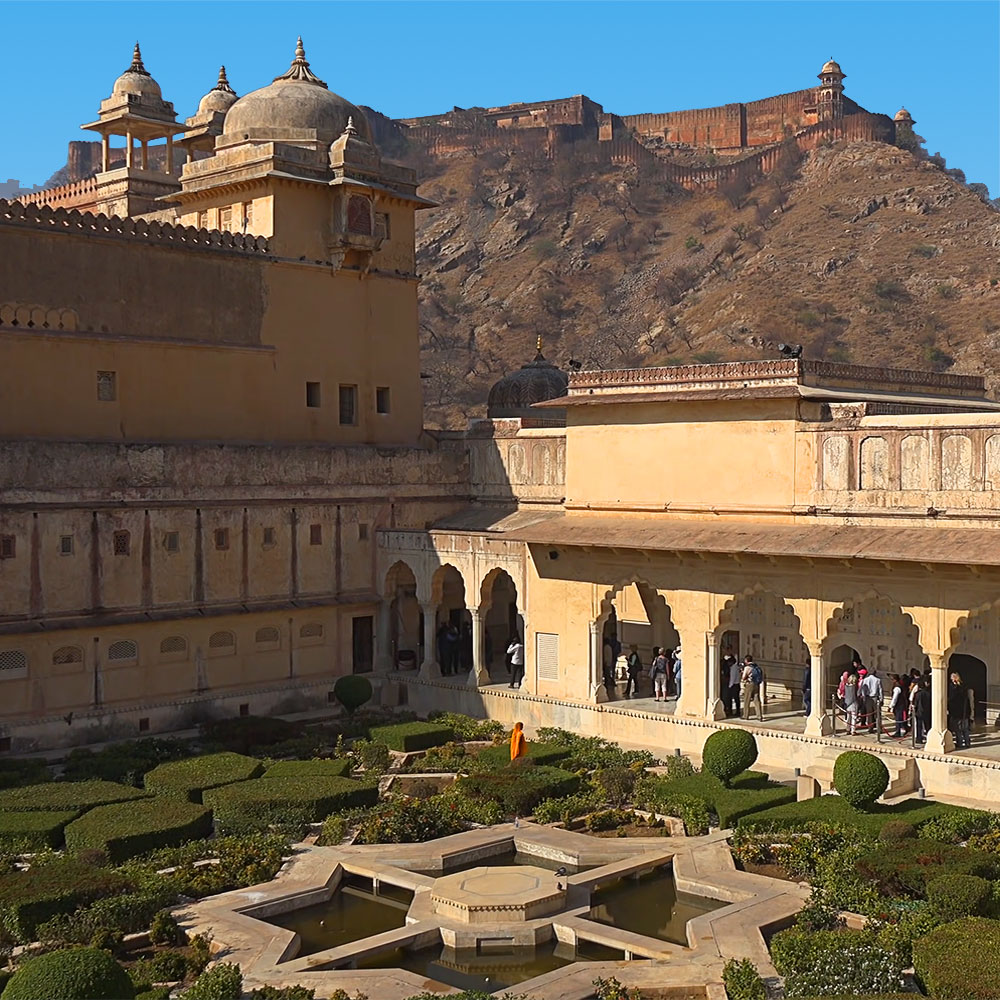 Courtyard Amber Fort, it is one of the principal
tourist attraction in Jaipur
Courtyard Amber Fort, it is one of the principal
tourist attraction in Jaipur
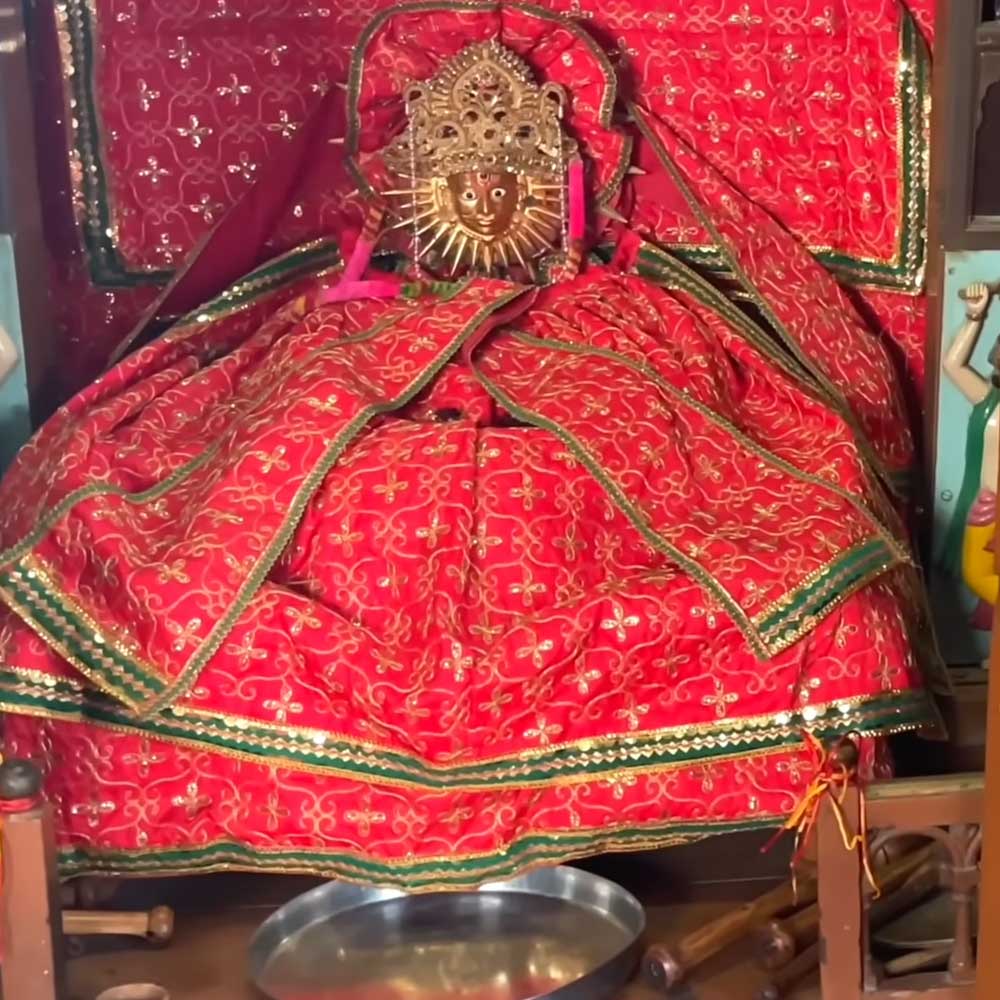 The idol of a Hindu goddess, commonly referred to as Mataji, adorned in traditional red attire with gold embroidery, the face of the deity is represented by a golden mask, featuring large, distinct eyes
 Elephant rides at Jaipur, The Amber Fort, built in
the 16th century
Elephant rides at Jaipur, The Amber Fort, built in
the 16th century
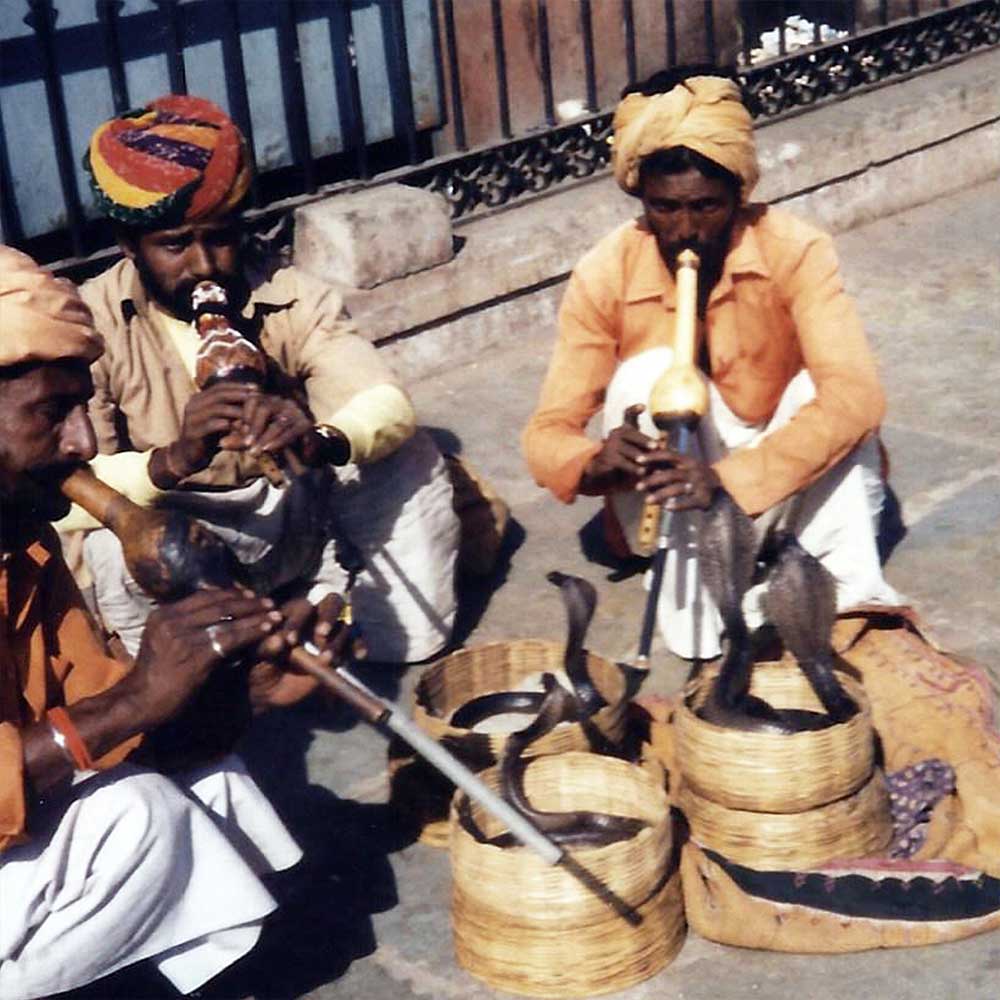 In Jaipur India, Snake charming is the practice of
appearing to hypnotize a snake (often a cobra) by playing and waving around an instrument, Jaipur
In Jaipur India, Snake charming is the practice of
appearing to hypnotize a snake (often a cobra) by playing and waving around an instrument, Jaipur
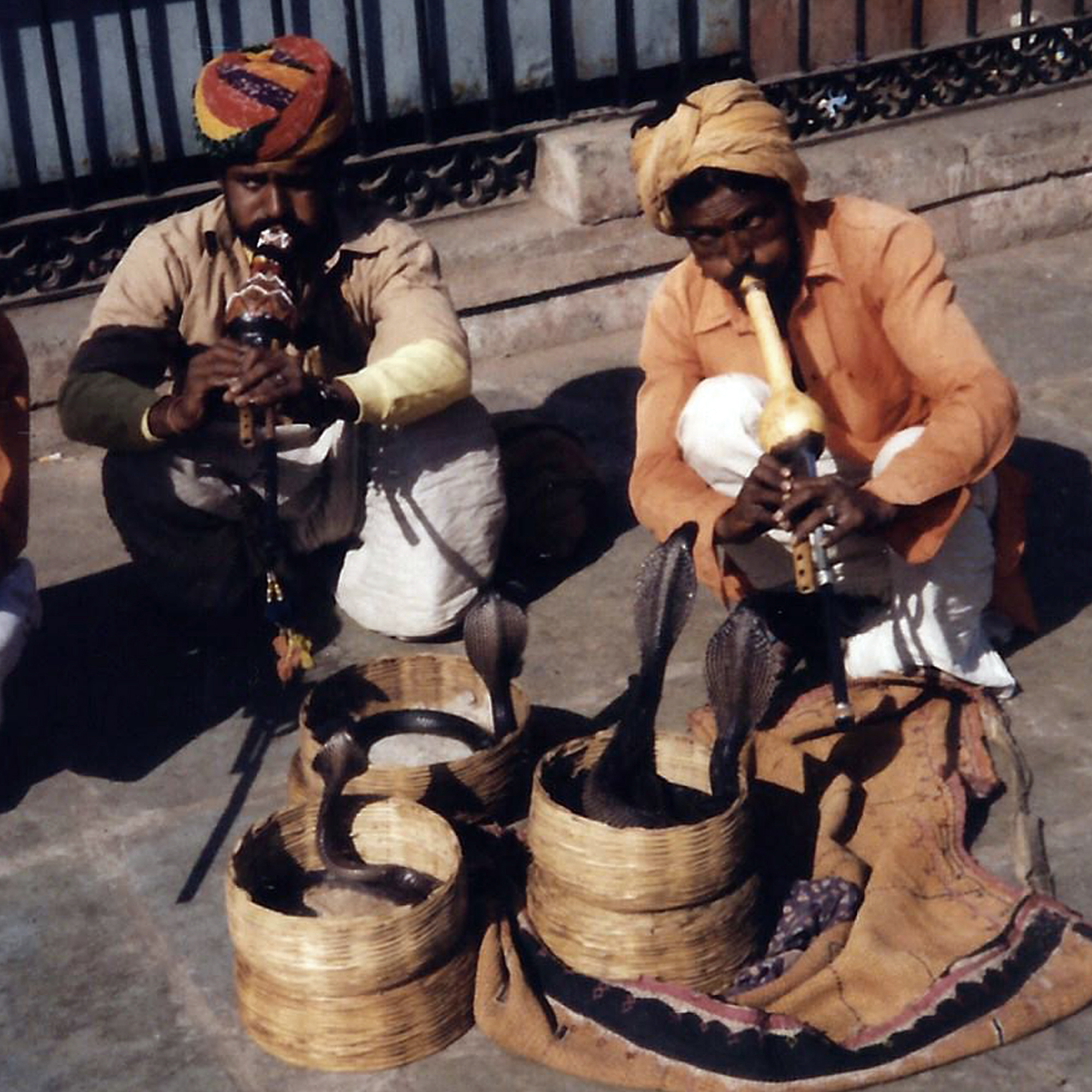 The practice was historically the profession of
some tribesmen in India well into the 20th century but snake charming declined rapidly after the government banned the practice in 1972, Jaipur
The practice was historically the profession of
some tribesmen in India well into the 20th century but snake charming declined rapidly after the government banned the practice in 1972, Jaipur
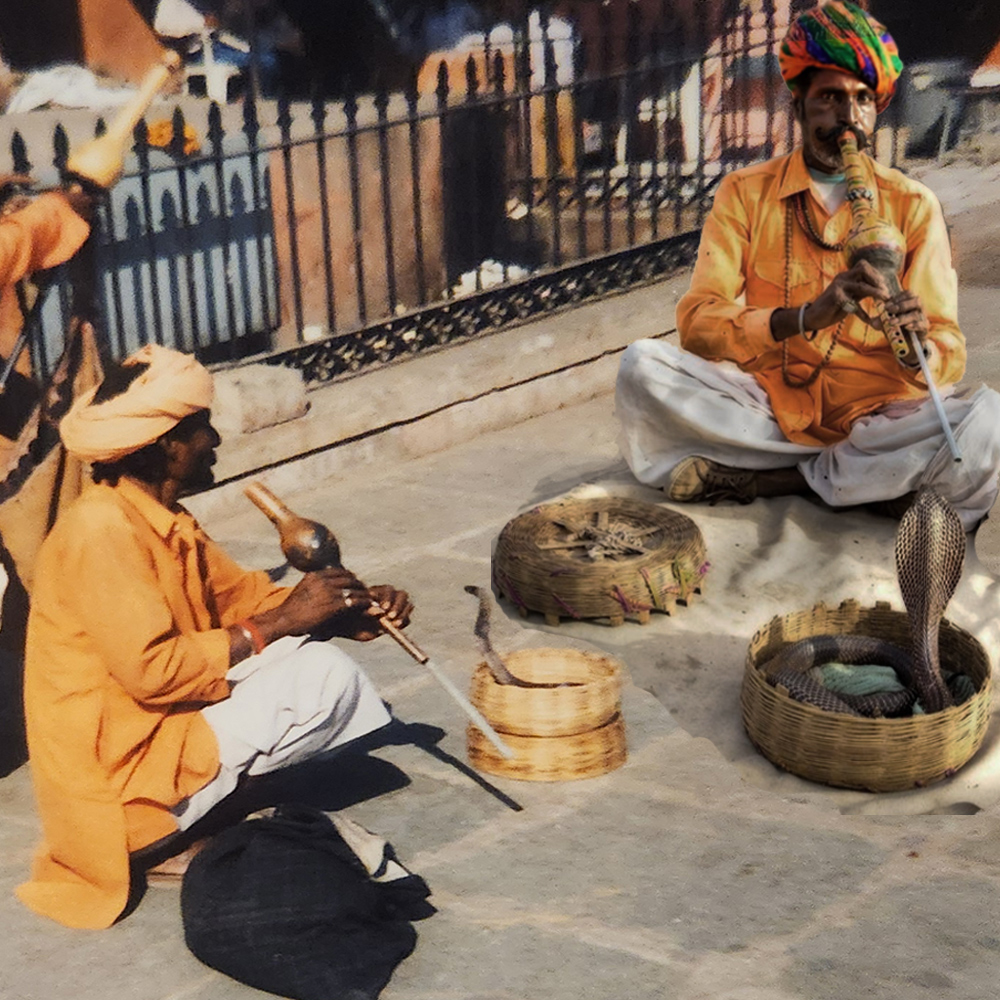 However Snake charming still continues and includes
handling the snakes or performing other seemingly dangerous acts. Often the fangs of the cobras are removed or they sew their mouths shut, Jaipur
However Snake charming still continues and includes
handling the snakes or performing other seemingly dangerous acts. Often the fangs of the cobras are removed or they sew their mouths shut, Jaipur
Website & Content Created by Richard Brafford, © 2025, Fair Use Disclaimer for Non-Commercial Use for Educational & Entertainment Purposes Only, No Copyright Infringement is Intended Top
Top