TEMPLE OF HORUS AT EDFU

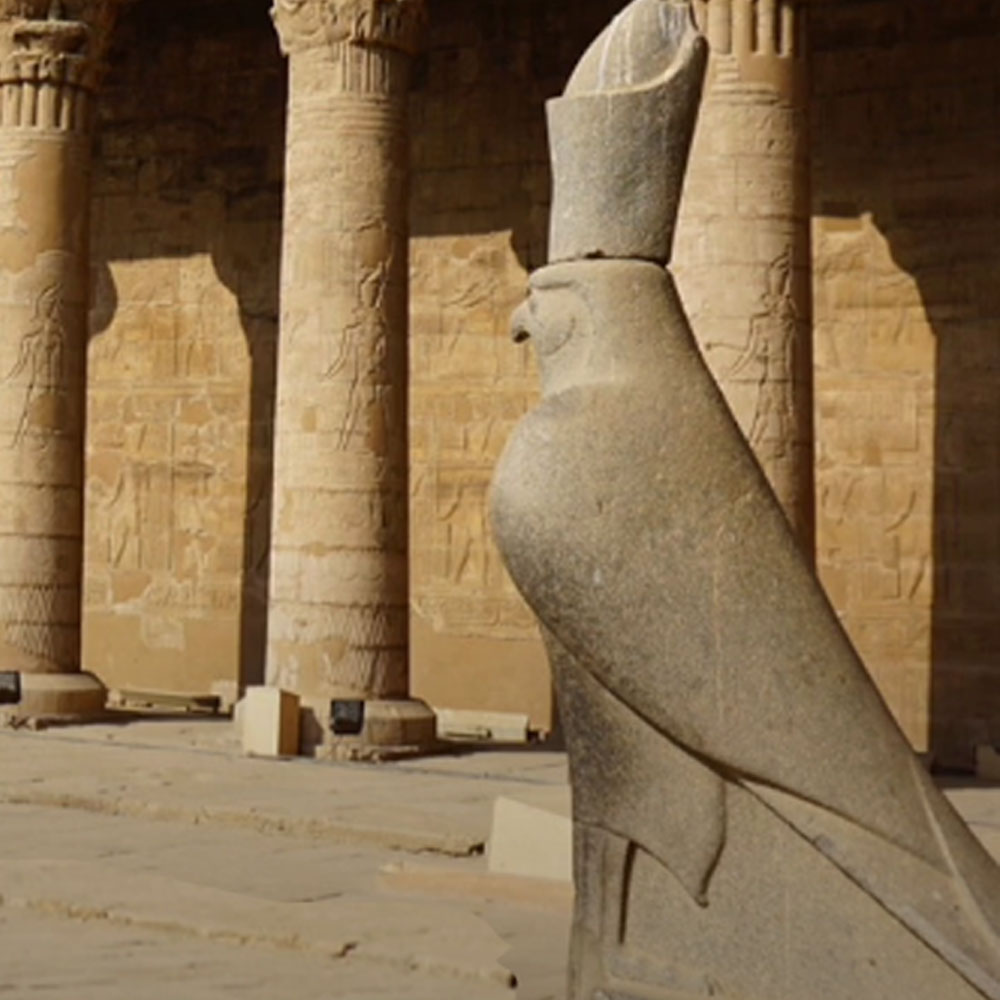
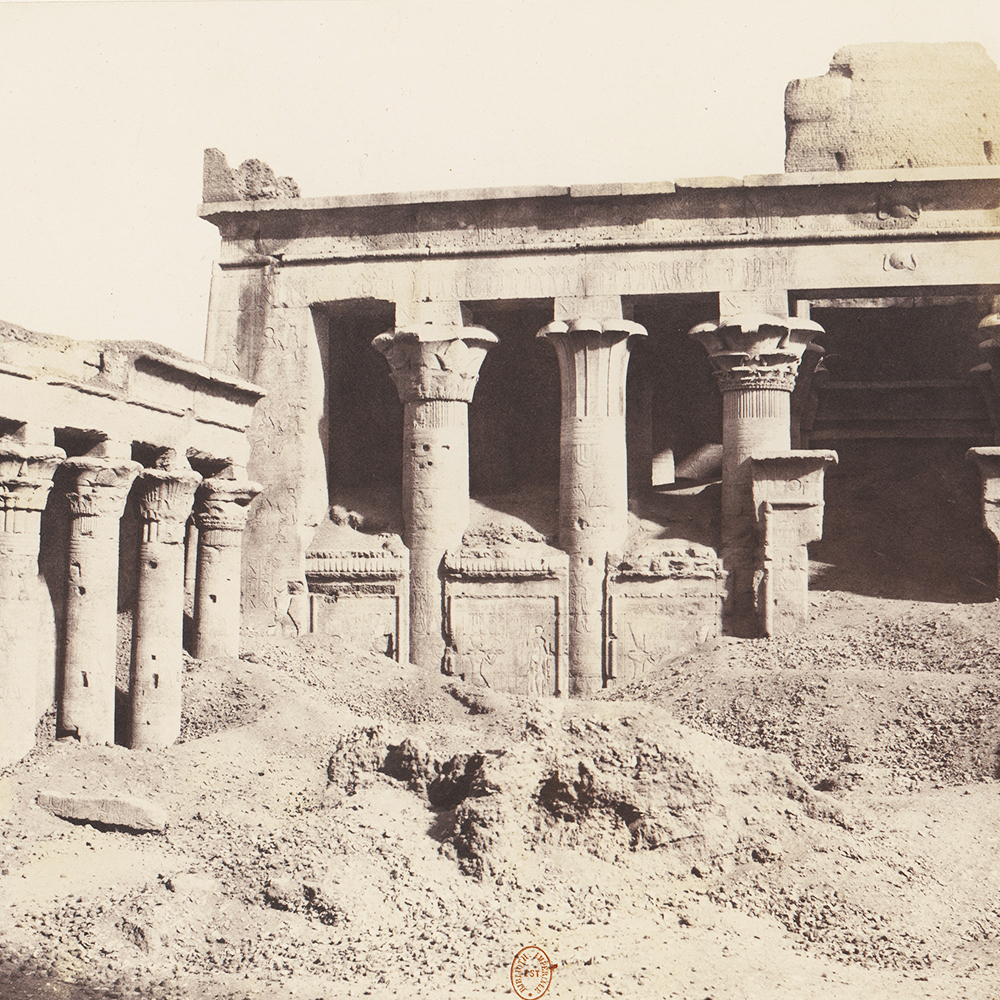
For over two thousand years, the Temple of Horus at Edfu, became buried to a depth of 12 meters or 39 feet beneath drifting desert sand and layers of river silt deposited by the Nile. Local inhabitants unaware of the temple built homes directly over the former grounds. Horus, a god in the form of a falcon bird, was a cult in its era, evidenced by late predynastic times and widespread in Egypt. This Ptolemaic temple, built between 237 and 57 BC, is one of the best-preserved ancient monuments in Egypt. It is the only temple with its roof intact and preserved by desert sand, which filled the temple after the pagan cult was banned. When approaching the temple, you may notice the two meticulously carved granite falcons flanking the entrance, acting as guards. In the present day, we are fortunate to be able to appreciate the splendor of this once-buried architectural gem.
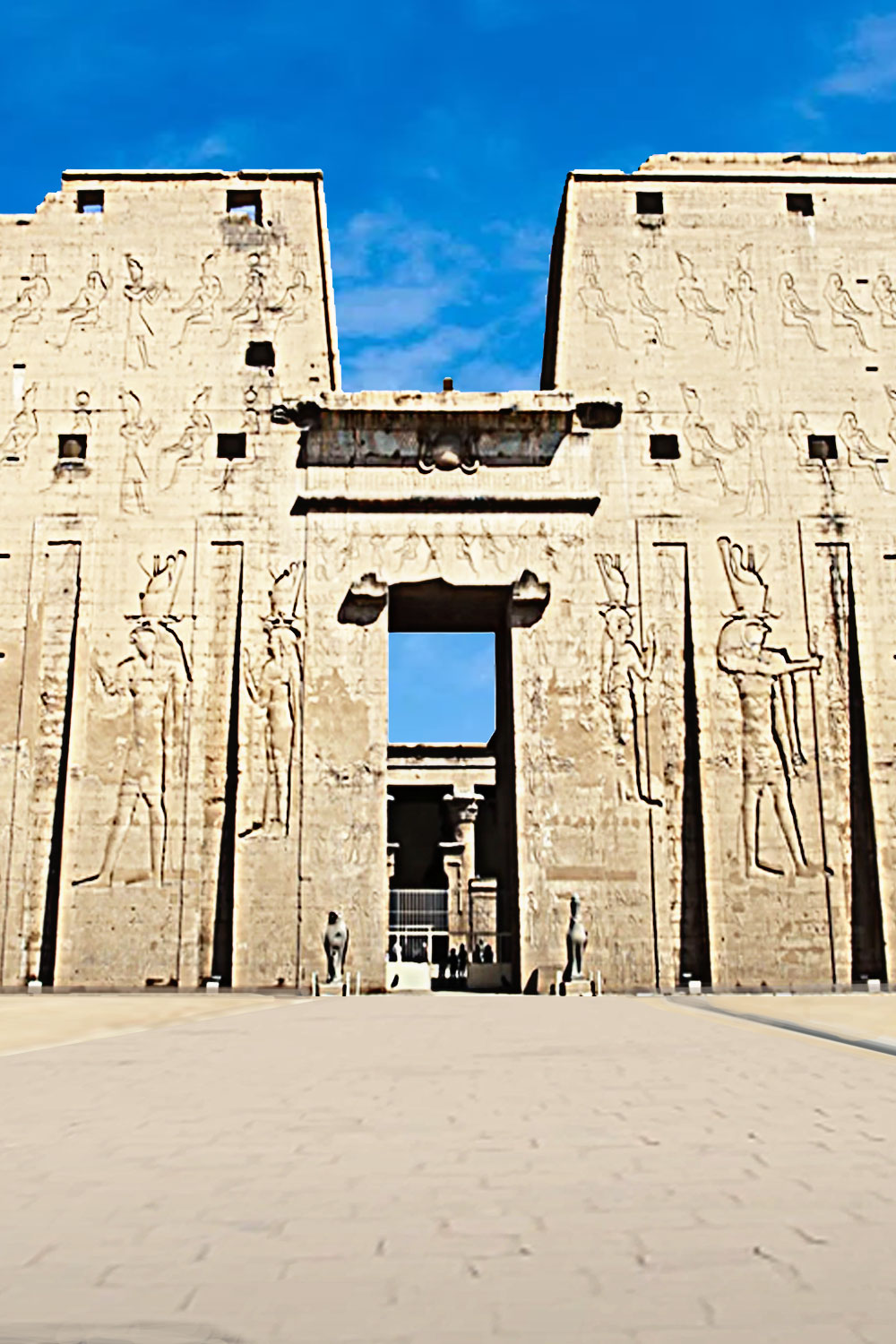
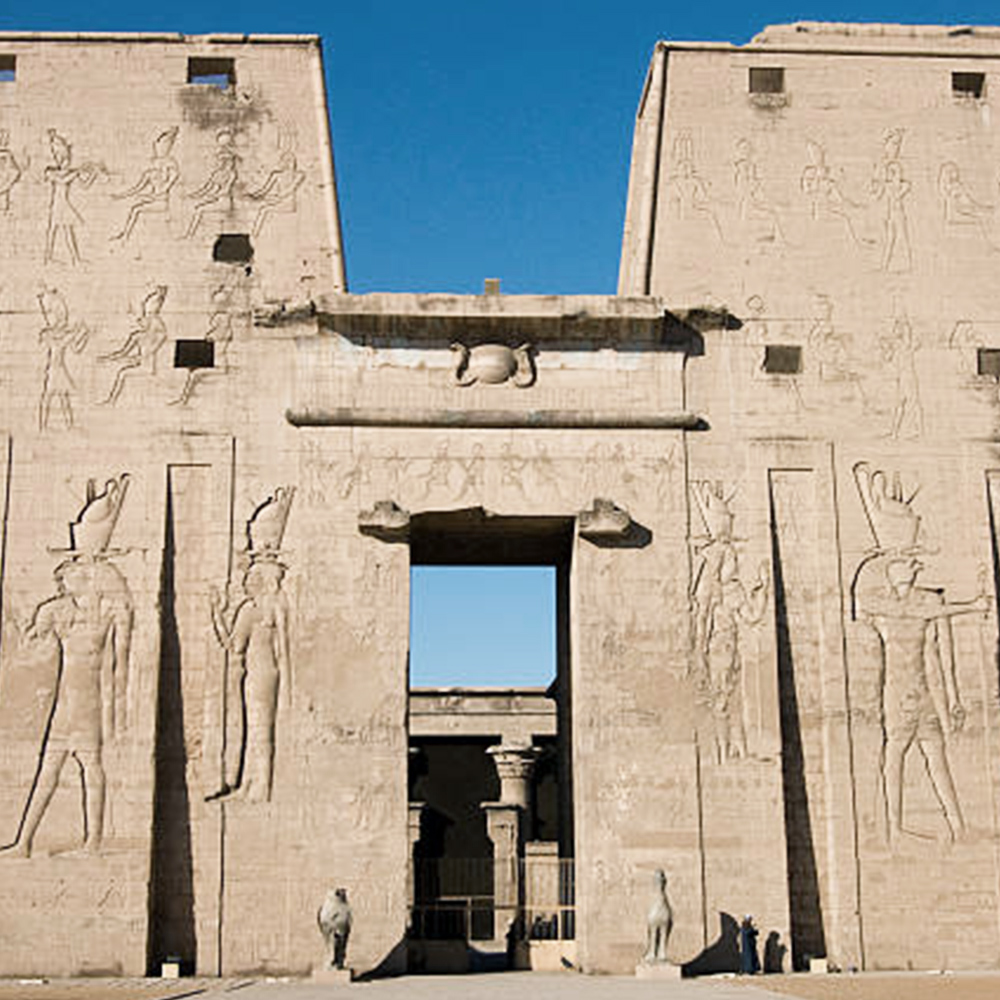
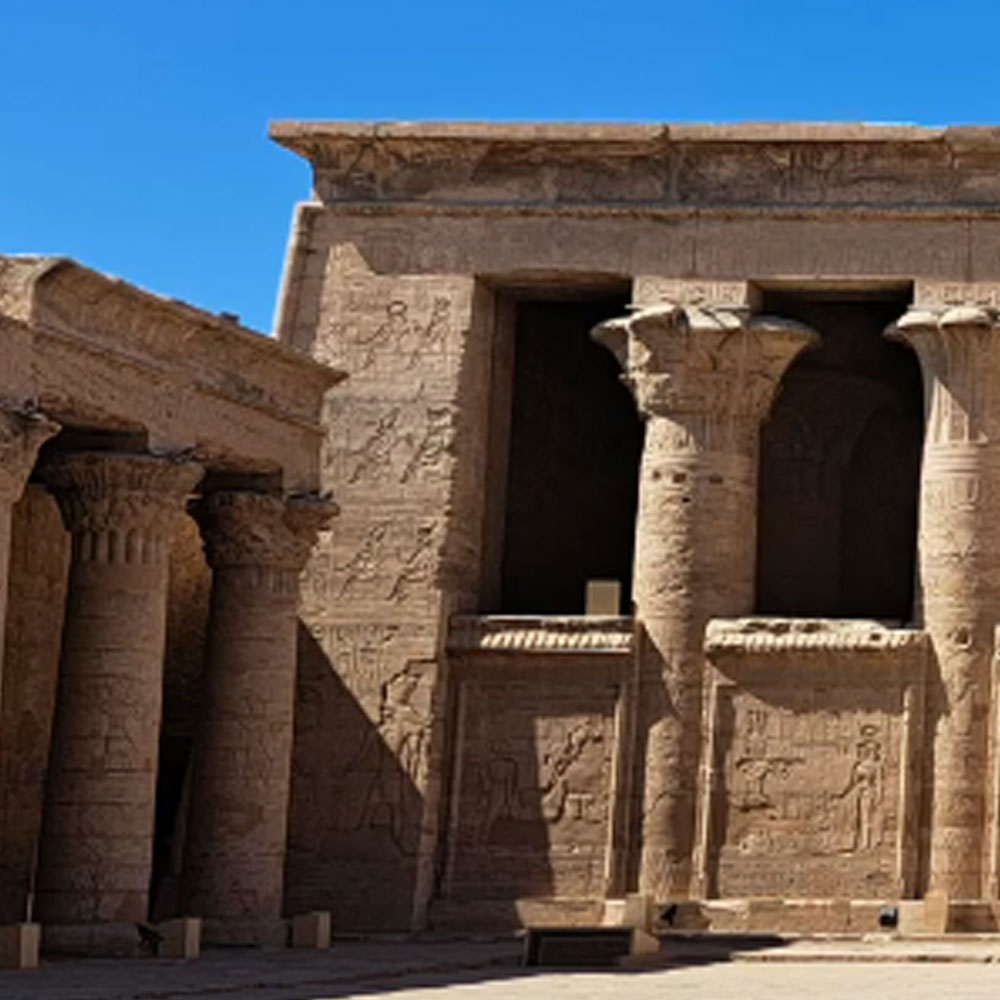
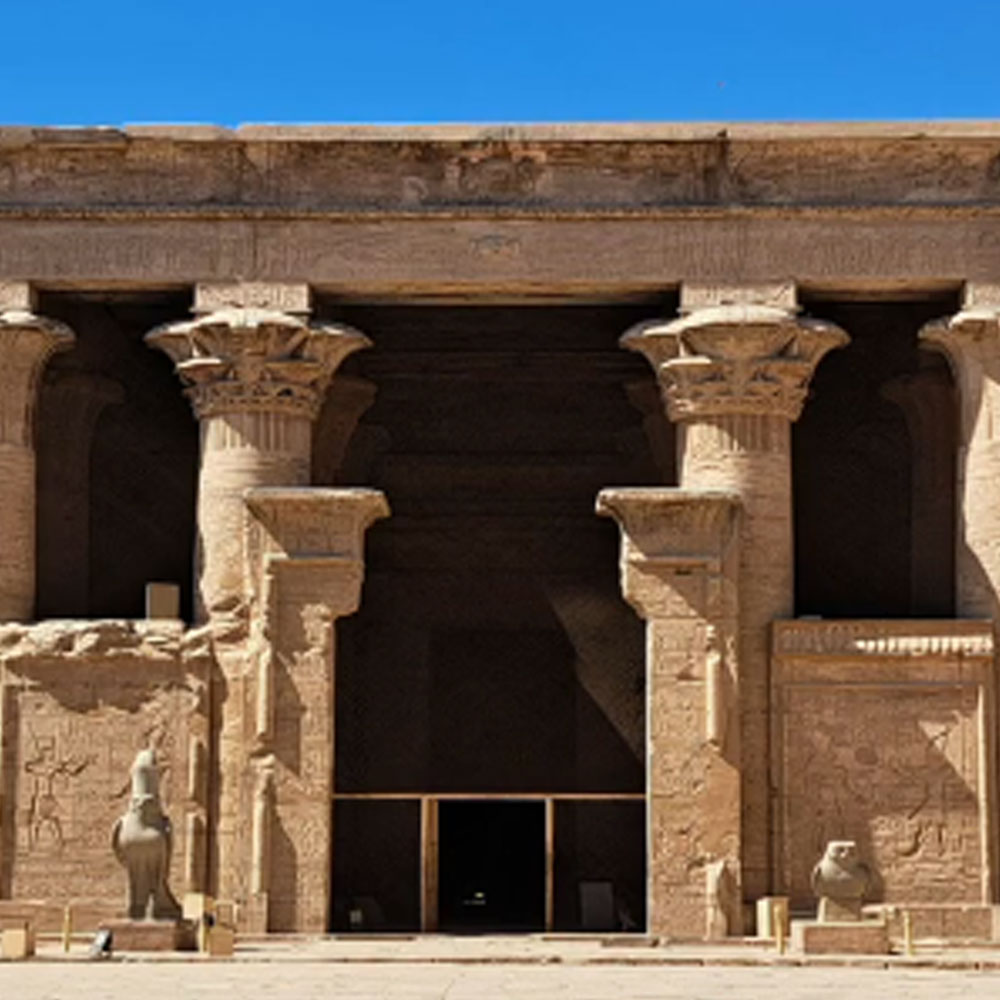
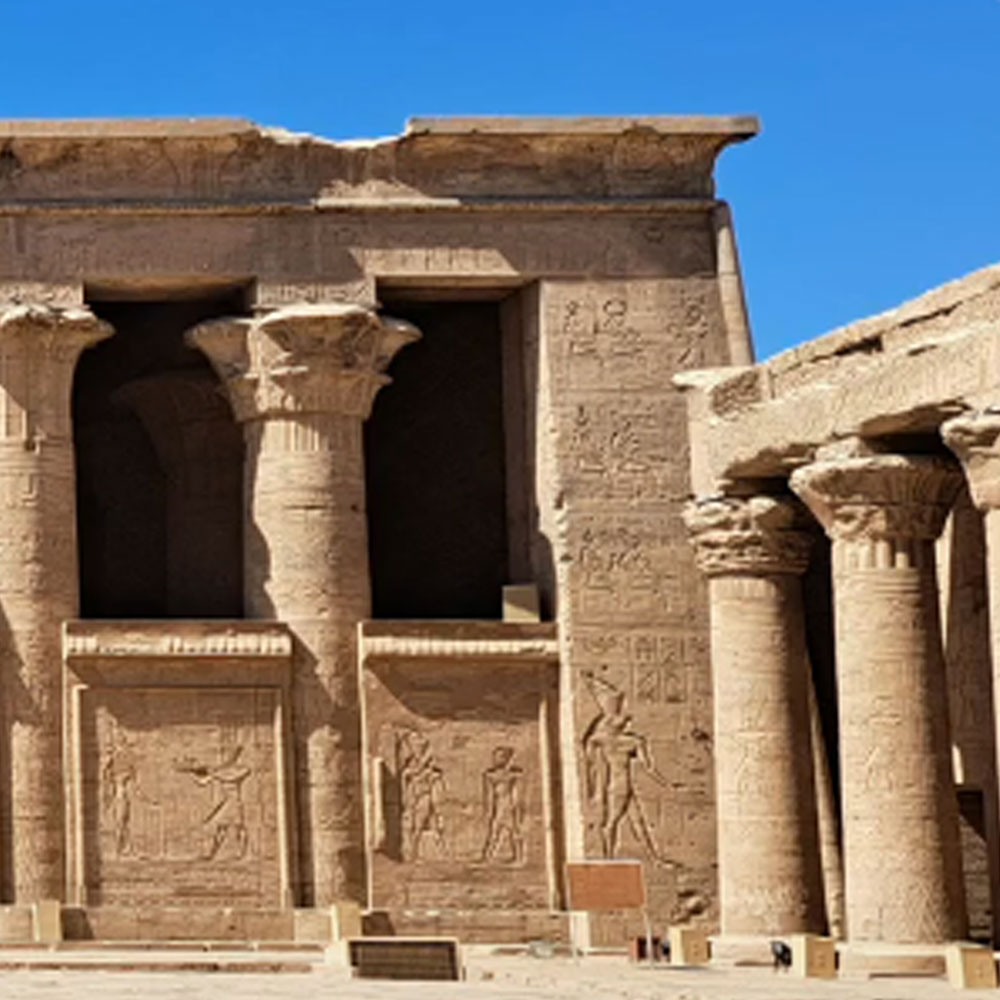
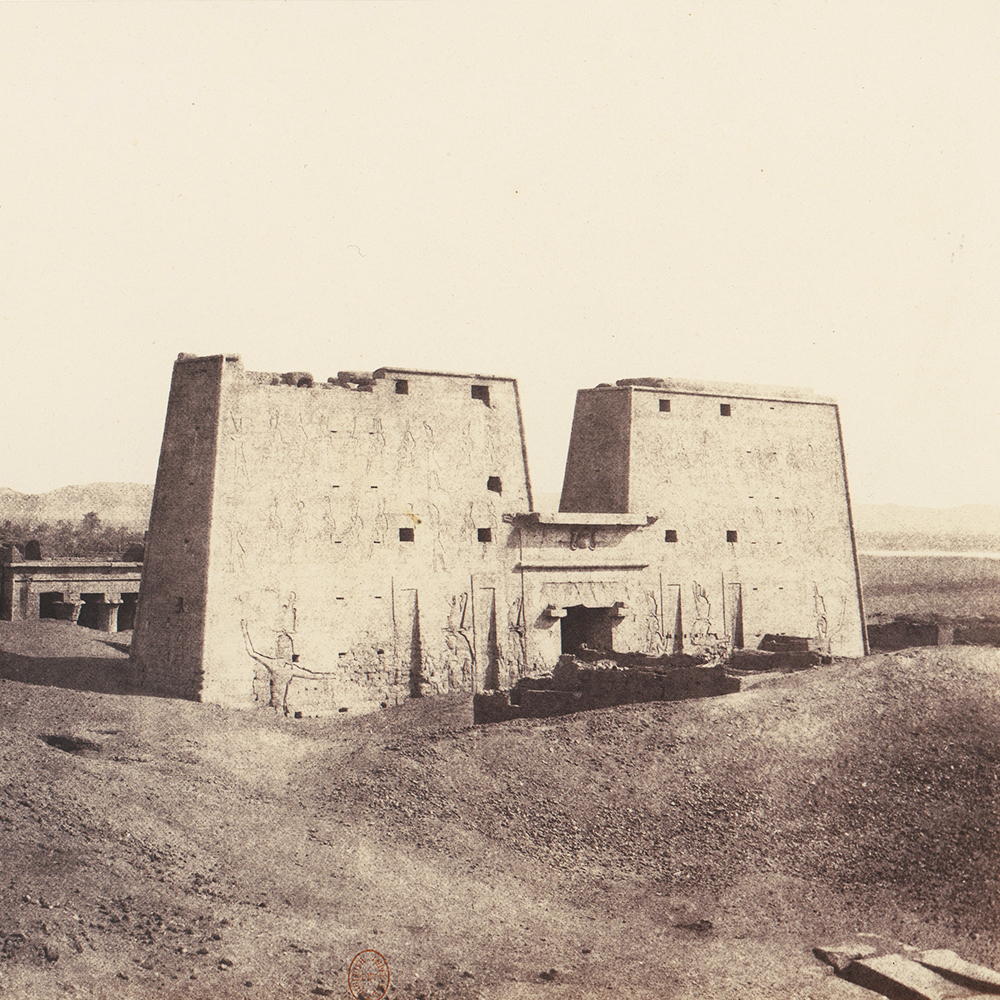
1.) The main entrance of the Temple of Horus at Edfu, showing the first pylon
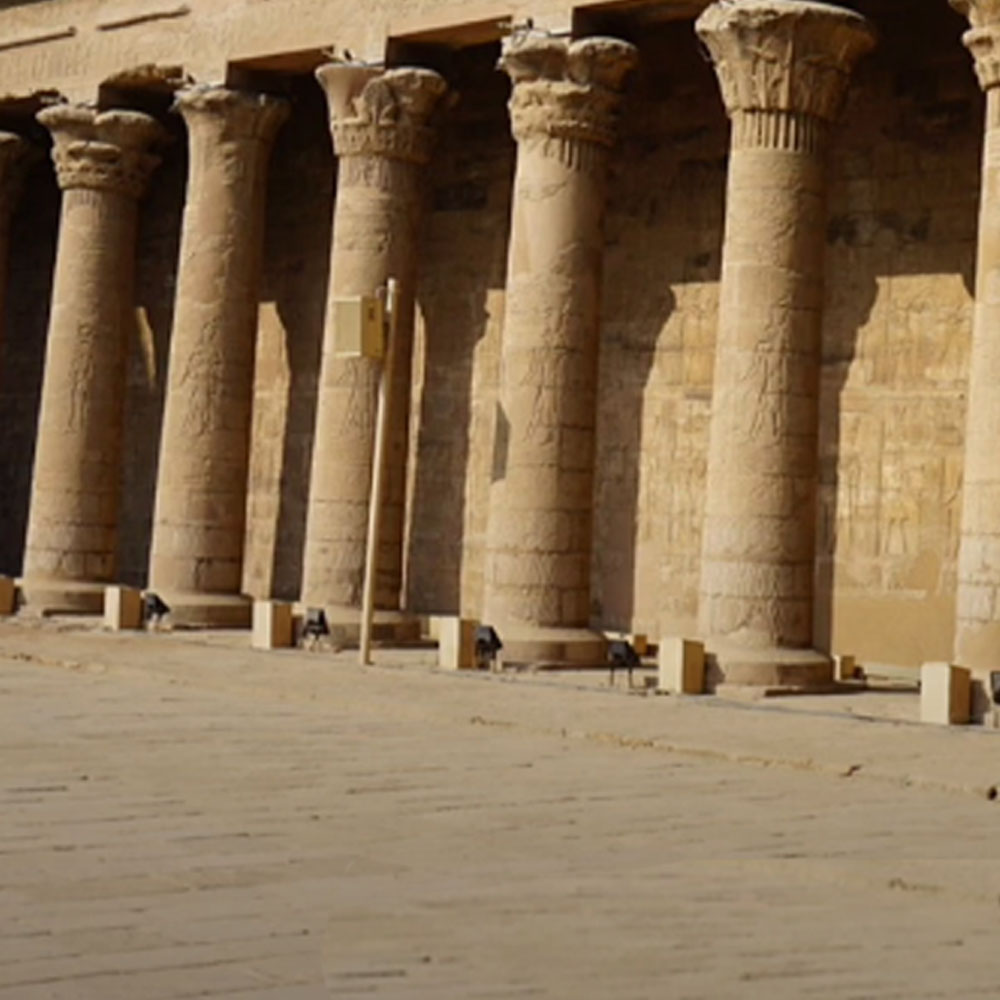
2.) It is one of the best preserved shrines in Egypt. The temple was built in the Ptolemaic Kingdom between 237 and 57 BC.
3.) The Temple of Horus fell into disuse following Emperor Theodosius I persecution of pagans and edict banning non-Christian worship within the Roman Empire in 391 AD
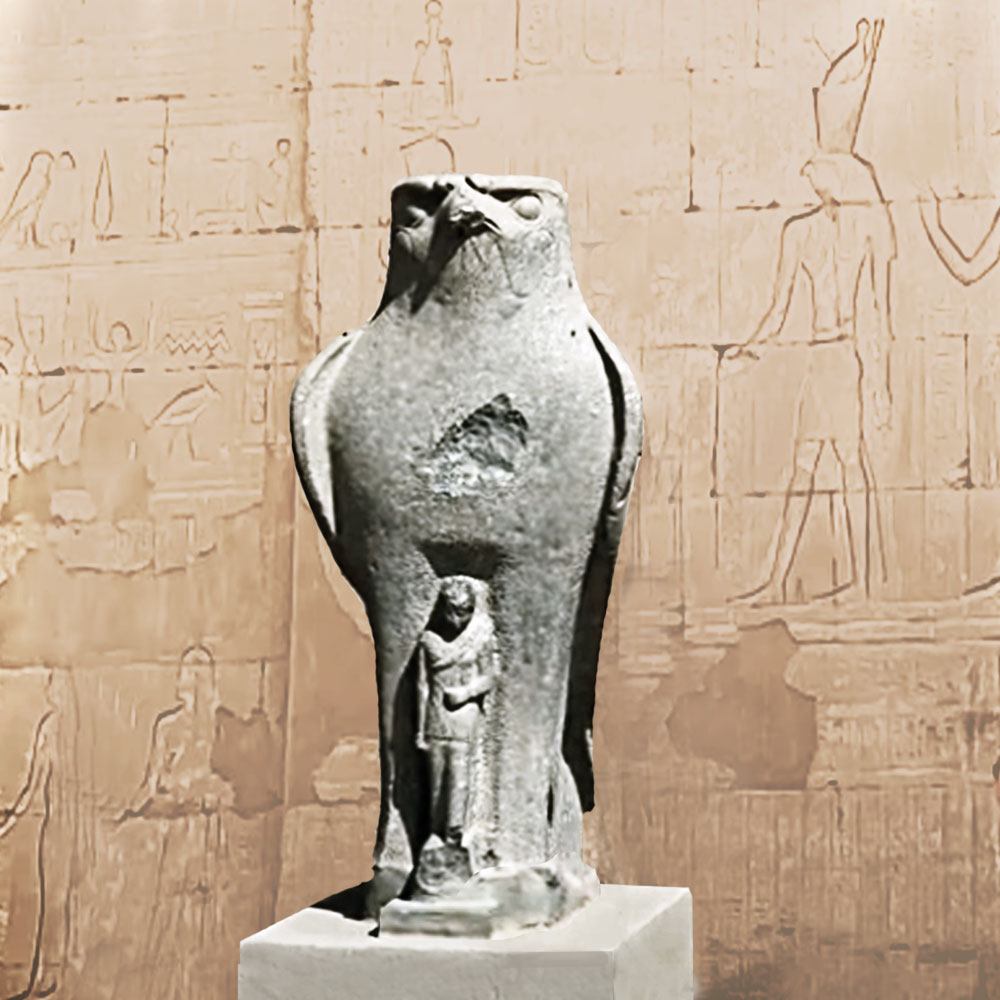
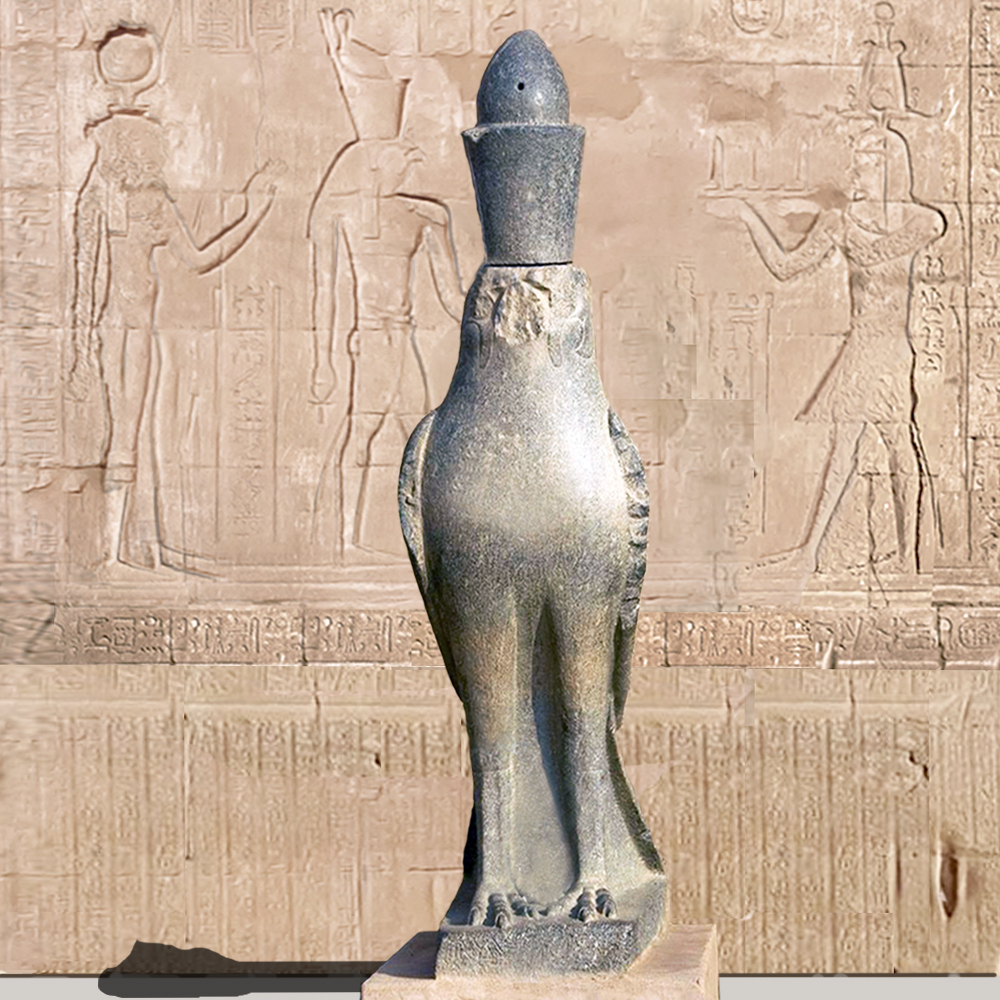
The granite sculpture of Horus left of the main entrance pylon of the temple, with a miniature of Caesarion (Ptolemy XV), son of Cleopatra VII, 33 BC, Temple of Horus at Edfu
The main entrance pylon of the Temple dedicated to sculpture in relief of Horus avenging his mother Isis and Osiris
The granite sculpture of Horus right of the main entrance pylon of the temple with a gouged out disfigured face, Temple of Horus at Edfu
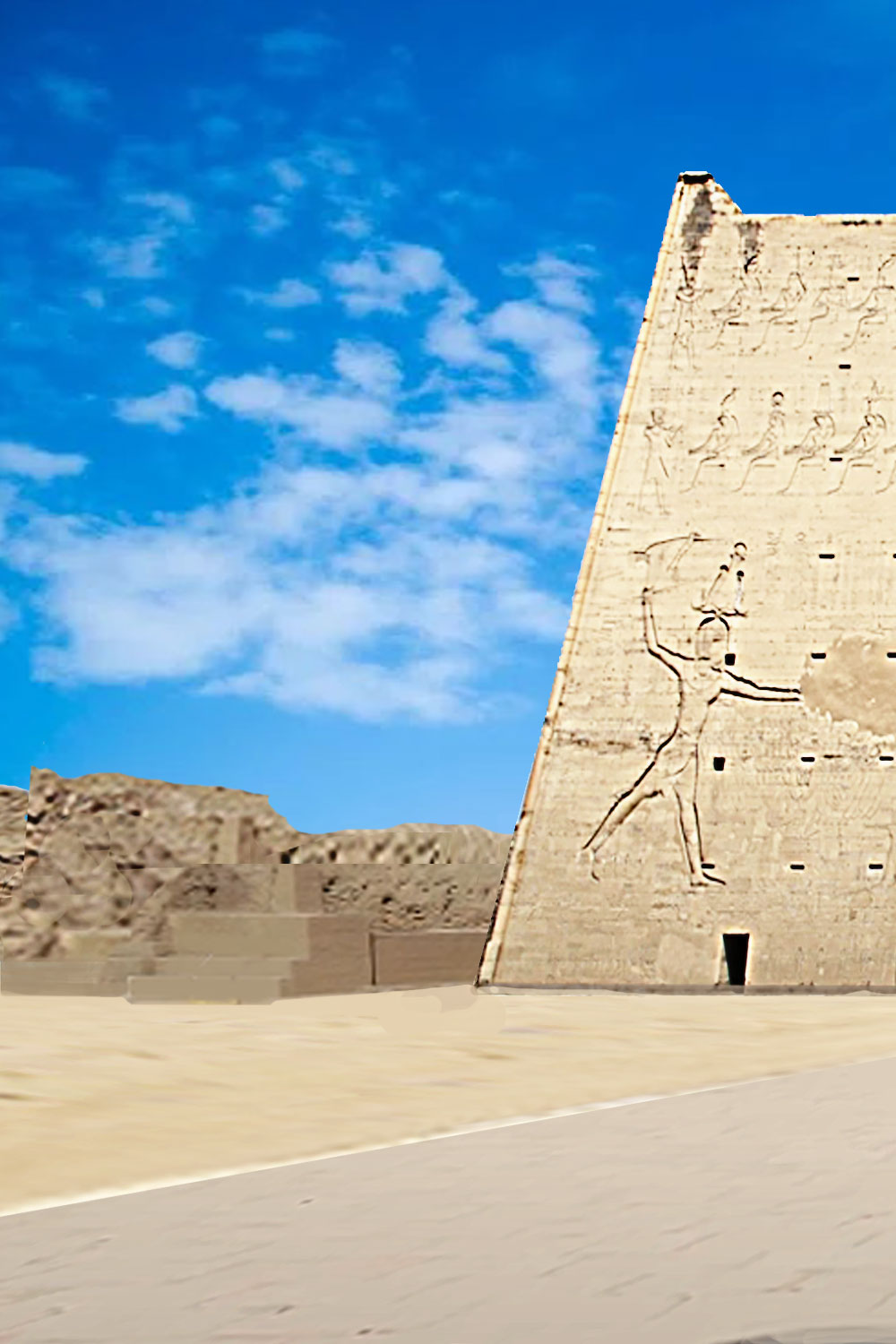
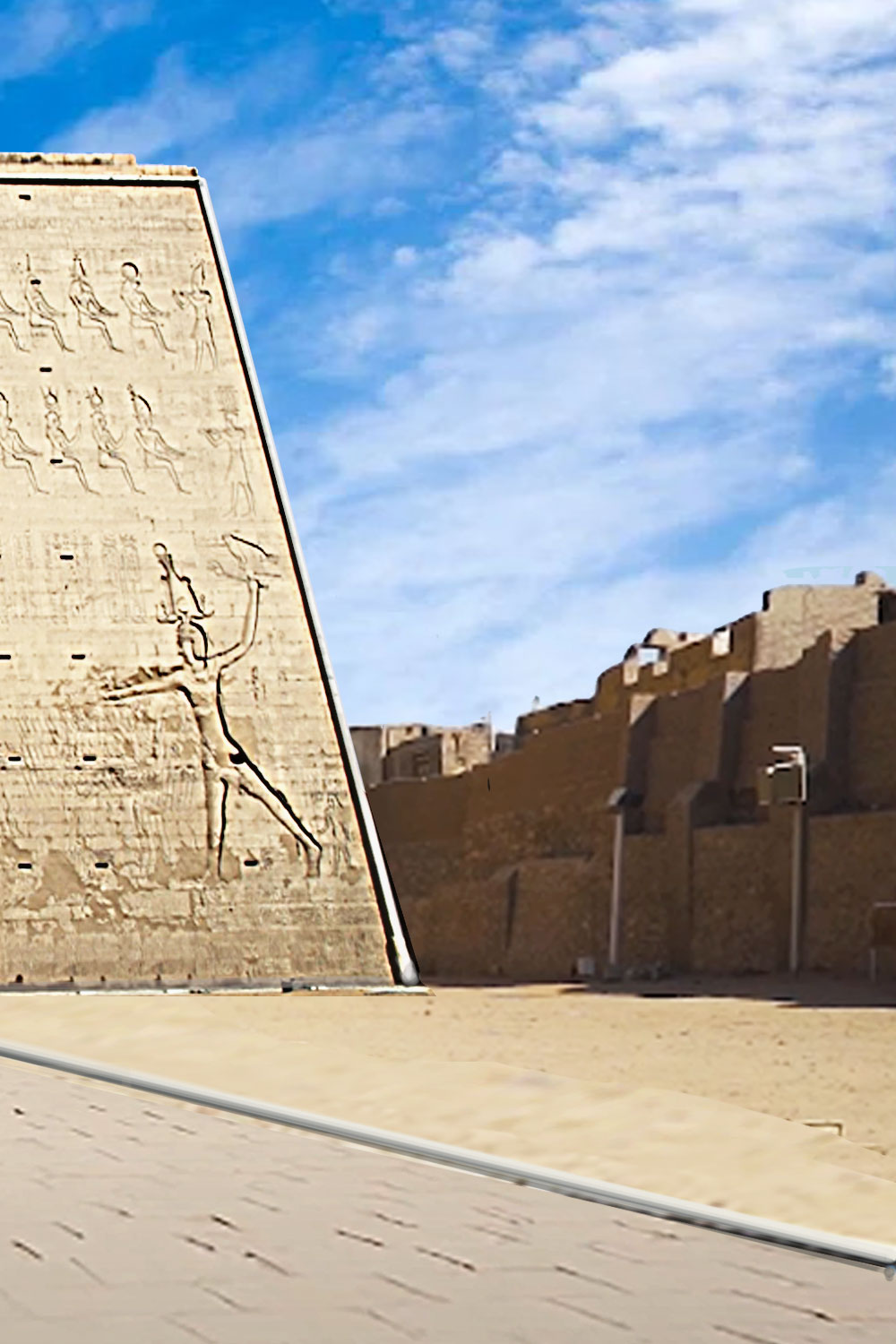
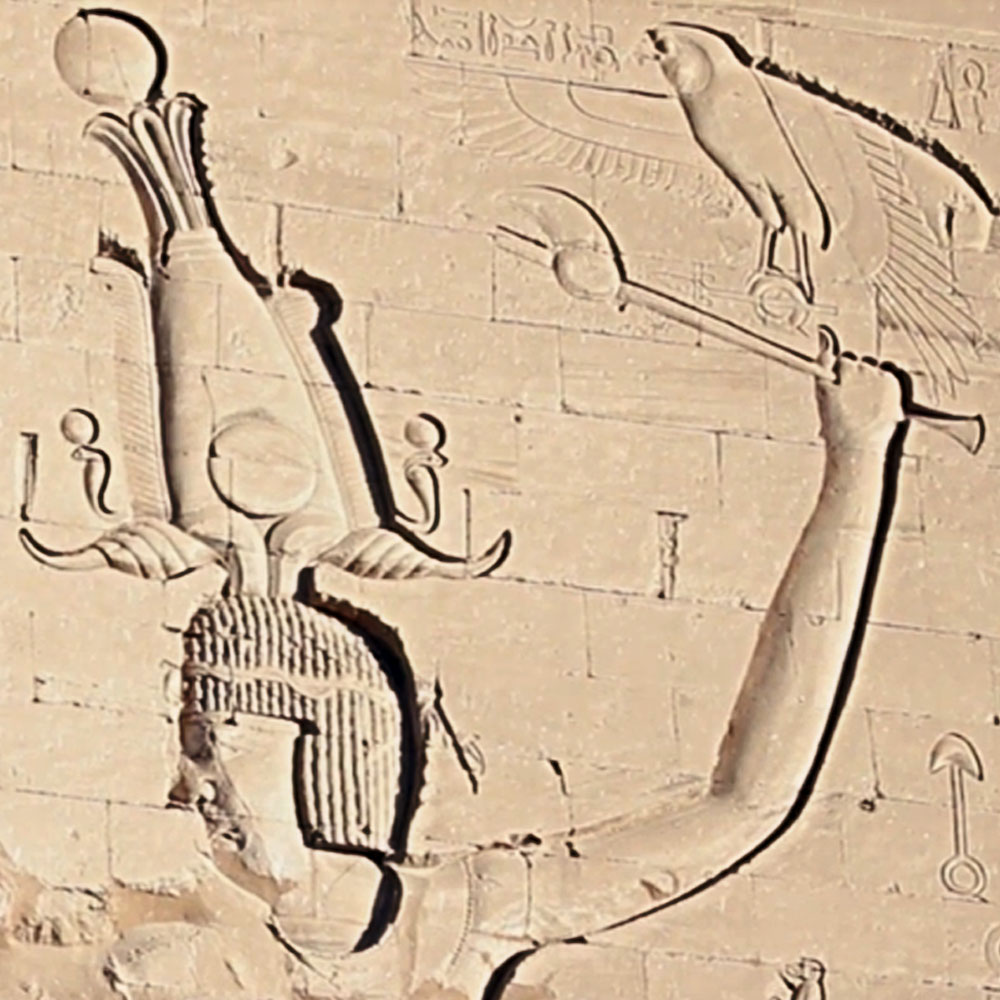
Main entrance, first pylon, left side detail relief of the pharaoh Ptolemy XII, smiting the enemy Seth in front of the god Horus, Temple of Horus at Edfu
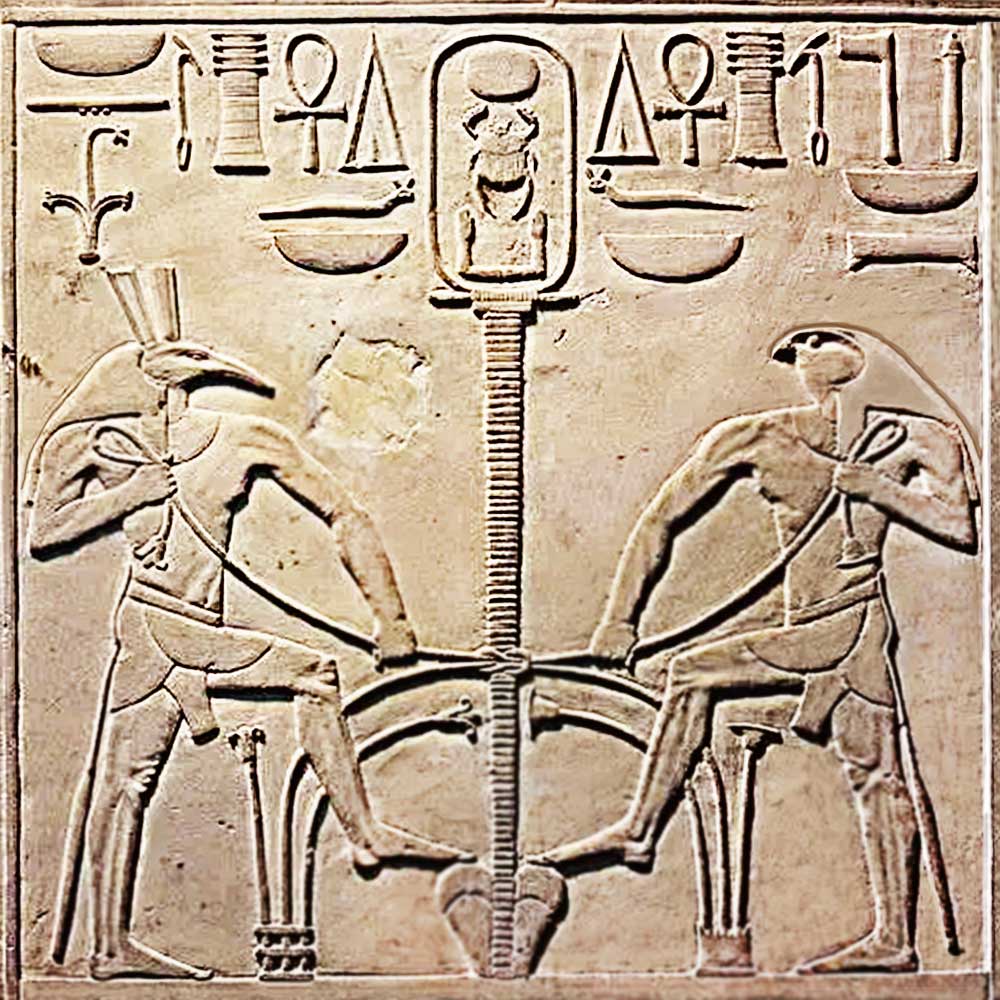
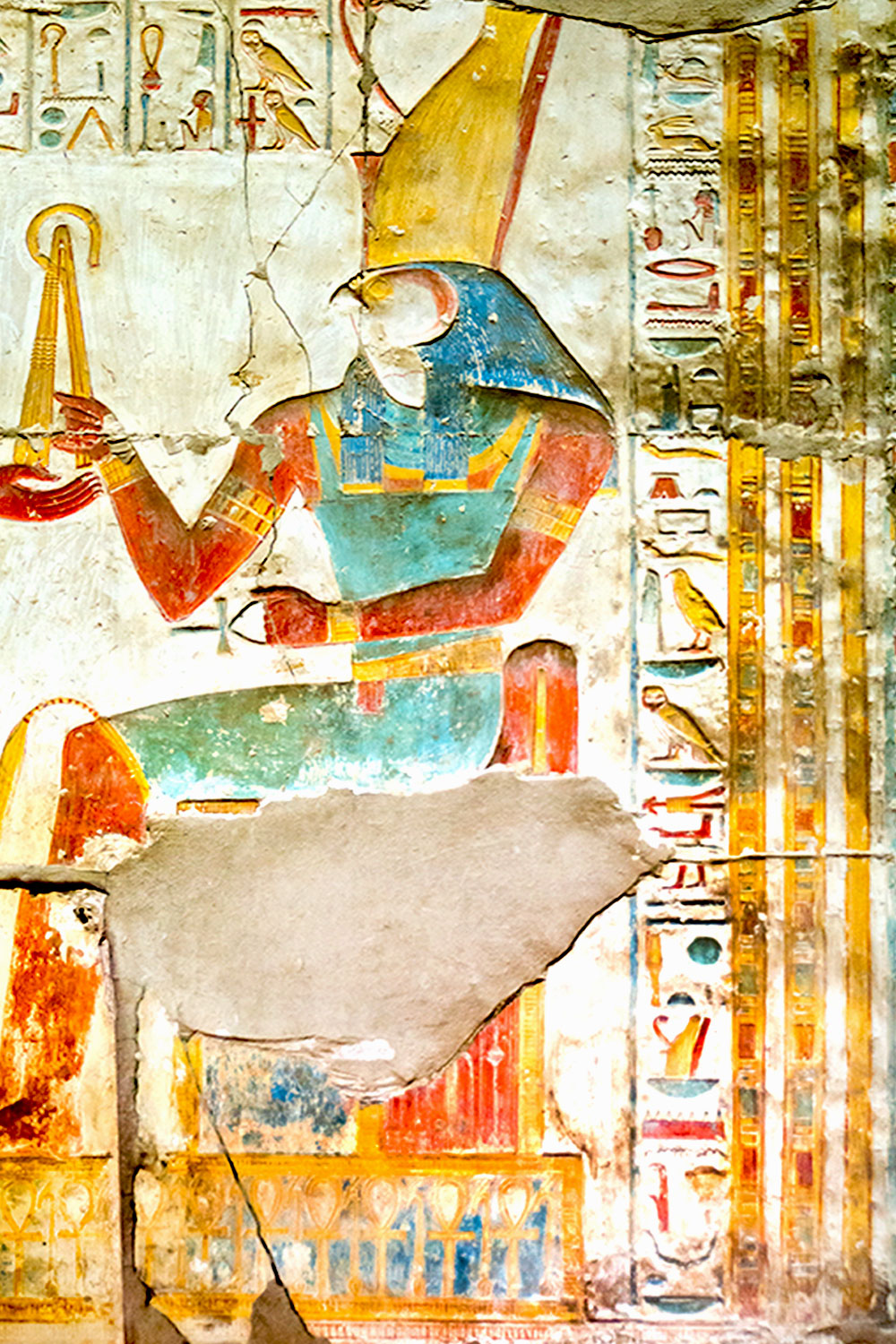
Relief of Horus and Seth from the throne of Seti I, 1550-1077 BCE, The Temple of Seti I, Abydos, Egypt.
Main entrance, first pylon, right side detail relief of the pharaoh Ptolemy XII, smiting the enemy Seth in front of the god Horus, Temple of Horus at Edfu
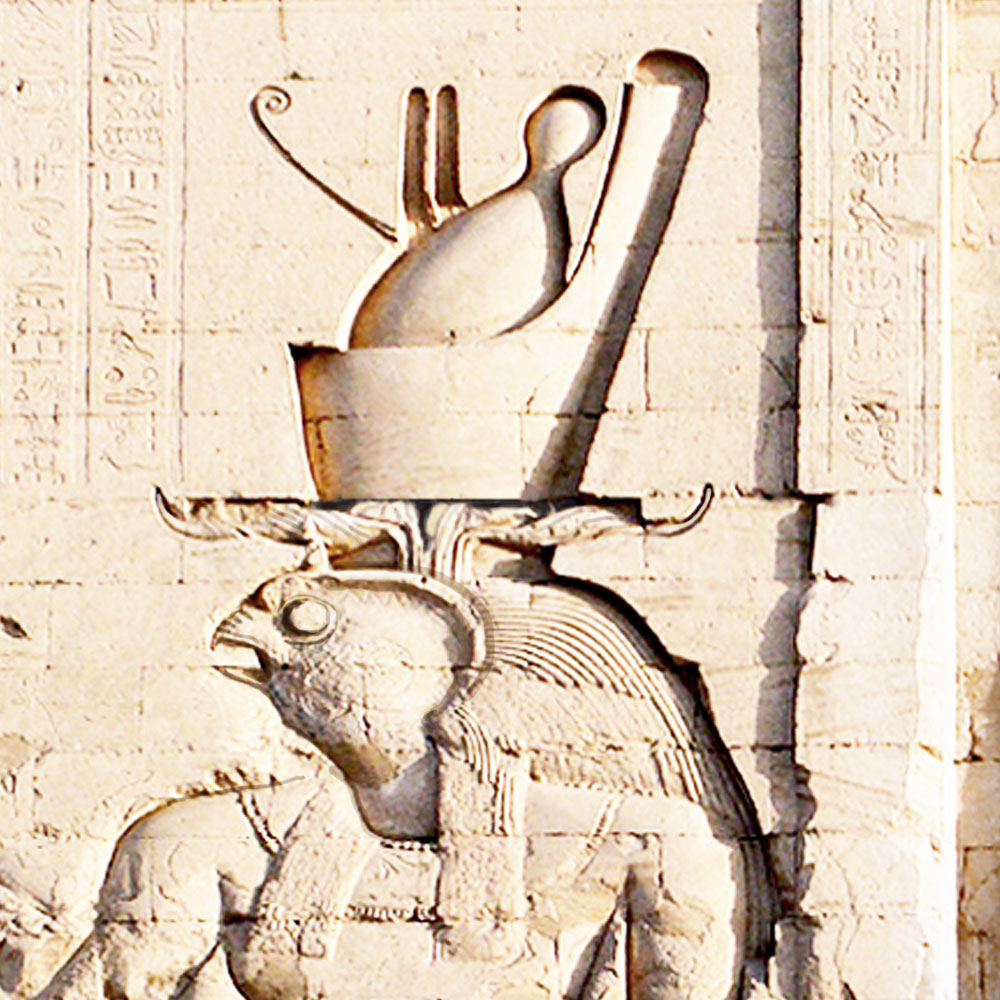
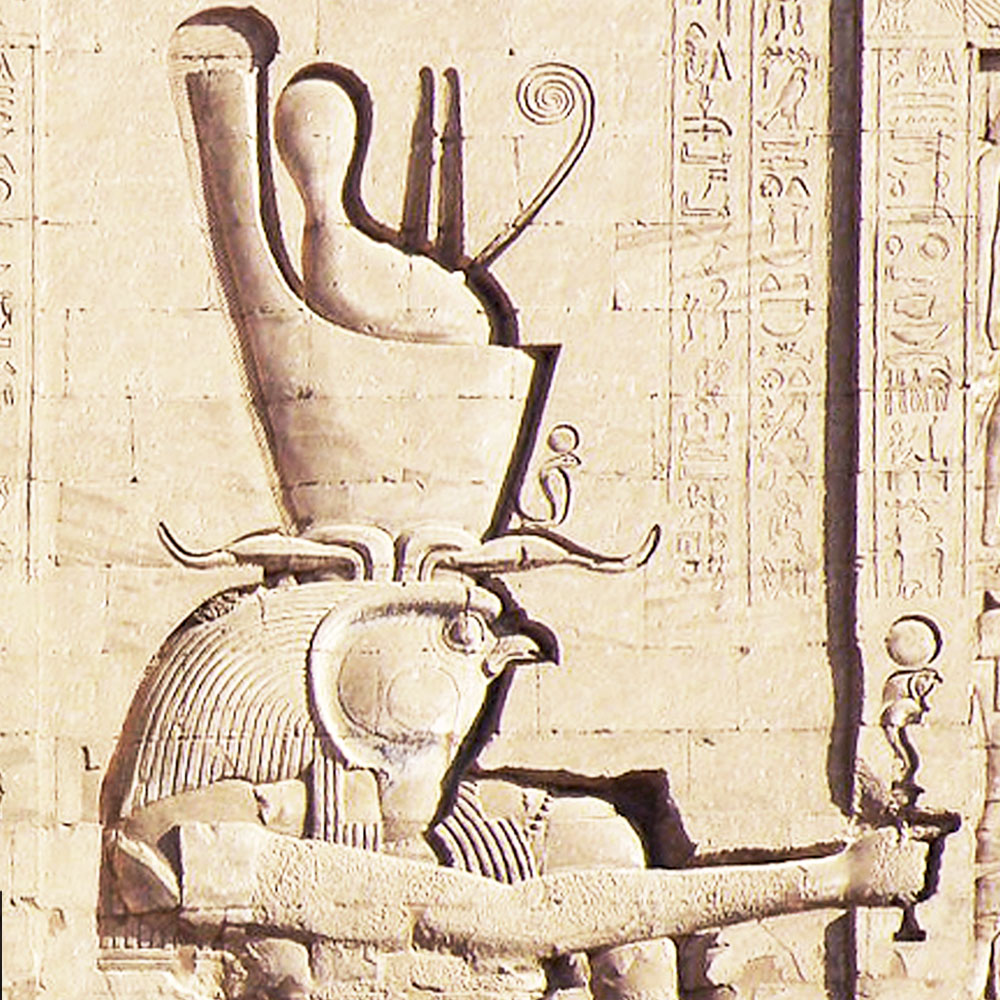
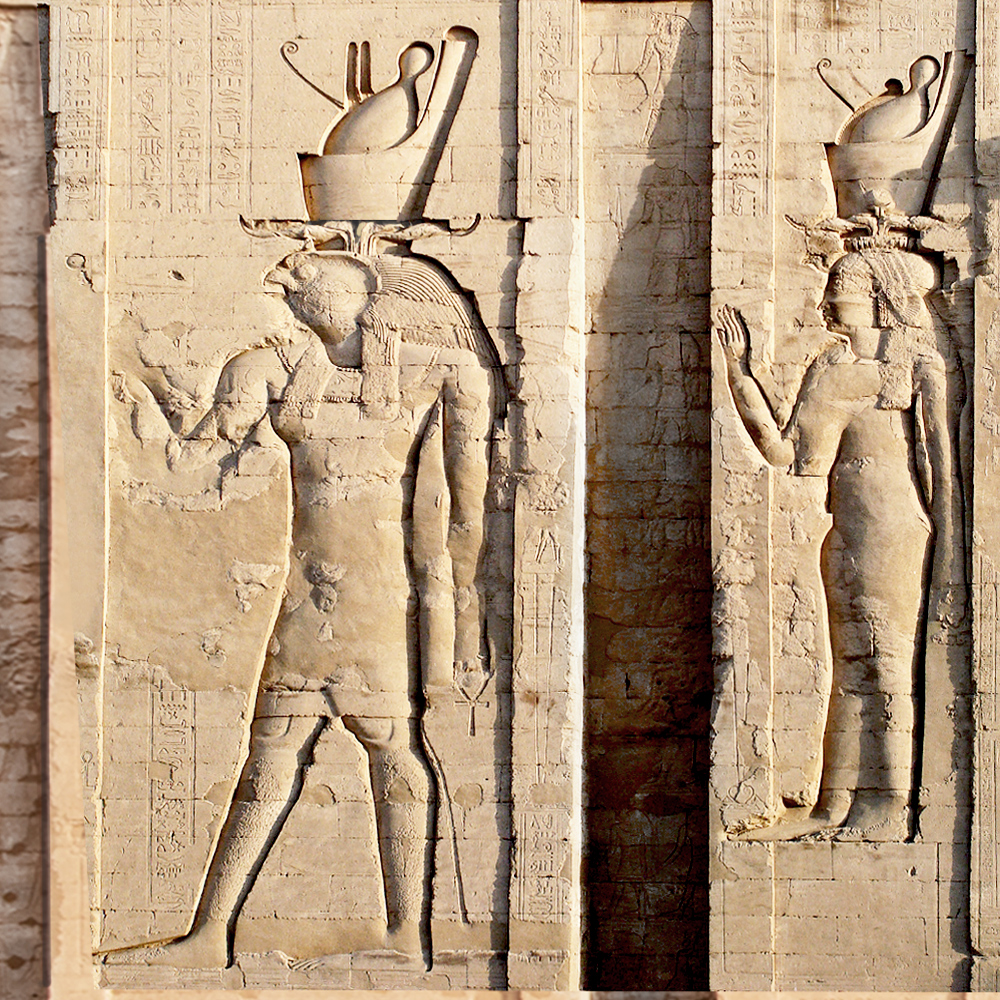
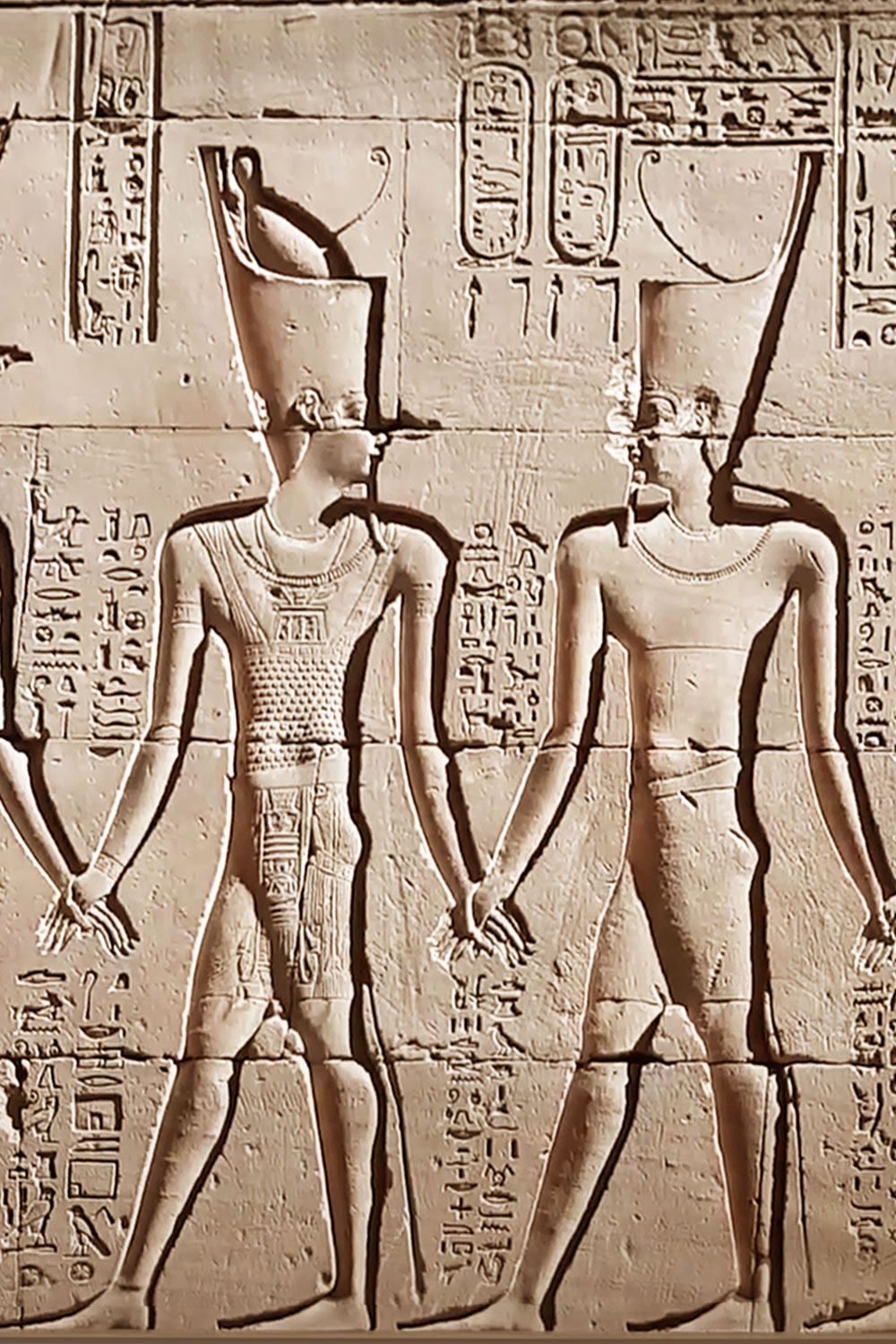
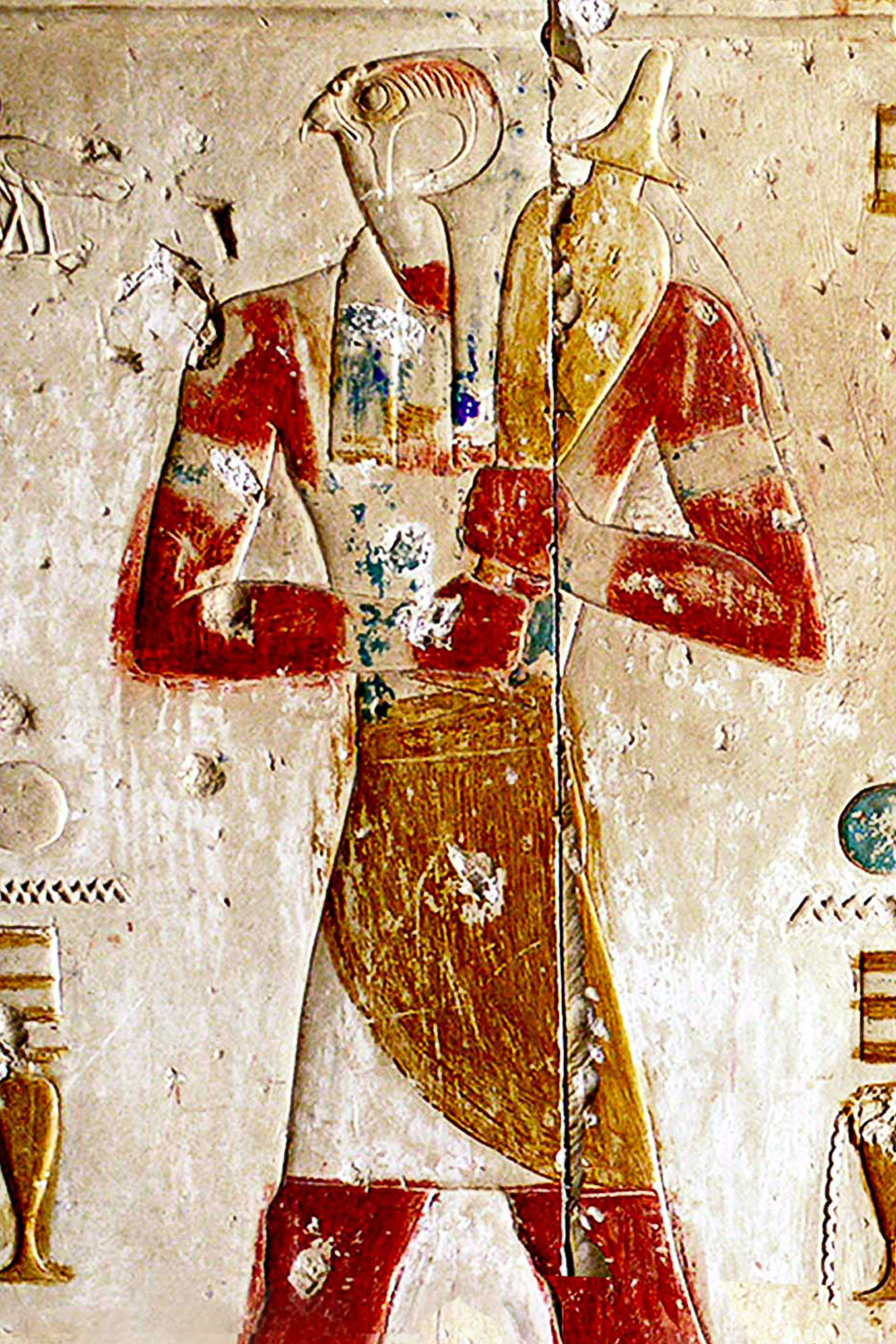
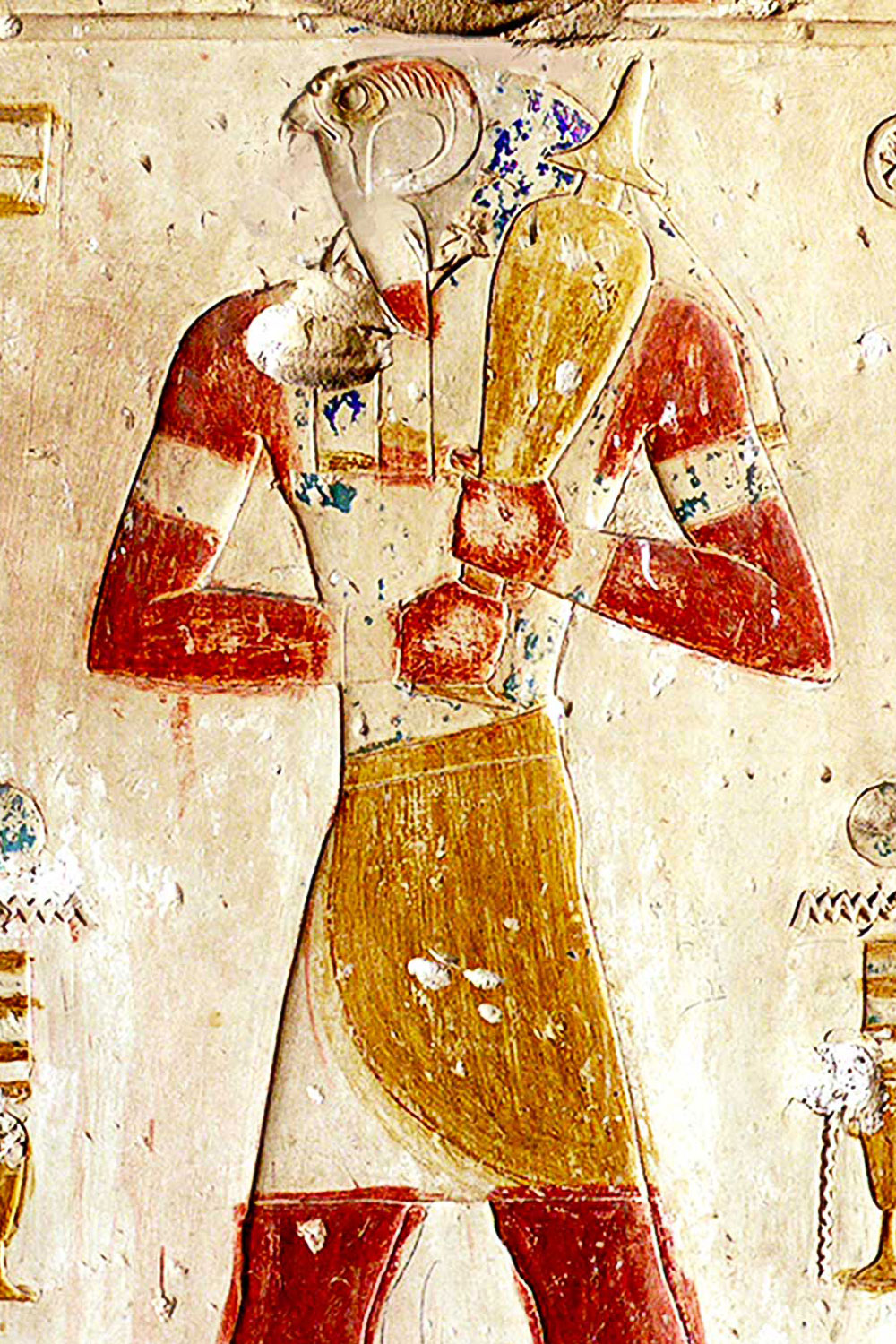
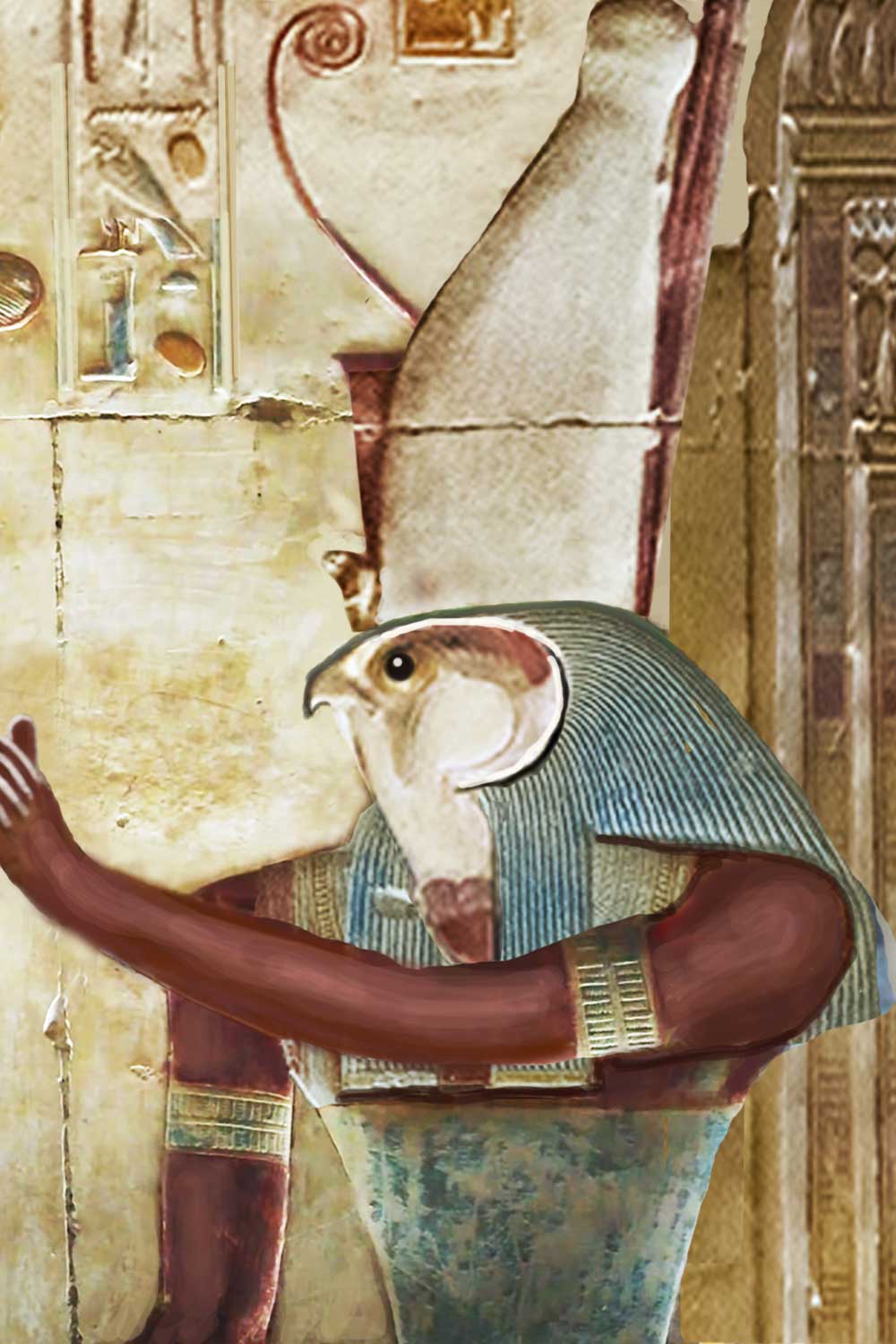
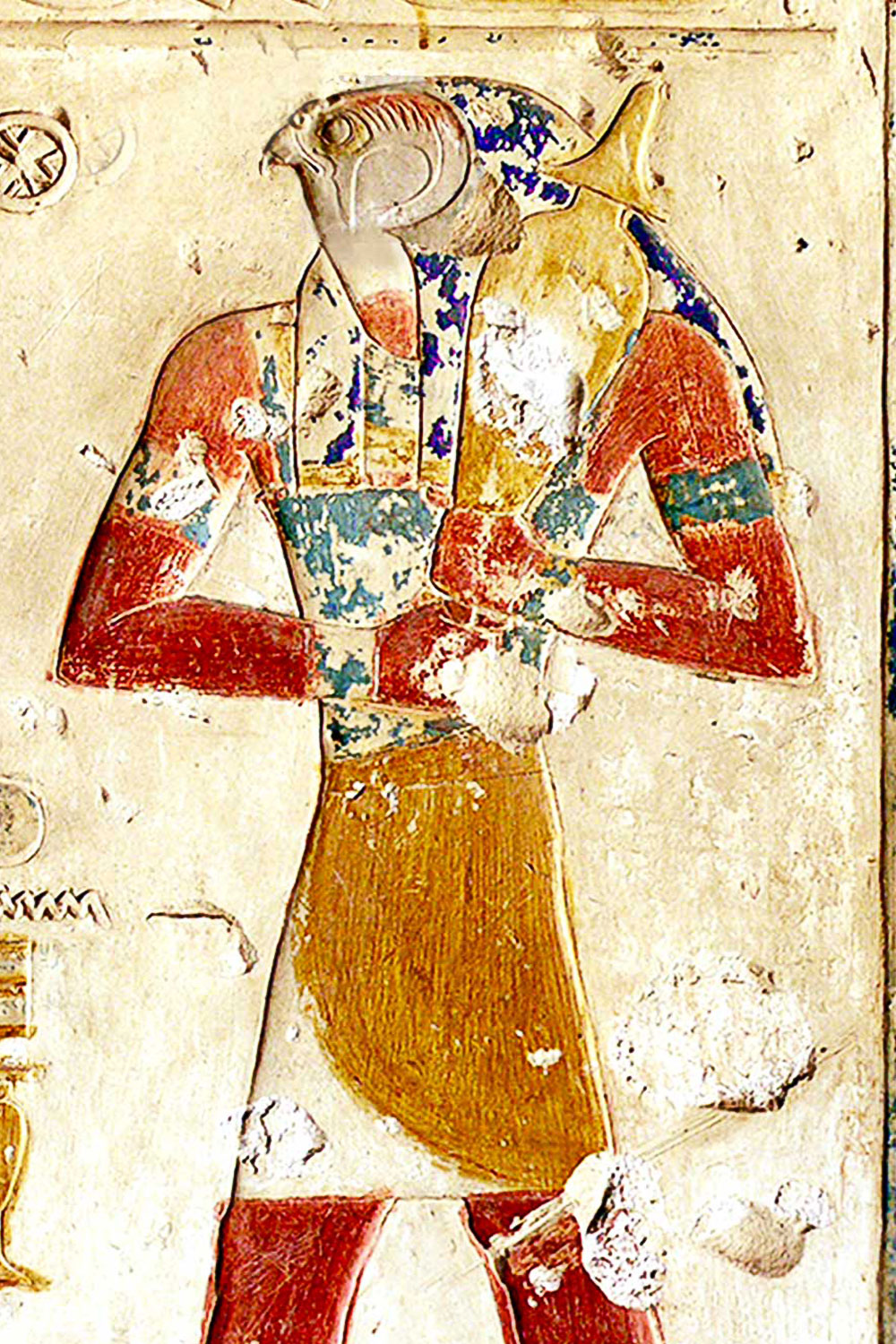
Detail relief of Horus, left of main entrance wearing a Pschent double crown, symbolizing the unification of Egypt, Temple of Horus at Edfu
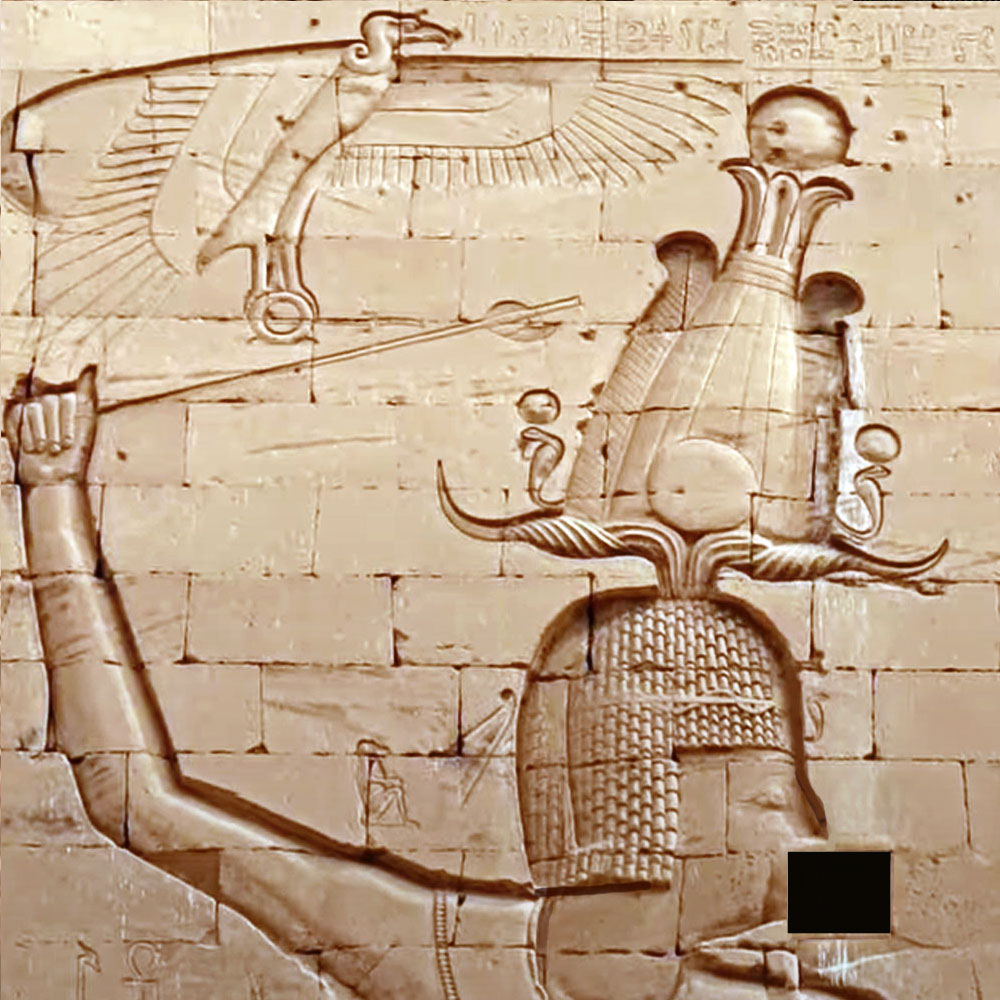
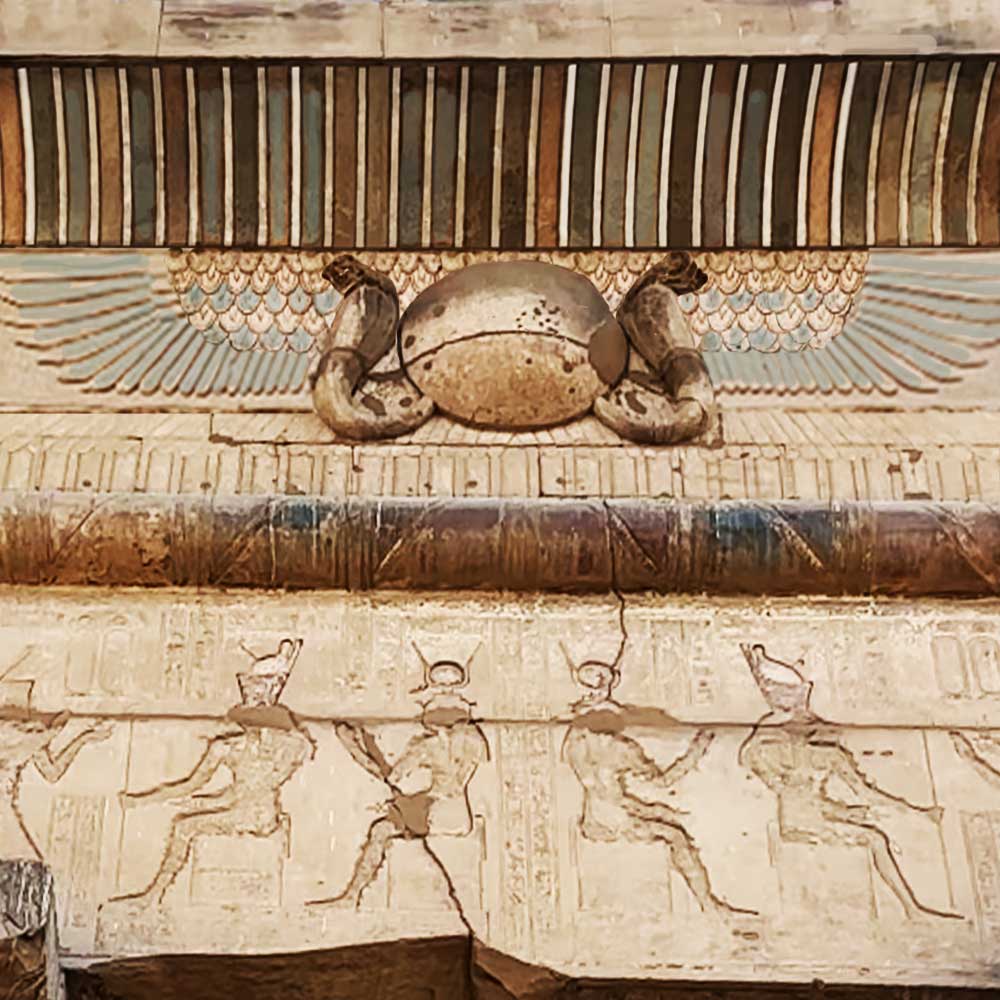
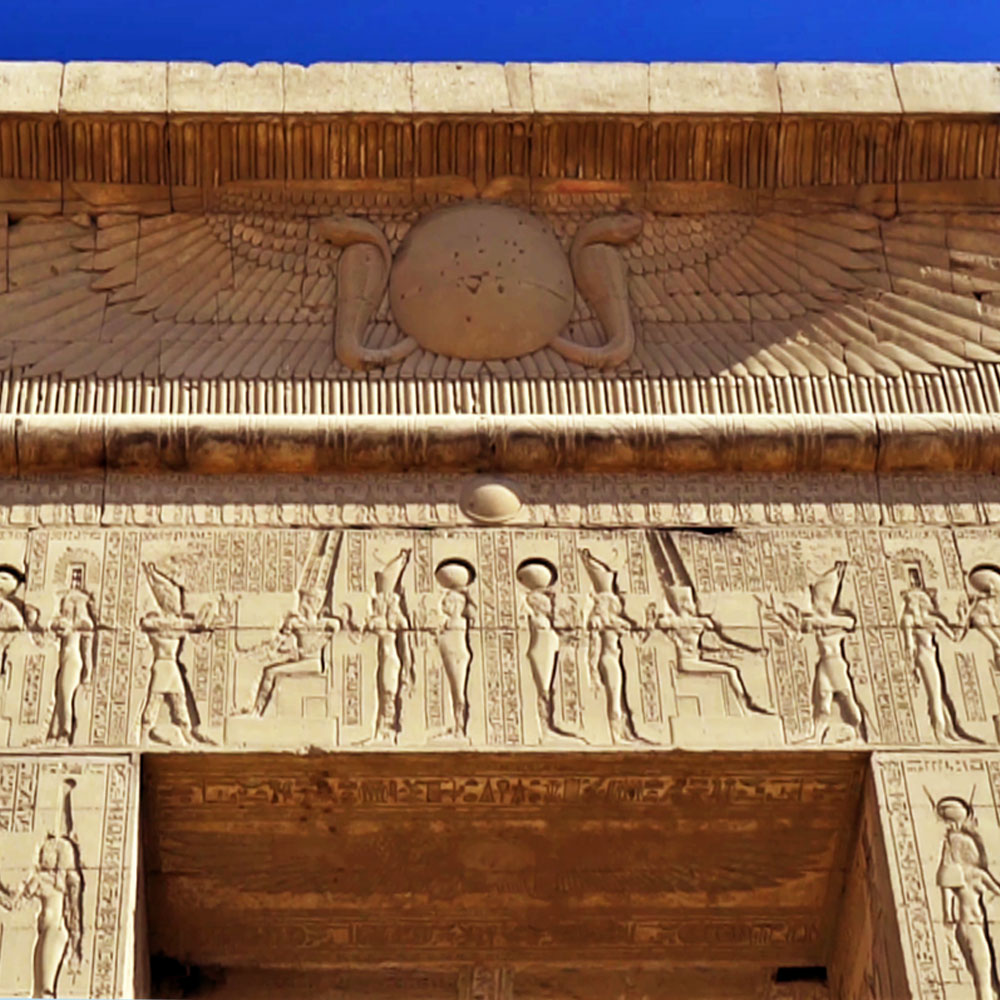
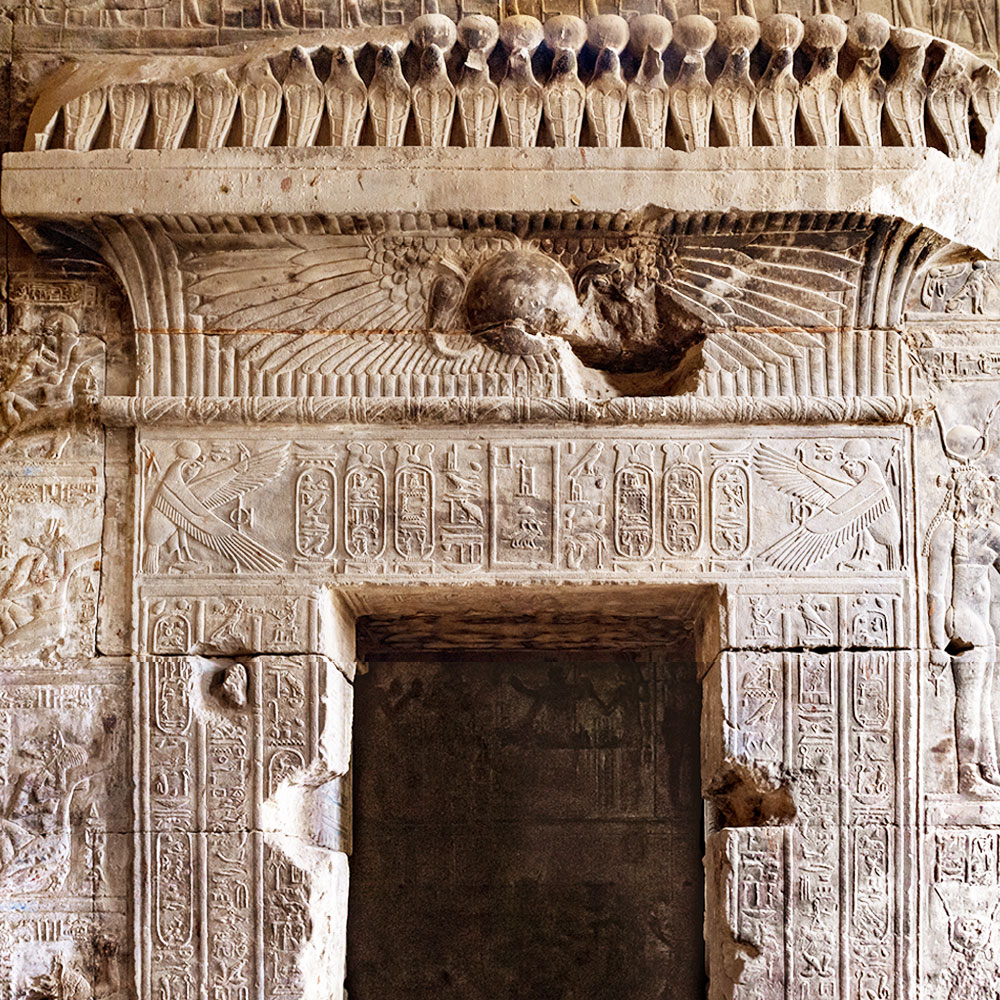
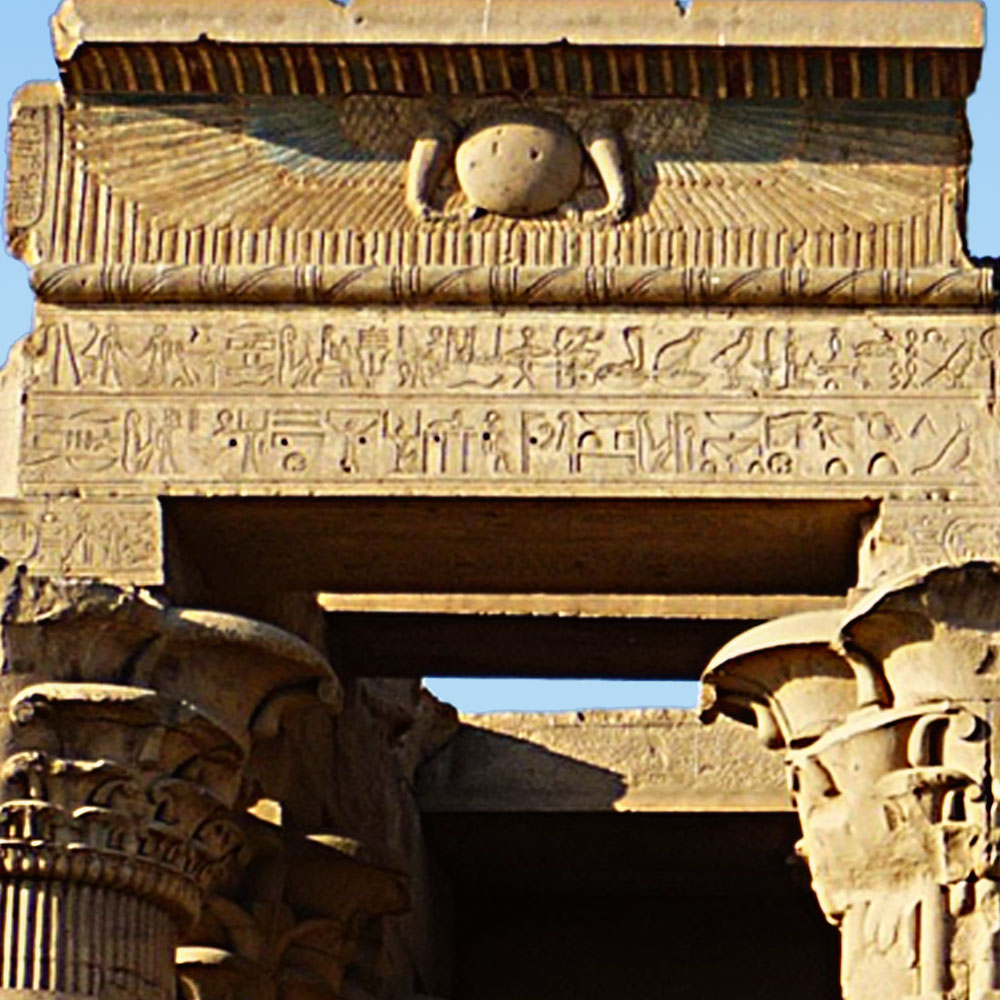
Over the main entrance, sun disk flanked by 2 cobras and outspread wings: solar disk represents Ra, the sun god, Cobras represent the Uraeuses (Wadjet and Nekhbet), Falcon wings represent Horus, A symbol of protection.
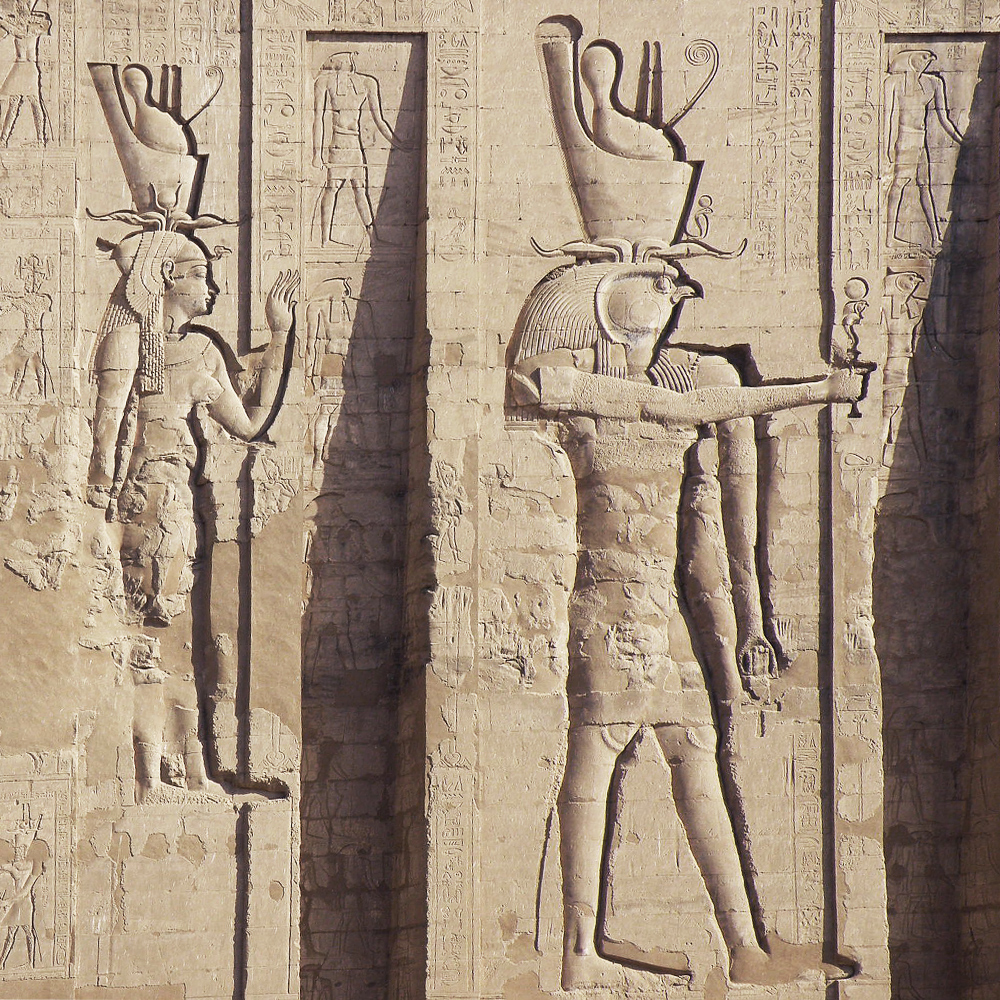
Detail relief of Horus, right of main entrance wearing a Pschent double crown, symbolizing the unification of Egypt, Temple of Horus at Edfu
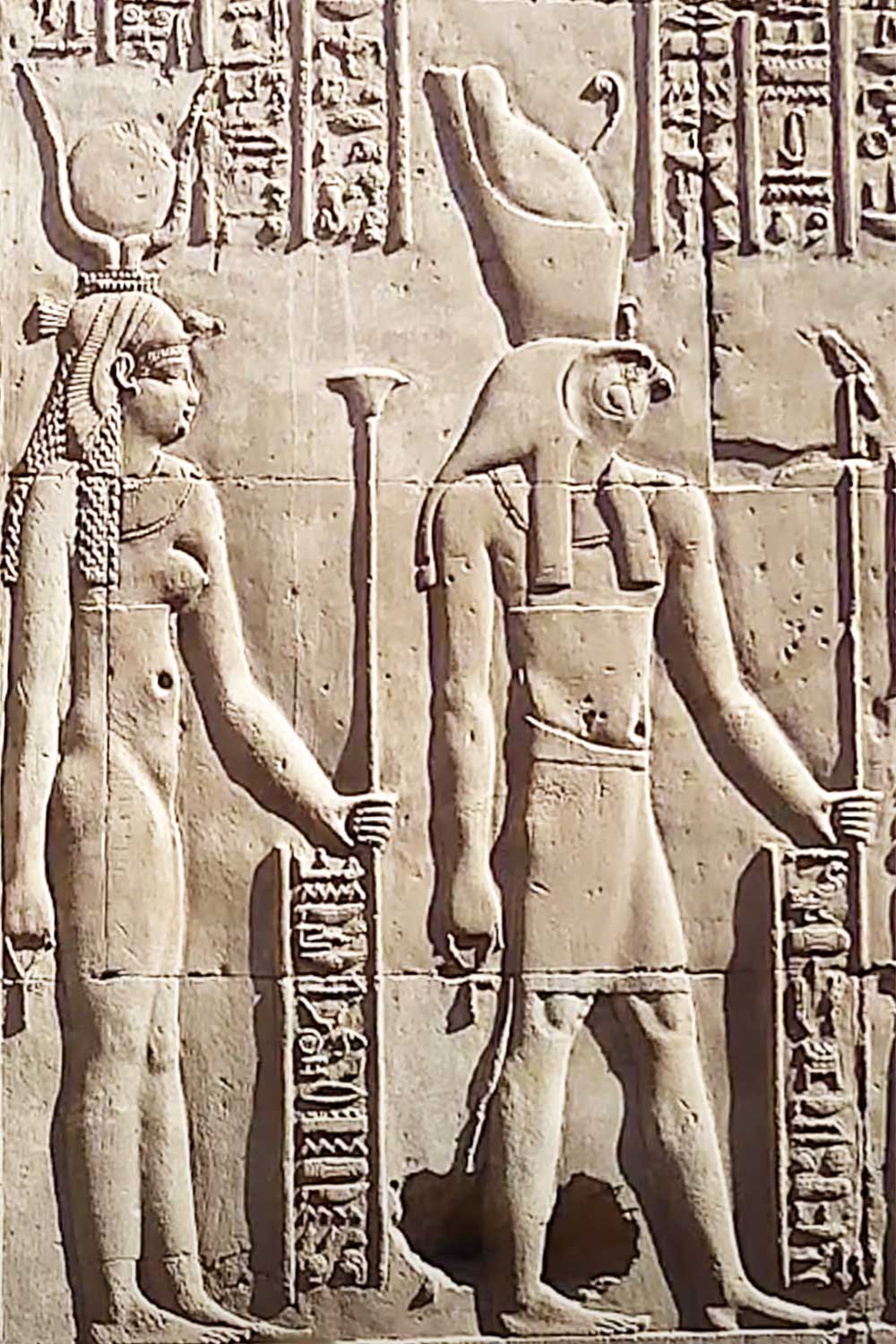
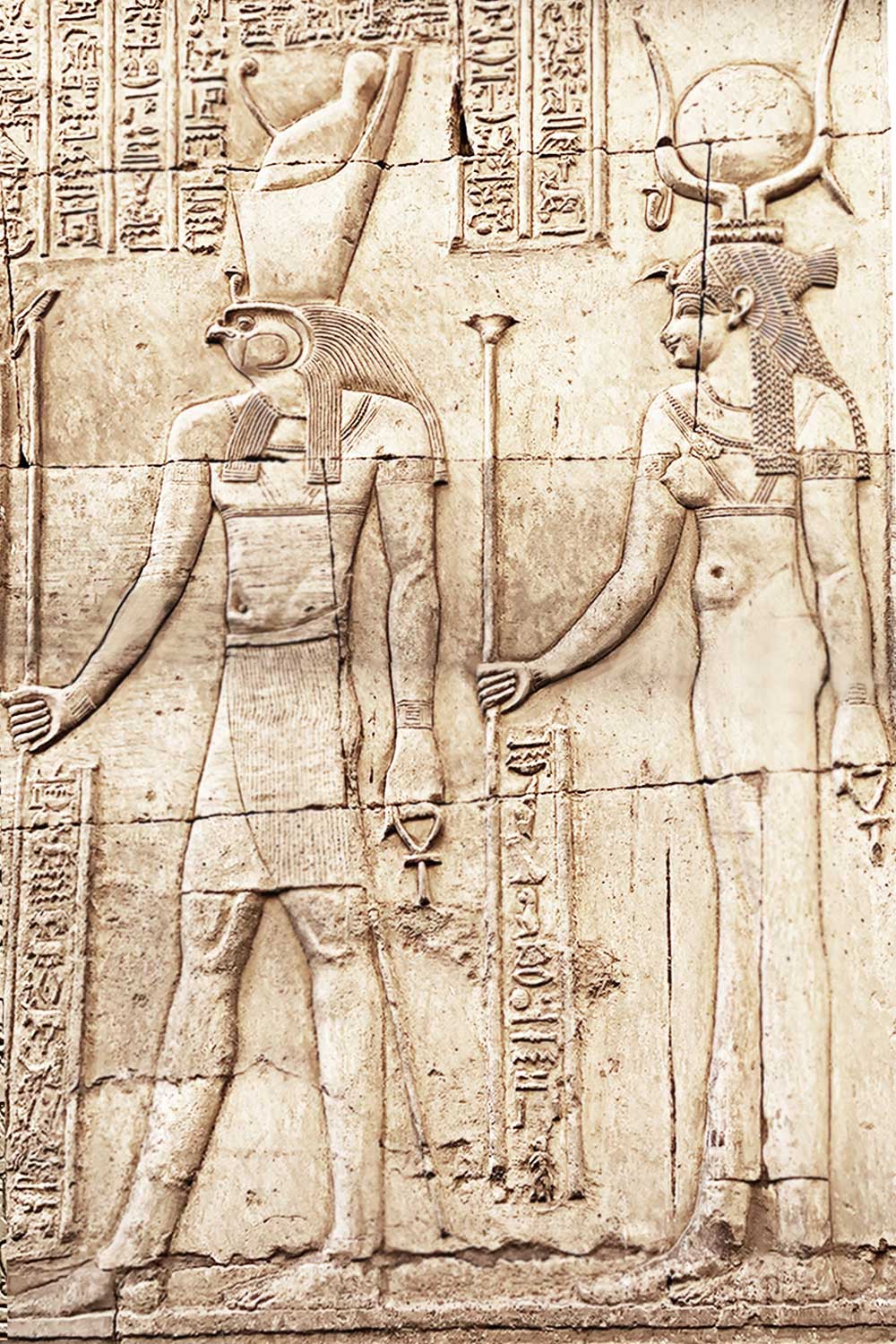
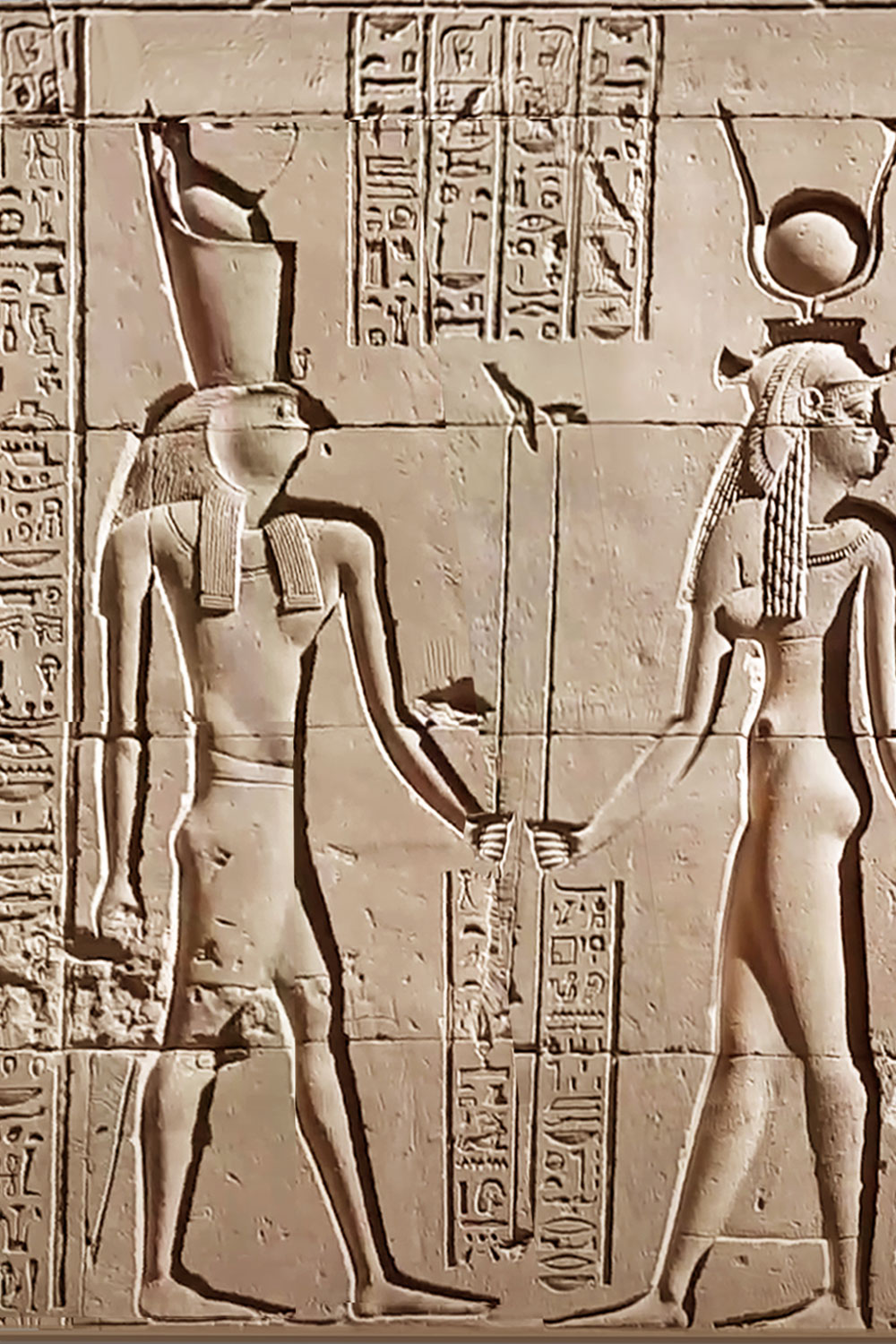
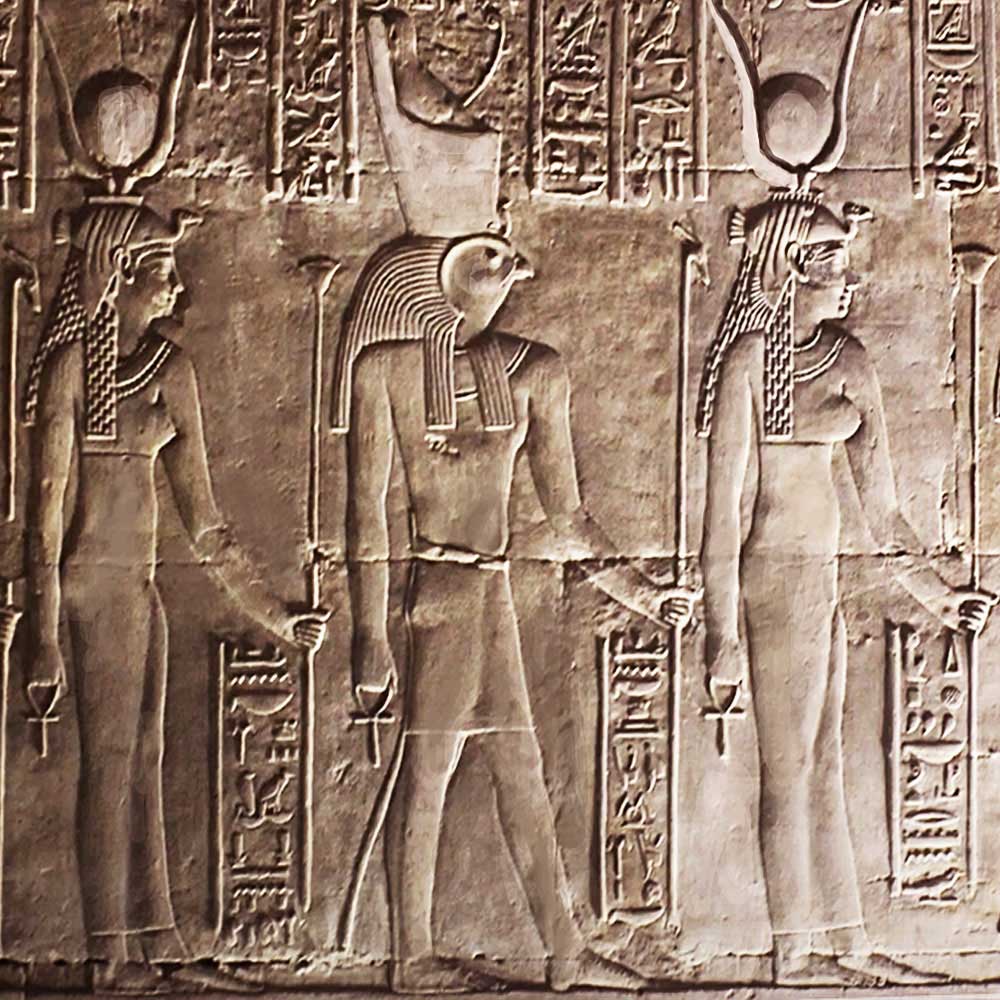
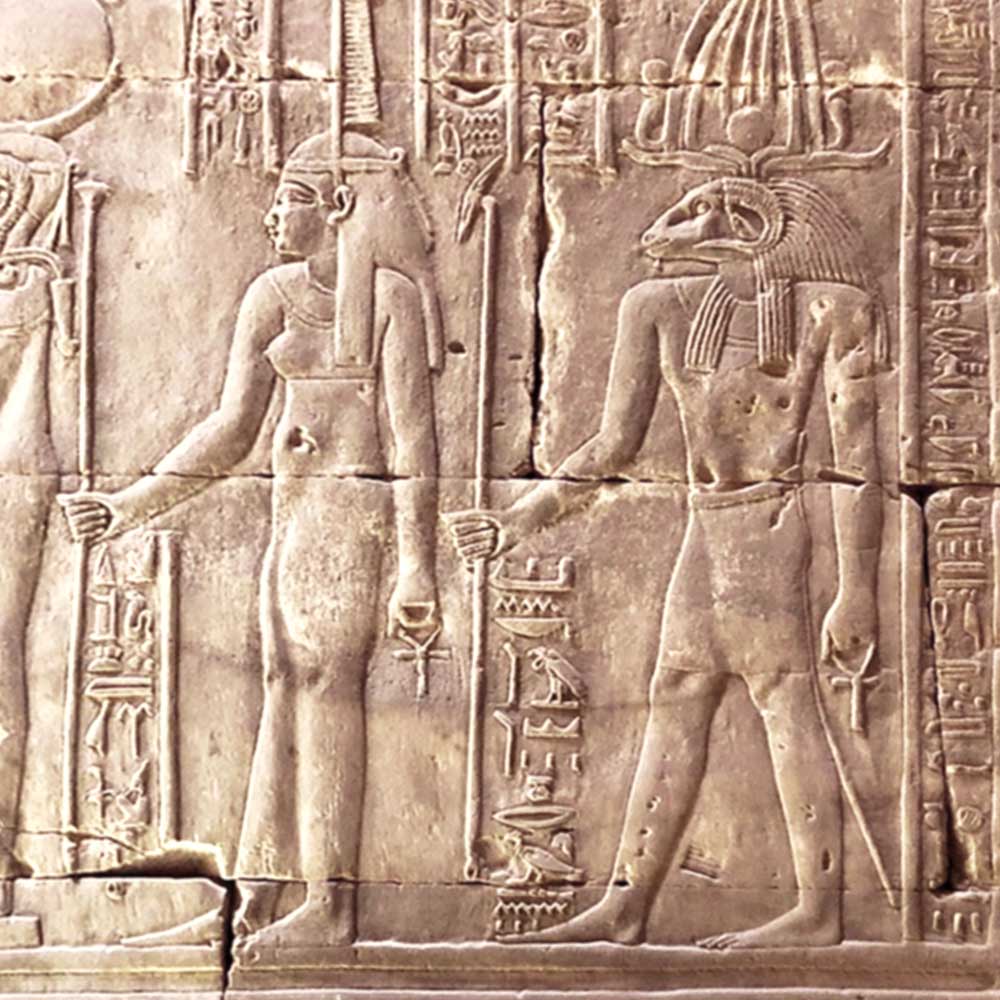
Relief of Horus and his consort Hathor left of the entrance, both wearing a Pschent double crown, holding the ankh that represents life and immortality.
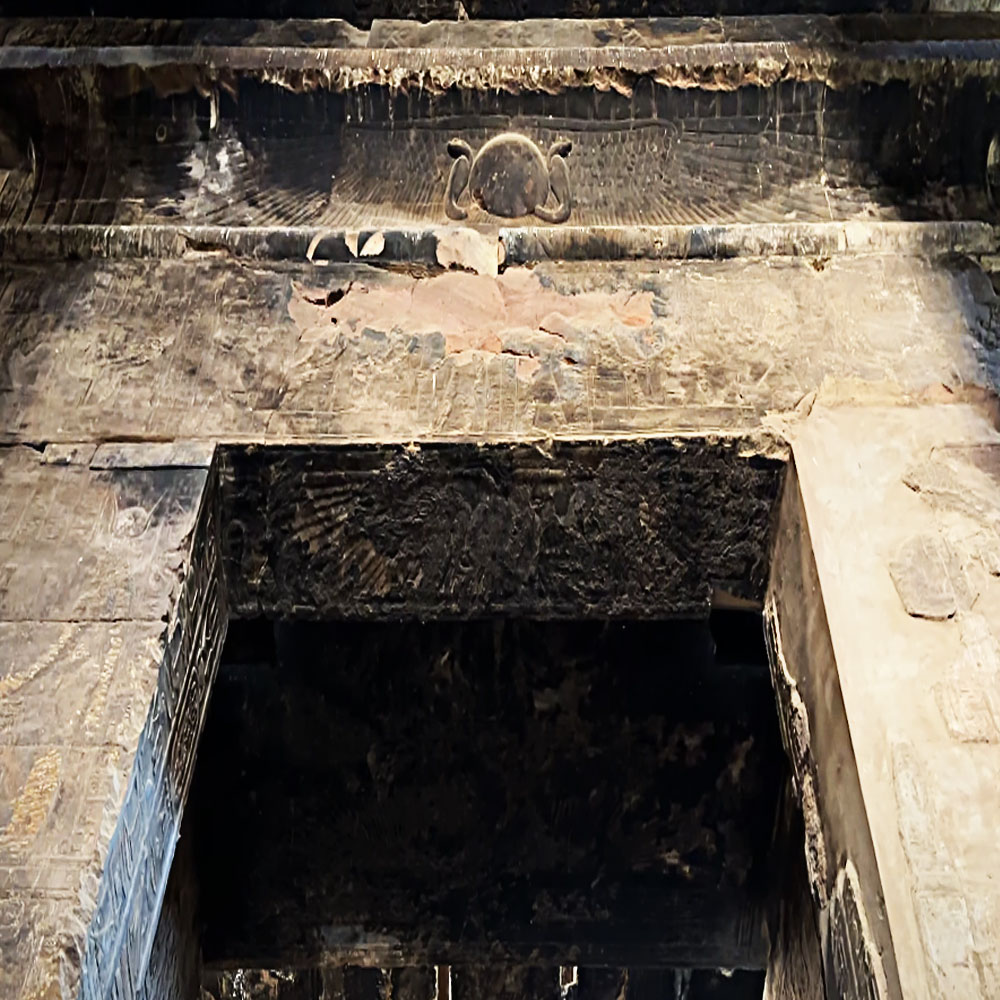
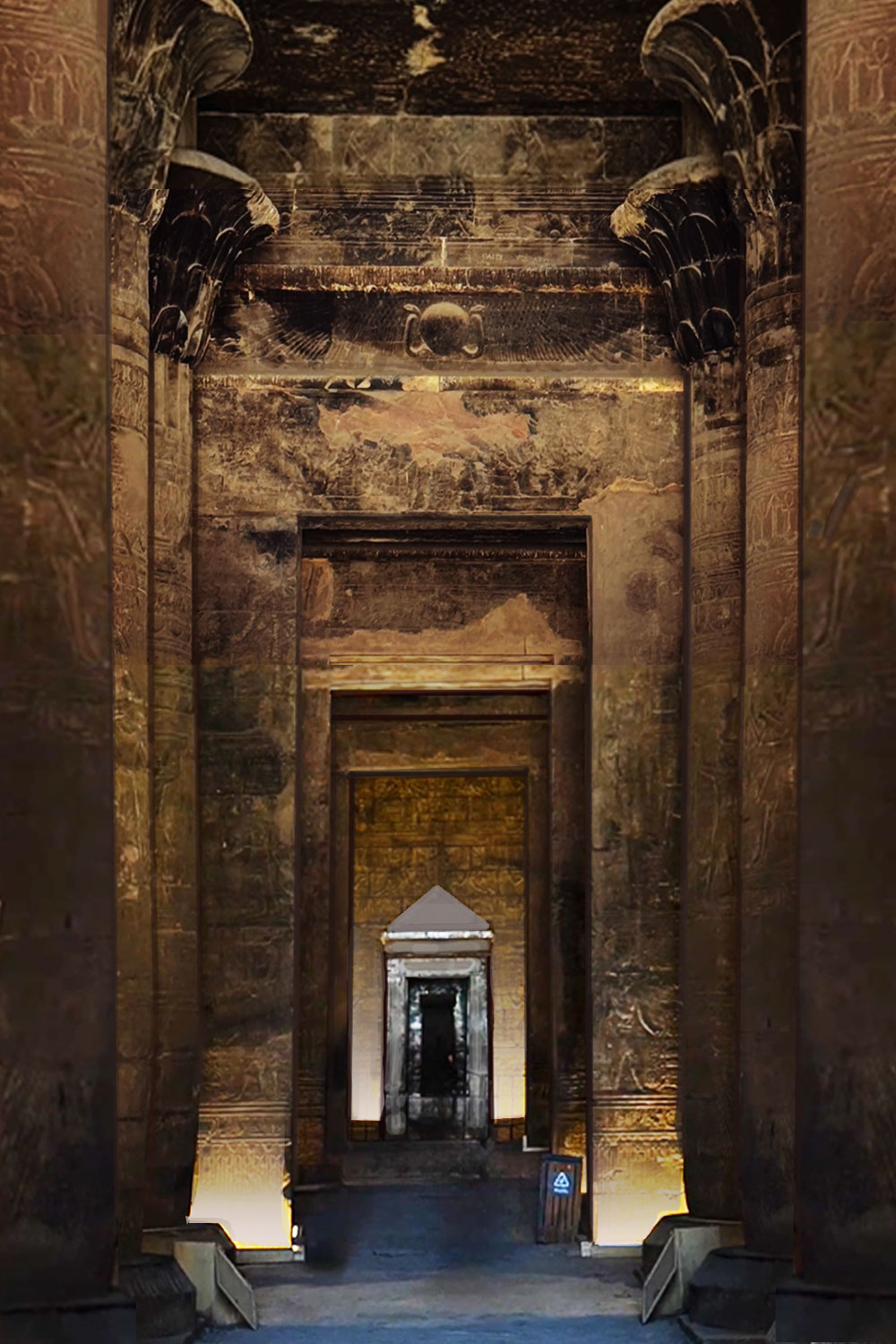
Horus's wings, sun disk & cobras protecting the entrance to the sanctuary once brightly painted, is now blackened, by early Christians who sought to eliminate the worship of pagan gods.
Relief of Horus and his consort Hathor right of the entrance, both wearing a Pschent double crown, holding the ankh that represents life and immortality.
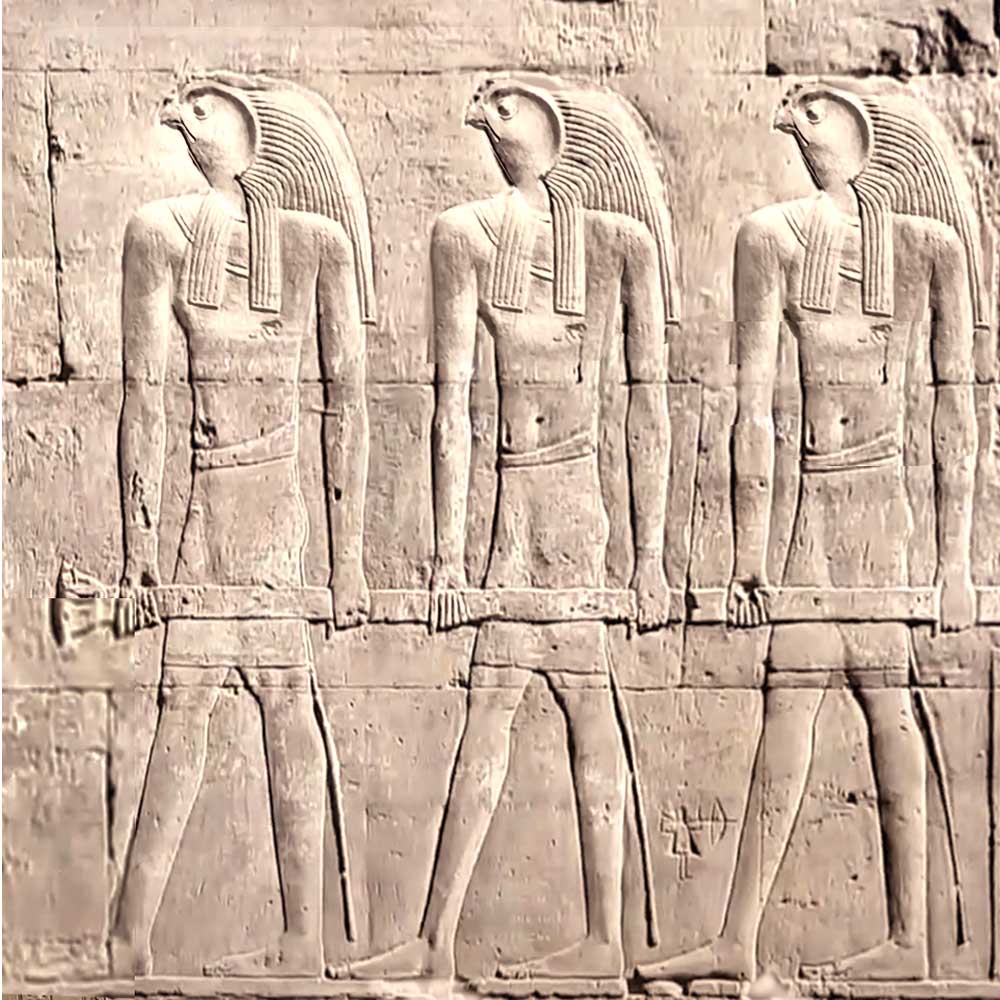
The falcon is the primary symbol of Horus, the sky god, his wings represent protection over doorways in Egyptian mythology, Gateway Ptolemy III Euergettes, Karnak Temple
Falcon Wings, Sun Disk & Cobras, Opet Temple, Originally built by Nectanebo I, 380 BCE, modified by Ptolemy III, 246 BCE and Ptolemy VIII, 170 BCE, Karnak Temple
As Horus was also considered the patron god of kings, the falcon wings above a doorway could also symbolize royal power. Horus Temple, built in the Ptolemaic Kingdom, 237-57 BCE, Edfu
1.) The back court of the Temple of Edfu, also known as the Court of Offerings, served as a public space where individuals could present offerings to the statue of the god Horus.
2.) Located beyond the first hypostyle hall, this court precedes the inner sections of the temple, including the second Hypostyle Hall, the Transverse Hall, and the Sanctuary.
3.) The walls of the forecourt feature carvings related to the Feast of the Joyous Union, an important festival celebrating the marriage between Horus and Hathor. Temple of Horus at Edfu
1.) The back court features statues of Horus, including a notable ten-foot-tall statue.
2.) Wall reliefs depict the pharaoh Ptolemy IX,Ptolemy X, & Alexander I) interacting with the victorious god Horus.
3.) A colonnade, with walls adorned with reliefs depicting scenes of the divine marriage of Hathor and Horus, Temple of Horus at Edfu
Relief of Horus and his wife Hathor, Temple of Horus, Edfu.
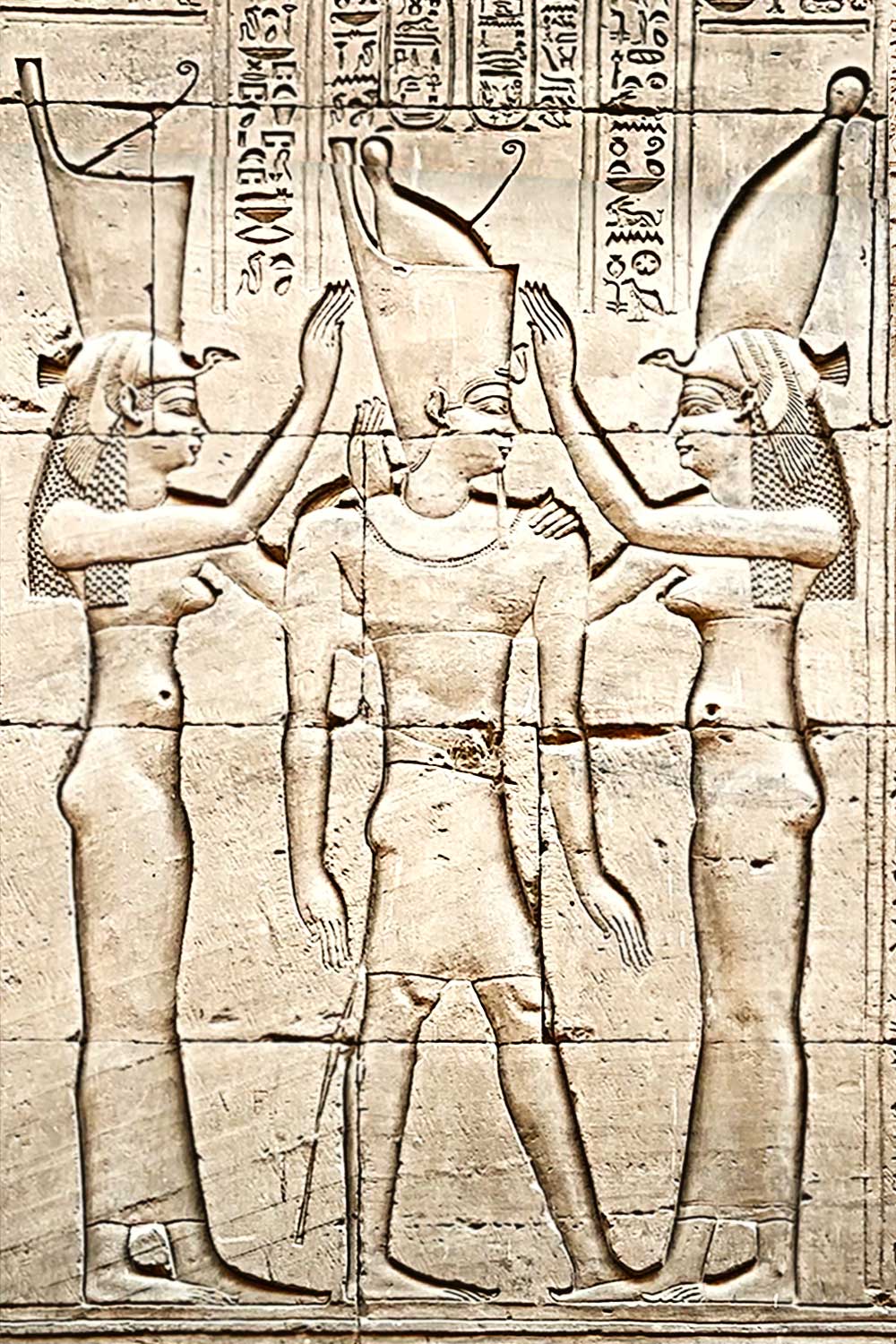
Relief of Pharoah Ptolemy VIII between the goddesses Wadjet of upper egypt and Nekhbet of lower Egypt, Temple of Horus, Edfu
Relief of Horus and his wife Hathor, Temple of Horus, Edfu
1.) Relief at Temple of Horus, Edfu, Horus and Isis
2.) Relief at Temple of Horus, Edfu
3.) Relief at Temple of Horus, Edfu
Relief of Horus and his wife Hathor and Isis holding the ankh, shaped like a cross with a loop at the top, that represents life and immortality.
Relief of Horus at work, Temple of Horus, Edfu
Relief depicting the reunion Horus and his wife Hathor and Sobek
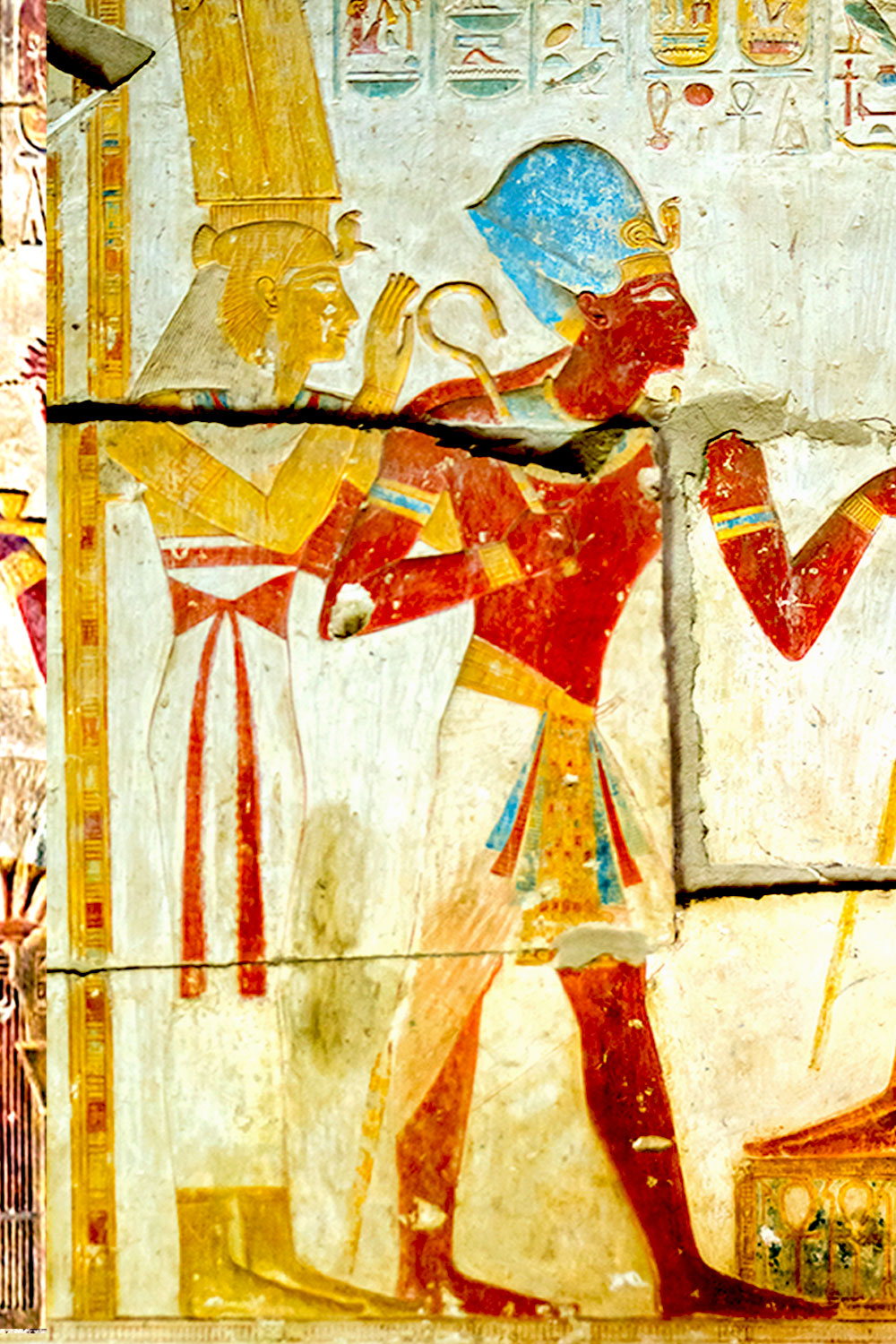
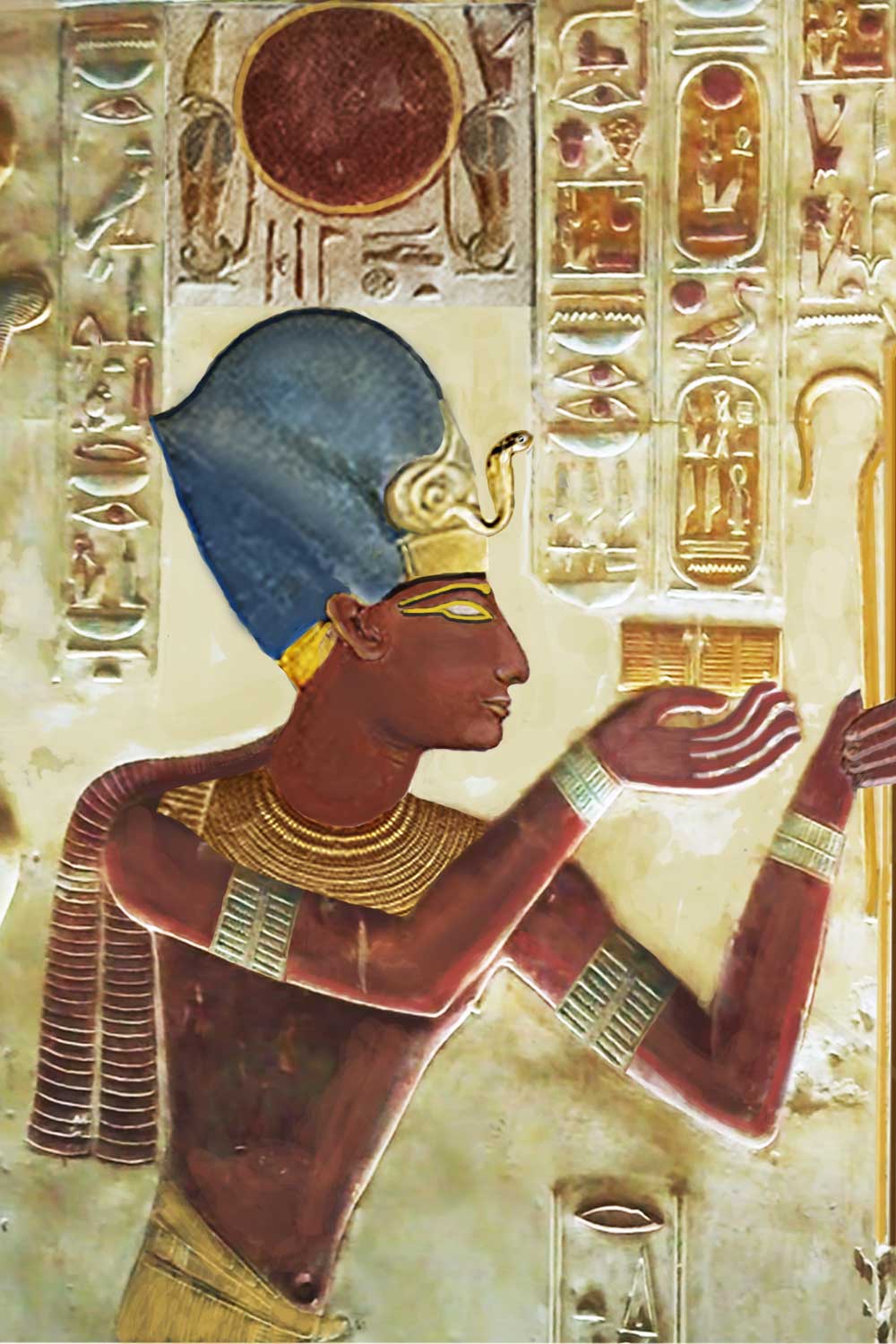
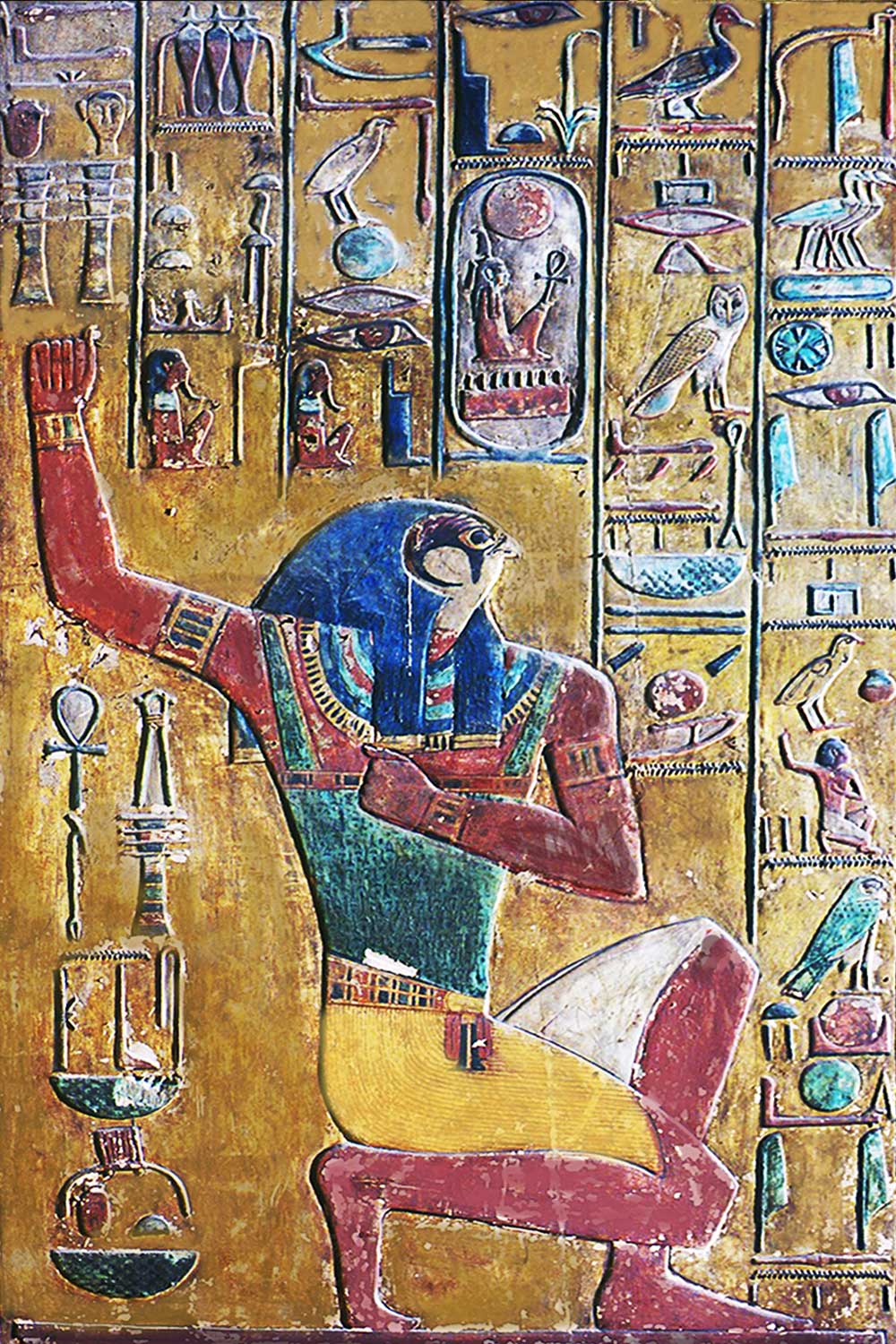
1.) Relief painting in the Chapel of Horus dedicated to Osiris, Isis introduces Seti to her son Horus,
2.) The King raises his hand to receive from Horus the royal emblems of the crook and flail. Seti's Temple of Abydos, Egypt
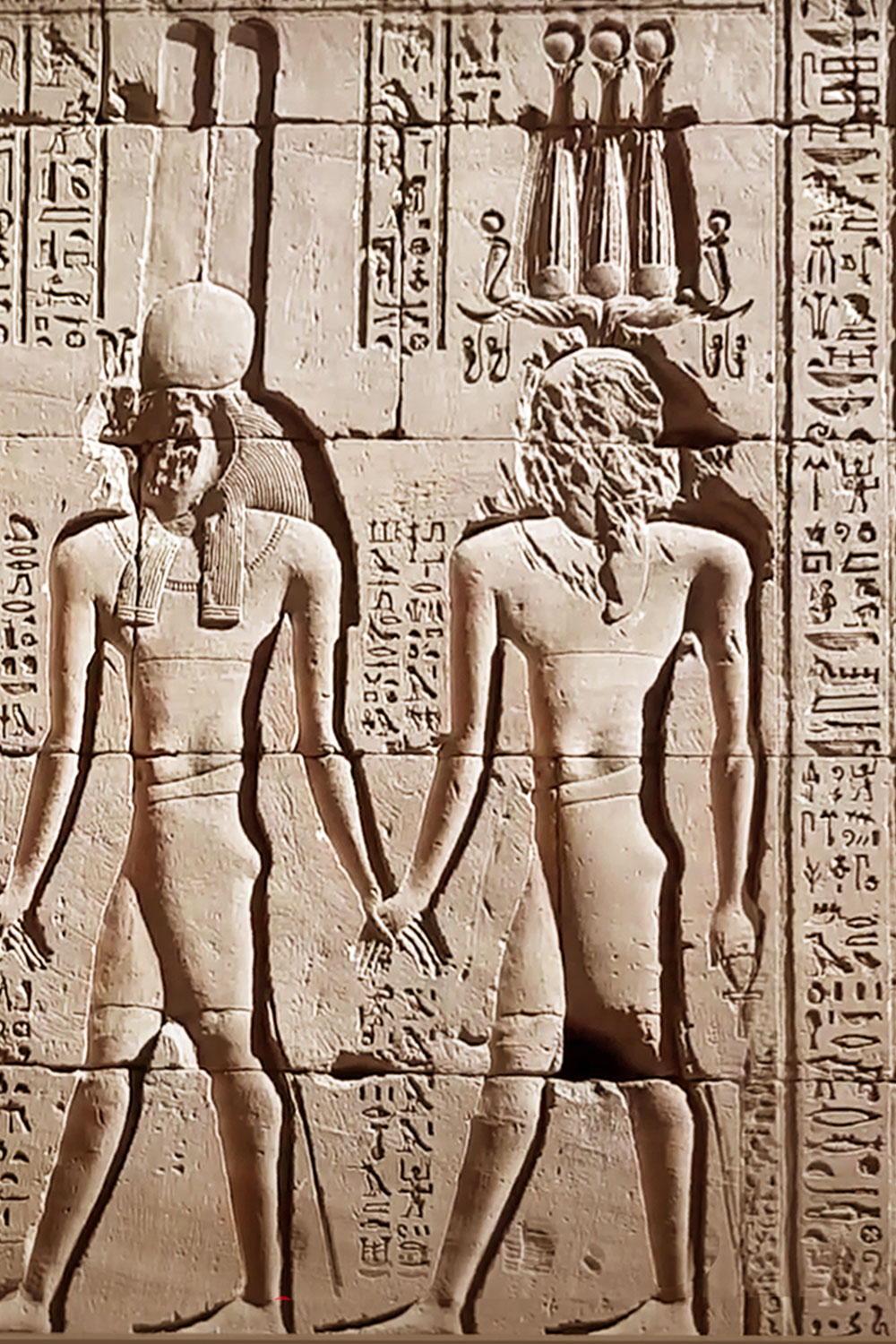
Horus performing the purification rite on "Osiris Seti", sprinkles a lustration of natron and water from three conjoined golden vases, Seti's Temple of Abydos, Egypt
1.) All egyptians viewed Horus as the protector of the Pharaoh, he was an important unifying tool used to tie the people together under their leader,
2.) Horus the falcon god was Egypt’s first national god worshiped by all, the worship of Horus spanned over 5,000 years,
3.) He is one of the most significant deities who served many functions, most notably god of kingship and the sky, Seti's Temple of Abydos
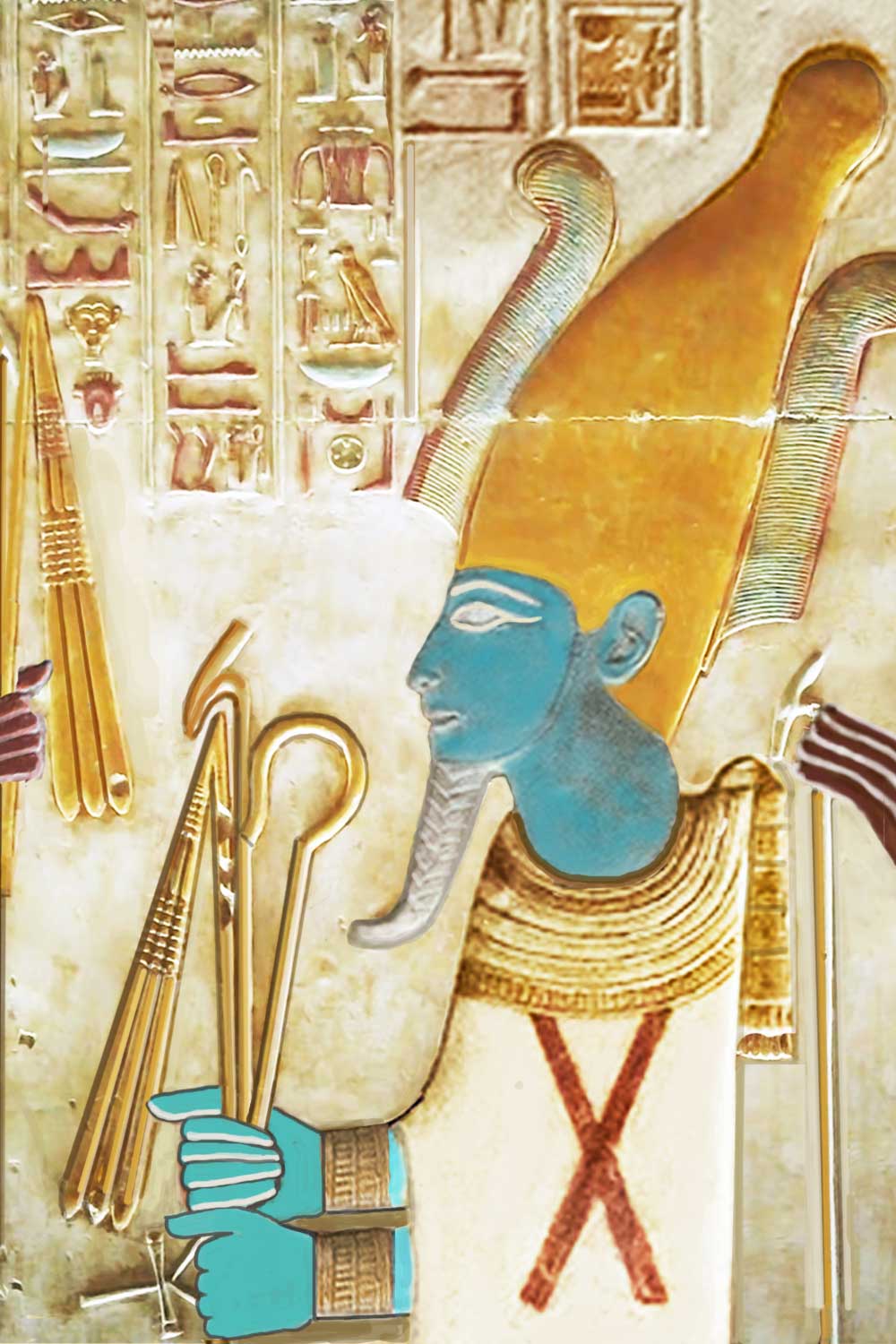
1.) A detail of a wall relief representing Seti, Osiris and Horus,
2.) Relief of Osiris with original attributes crook and flail, symbols that represented his power and majesty,
3.) King Seti I receiving the royal flail and crook after death, from the god Horus as Osiris, Seti's Temple of Abydos, Egypt.
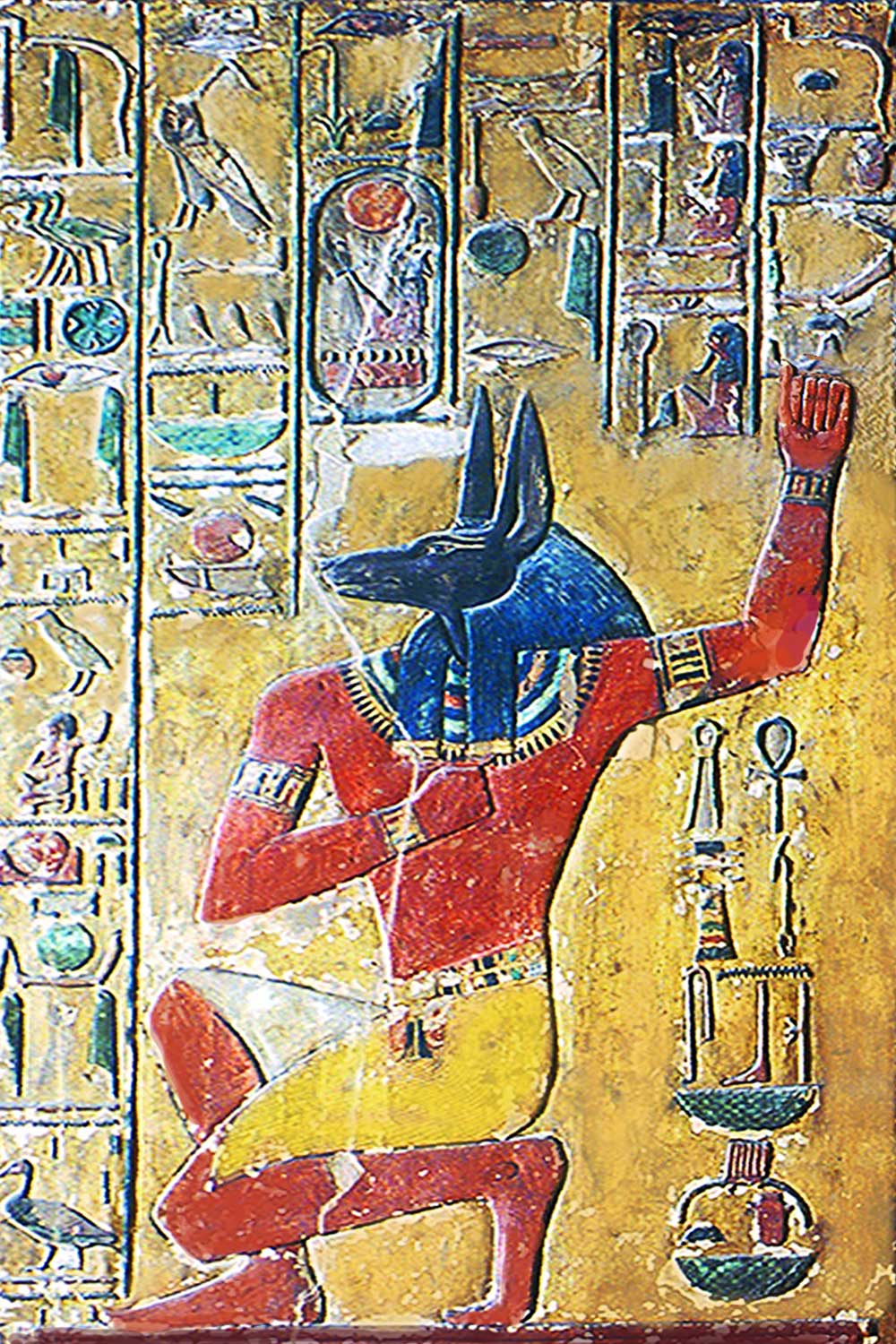
The souls of Pe a Falcon and Nekhen a Jackal kneeling atop Nome standards, the Greek Hierakonpolis was the Upper Egyptian centre of the worship of the god Horus
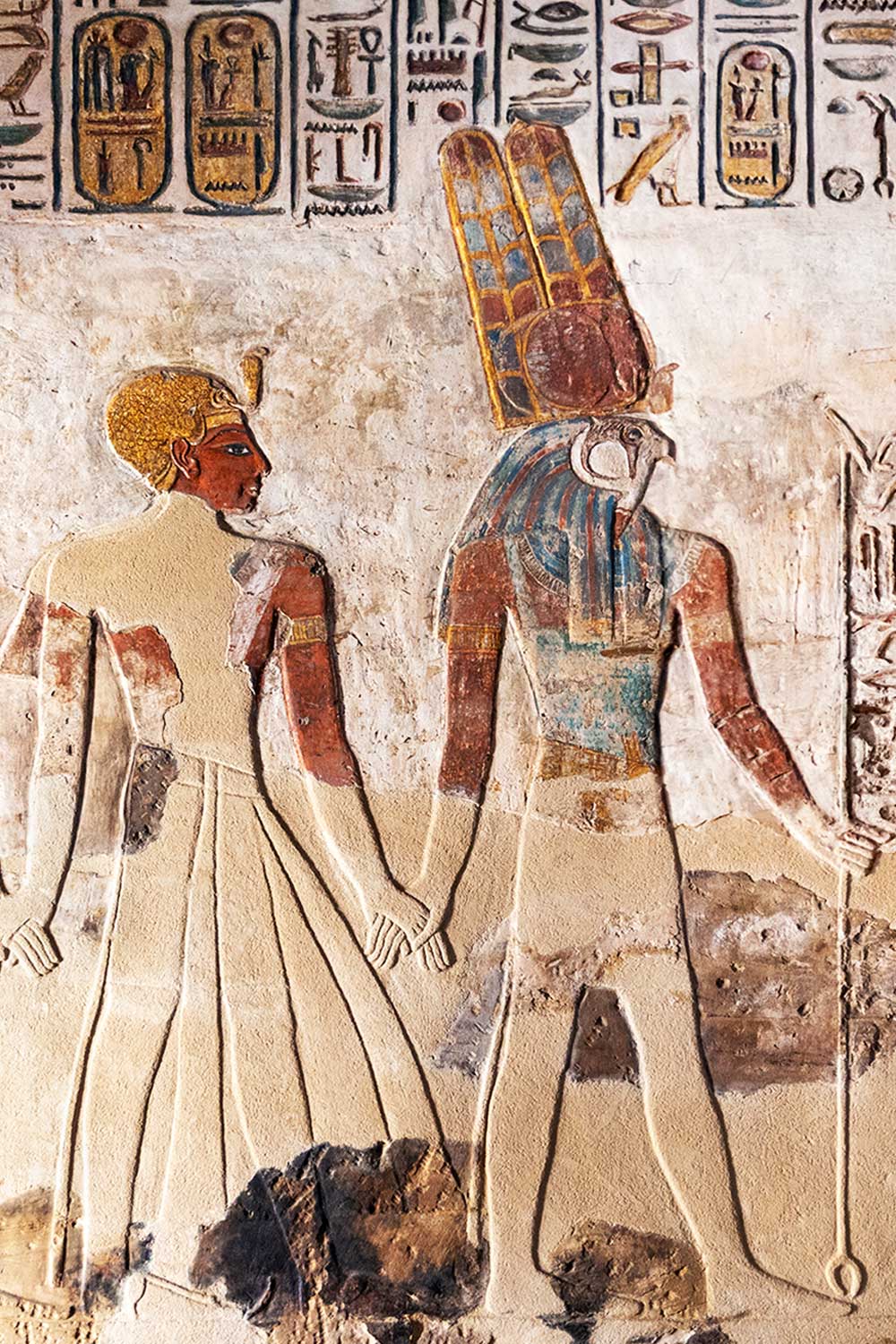
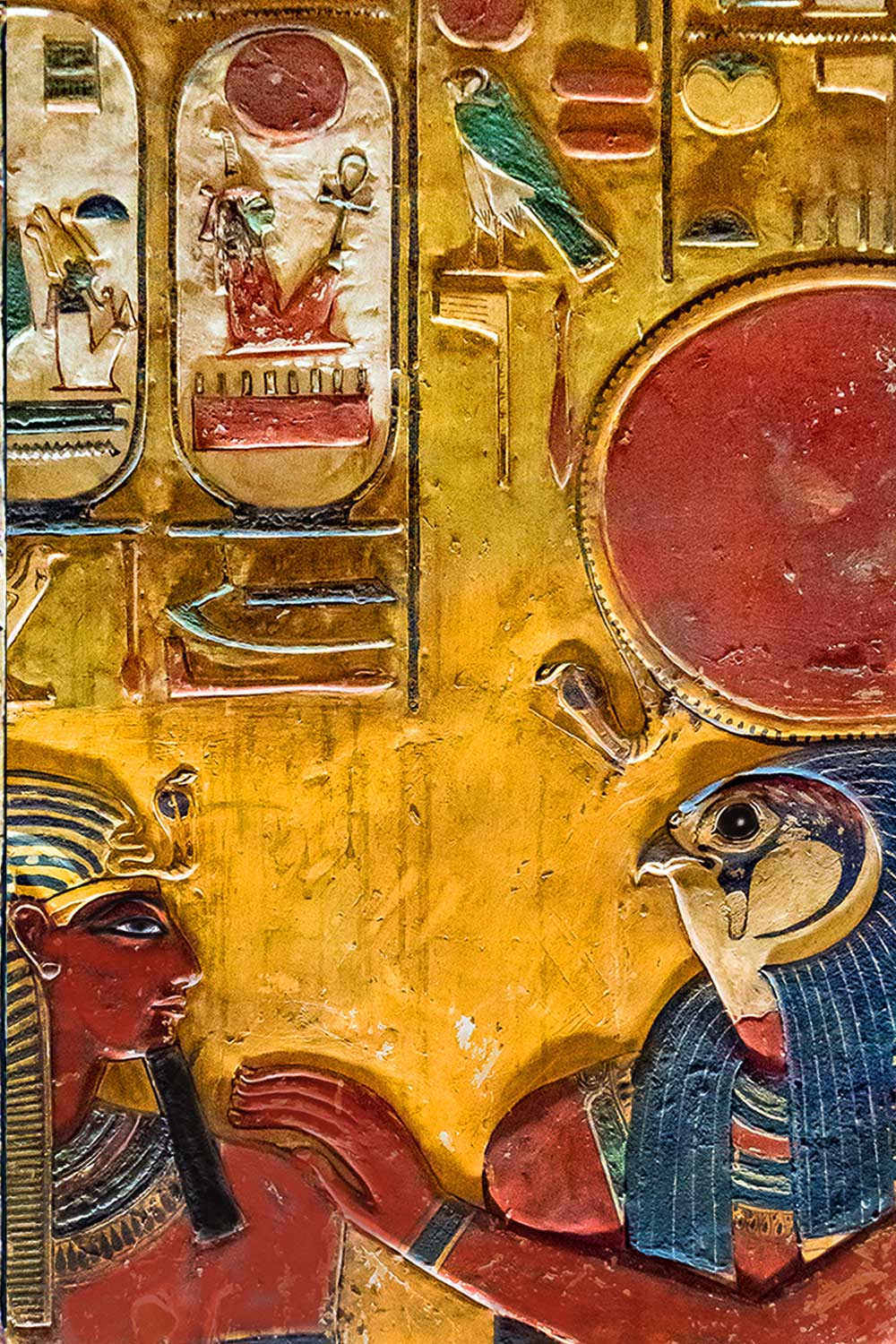
Seti and the God Ra as a falcon-headed man in anthropomorphic form of Ra as the god Horus, Seti's Tomb KV17,
Pe (Greek Buto) was a Lower Egyptian town, not known for its Horus worship, but Ra had awarded the town to Horus after his eye was injured in the struggle for the throne of Egypt
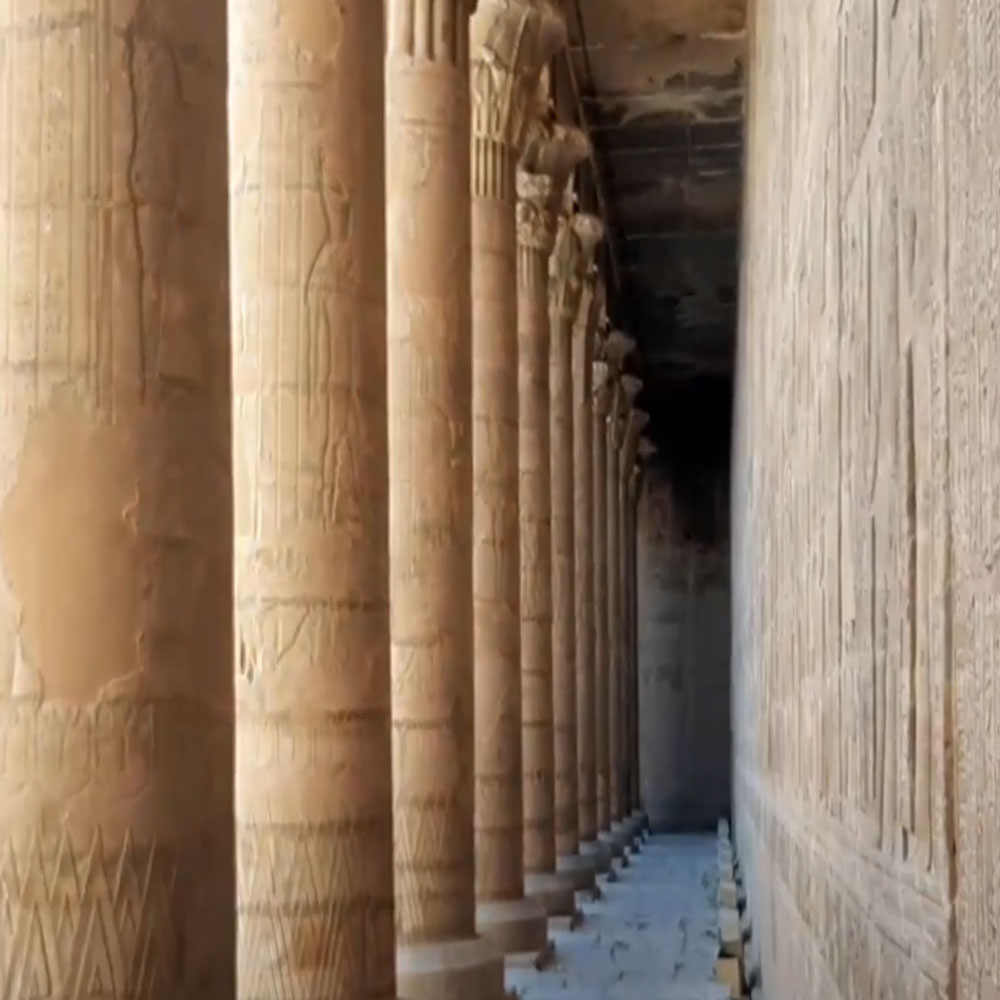
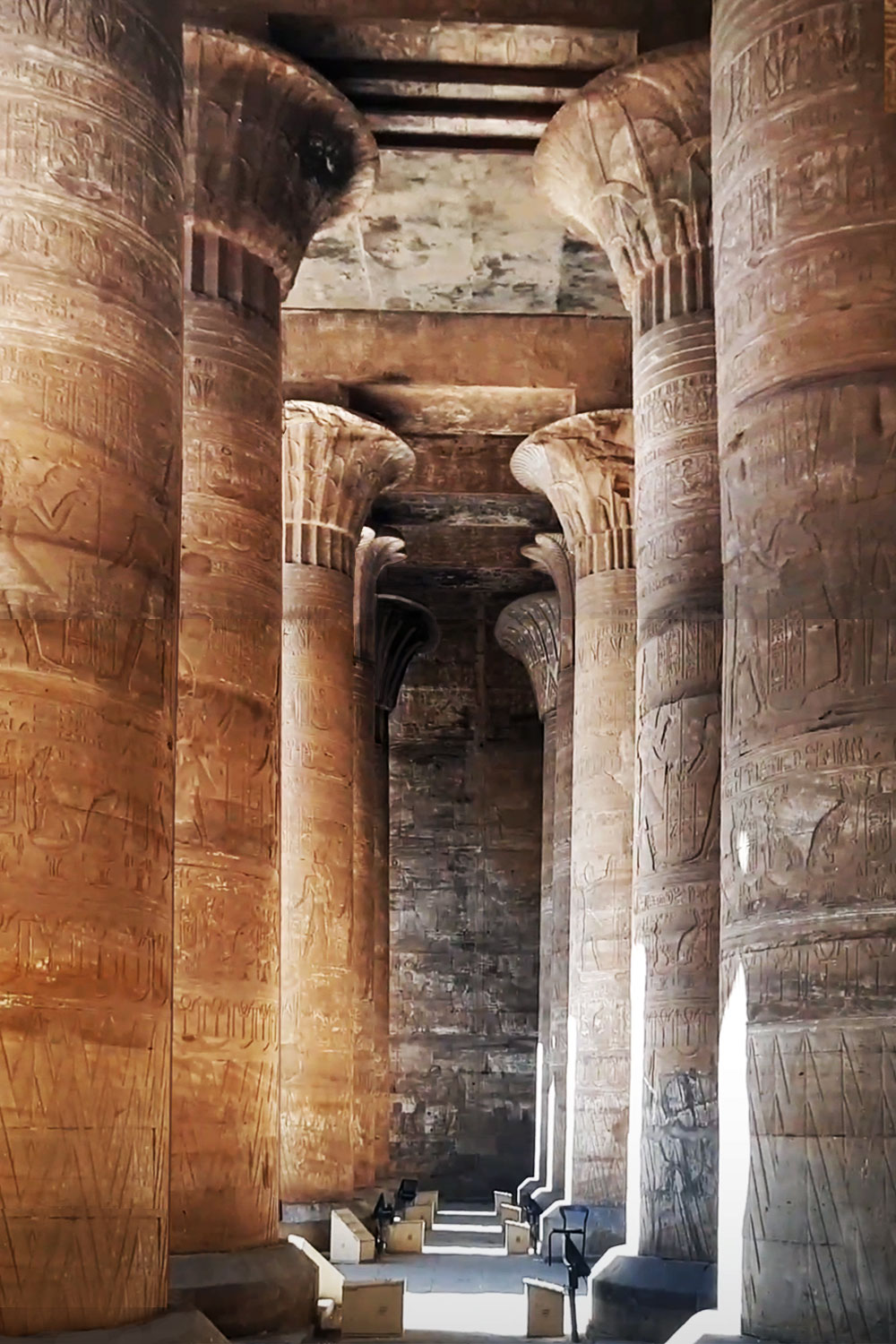
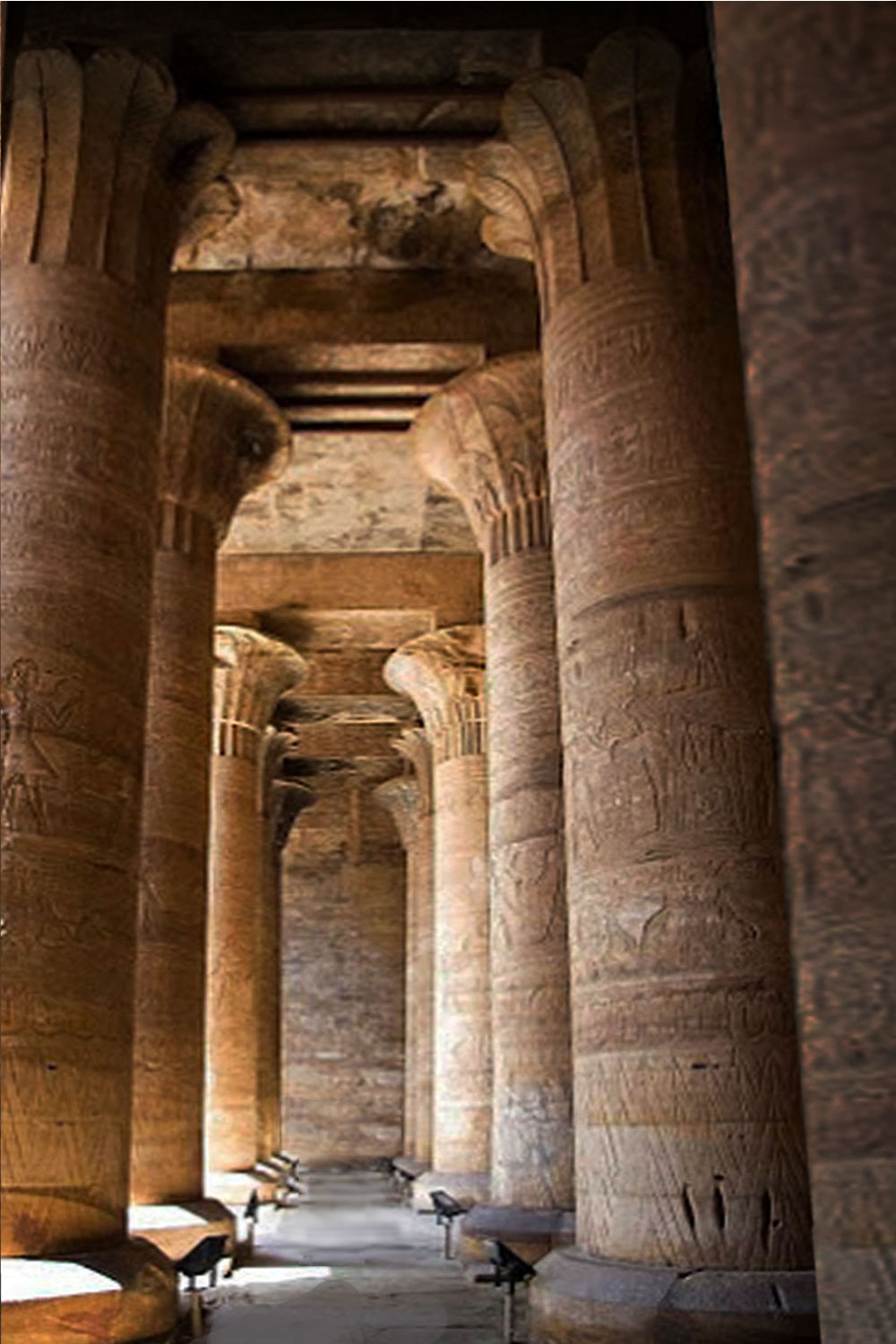
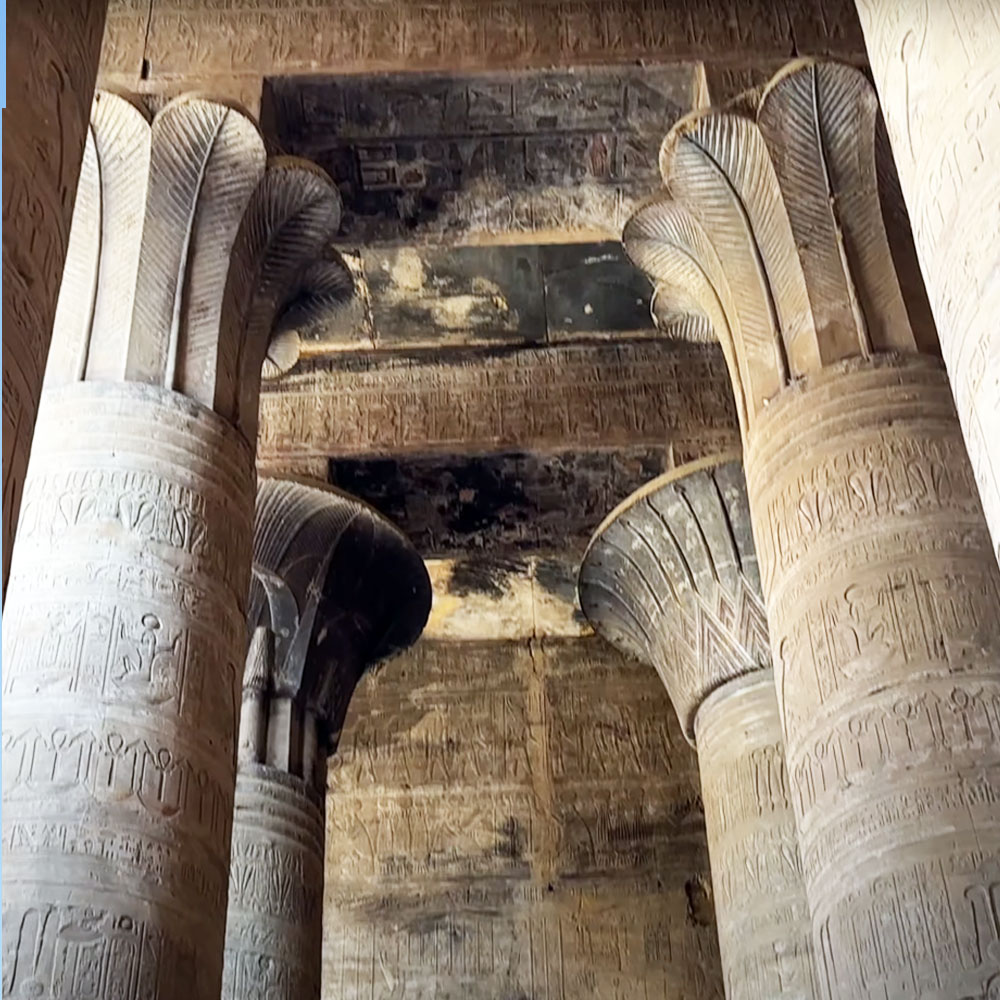
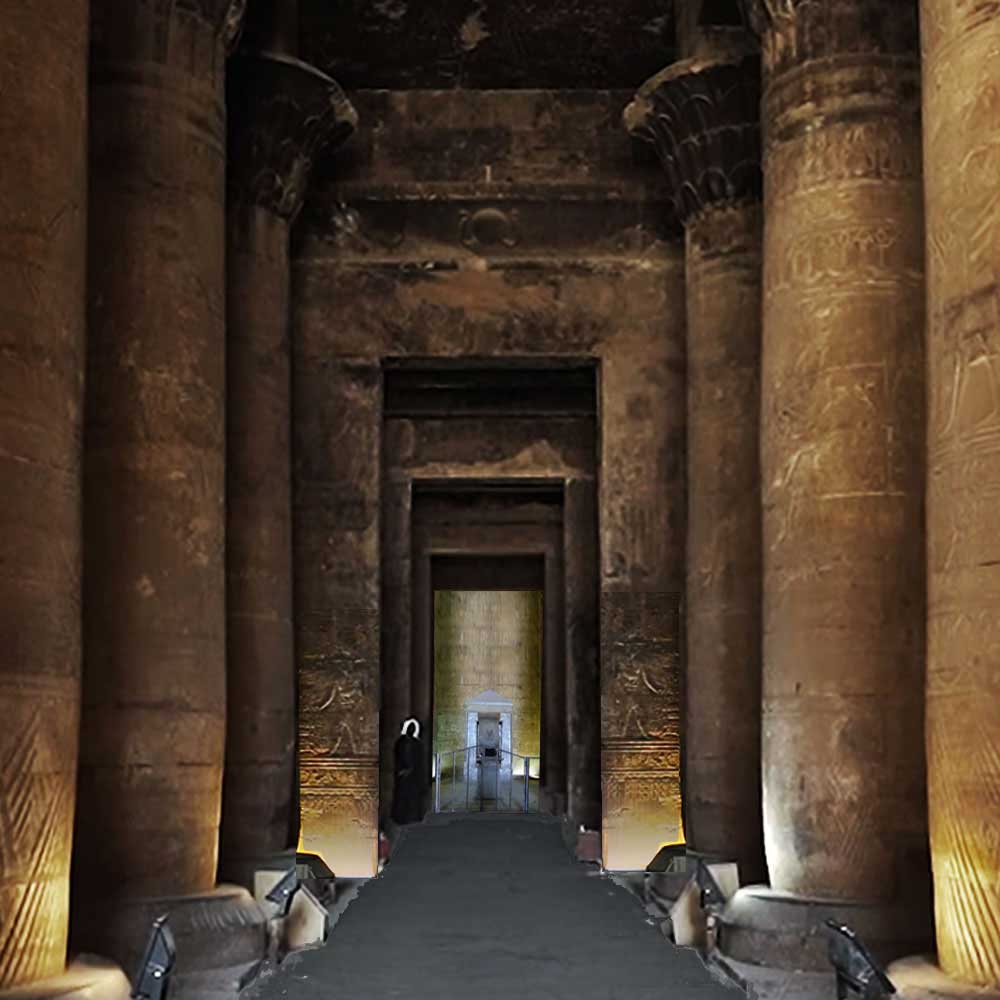
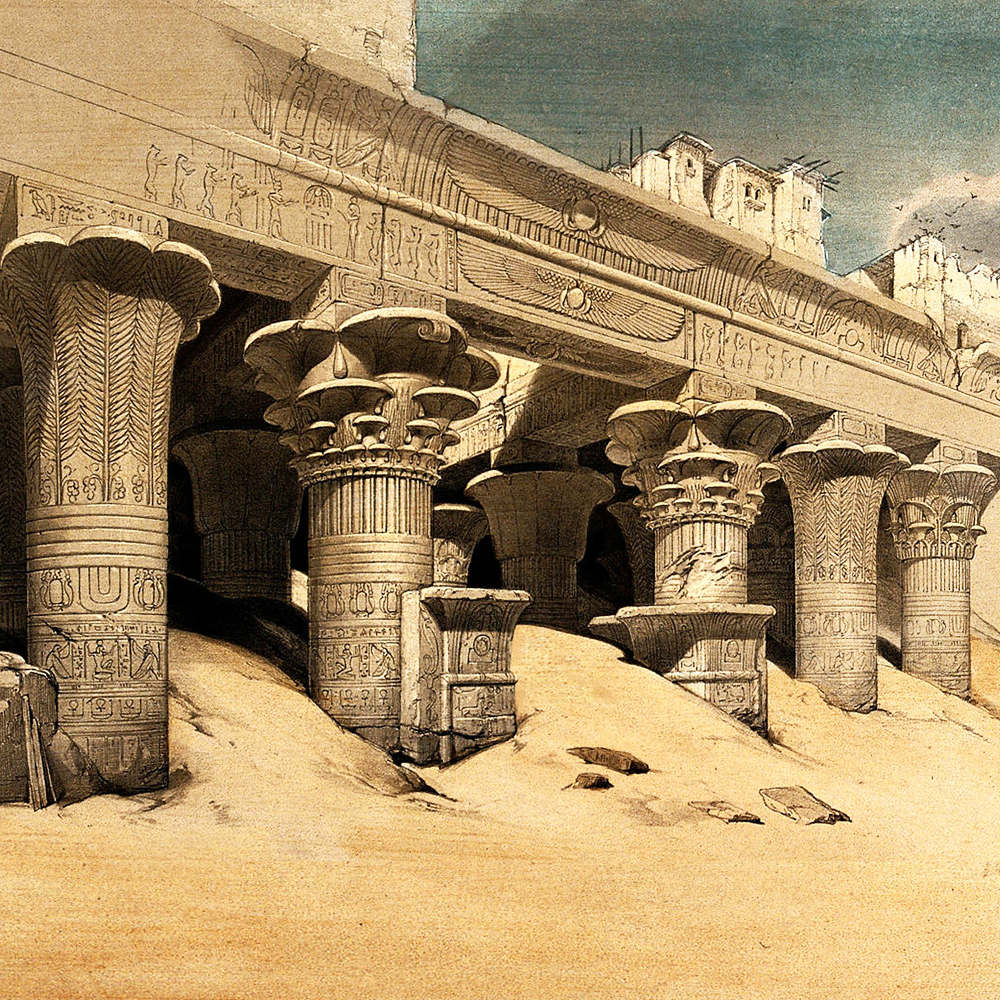
1.) The Hypostyle Hall at the Temple of Horus at Edfu, 2600 BC the architect Imhotep made use of stone columns highly decorated with carved and painted hieroglyphs, texts, ritual imagery and natural motifs.
2.) One of the most important type are the papyriform columns. The origin of these columns goes back to the 5th Dynasty composed of carved lotus (papyrus) stems.
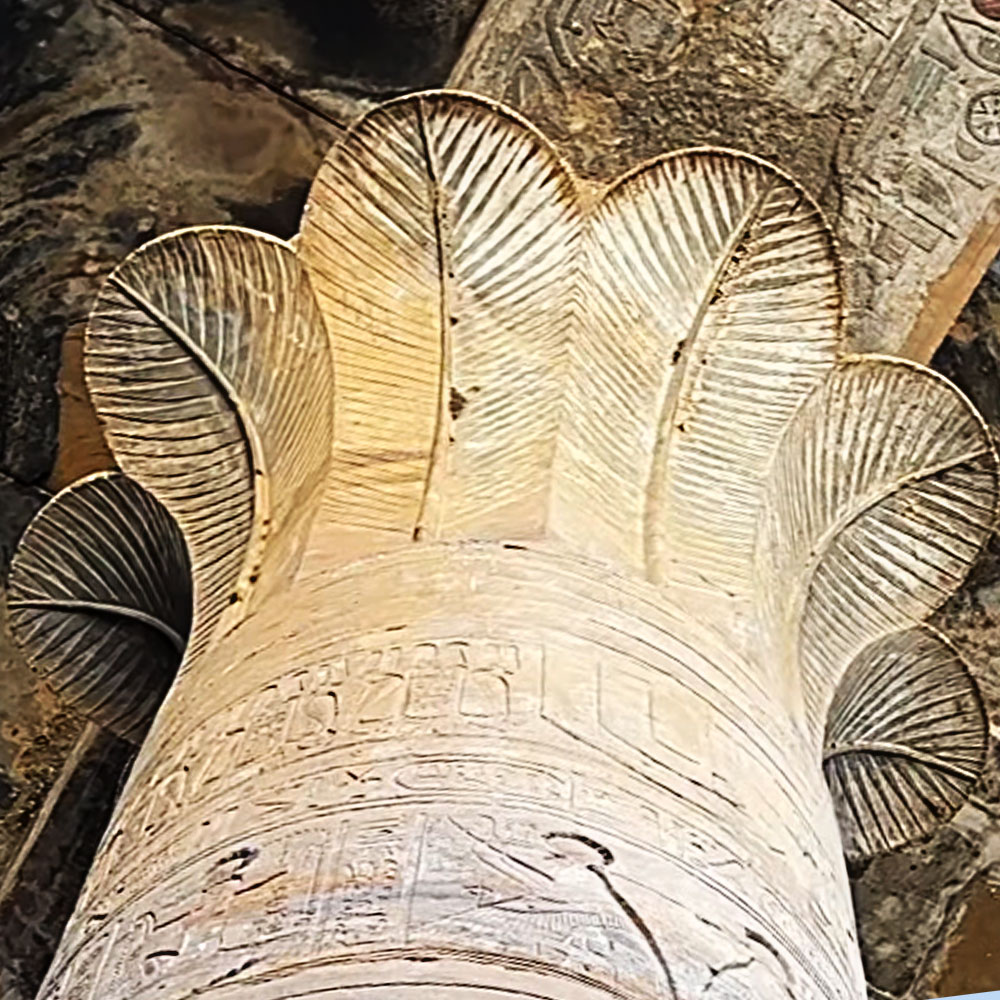
3.) Many motifs of Egyptian ornamentation are symbolic, such as the scarab, or sacred beetle, the solar disk, and the vulture. Other common motifs include palm leaves, the papyrus plant, and the buds and flowers of the lotus.
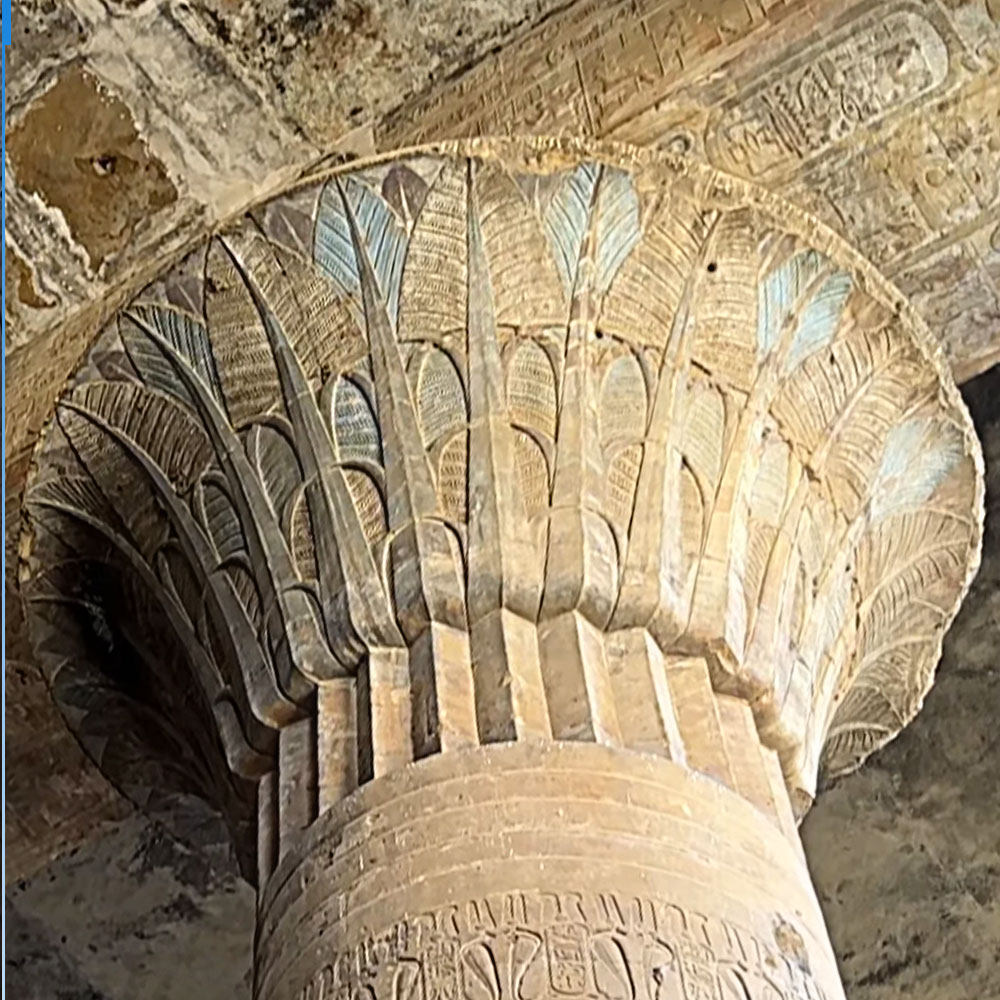
4.) The column capitals in the Temple of Horus are of the highest order, including, like here, the magnificent Palm leaves capitals (above)
5.) The Temple of Horus at Edfu is one of the few ancient temples with its roof intact and the column capitals follow the forms of the lotus, the papyrus, and the palm.
6.) The Temple of Horus has column capitals in the shape of a papyrus with lotus flowers representing the cosmos. Columns in the shape of papyrus plants symbolized the sky, represented by the ceiling.
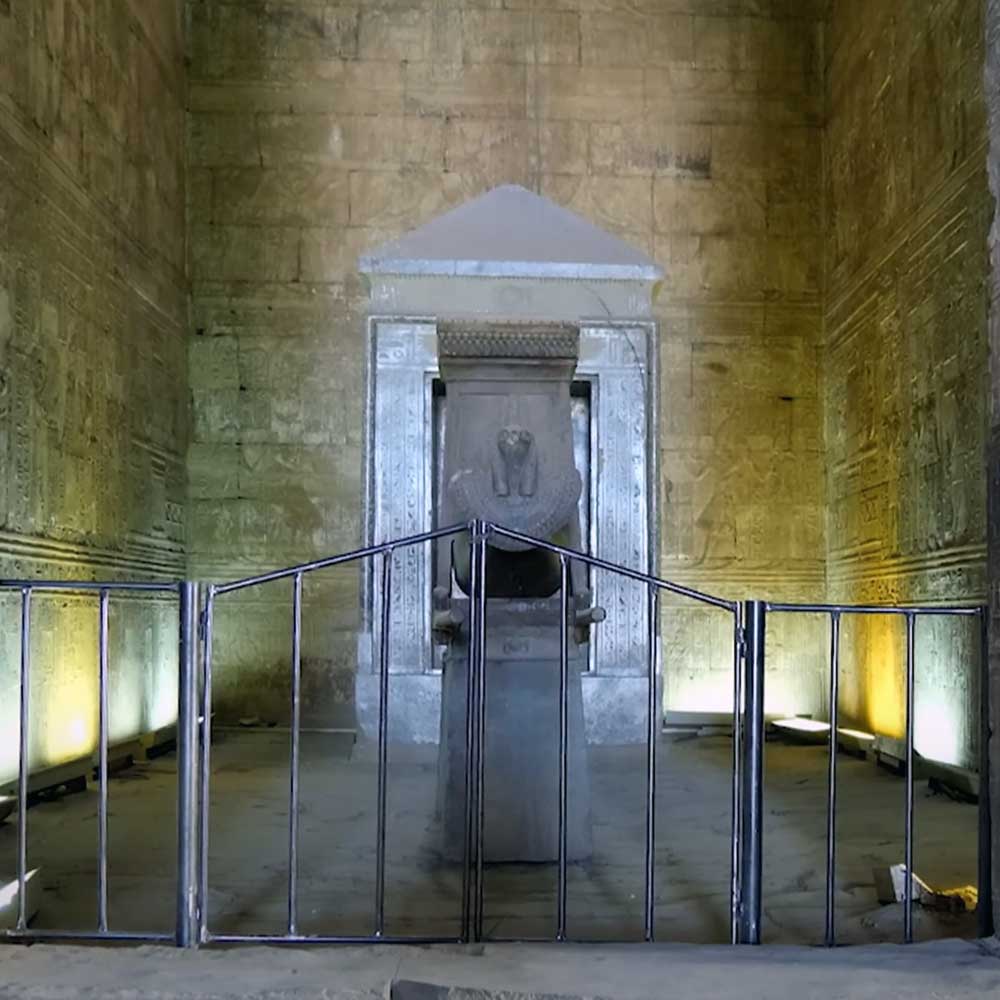
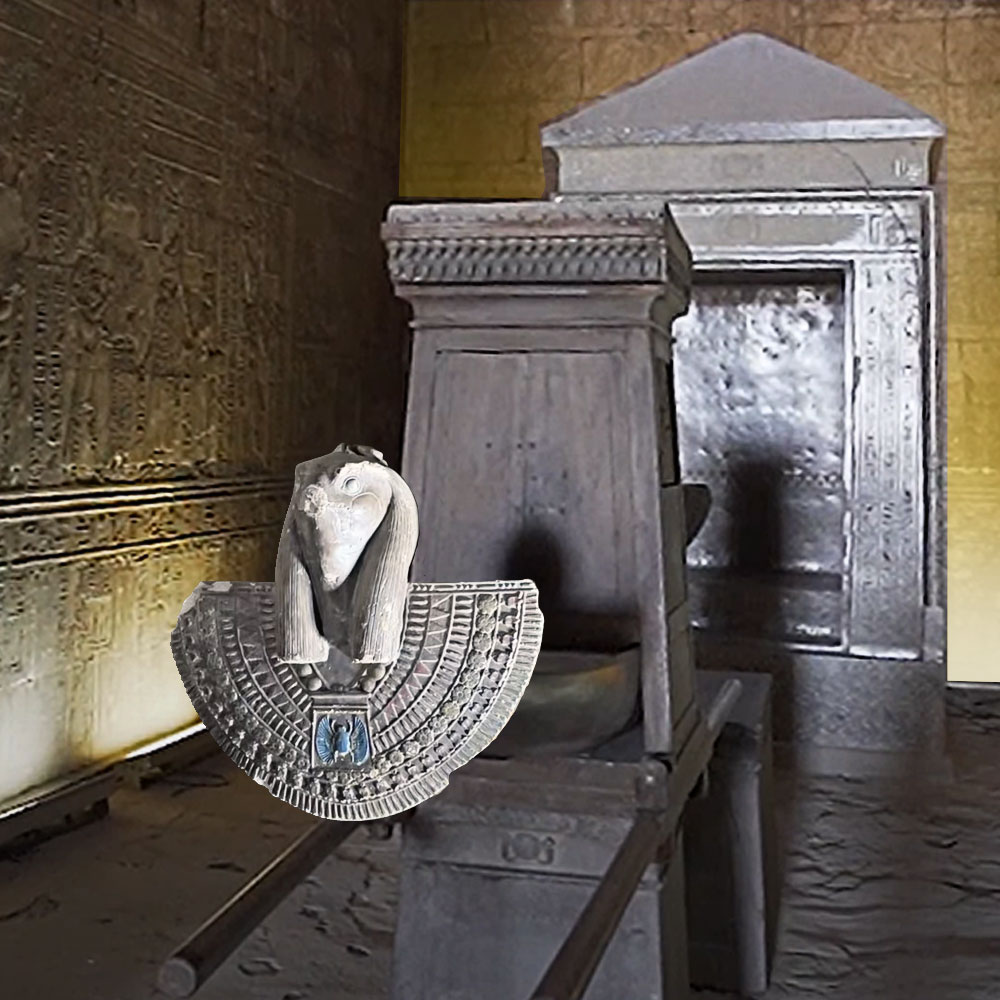
1.) The Temple of Horus & The Hypostyle Hall leading to the ceremonial boat of Hathor and the sacred bark of Horus are both located in the sanctuary. The temple of Horus at Edfu
2.) The sanctuary is the most sacred part of the temple and is made of black granite. It contains the shrine of Horus, the offering table, and the ceremonial boat. The temple of Horus at Edfu
3.) The sacred bark of Hathor was used in processions. Hathor was the patron goddess of love, beauty, pleasure, and music. The temple of Horus at Edfu
Temple of Horus, buried in sand, 1852, Photographed by Félix Teynard, French, 1817–1892, Salted paper print from paper negative,
The Temple of Horus, 1838, by David Roberts, 1796-1864, Watercolor, pen and ink, The Pierpont Morgan Library, New York City,
Temple of Horus, buried in sand, 1852, Photographed by Félix Teynard, French, 1817–1892, Salted paper print from paper negative,

Website & Website & Content Created by Richard Brafford, © 2025, All Rights Reserved, Fair Use Disclaimer for Non-Commercial Use for Educational & Entertainment Purposes OnlyTop