THE GREAT PYRAMIDS
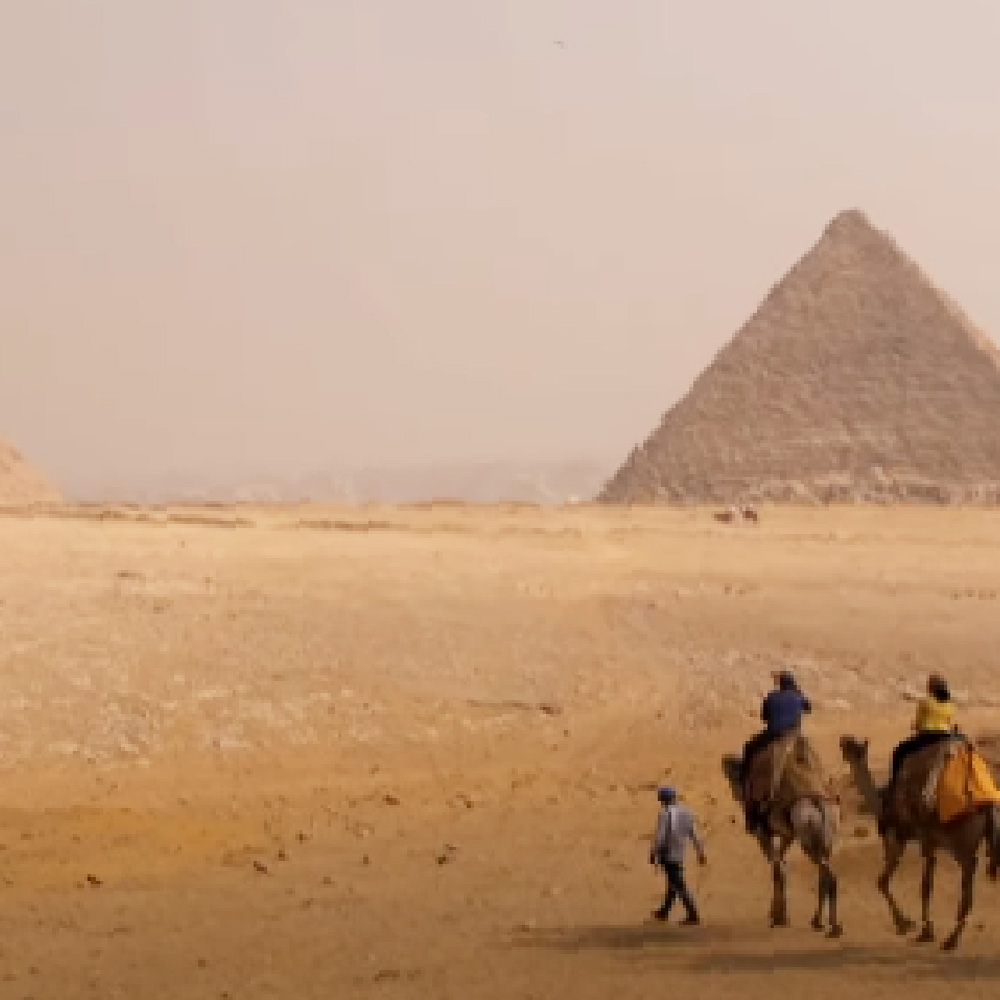
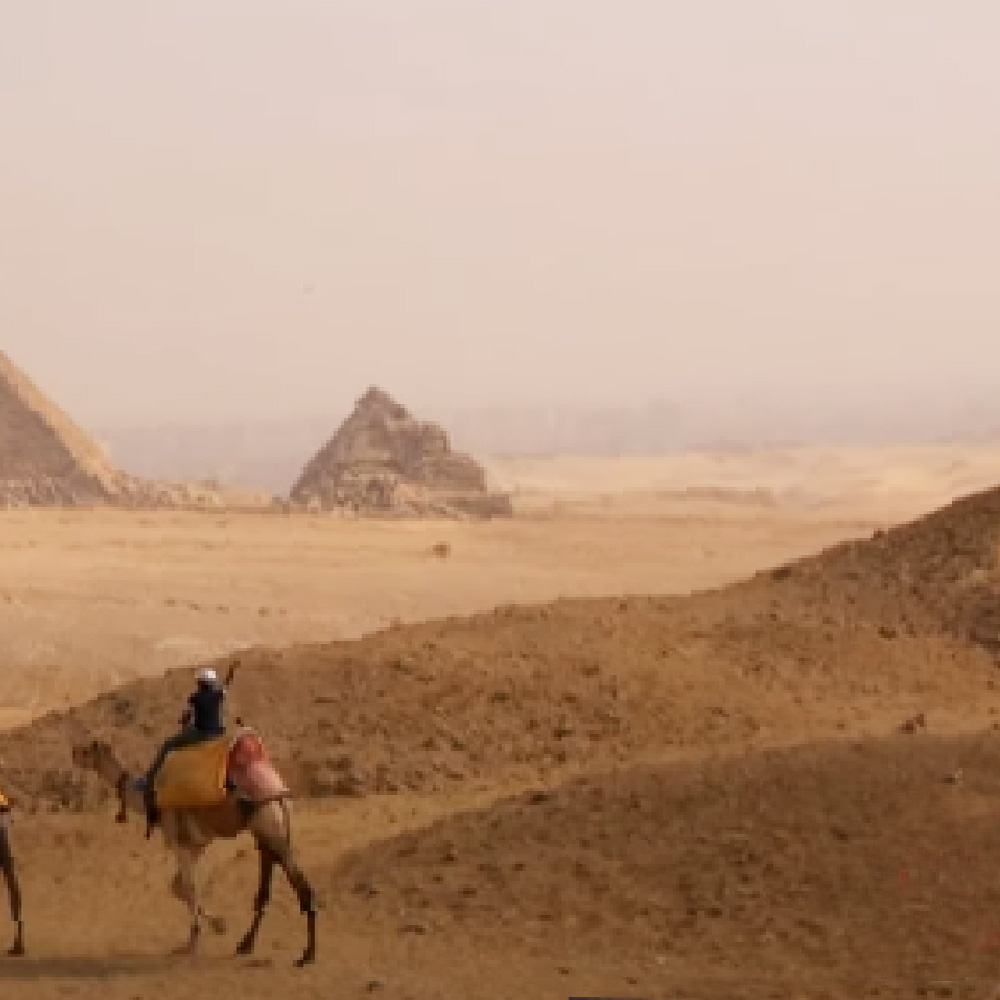
Seeing the pyramids for the first time from the back of a camel was an unexpectedly powerful experience. Their size—impossible to grasp from
images alone—became undeniable as I approached, each limestone block revealing its monumental scale. The encounter was humbling, a reminder of how
ancient engineering can still overwhelm the senses. THE PYRAMIDS of SNEFRU
Pyramid building reached its maturity in the reign of Pharaoh Snefru of the 4th Dynasty (2543–2436 BCE); he constructed three pyramids; the first
was known as the Bent Pyramid due to its double slope collapsed, the second was known as the Meidum Pyramid that collapsed too, the third was
successfully known as the first true pyramid—called the Red Pyramid at Dahshur; it is about 220 meters (722 feet) wide at the base and 104 meters (341
feet) high, it is Egypt's first successful construction of a "true" smooth-sided pyramid.
Archaeologists speculate the Red Pyramid design built at a slope of 43° was an outcome of engineering crises experienced
during the construction of Sneferu's two earlier pyramids. The first of these, the Pyramid at Meidum, collapsed in antiquity. In contrast, the
second, the Bent Pyramid, had the angle of its inclination dramatically altered from 54 to 43 degrees part-way through construction, and it
collapsed. The Red Pyramid was built at a slope of 43°, 105 meters (344 ft) high, and 220 meters (720 ft) wide; it is believed that Pharaoh
Sneferu was buried in the Red Pyramid in 2589 BCE. Considering that the remains of King Sneferu have not yet been found or positively identified,
it may still be possible that his sarcophagus and mummy lie hidden in his Red Pyramid in a hidden chamber.
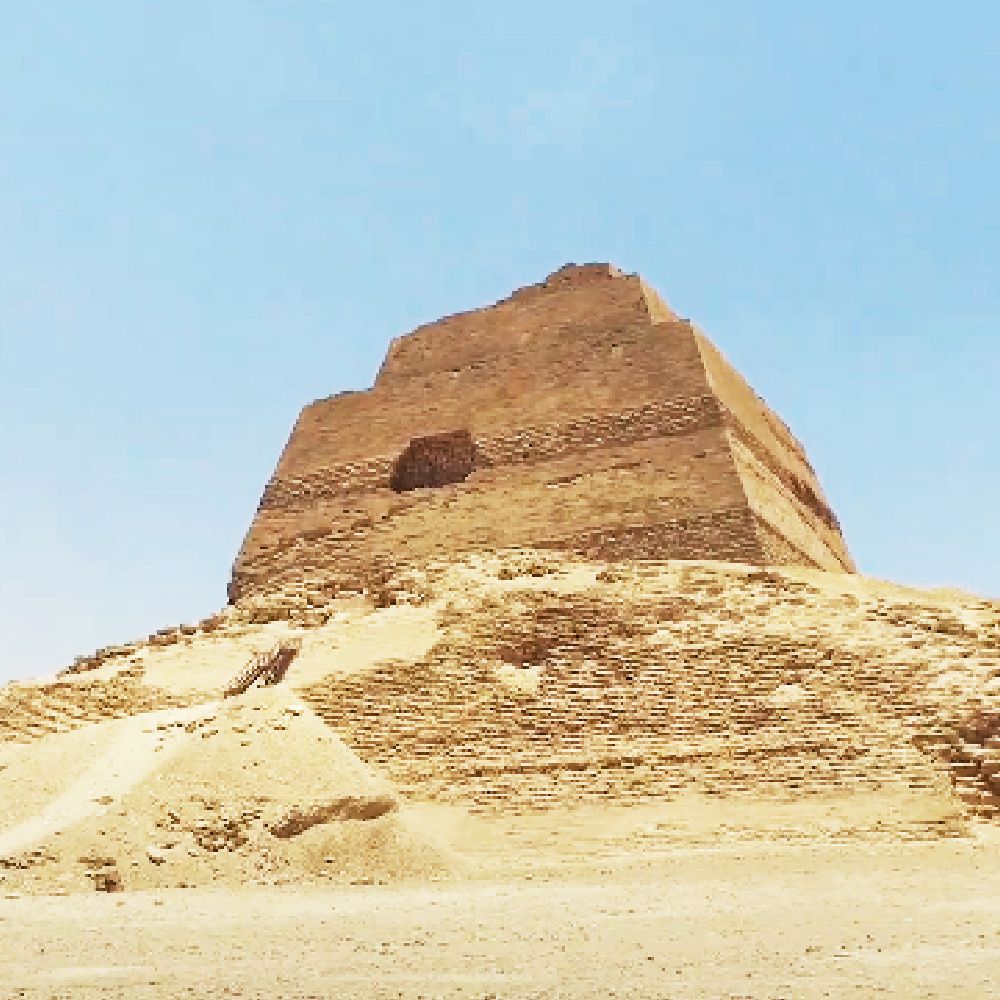 The Meidum Pyramid, built by King Snefru, was
known as the "collapsed pyramid" because of its ruined state; it was built around 2600-2575 BCE
The Meidum Pyramid, built by King Snefru, was
known as the "collapsed pyramid" because of its ruined state; it was built around 2600-2575 BCE
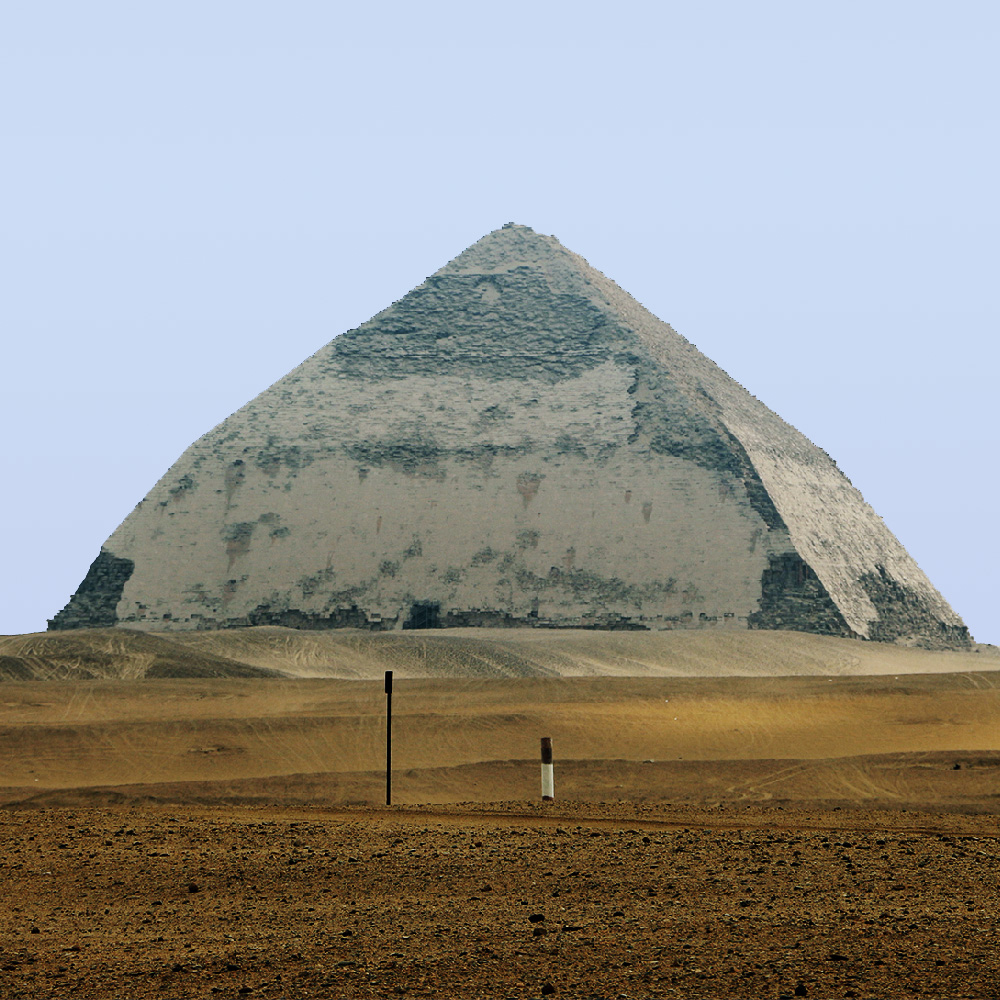 Sneferu's Bent Pyramid at Dahshur was modified
during construction; the inclination angle changed from 55° to about 43° due to instability. Soon, it began to collapse around 2600 BCE, and the
work was abandoned
Sneferu's Bent Pyramid at Dahshur was modified
during construction; the inclination angle changed from 55° to about 43° due to instability. Soon, it began to collapse around 2600 BCE, and the
work was abandoned
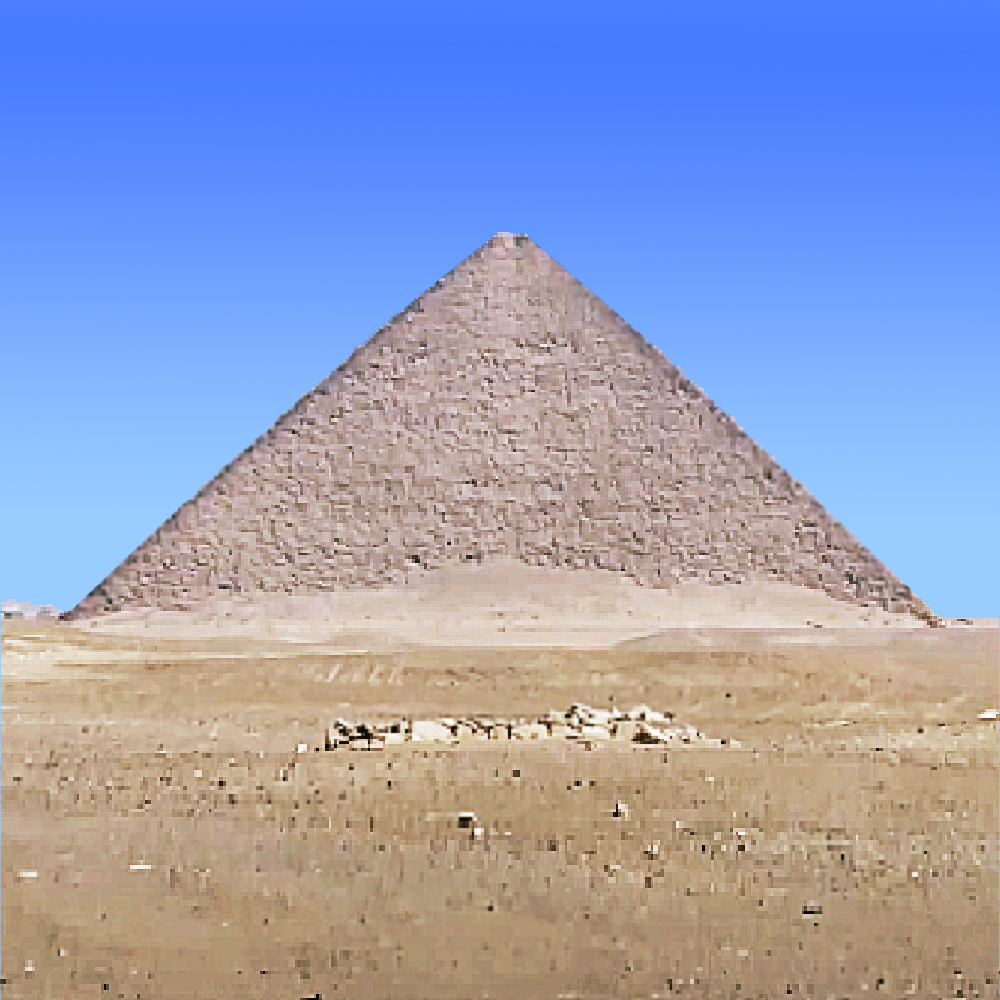 The Red Pyramid of Dahshur, named for the rusty,
reddish hue of its red limestone, is the first true pyramid; it was built around 2575–2563 BCE; it has an angle of 43^ degrees, it is the third
largest Egyptian pyramid after Khufu and Khafre at Giza
The Red Pyramid of Dahshur, named for the rusty,
reddish hue of its red limestone, is the first true pyramid; it was built around 2575–2563 BCE; it has an angle of 43^ degrees, it is the third
largest Egyptian pyramid after Khufu and Khafre at Giza
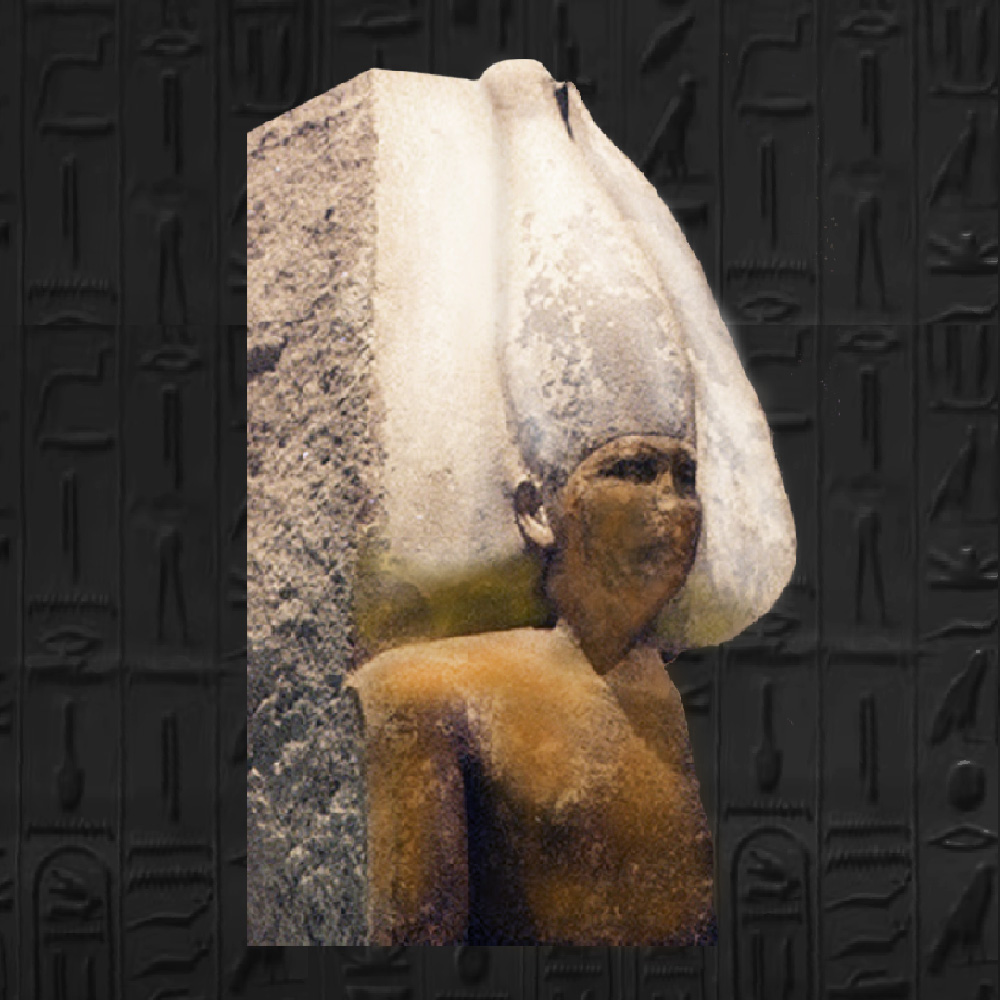 Statue of Pharaoh Sneferu, wearing the White Hedjet
Crown of Upper Egypt, Old Kingdom, 4th Dynasty, carved limestone, 2600 BCE, Egyptian Museum, Cairo
Statue of Pharaoh Sneferu, wearing the White Hedjet
Crown of Upper Egypt, Old Kingdom, 4th Dynasty, carved limestone, 2600 BCE, Egyptian Museum, Cairo
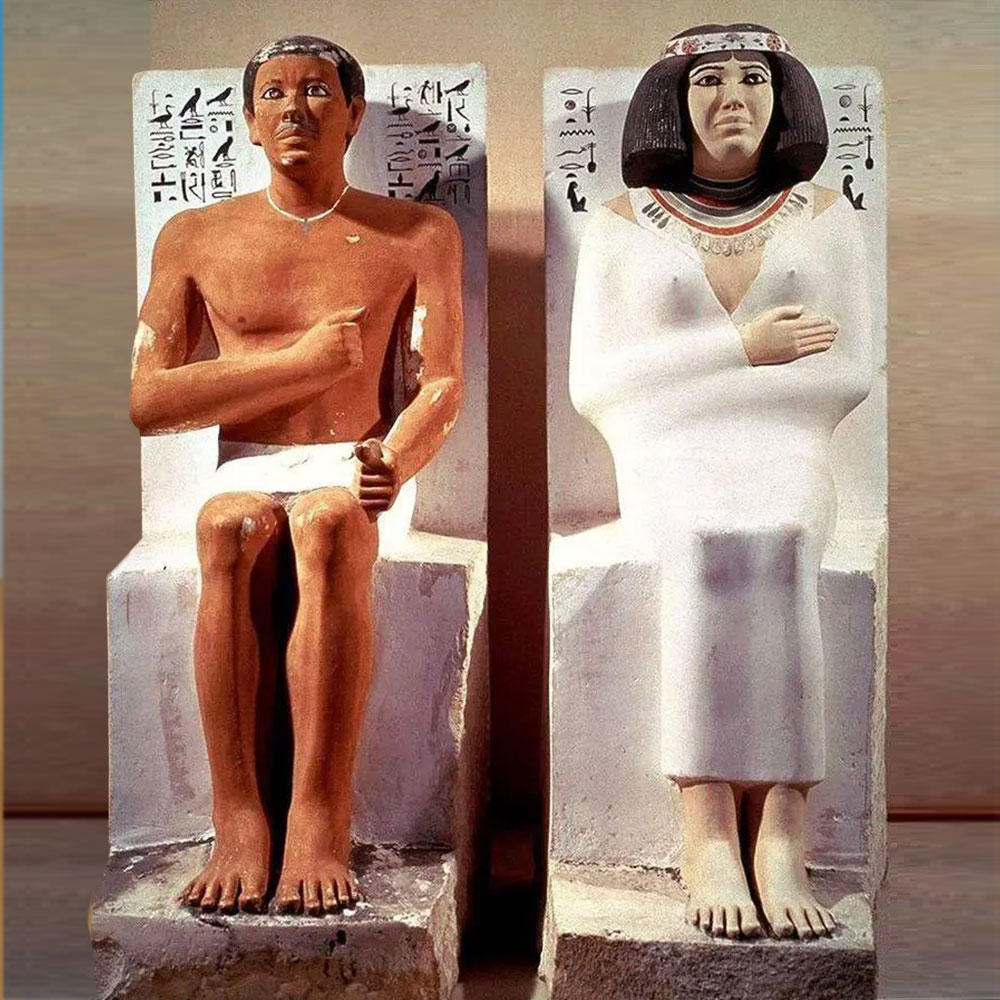 Prince Rahotep (son of Sneferu) and his wife
Nofret, tomb statues from Meidum pyramid, painted limestone, 2600 BCE, Egyptian Museum, Cairo
Prince Rahotep (son of Sneferu) and his wife
Nofret, tomb statues from Meidum pyramid, painted limestone, 2600 BCE, Egyptian Museum, Cairo
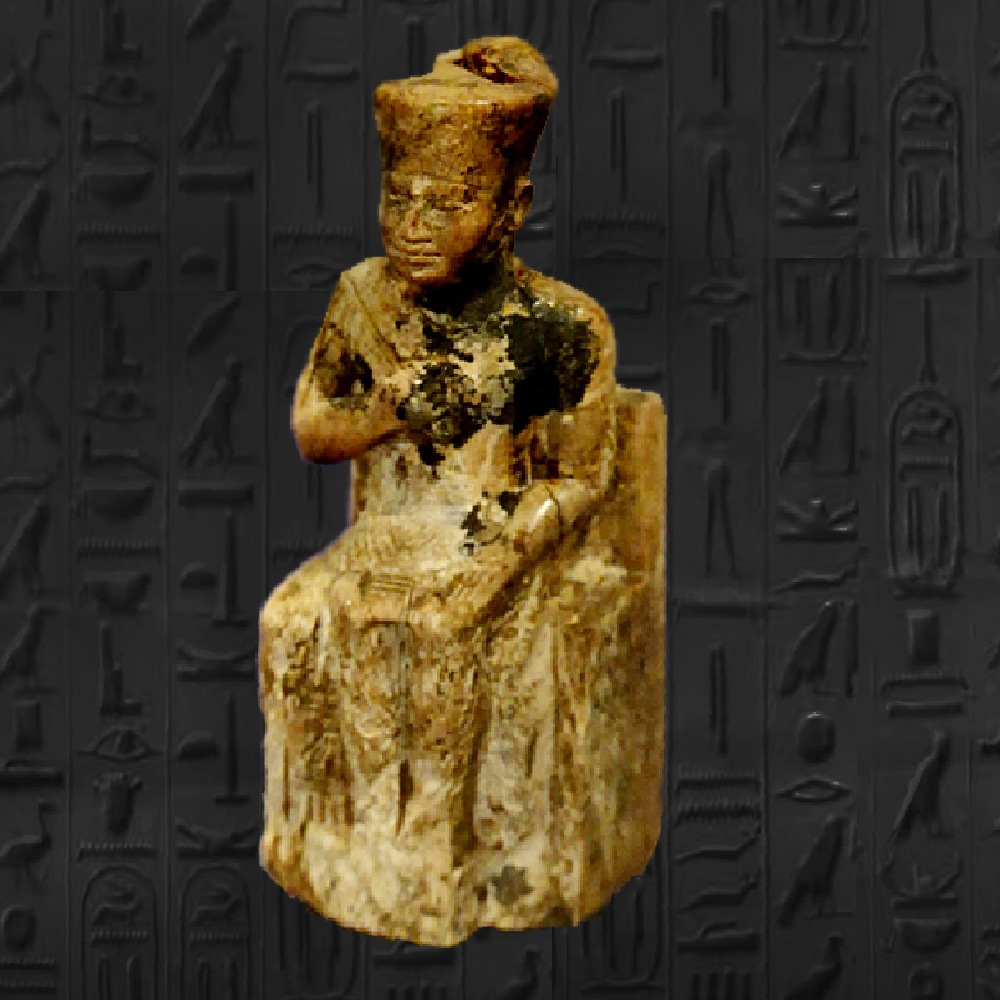 Statuette of King Khufu, builder of the Great
Pyramid, 2600 BCE, found in 1903 in Abydos, Egyptian Museum, Cairo
Statuette of King Khufu, builder of the Great
Pyramid, 2600 BCE, found in 1903 in Abydos, Egyptian Museum, Cairo
THE GREAT PYRAMIDS
The Great Pyramids of Giza served as royal tombs during Egypt’s Old Kingdom. The three largest pyramids were built for King Khufu, his son Khafre, and his
grandson Menkaure, with smaller pyramids constructed for their wives and mothers. In total, around 80 pyramids were built from the Kingdom of Kush in modern Sudan
to the Giza plateau. Khufu’s Great Pyramid, completed around 2600 BC after roughly 26 years of construction, is the tallest at 481 feet (147 meters) with a base of
756 feet (230 meters). Built at an angle of about 51°50′ and aligned with the constellation Orion, it is the oldest of the Seven Wonders of the Ancient World and
the only one still largely intact. Its north‑facing layout reflects the ancient belief that the king would join the “indestructible” circumpolar stars after death.
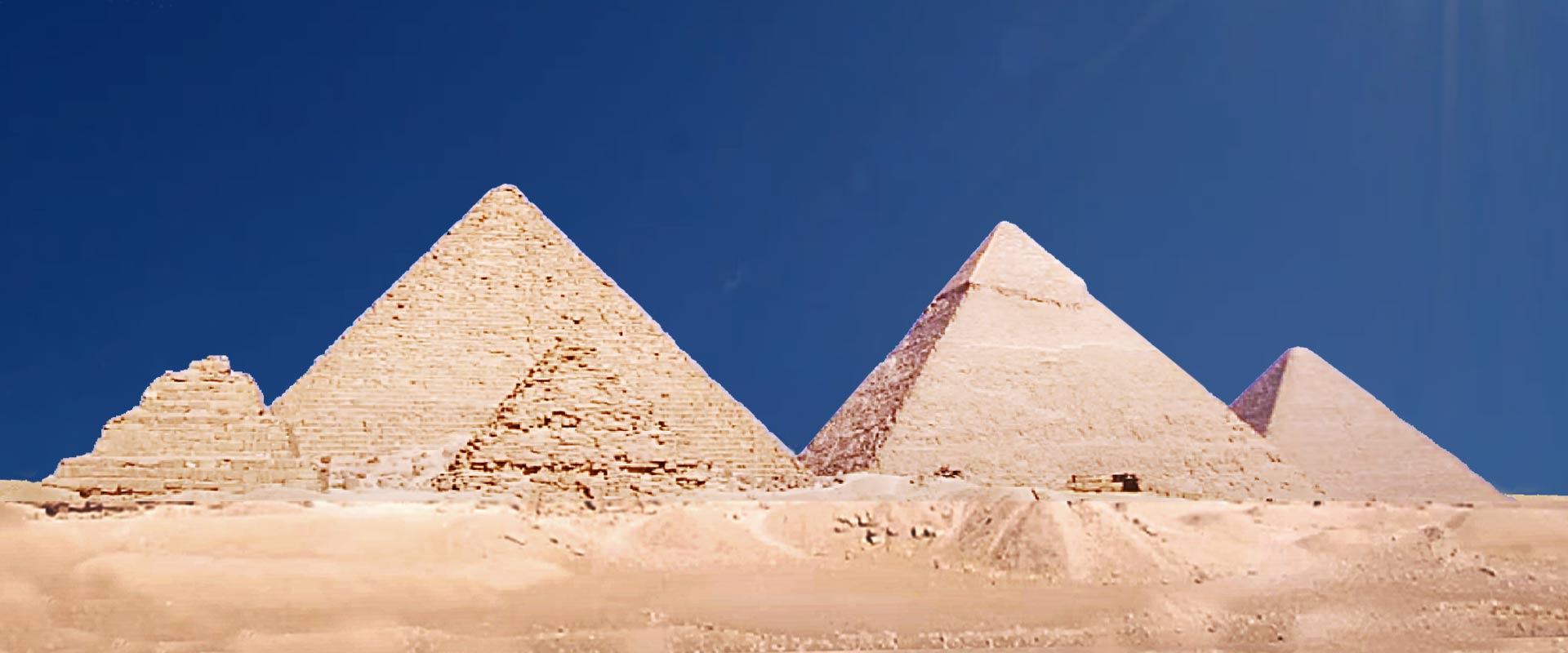 Mid-morning photo on the back of a camel, the first Great Pyramid you see is Menkaure, the smallest of the three main pyramids, built in 2510 BCE,
213 feet high, Slop: 51°20, In the middle is Khafre, the second largest and the second tallest built in 2570 BCE, 448 feet high, Slop: 53°10' it is the only pyramid that still has cladding at the top, In the far back is Khufu the Great Pyramid,
built in 2600 BCE, 481 feet high, Slop: 51°50
Mid-morning photo on the back of a camel, the first Great Pyramid you see is Menkaure, the smallest of the three main pyramids, built in 2510 BCE,
213 feet high, Slop: 51°20, In the middle is Khafre, the second largest and the second tallest built in 2570 BCE, 448 feet high, Slop: 53°10' it is the only pyramid that still has cladding at the top, In the far back is Khufu the Great Pyramid,
built in 2600 BCE, 481 feet high, Slop: 51°50
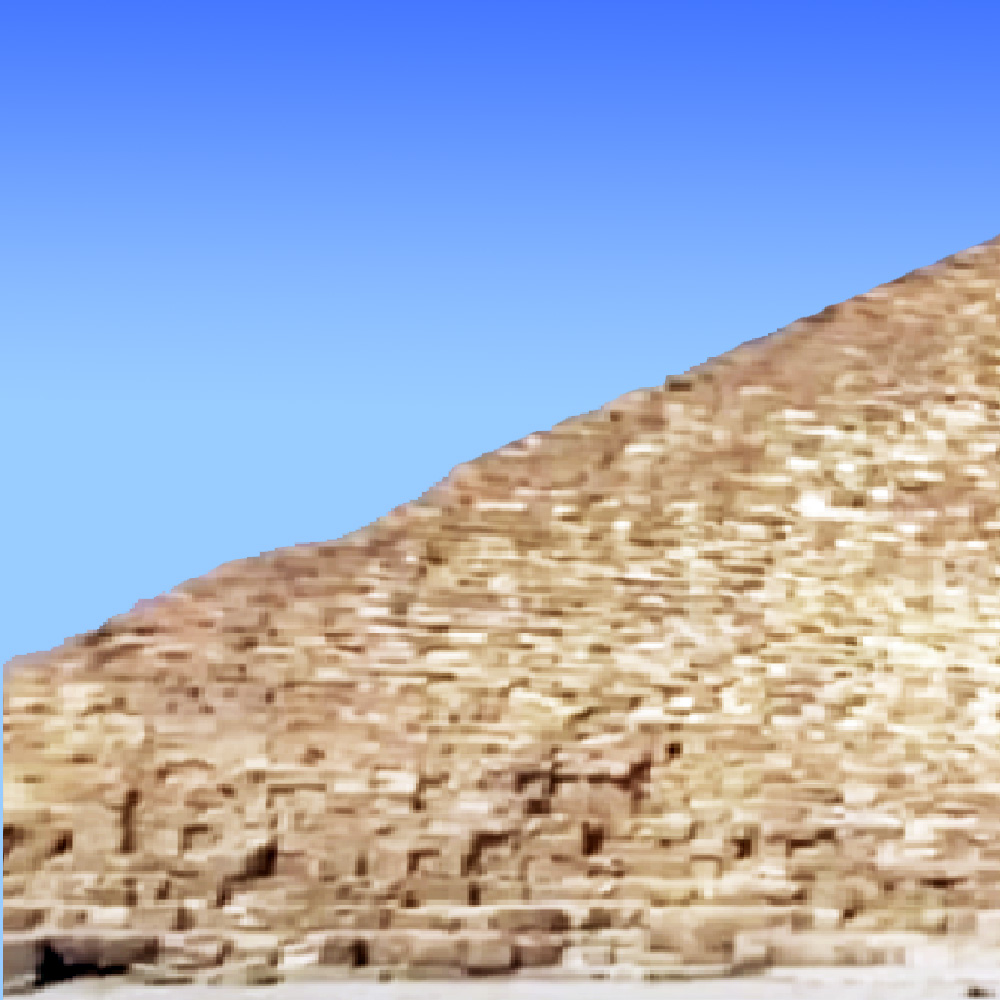 "Worm's eye" view of the Great Pyramid of Khufu at 481 feet high
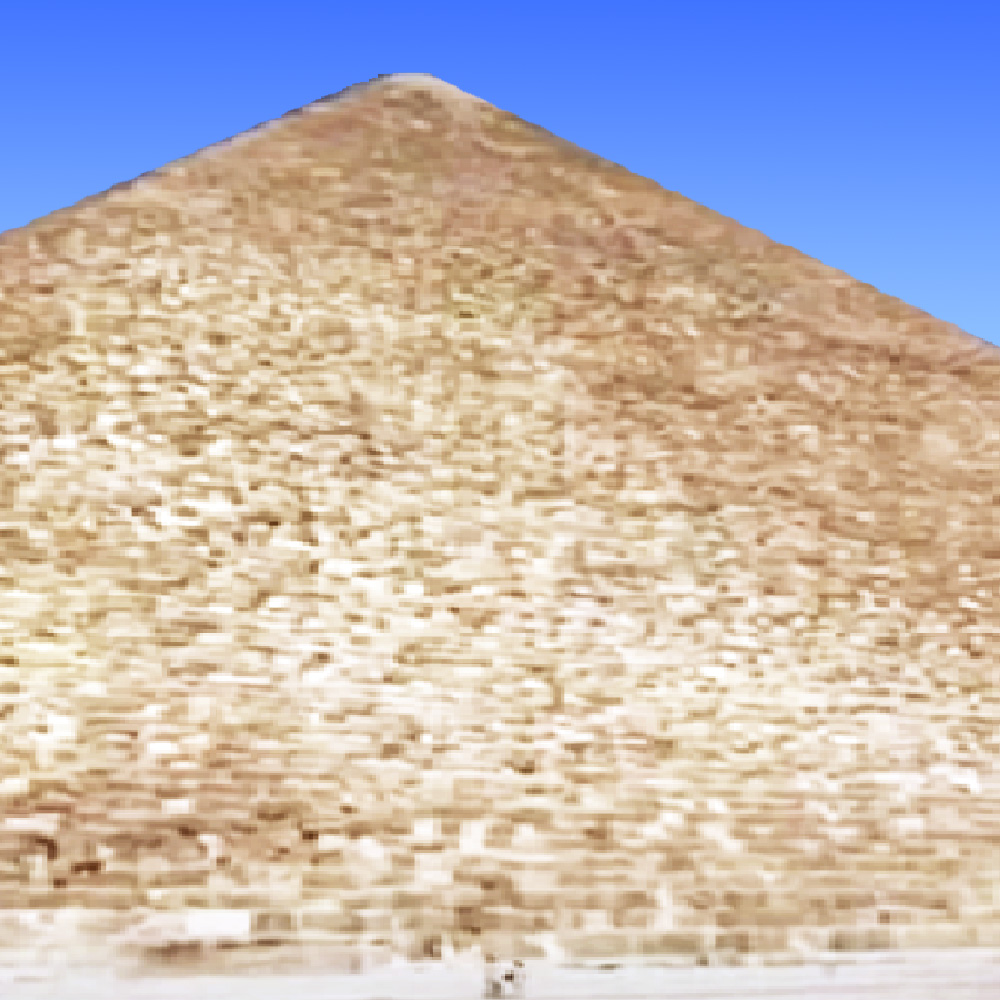 was the world's tallest structure for over 3,800 years, until
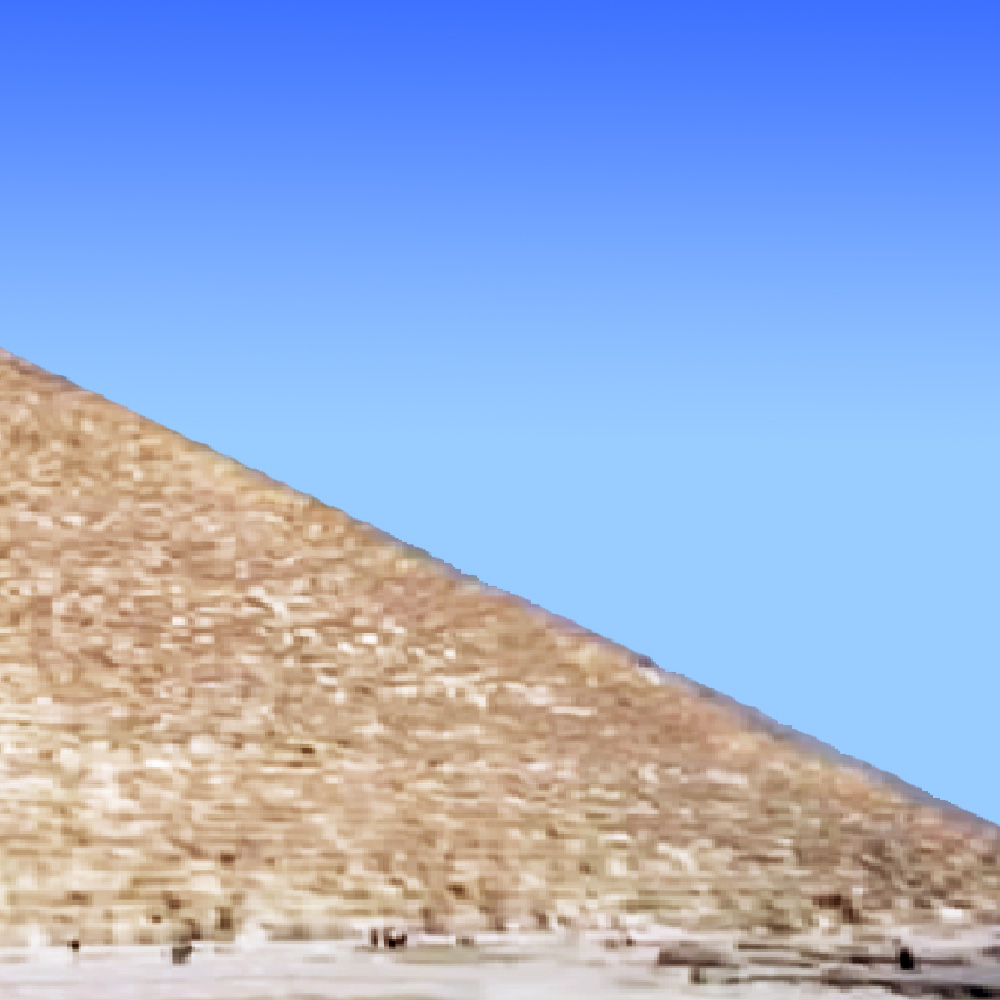 Lincoln Cathedral in England surpassed it in height around 1311 CE
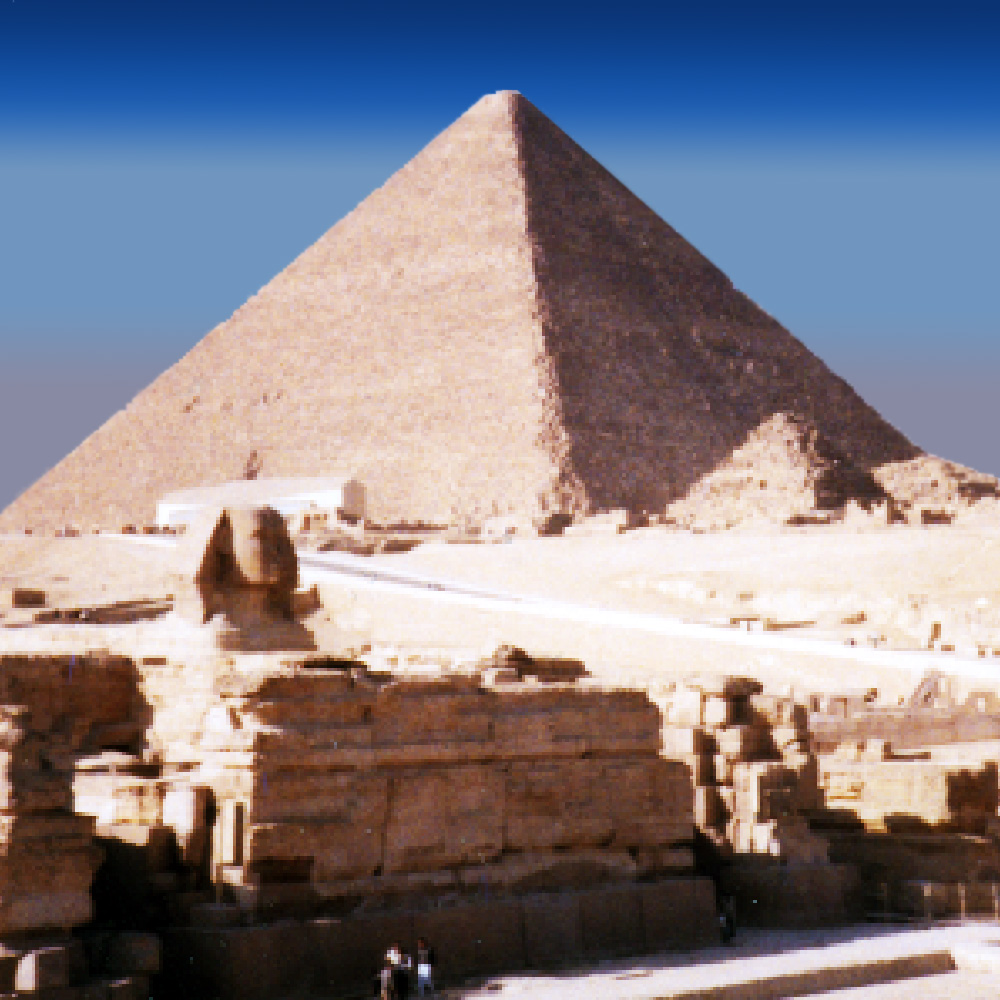 The Great Kufu Pyramid with the Khufu ship museum at its side, and the Great Sphinx, 4th Dynasty, 2613–2494 BC. The Giza
Plateau, Cairo
The Great Kufu Pyramid with the Khufu ship museum at its side, and the Great Sphinx, 4th Dynasty, 2613–2494 BC. The Giza
Plateau, Cairo
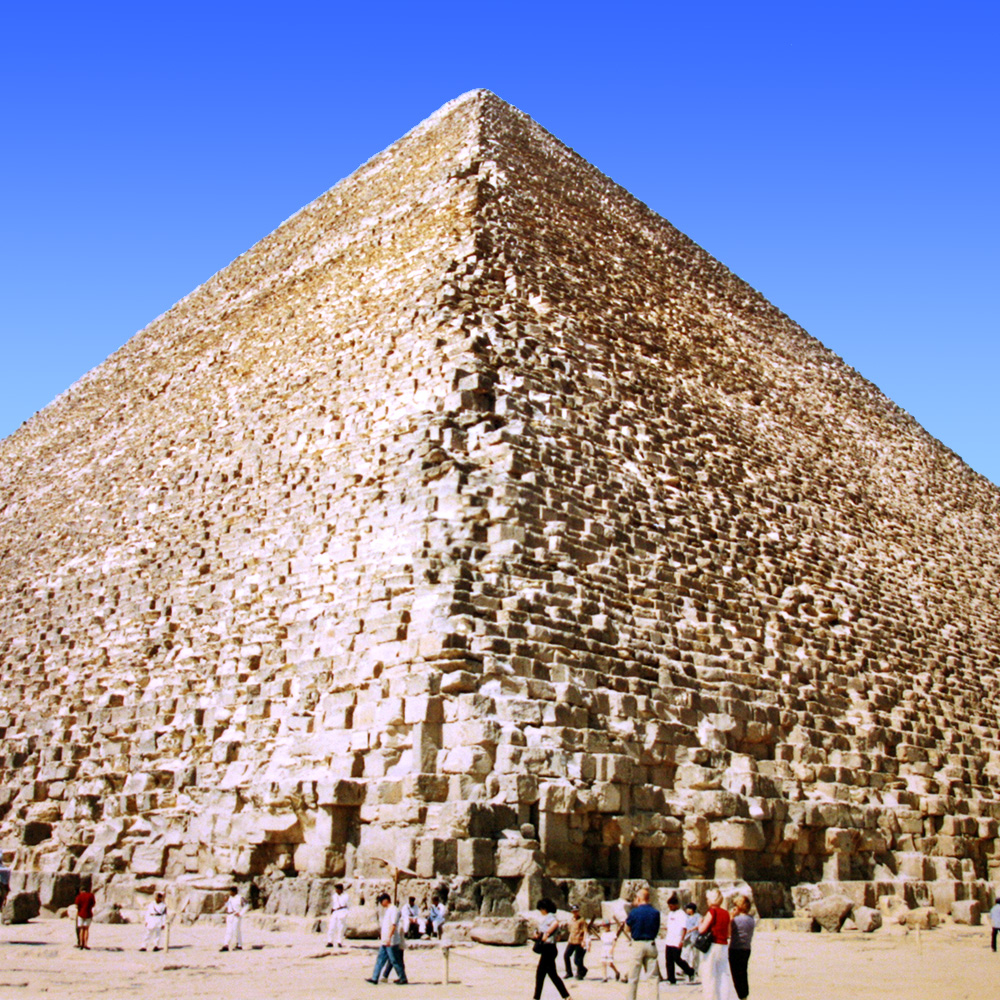 Close-up of the Great Pyramid of Khufu, 481 feet
high,also known by its Greek name Cheops, built on the Giza Plateau, 4th Dynasty, 2600 BCE.
Close-up of the Great Pyramid of Khufu, 481 feet
high,also known by its Greek name Cheops, built on the Giza Plateau, 4th Dynasty, 2600 BCE.
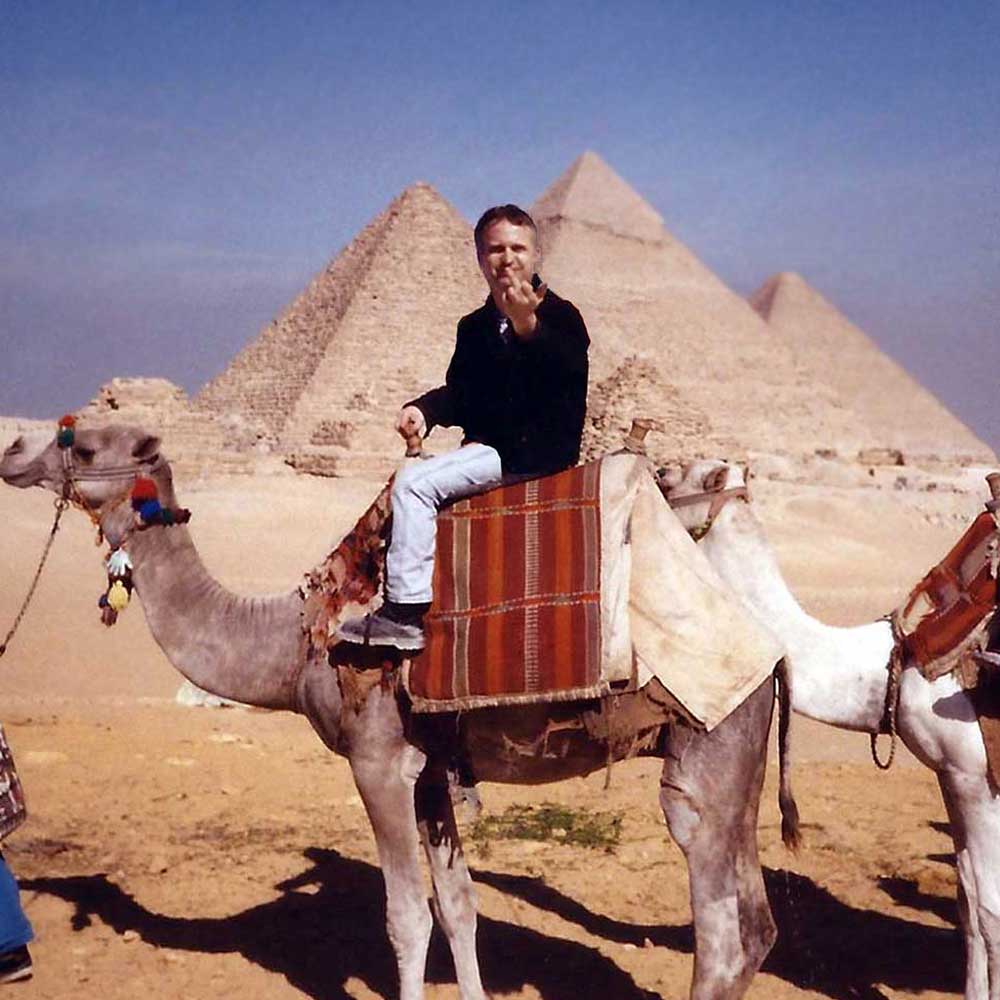 The Great Pyramids of Giza with moi and my itchy
finger (how lovely!) on camel back; this view vantage point is a half-hour camel ride into the desert, The Giza Plateau, Cairo
The Great Pyramids of Giza with moi and my itchy
finger (how lovely!) on camel back; this view vantage point is a half-hour camel ride into the desert, The Giza Plateau, Cairo
 I, with resting camels and The Great Pyramid of
Khufu, The Giza Plateau, Cairo
I, with resting camels and The Great Pyramid of
Khufu, The Giza Plateau, Cairo
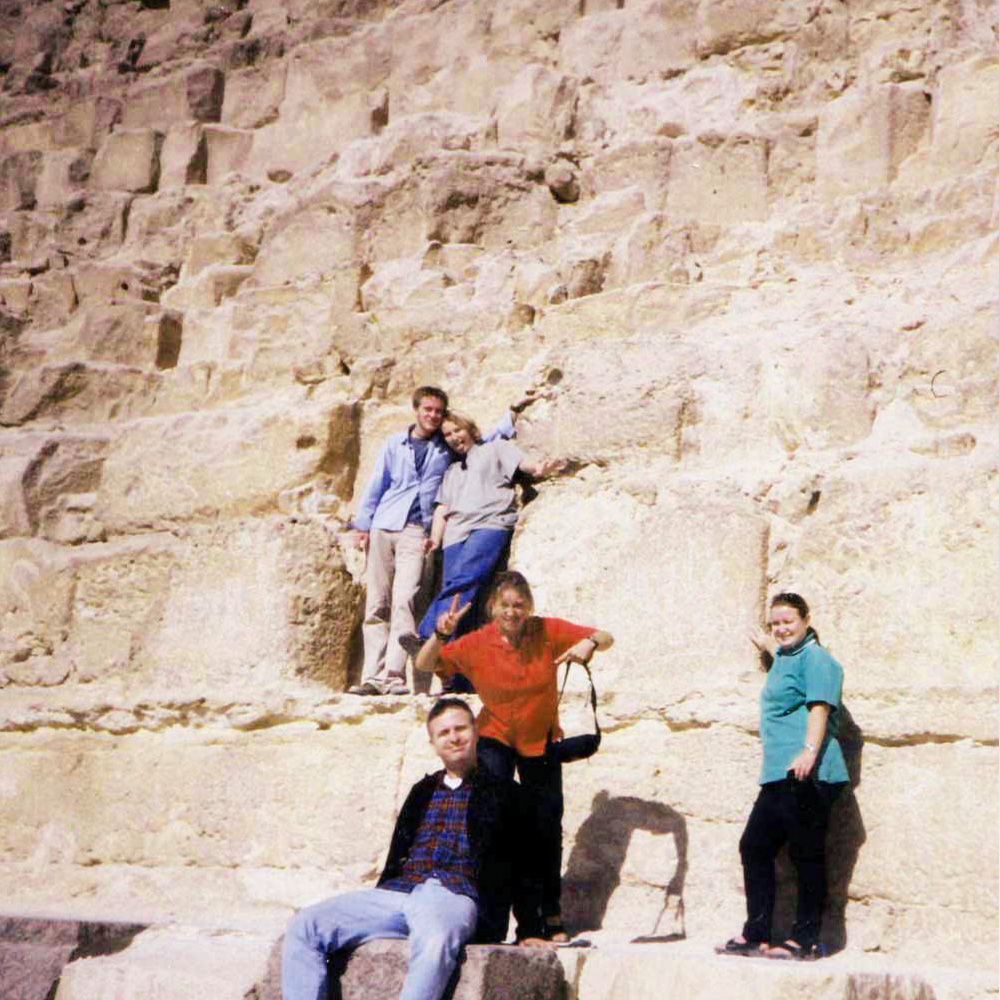 I and other fellow tourist sitting on the base of
The Great Pyramid of Khufu, Cairo
I and other fellow tourist sitting on the base of
The Great Pyramid of Khufu, Cairo
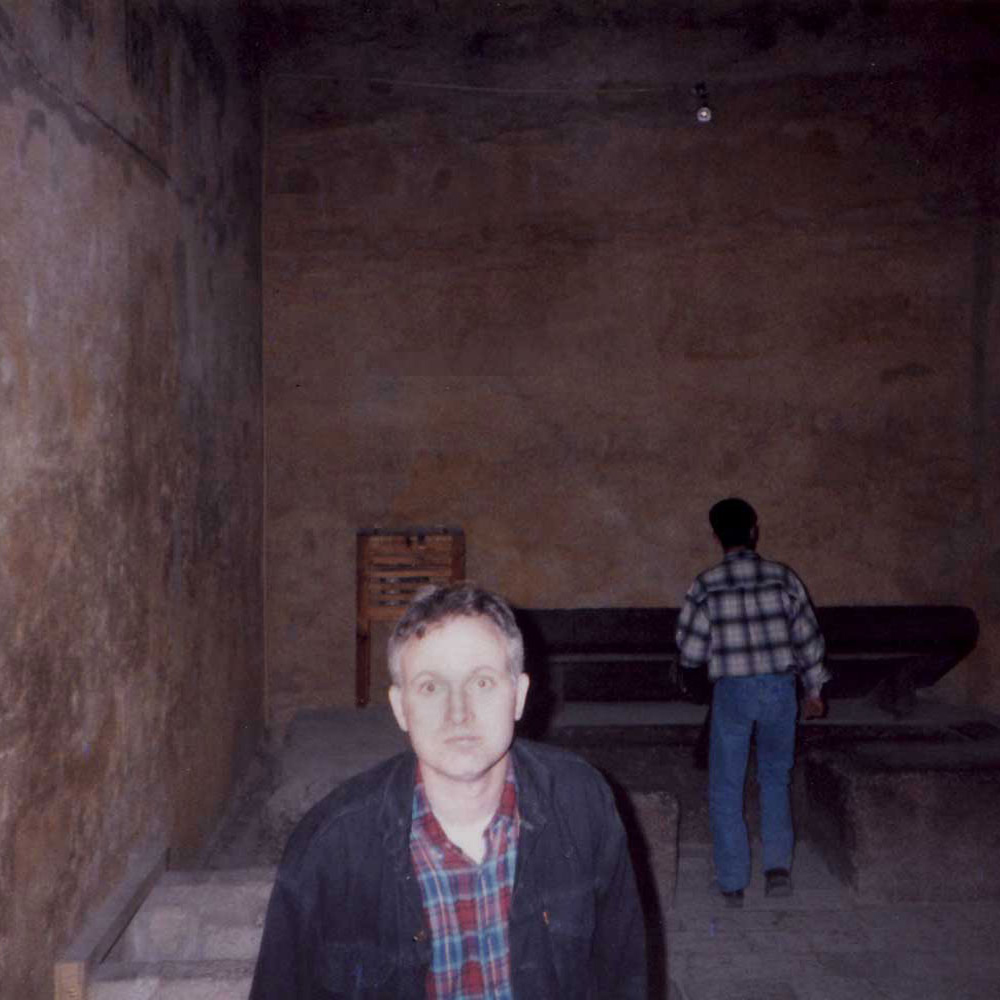 I inside the burial chamber of the Great Pyramid
of Khufu, The Giza Plateau, Cairo
I inside the burial chamber of the Great Pyramid
of Khufu, The Giza Plateau, Cairo
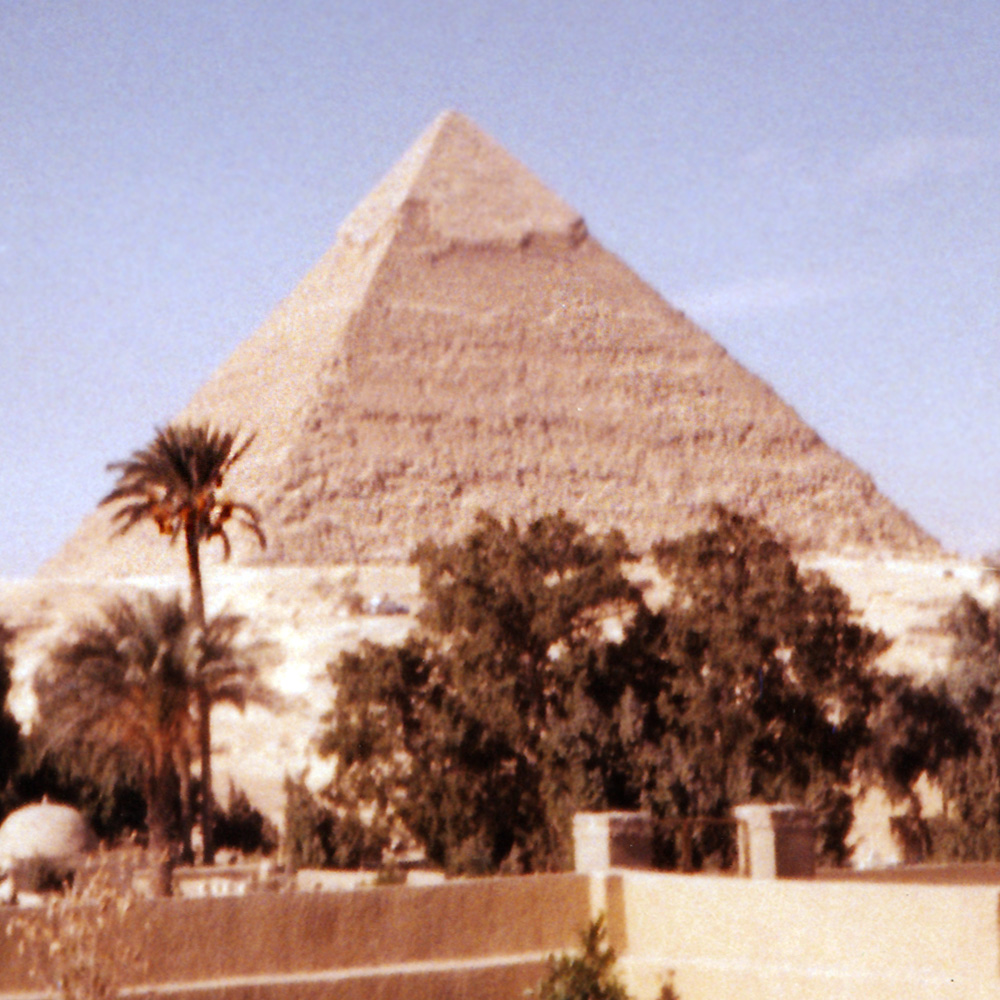 View of King Khafre's pyramid from the
outskirts of Cairo city limits, on the Giza Plateau, Cairo
View of King Khafre's pyramid from the
outskirts of Cairo city limits, on the Giza Plateau, Cairo
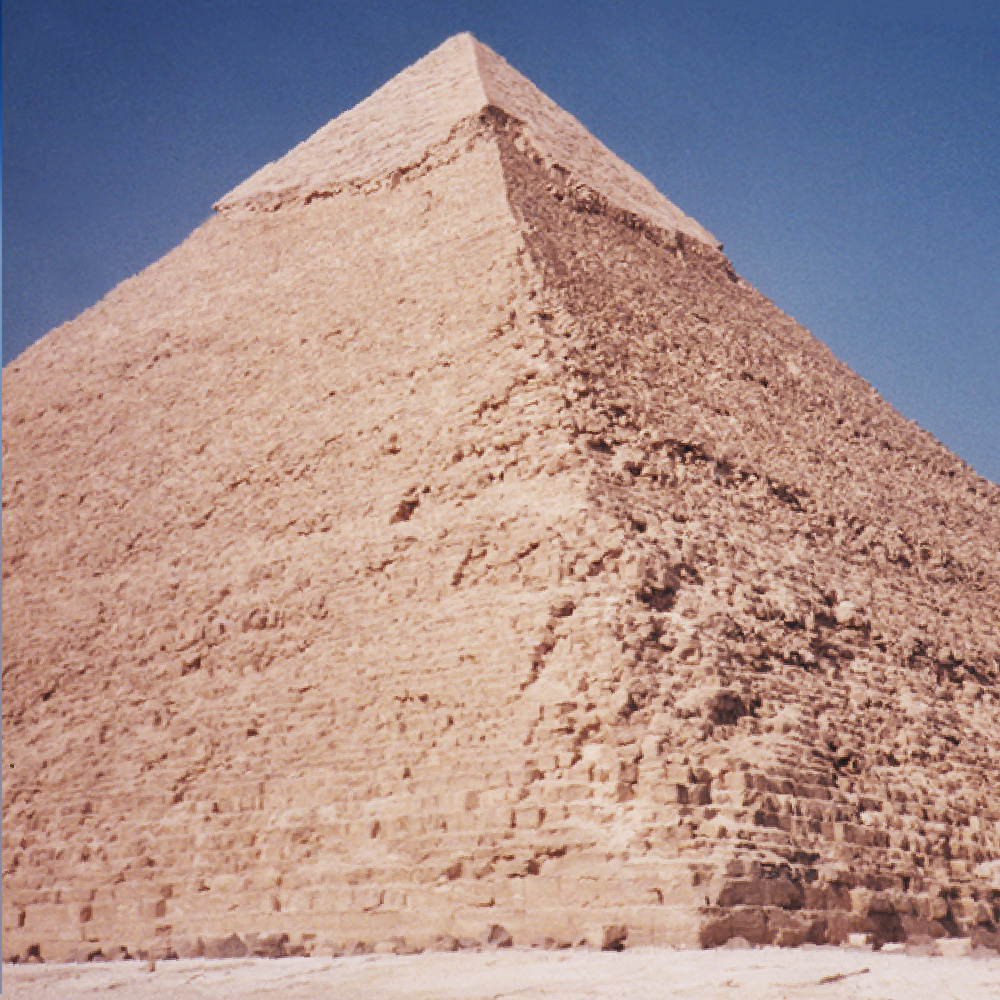 King Khafre's pyramid is surpassed only by the
Great Pyramid, built by his father Khufu, the 4th Dynasty, 2613–2494 BC. The Giza Plateau
King Khafre's pyramid is surpassed only by the
Great Pyramid, built by his father Khufu, the 4th Dynasty, 2613–2494 BC. The Giza Plateau
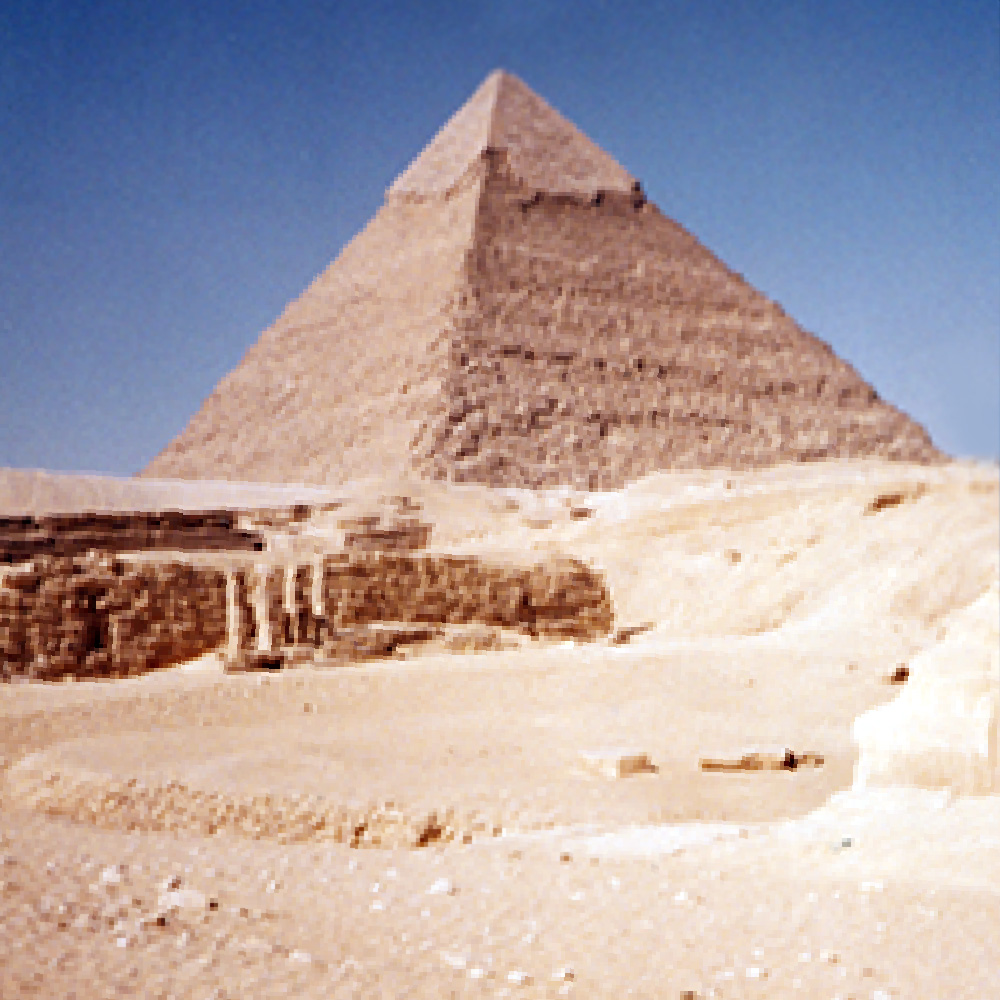 View of Khafre's Pyramid from the open desert of
the Giza Plateau, the 4th Dynasty, 2613–2494 BC. Cairo
View of Khafre's Pyramid from the open desert of
the Giza Plateau, the 4th Dynasty, 2613–2494 BC. Cairo
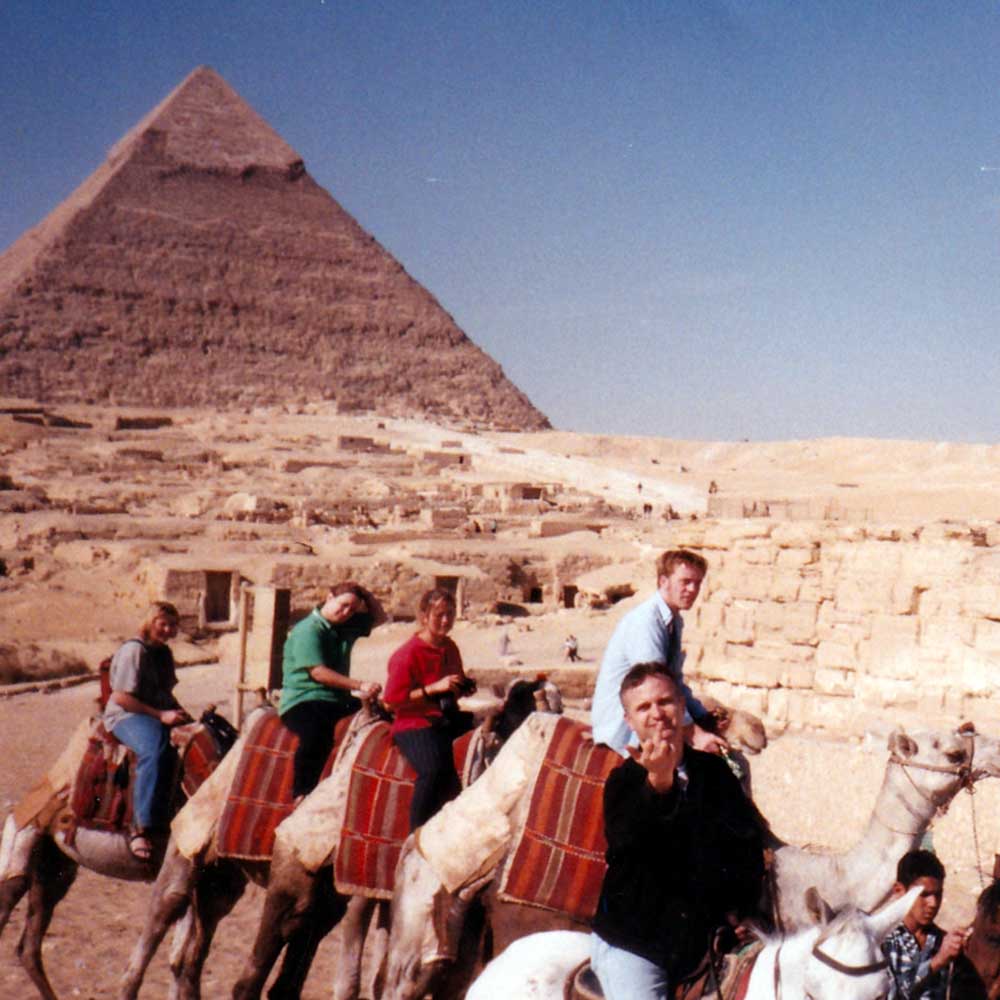 I and other tourist on camelback with The Great
Pyramids of Khafre, Khufu, and the Great Sphnix on the Giza Plateau
I and other tourist on camelback with The Great
Pyramids of Khafre, Khufu, and the Great Sphnix on the Giza Plateau
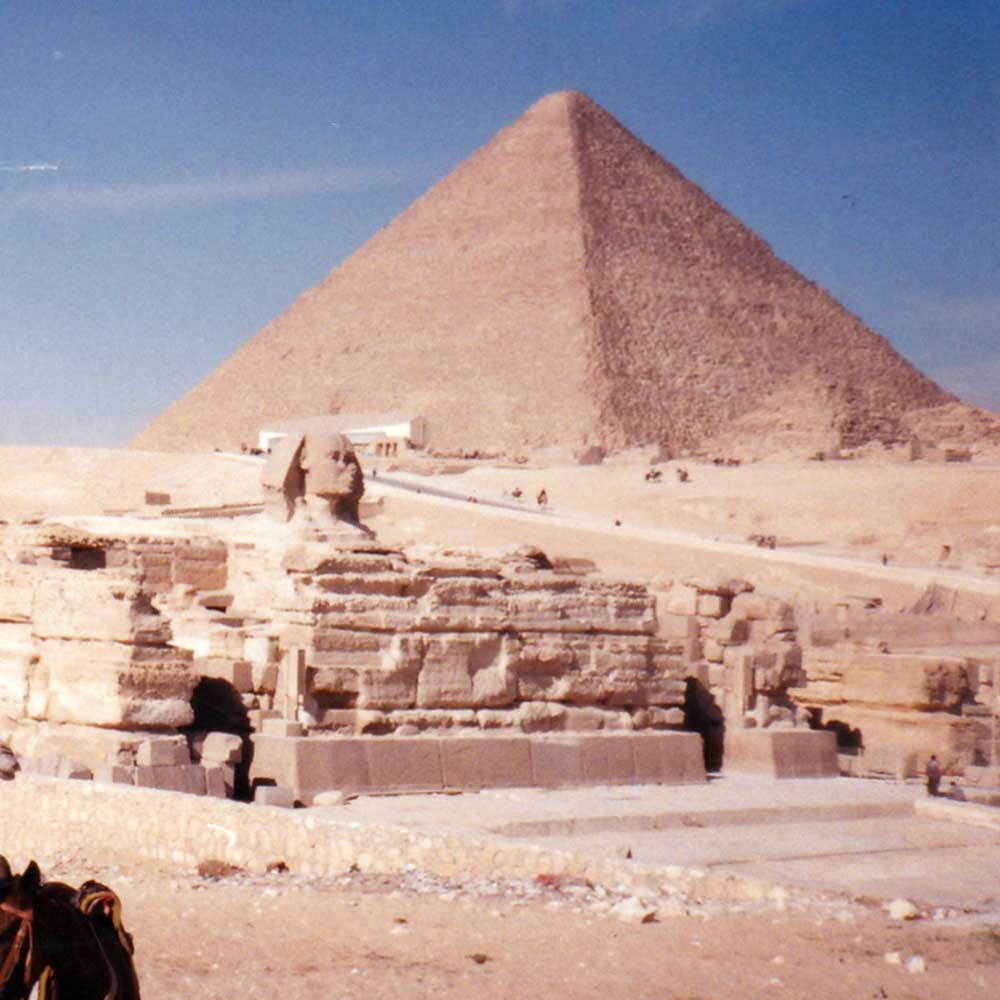 The Great Pyramid of Khufu, of the Giza
Plateau, 4th Dynasty, 2613–2494 BC. The Giza Plateau, Cairo
The Great Pyramid of Khufu, of the Giza
Plateau, 4th Dynasty, 2613–2494 BC. The Giza Plateau, Cairo
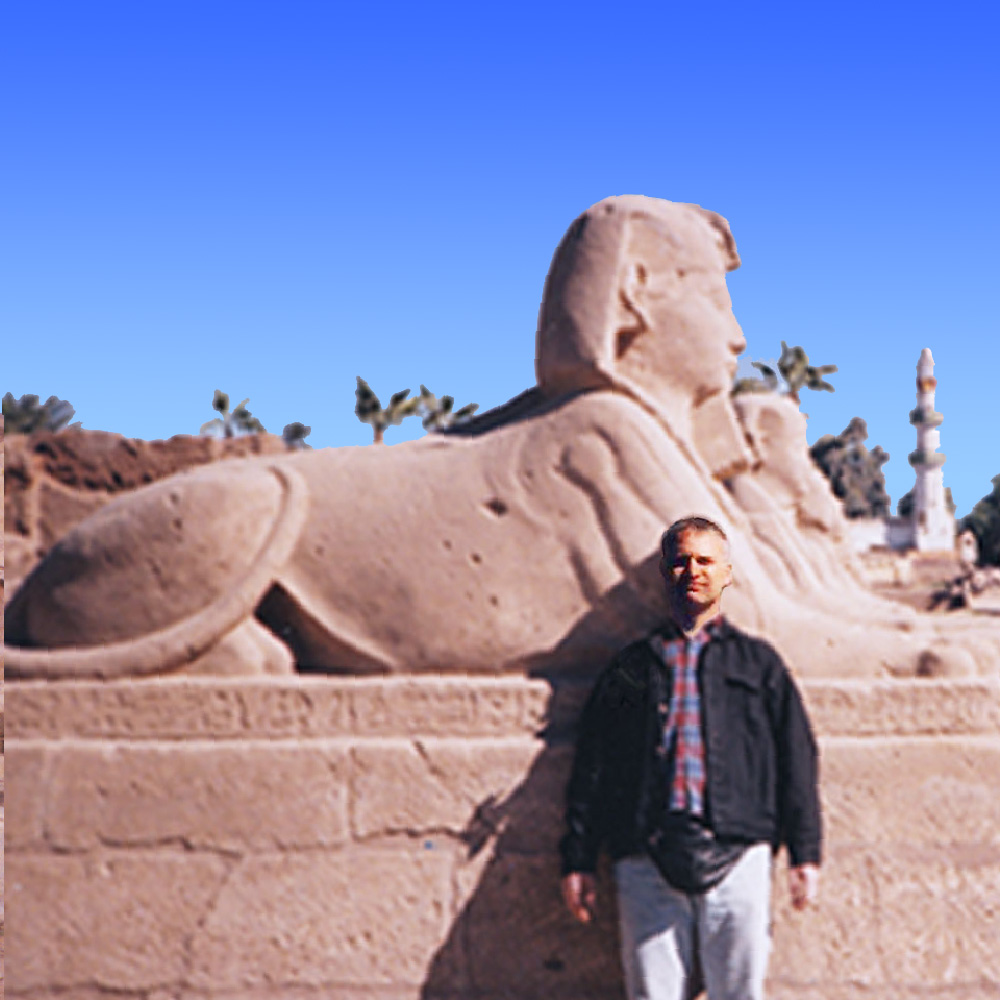 I in front of a Avenue Sphnix in its third
shape, a body of a lion and head of a pharaoh, the statues extend over a mile to Luxor Temple, Cairo
I in front of a Avenue Sphnix in its third
shape, a body of a lion and head of a pharaoh, the statues extend over a mile to Luxor Temple, Cairo
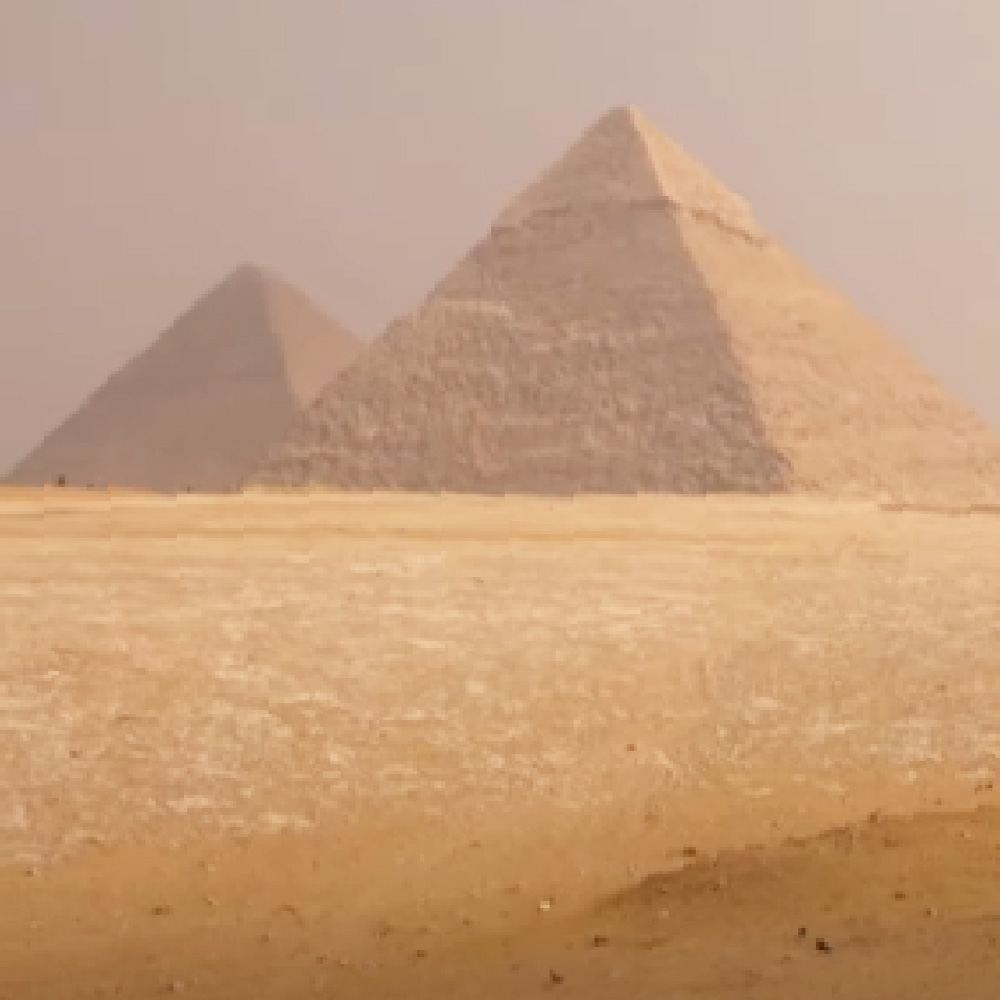 On camelback to the Great Pyramids on the Giza Plateau
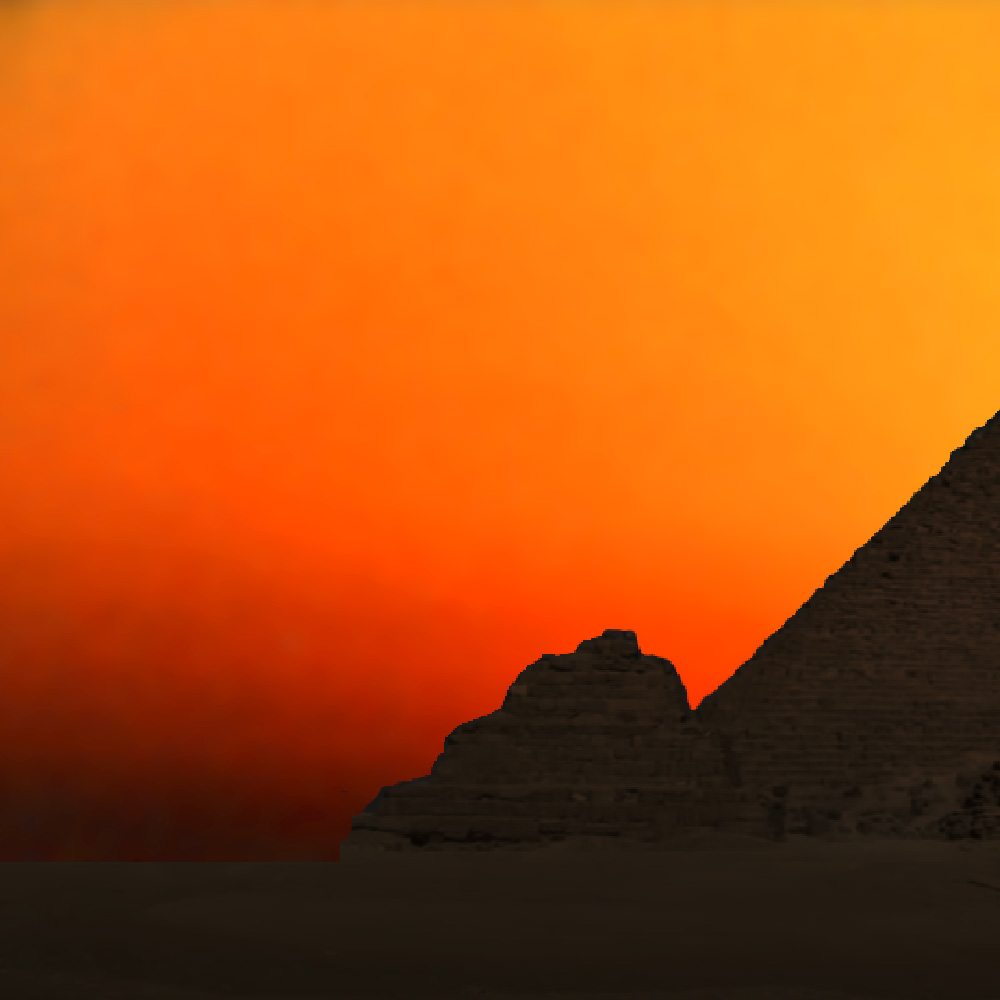 1.) Fantastic sunset behind the Pyramids
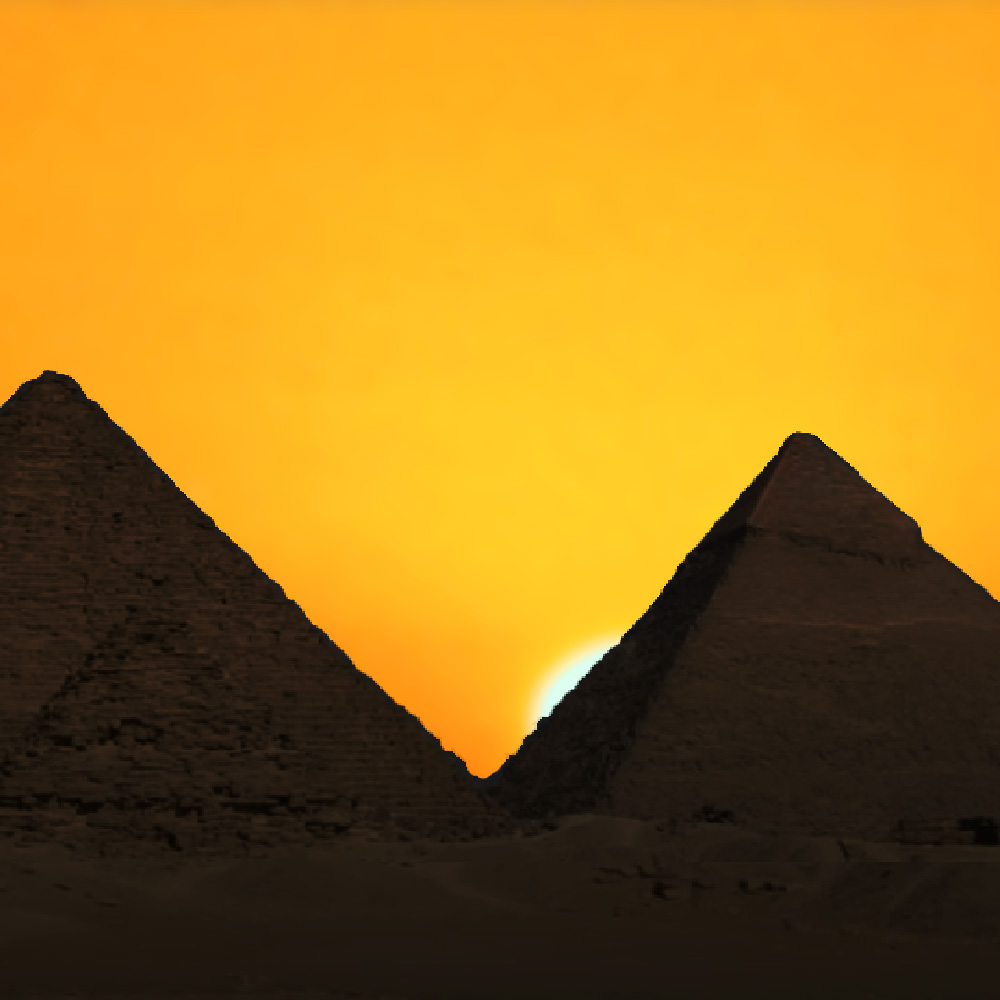 2.)
2.)
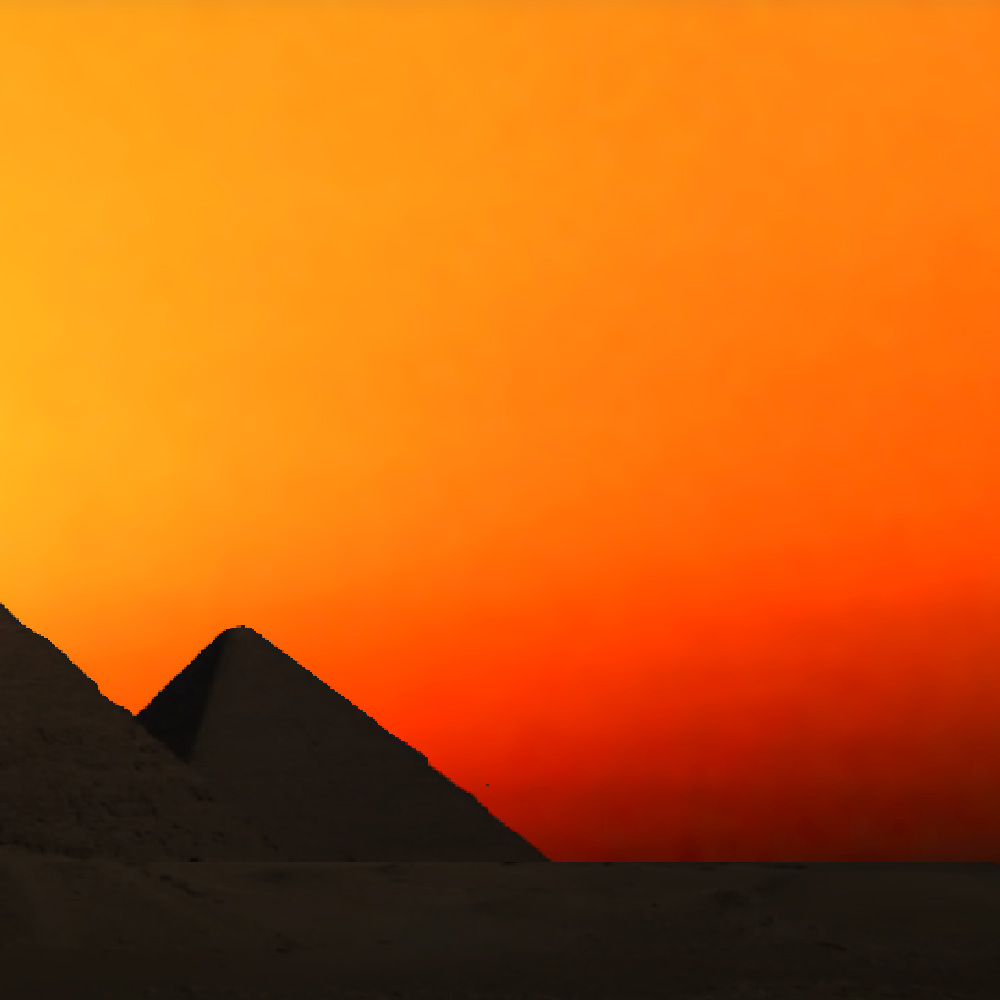 3.)
3.)
HISTORIC PHOTOS OF THE PYRAMIDS
Historical documentation of 19th-century photography of the pyramids. Photographers
and artists have flocked to the Egyptian desert to see the colossal sculptures, monuments, and especially the Giza Plateau to capture the massive
size of the pyramids specifically the Great Pyramid at 481 feet high, known as one of the Seven Wonders of the Ancient World.
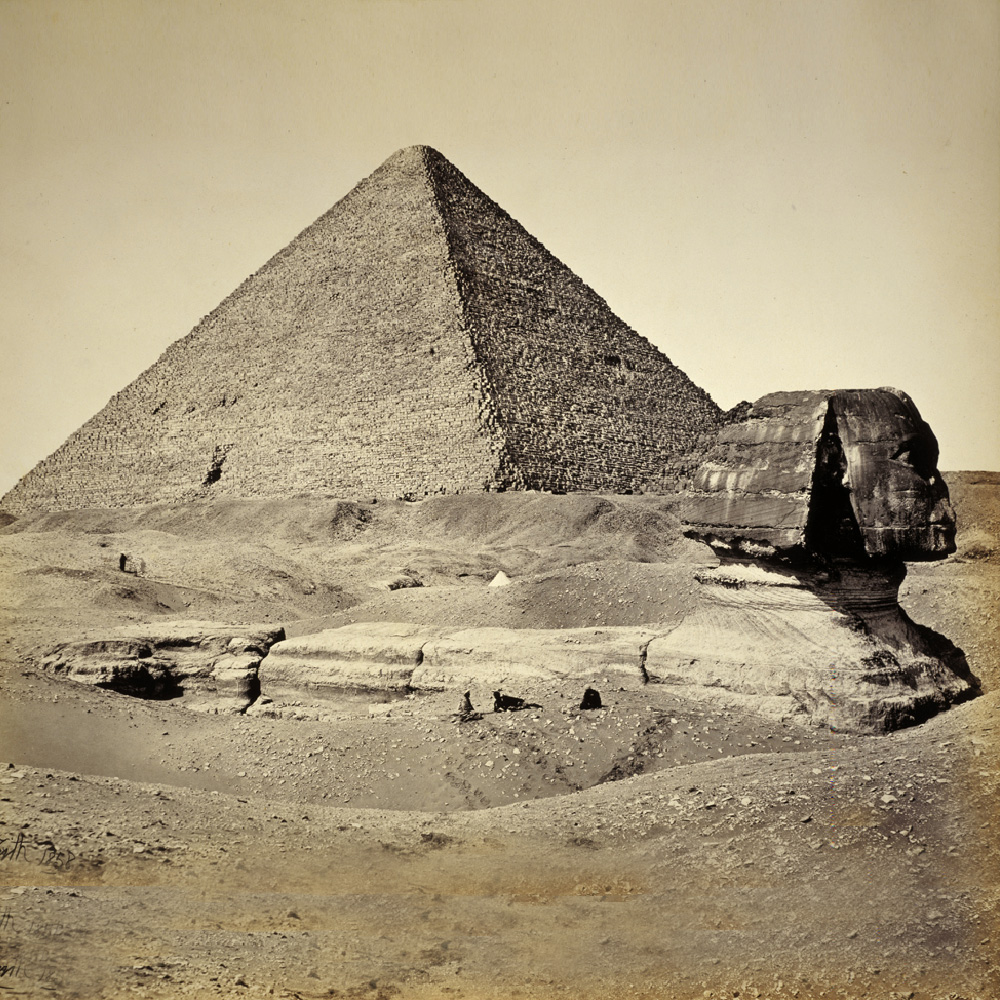 The Great Pyramid and The Sphinx, Date: 1858,
Photograher: Francis Frith, (1822-1898), Collection of: The Met, NYC, 🅮Public Domain
The Great Pyramid and The Sphinx, Date: 1858,
Photograher: Francis Frith, (1822-1898), Collection of: The Met, NYC, 🅮Public Domain
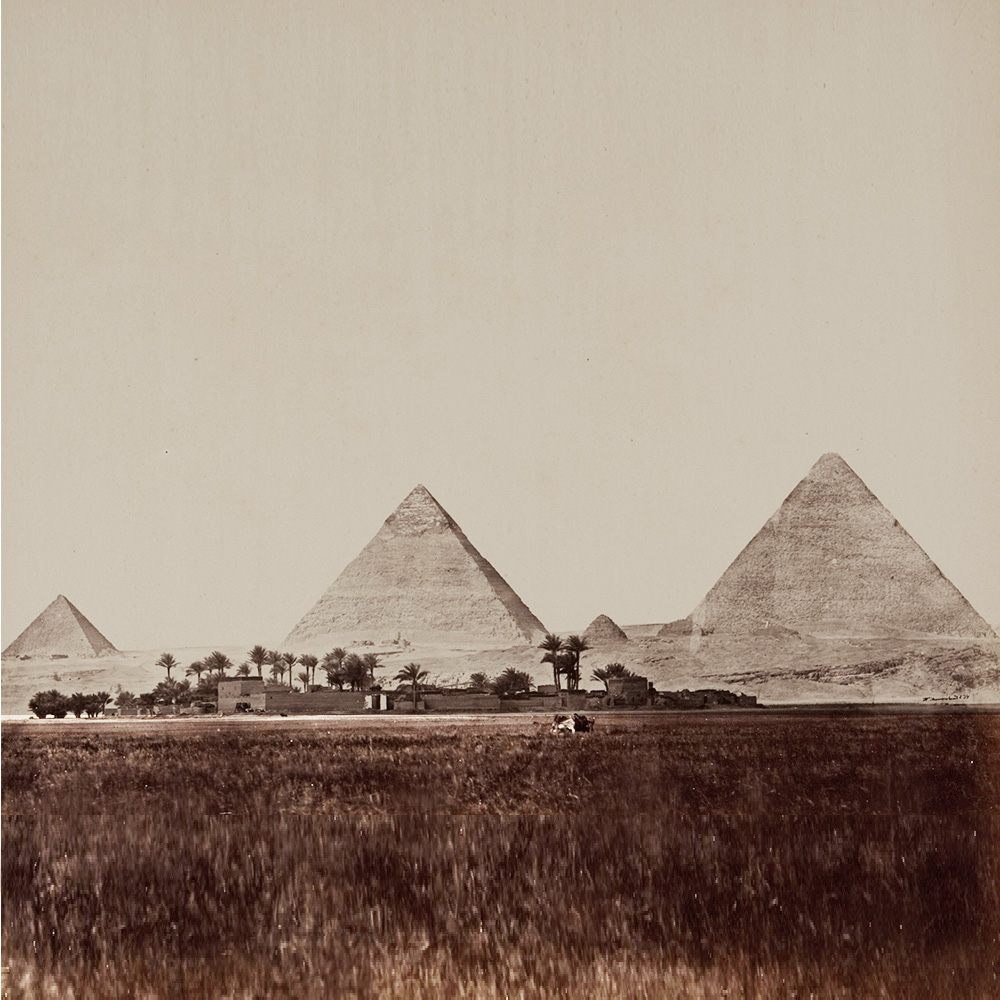 Pyramids of Giza, Date: 1860, Process: albumen
print, Photographer: W. Hammerschmidt, Source: Getty Museum, 🅮Public Domain
Pyramids of Giza, Date: 1860, Process: albumen
print, Photographer: W. Hammerschmidt, Source: Getty Museum, 🅮Public Domain
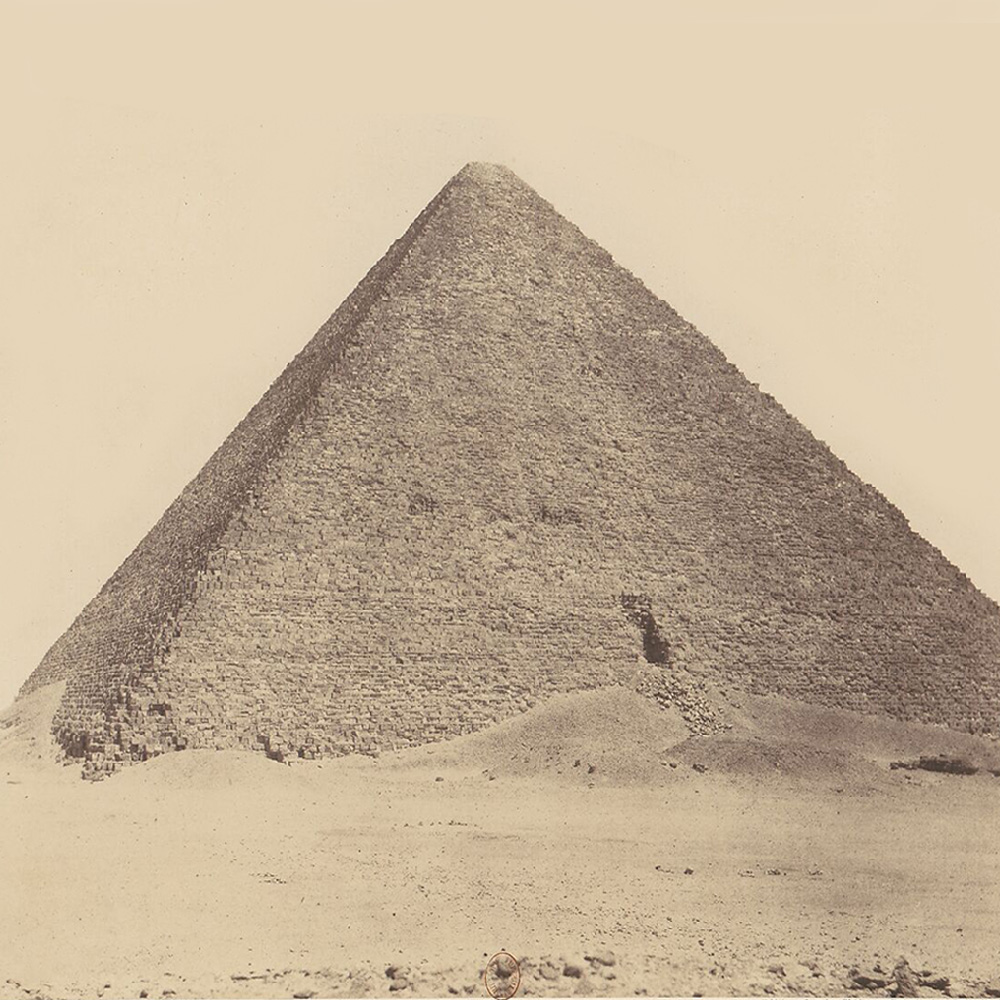 Pyramide de Chéops, Salted paper print, Date: 1852,
Photograher: Félix Teynard, (1817–1892), The Met, NYC, 🅮Public Domain
Pyramide de Chéops, Salted paper print, Date: 1852,
Photograher: Félix Teynard, (1817–1892), The Met, NYC, 🅮Public Domain
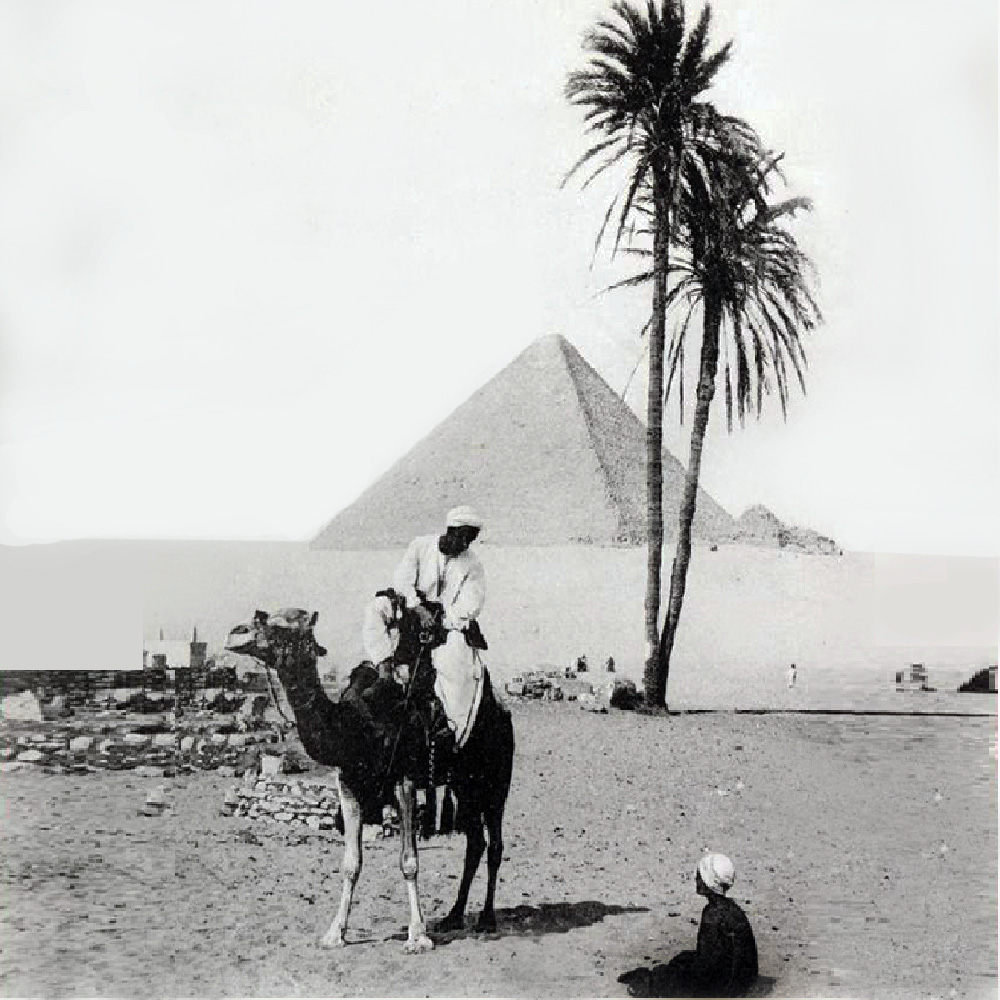 Man riding a camel in front of the Great Pyramid,
Date: 1900, Source: Travelers in the Middle East, TIMEA, 🅮Public Domain
Man riding a camel in front of the Great Pyramid,
Date: 1900, Source: Travelers in the Middle East, TIMEA, 🅮Public Domain
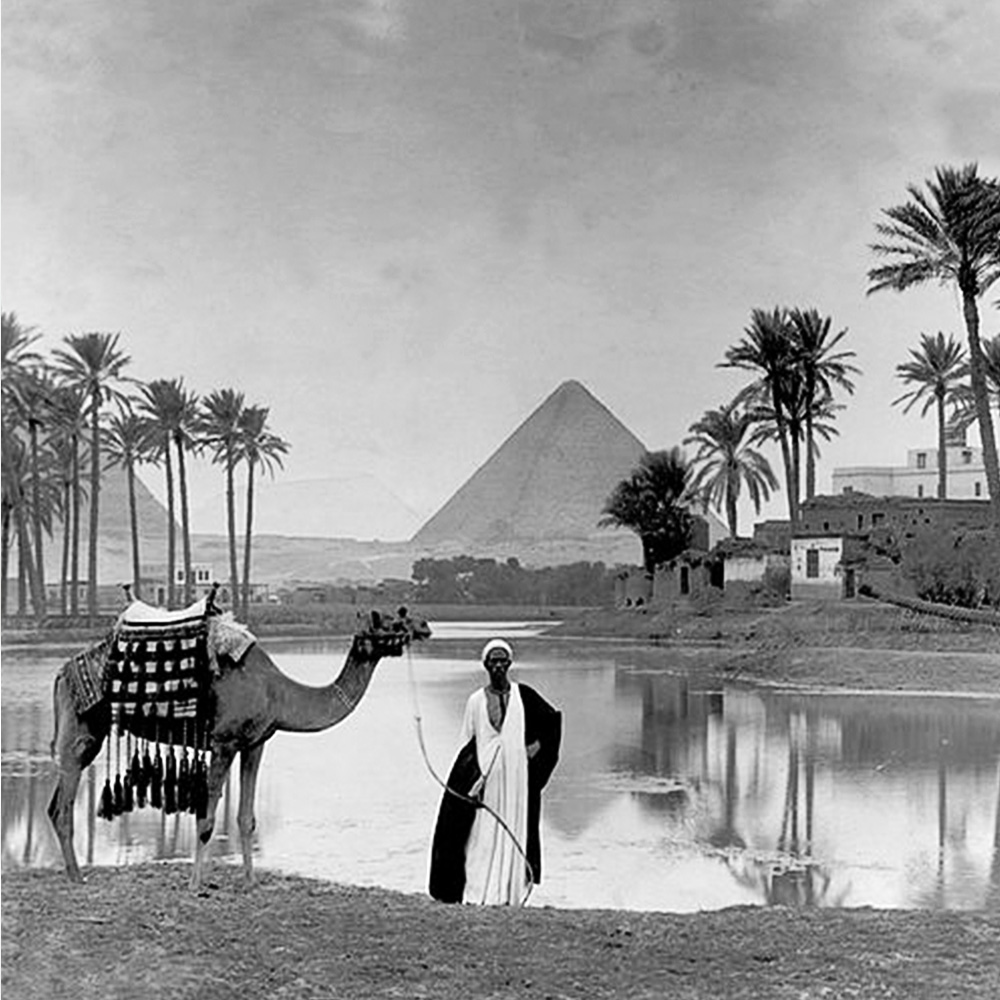 A man, a camel, an oasis ?, and the pyramids of
Giza, date: 1917, Photo: Brown & Dawson, The NY Times archive, 🅮Public Domain
A man, a camel, an oasis ?, and the pyramids of
Giza, date: 1917, Photo: Brown & Dawson, The NY Times archive, 🅮Public Domain
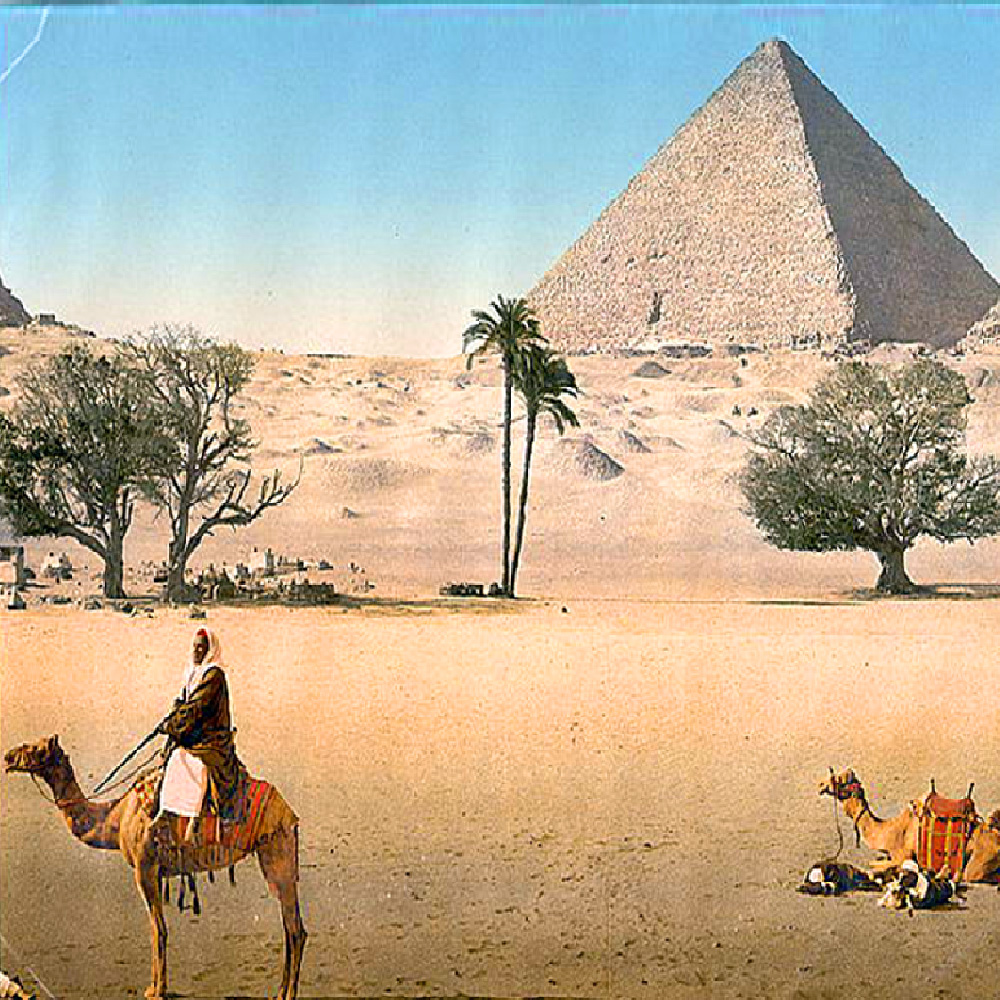 Great Pyramid (5147211672), Date: 1890,
Description: Coloured photo of the pyramid of Khufu, Photographer: Vincent Brown, 🅮Public Domain
Great Pyramid (5147211672), Date: 1890,
Description: Coloured photo of the pyramid of Khufu, Photographer: Vincent Brown, 🅮Public Domain
Content Created by Richard Brafford, © 2025, All Rights Reserved, Fair Use Disclaimer for
Non-Commercial Use for Educational & Entertainment Purposes Only Top
Top